
Welcome to Modern Agriculture!

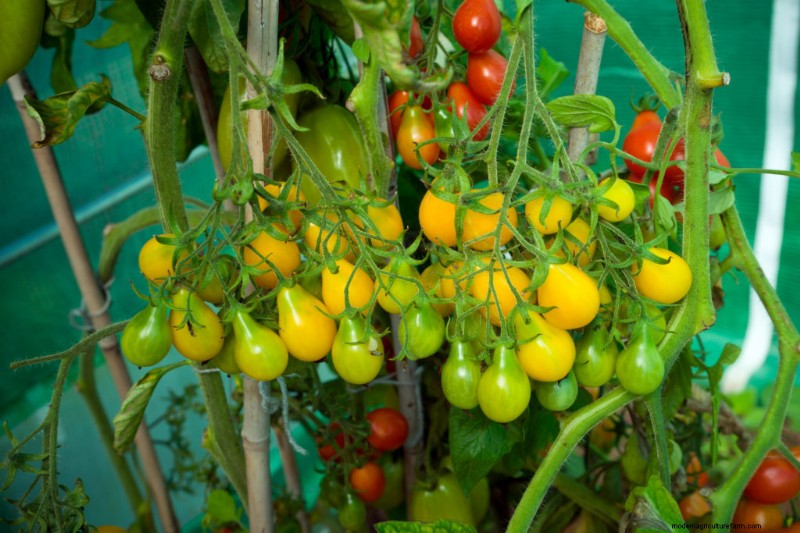
To prune or not to prune? This is the question many gardeners ask themselves when it comes to cherry tomatoes. Some don’t touch them at all, others prune them diligently, and there’s no right or wrong way to do it. Cherry tomatoes are a different kind of beast – and they really do grow into beasts – so I personally prefer pruning just to keep them under control.
Indeterminate cherry tomatoes typically require pruning because they are prolific growers. If left untouched, all suckers will turn into stems, creating a crowded plant that shades its surroundings. Leave the main stem and 1-2 suckers for optimal results and prune new suckers regularly.
Pruning starts from the very first day you transplant your cherry tomato seedling into the ground, and it continues in different stages. As a gardener, you need to be intentional with pruning and have a plan in place. But not to worry, in this article, you’ll learn all the pruning basics, and you’ll get even better with practice.
Some gardeners argue that cherry tomatoes don’t need pruning, because they’ll be even more productive if suckers are left alone. And that’s true – ALL tomato suckers will grow into a new stem with leaves and fruit. On regular slicing tomatoes, those suckers zap the energy out of the plant and stunt fruit production, but with cherry tomatoes, you don’t see this happening.
Virtually all suckers will bear equally large clusters of cherry tomatoes. So why prune?
Indeterminate cherry tomatoes are very fast growers and can reach impressive sizes by mid-season. If left untouched – and planted close together – you’ll soon have a jungle on your hands. This means lots of foliage, moisture that’s trapped in, and little to no airflow – the perfect breeding ground for blight and disease.
In simple terms, here are my main reasons for pruning indeterminate cherry tomatoes:
Pruning can be labor-intensive, though, and that’s why many gardeners feel overwhelmed and let their tomato patch grow into a jungle. But if you know the basics, start early, and keep on top of it weekly during the growing season, you’ll love your results. (Be sure to also check this article on the timing and frequency of tomato pruning to learn more.)
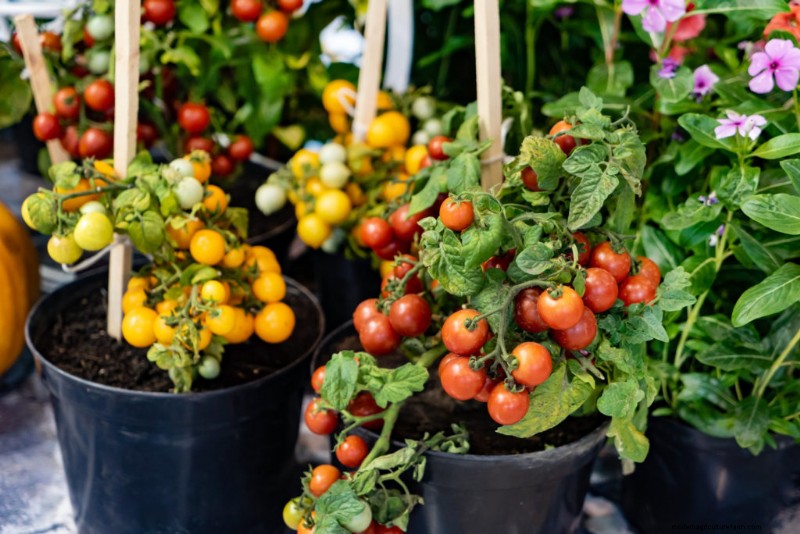
Now let’s talk about determinate tomatoes. Whether you’re grabbing them from a nursery or growing them yourself from seed, you need to know whether your variety is determinate or indeterminate because it makes a world of difference.
You should NEVER prune a determinate tomato variety, cherry, or regular. Determinate tomatoes will reach a certain height (you might have seen dwarf or even micro dwarf varieties), grow a certain number of suckers, and produce fruits that ripen all at the same time.
Pruning determinate cherry tomatoes will seriously hinder their productivity. The maximum amount of pruning you can do is removing base leaves for better ventilation and, of course, diseased foliage.
Let’s talk about timing. As soon as you plant your cherry tomato seedling in the ground, you should already start pruning:
At this stage, your cherry tomato plant will be less than a foot tall. Give it a couple of weeks to grow and then come back to it and start regular pruning. Pruning will focus on two main things: removing leaves and removing suckers.
If you don’t know what a sucker is – check the image below. It’s a secondary stem that shoots diagonally at the base of every tomato leaf. Left unattended, it will grow into a thick stem and you won’t be able to tell it apart from the main stem. When pruning suckers for the first time, let them grow a little larger so that you don’t accidentally confuse them with flower clusters.
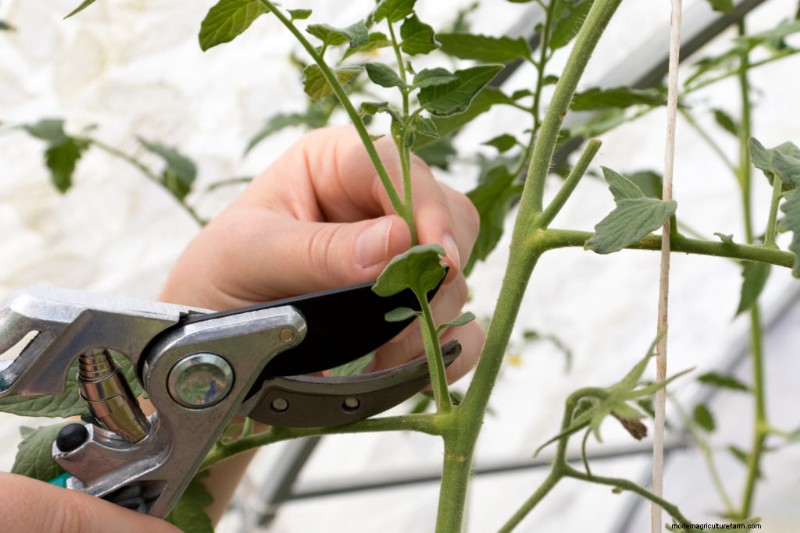
Cherry tomatoes grow and produce best when they have 2 to 3 leads – this means one main stem and 1 to 2 additional suckers. Where you allow these suckers to grow is entirely up to you, but it’s best to allow the first sucker to develop at a good height – at least 1ft (30cm) from the ground.
You can choose to leave the sucker that’s growing just under the first flower cluster or go higher. The sucker will grow into a new stem and go on to produce new leaves and fruit. The main stem and sucker will create a Y shape (called the strong Y), and as these stems diverge, you’ll want to stake them or support them on a trellis separately to avoid tangling.
You can continue to do the same with a second sucker, higher up. Anything more than 3 stems, and I feel like they can quickly get out of hand, especially if you’re growing other cherry tomatoes close by. In time, you’ll learn what works best for you.
Just like with regular tomatoes, when the first fruit cluster begins to ripen, remove all the leaves below the fruit. That’s right, you’ll get a long, bald stem, but that’s good for the plant’s airflow and energy.
A few more rules you should follow when pruning cherry tomatoes:
Indeterminate cherry tomatoes will keep on growing until the frost kills them. And they’ll grow faster than regular tomatoes, too. This is why you’ll often see them reach an impressive height of 8ft, sprawling over your stakes or trellises.
To keep cherry tomato plants from growing extremely tall, you can top them (snip the tops off the main stems) once the season is almost over. Be careful with timing when doing this – I’ve written this article on topping tomato plants that goes into more detail.
Determinate cherry tomatoes, however, will rarely grow past 4ft (120cm), and you’ll see many dwarf varieties under 1ft tall that are perfect for balconies and containers.
Determinate cherry tomato plants will also produce fruit sooner and ripen faster than indeterminate varieties, which is why it’s a good idea to grow both if you can, and enjoy a longer tomato season.
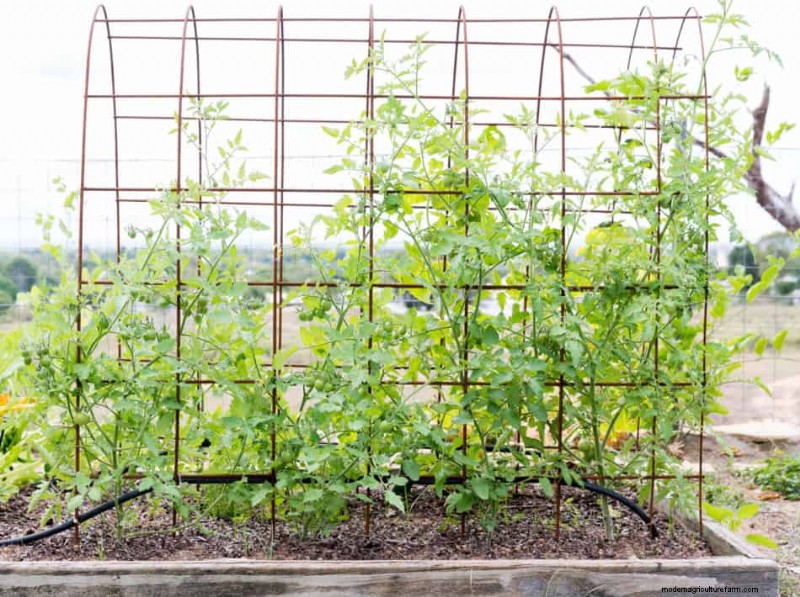
Indeterminate cherry tomato plants need some kind of support, whether that’s a trellis, stakes, or strings. You can successfully train a cherry tomato plant up 2-3 strings, 2-3 bamboo canes, or wooden stakes. If you have the option of trellising them, a fence-type trellis works best.
Growing cherry tomatoes up stakes is a little different than with regular tomatoes because you’ll need 2-3 stakes to support the 2-3 leads you’ll be training up. The same goes with strings if you’re lucky enough to have a greenhouse or polytunnel.
In my experience, bamboo stakes sometimes break under the weight of super-productive cherry tomato plants, so wooden stakes work better.
As for trellises, be sure to space your cherry tomato plants far enough so that you can branch their stems out in a V. Tall fence-type trellises are ideal, but cattle panel arches work great too, and as they grow tall, the cherry tomato plants can drop over to the other side.
If you’re not a DIY-er, there are some fantastic trellis options sold by Gardener’s Supply. This one works best for heavy producing plants like squash or tomatoes.
Lastly, some gardeners choose to grow their indeterminate cherry tomatoes inside tomato cages and allow for 4 or more stems. This, in my opinion, is a quick recipe for disaster. While easy to prune at first, and nicely ventilated at the base, caged cherry tomatoes will soon grow into a tangled mess, filling up all the space inside the cage and around it. Soon, you won’t be able to tell unintentional suckers from main leads and things can quickly get out of hand.
Cages are the perfect choice for determinate tomatoes, and it’s all the support they’ll ever need. If you get really small varieties, a small stake will be more than enough, and most of the time, determinate tomatoes won’t need any staking at all.
Whether you’re growing cherry tomatoes for the first time, or you’ve grown them in the past and are looking for better ways to do it, you’re in the right place. Follow these tips on creating beautiful, clean double or triple leads in your cherry tomato plants.
If you do a good job pruning during early and mid-summer, you can finally relax and let things get a little crazier in fall, once the danger of blight has passed. No need to be perfect or obsessive about it – but it can get addictive! So sharpen your pruning shears, and have a great season!


