
Welcome to Modern Agriculture!

Momotaro tomatoes are a tasty addition to your garden, producing a distinctly sweet, tangy fruit.
In this guide, we’ll be showing you our Momotaro tomato review, as well as tips and tricks for growing this exciting Japanese tomato plant at home.
 Momotaro tomato, also known as Tough Boy, is one of the most popular hybrid tomatoes and was developed in Japan by the Takii Seed Company. It is an indeterminate tomato variety, producing large, pink fruits with a very pleasant sweetness, balanced out by just a bit of tang.
Nowadays, Momotaro is the most popular tomato variety cultivated in Japan. The Japanese call it after the name of Momotarō, the troll-slaying hero born from a peach from Japanese folklore, definitely adds to its charm.
So what makes Momotaro unique when you compare it to other tomato hybrids? The taste plays a decisive role, but Momotaro was also specifically bred to be tougher than other cultivars.
Let’s take a quick look at the stats:
Momotaro tomatoes are quite rare outside Japan, so it’s unlikely you will find them in local Asian shops and markets. So if you want to enjoy these sweet, juicy tomatoes fresh, the best thing to do is grow your own.
Read on to find out how.
 Growing tomatoes takes a bit of skill to produce an abundant harvest, but hybrids require an extra bit of care
Although tomato hybrids were bred to produce larger yields, unique flavors, and colors and develop a higher resistance to pests and diseases, they can be a bit tricky to get going.
Luckily, we’re here to tell you everything you need to know.
All tomatoes are warm-season crops, and Momotaro is no exception. You can plant Momotaro in your garden in late spring or when temperatures are steady above 60 °F (15 °C) throughout the day.
Although Momotaro can reach maturity in as little as 70 days, sowing so late in the year could result in a shorter growing season. As a result, our suggestion is to germinate the seeds indoors and transplant them outside in late spring.
Start by sowing your Momotaro tomato seeds in compostable seed pots. Fill each pot with a nutrient-rich soil mix, place one seed in each pot, and use a hand pump to mist the soil in order to keep it moist gently. The main thing your tomato seeds need to germinate is warmth. Aim for a temperature range between 70 °F and 80 °F (21 °C to 27 °C).
Keep the pots in a warm, dark spot, and you should start seeing seedlings after 7 to 10 days. As the seedlings grow, move them into larger plastic containers to continue to grow indoors until they’re ready for moving outside. Don’t remove the compostable seedling pots, as you risk damaging the roots. Instead, dig a hole in the larger container, and place the seedling plug in the center. The compostable material will decompose naturally in a few weeks.
 Your tomato plants can be transplanted outside once they are at least 6 inches (15 cm) tall and have at least 3 sets of leaves each. Ensure that outdoor temperatures do not drop below 60 °F (15 °C) for at least a week before transplanting. Momotaro seedlings require careful handling when transplanting. When they’re too small, moving them outdoors can stress the plants, resulting in lots of leaves and vines but very little fruit.
Pick a part of your garden that gets at least 6 hours of sun each day. Momotaro grows best in full sun, but it doesn’t tolerate extreme heat. Temperatures exceeding 86 °F (30 °C) will result in a very poor harvest. In comparison, temperatures above 95 °F (35 °C) will effectively destroy the pollen, and the plants won’t produce any fruit.
Momotaro tomatoes thrive in nutrient-rich, well-draining soils, with a pH ranging from 6.0 to 7.0. Take the time to dig out and turn the soil in your garden to a depth of at least 1 foot (30 cm), and incorporate plenty of compost or well-rotted manure. This boost of nutrients will encourage the young plants to grow strong and healthy. Plant spacing should be at least 18 inches (45 cm) in rows at least 48 inches (1.2 meters) apart.
Like all indeterminate tomatoes, Momotaro doesn’t grow to a predetermined size or a bushy shape. It will start vining throughout the growing season, and in some cases, it can reach as much as 8 feet (2.4 meters) in height. Therefore, it’s best to provide Momotaro tomatoes with some form of support to climb on, such as a trellis. Make sure that the support system is in place before transplanting to avoid disturbing the plants later on.
Regularly water your Momotaro tomatoes.
The best time to do this is early in the morning, by watering right at the plant’s base. Avoid splashing water on the leaves and vines, as this can cause fungal problems. Although tomatoes are susceptible to drought, overwatering them can kill them just as quickly by drowning the roots.
Apply a liquid tomato fertilizer once a month. If possible, use fertilizers specifically designed for tomatoes, which should be rich in potassium and phosphorus. Avoid nitrogen-rich fertilizers, as they promote leaf and vine growth rather than fruit.
Once established, Momotaro tomatoes grow very fast, so you will need to prune them in order to keep your plants healthy regularly.
Using a pair of gardening scissors, trim any side shoots once they have more than 3 leaves on the vine. Encourage your tomatoes to climb on their supports, and use string if needed.
As the plants mature and grow over 3 feet (90 cm) tall, you can start trimming the leaves growing right at the bottom, especially if they start yellowing. This approach will deter attacks from pests and provide proper air circulation, which prevents fungal diseases.
 Throughout summer, your Momotaro tomatoes will produce numerous self-pollinating yellow flowers. Each flower will become a tasty tomato that you can pick in a few weeks if all goes well. But what happens if none of your tomato flowers result in fruit?
Here are the most common causes why your Momotaro tomatoes are not setting:
Momotaro is an extra-early maturing tomato hybrid and typically reaches maturity after 70 to 80 days after sowing. The plant produces 6 to 7 tomatoes per cluster, with round fruit that weighs around 8 ounces (220 grams). Unlike common tomato varieties, the ripe fruit’s skin is not deep red but rather a lighter shade — that’s why they’re called ‘pink tomatoes.’
As an indeterminate tomato, Momotaro will continue to produce fruit throughout the growing season. It means you can harvest it several times, picking the tomatoes off the vines as they ripen. If you’re lucky and live in a warm climate, that’s almost 3 months of fresh tomatoes straight from your garden. Momotaro also stores very well, and once picked, it can last for up to 2 weeks in the vegetable drawer of your fridge.
Like all tomatoes, Momotaro is an annual plant. Once the harvest season is over, you can cut down the vines and add them to your compost heap. If there are still some green tomatoes on the vines, you can hang the plants in a cellar or garage, where they will continue to ripen.
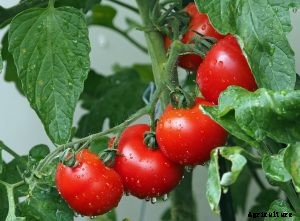
Momotaro is one of the tastiest Japanese tomato varieties you can grow in your garden.
Let’s do a quick recap of why we recommend growing this vegetable:
Momotaro tomatoes are undoubtedly popular in our garden and kitchen. There’s nothing quite like eating a pink, juicy, sun-warmed tomato straight from the vine — why not grab some seeds and see for yourself!


