Welcome to Modern Agriculture!

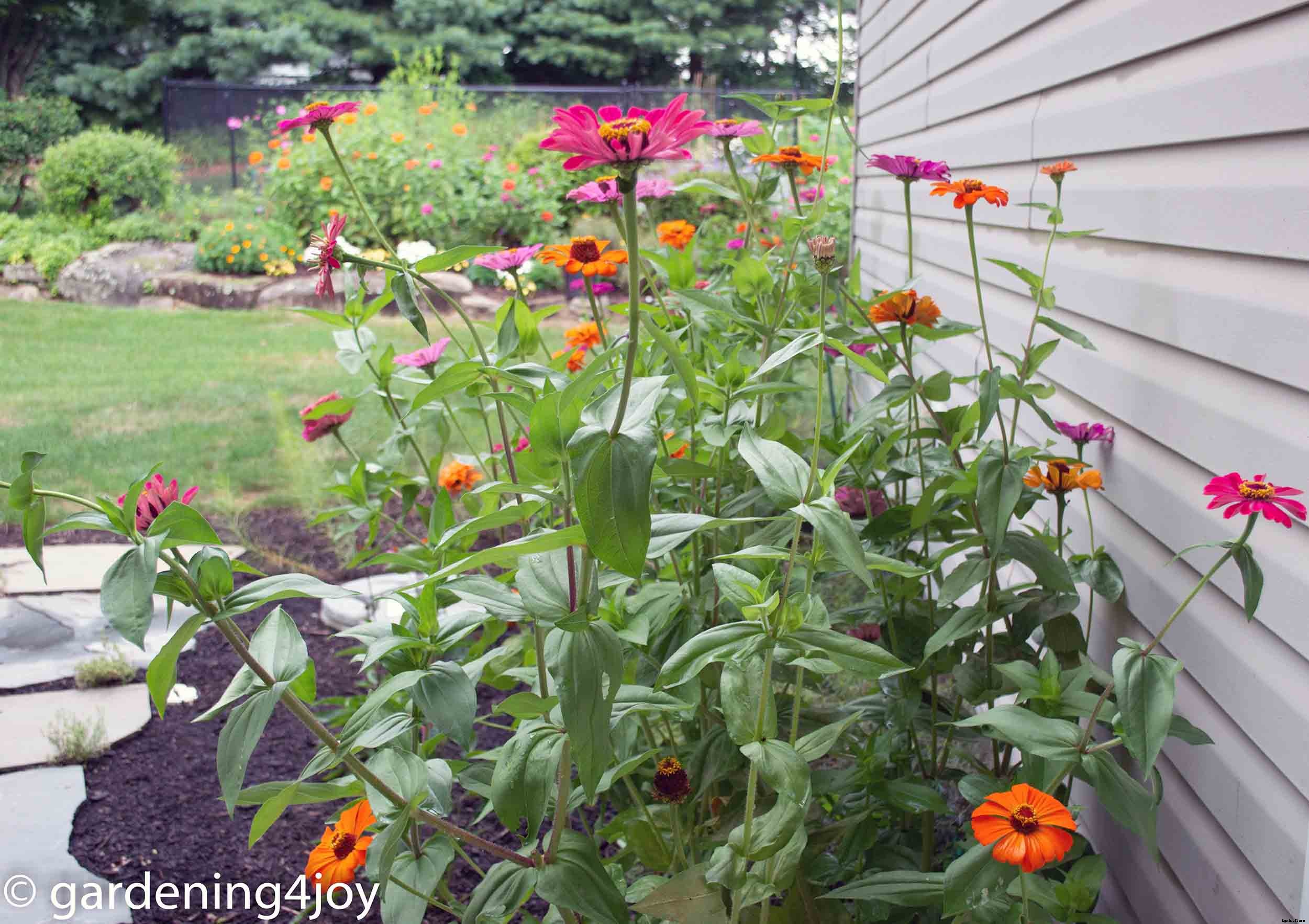
Zinnias are a beautiful annual flower that comes in several colors, shapes and sizes. I particularly love growing the 3-4’ tall zinnias because they add such a stunning and dramatic effect to my garden. The fact that they attract a variety of butterflies is an added pleasure. Butterflies bring such life to the garden and the zinnias bring the butterflies. I have spotted the following butterflies in my garden: swallowtails (Papilio spp.), monarch (Danaus plexippus), and painted ladies (Vanessa cardui).
To sum it up, zinnias are an easy flower to grow and come in a multitude of colors, sizes and forms. I encourage you to give zinnias a try in your garden, I guarantee you will not be disappointed! In this post I share all the information you need for growing and caring for zinnias.
My green thumb came only as a result of the mistakes I made while learning to see things from the plant’s point of view.
H. Fred Dale, gardening editor, Toronto Star


Zinnias are native to Mexico and thus tolerate both heat and drought well. They became popular in America in 1920 when the Bodger Seed Ltd. introduced a zinnia variety called ‘Giant Dalila’. This variety became popular due to its large flower heads and wide range of colors. Today, zinnias are one of the most popular annual flowers in America.
Zinnia flowers have three primary forms:
Zinnias range in height from 6 inches (dwarf variety) to 3-4’ (giant variety). The flower petals range in size from 2 inches across to up to 6 inches.


Zinnias are annual flowering plants in the sunflower/daisy family Asteraceae. The most popular species is the Zinnia elegans. The zinnia genus was first named by German botanist Johann Gottfried Zinn in the late 1700s.
One of the reasons that zinnias are so popular is because they are easy to grow and will bloom all summer and into the fall until the first frost. They can either be started indoors from seed (4-6 weeks before the last frost) or directed seeded outdoors after danger of frost has passed. Zinnias will germinate in five to seven days in temperatures above 65°F. When the soil reaches a minimum temperature of 60°F., zinnias can be planted outdoors. Once the seedling emerges, it will take anywhere from 1-3 months for the flowers to appear.
If starting seeds indoors, chose the size container based upon the grown height of the zinnia. When I grow the 3-4-foot variety, I start my seeds in 2×2 inch containers. This ensures that the roots have a good amount of space to grow before being transplanted outdoors. It is also important to ‘harden off’ the transplants before being planted in the ground.
Hardening off is the process of gradually acclimating the plant to the outdoors. Hardening off can be done in a cold frame or by simply placing the plants outdoors for a couple of hours each day for one to two weeks. For a full guide on starting plants from seeds, see my blog post titled “The complete guide to starting plants from seeds indoors”.

Light: Zinnias like full sun with at least 6 hours of sunlight a day.
Soil: Zinnias prefer a soil that is fertile, well-drained and amended with organic matter (e.g. the addition of compost and/or manures). Compost can be made at home or purchased from a garden center. For information on making compost at home, reference my blog titled “Recipes for Compost”. It is best to work compost into the soil in the fall for a spring planting. Soil should have a pH between 5.5 and 7.5.
Spacing: Follow the guidelines on the back of the seed package for plant spacing. To encourage longer stems, plant zinnias closer together (e.g. closer than recommended on the seed package).
Water: Zinnias do need regular watering especially if you are growing zinnias in containers.
Fertilizing: Zinnias should be fertilized at least twice during the growing season with a balanced NKP (nitrogen (N), phosphorus (K), and potassium (P)) fertilizer with a formulation of 20-20-20.
Companions: Zinnias can be interplanted within a vegetable garden to attract pollinators or as a row along a vegetable garden. I find that both my vegetables and zinnias are healthier when planted together.
Zinnias are perfect as cut flowers to bring indoors and place in a vase. They will keep for at least one week in a vase; remember to change the water often. Many gardeners will say that the primary reason they grow zinnias is that they can be cut and brought indoors.
To ensure that your zinnias continue to produce new flowers, it is important to remove the old flowers in a process called ‘deadheading’. This will allow the plant to redirect energy to producing new flowers.
Zinnias are among the easiest flowers to save seeds from. Remember to only save seeds from open-pollinated varieties as saving seeds from hybrid plants is unreliable. Follow the process outlined below to save zinnia seeds:


Single Flower: Profusion Red, 2½ inches, 8-14 inches tall
Semi-Double Flower: Thumbelina Mix, 1¼ inch flowers, 6 inches tall
Double Flower: Queen Lime Orange, 2-4 inch flowers, 24-30 inches 18-24 tall

There are several pests and disease that can impact zinnias. The best prevention is raising healthy plants and keeping them healthy:
Common pests include:
Common diseases include:
Penn State Extension – Zinnias for the home garden
Michigan State University Extension – Growing zinnias in your flower garden
University of Illinois Extension – Zinnias


