
Welcome to Modern Agriculture!

Tillandsia capitata ranks among the most desirable air plants for novice and expert gardeners alike. Popular in the 1970s, air plants fell from grace for a few decades but have been making a strong comeback in recent years.
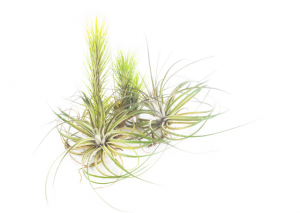 Flowering varieties such as Tillandsia capitata, with their incredible foliage and impressive inflorescences, have spearheaded the air plant revival and are now more popular than ever.
If you’re looking to add a capitata air plant to your collection, this guide will show you how simple it is to care for at home.
Tillandsia capitata is a species of air plant native to Mexico, Cuba, Honduras, and the Dominican Republic. First discovered by German botanist August Grisebach in 1866 in Cuba, it comes in many shapes and sizes. All of them are known for their otherworldly beauty, delicate blooms, and a blush of color on the tips of the foliage.
The capitata air plant can grow to a height and width of 10 inches (25 cm). Tillandsia capitata leaves are light green, curved, displayed in a large, head-like rosette, and can reach 4 inches (10 cm) in length.
As the plant matures, the newest leaves will turn a bright shade of pink or red. The Tillandsia capitata will bloom only once in its lifetime, producing up to five blue or purple inflorescences, about 2 inches (5 cm) in size.
What makes air plants so remarkable is the unique structure of their foliage. The leaves contain specialized cells, also known as trichomes, which allow the plant to absorb water and nutrients from the air.
Tillandsia capitata hybridizes easily and can come in many varieties.
Here are some exciting types to look for:
Before we take a closer look at how to care for your Tillandsia capitata, there’s one important aspect to keep in mind: this plant is both epiphytic and saxicolous.
This means that it can grow on trees as well as rocks, and as a result, it is more adaptable and low-maintenance compared to other air plants.
Here’s what you need to know.
Tillandsia capitata grows best in bright filtered light. In its native habitat, it will grow on various surfaces, which means that it has a higher tolerance to sunlight exposure than other plants in the genus. Not only that but giving it enough sun will also result in the leaves developing their unique red, pink, or orange coloring.
However, avoid exposing your capitata air plant to direct sunlight for too long. A few hours of direct sun in the morning or evening is fine, but the intense midday sun will scorch the leaves. The ideal spot for this plant is in a room with eastern or western exposure. It can even be placed on a windowsill, with a sheer curtain to filter some of the sun.
The Tillandsia capitata plant can grow in elevations ranging from 330 to over 6500 feet (100 to almost 2000 meters). As a result, it can tolerate a wide temperature range and can grow just as comfortably at 59 degrees as it does at 95 degrees F (15 C to 35 C).
Avoid keeping it in temperatures below 35 F (1.6 C) for too long. This plant may be hardy, but prolonged exposure to cold will cause wilting and permanent damage to the foliage.
Compared to other air plants, Tillandsia capitata has moderate watering needs. It can also tolerate a mild drought and will forgive you if you forget to water it for a few days. But that doesn’t mean that it thrives on neglect.
One common misconception about air plants grown indoors is that they absorb all the water they need from the air. Often, beginner gardeners will be tempted to leave the plant on its display and forget to water it altogether.
While it’s true that air plants can get water from the air, this is only possible in their native habitats, such as cloud forests or misty plateaus. Most homes are simply too dry for this process to take place.
So what is the best way to water your Tillandsia capitata? Our recommendation is to soak it in water once every 10-14 days, for about 20-30 minutes. If you can, use distilled or rainwater.
If not, you can use tap water, but allow it to sit in an open container overnight so that the chlorine evaporates. Once the soaking is done, give the plant a shake, and allow the water to drain from the leaves by resting it upside down for at least two hours.
Tillandsia capitata is used to arid environments, so it doesn’t need a lot of humidity to grow. If the humidity in your home is around 40 or 50 percent, that should be more than enough for this plant.
You can give it a light misting if the air is very dry or if temperatures exceed 86 F (30 C). Otherwise, it’s best if you allow the foliage to stay dry in between waterings.
Air circulation is more important than humidity for this plant. Good ventilation will allow the leaves to dry out and prevent fungal problems, which are deadly for your Tillandsia capitata. Airflow also allows the plant to use the trichomes on the leaves, which are the specialized cells that enable the plant to absorb water and nutrients.
Here’s how you can ensure that your air plant is receiving the right ventilation:
You probably guessed this already: air plants don’t need soil to grow. Most types of substrate, whether it’s soil, perlite, or sphagnum moss, will retain moisture, which causes the base of the plant to rot.
To display your Tillandsia capitata, you can either mount it on a piece of wood, prop it on a decorative stone slate, or even hang it using plastic wires. Whichever method you use, always make sure that the display is kept dry and that the plant gets plenty of air circulation and bright filtered sunlight.
Tillandsia capitata has very low fertilizer requirements. In terms of frequency, we recommend using a fertilizer specifically designed for air plants once a month, throughout spring and summer. Simply dilute it in water according to the instructions on the label, and soak the plant for 20-30 minutes. The plant enters dormancy in winter and won’t need any fertilizer applications.
The easiest way to propagate air plants is through offset division. After your Tillandsia capitata has flowered, you will notice small baby air plants growing from the base of the mother plant. These are known as offsets, or “pups,” and will develop into mature plants as they grow.
Here’s our step-by-step guide to propagating Tillandsia capitata:
Depending on the plant, your Tillandsia capitata will produce around 1-4 offsets. You can either remove all of them or keep some attached. It’s best to note that once the offsets are removed, the mother plant will start to wilt and eventually die. To prolong its lifespan, we suggest keeping some of the ‘pups’ attached to its stem.
Like all flowering plants, Tillandsia capitata will produce seeds, and, in theory, you can use them for propagation.
However, the process is tedious and lengthy. Pollinating air plants can be tricky, and the seeds need careful monitoring to germinate. Even if germination is successful, the plants will grow very slowly, and you may need to wait at least two years for the plant to reach an inch in size.
Expert gardeners use air plant seed propagation, usually when they want to create new hybrids. If you’re growing these plants in your home, our recommendation is to use the easy route and propagate your Tillandsia capitata through offsets division.
Tillandsia capitata is a low-maintenance plant with good resistance to most pests and diseases. It can tolerate some direct sunlight, a light drought, and even low humidity, so caring for it shouldn’t provide too much trouble.
However, the plant is deathly sensitive to crown rot caused by leaves staying wet for too long and water building up in the rosette.
To prevent crown rot in your air plant, always allow it to dry out in between waterings. After soaking it, place it upside down on a towel for at least two hours, and make sure that the room it’s in has good circulation.
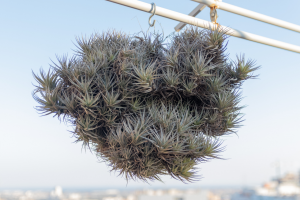 If you read and follow this guide, your Tillandsia capitata is certain to thrive in your home.
Let’s go over the basics one more time.
So if you can find Tillandsia capitata, pick one up and see just how much fun air plants can be!


