
Welcome to Modern Agriculture!

Raspberries are one of the simplest and most rewarding fruits you can grow at home. With these simple Raspberry growing tips, you can find out everything you need to know about growing this delicious fruit! Also, we will find out how to grow raspberries from seed and how to prune raspberries.
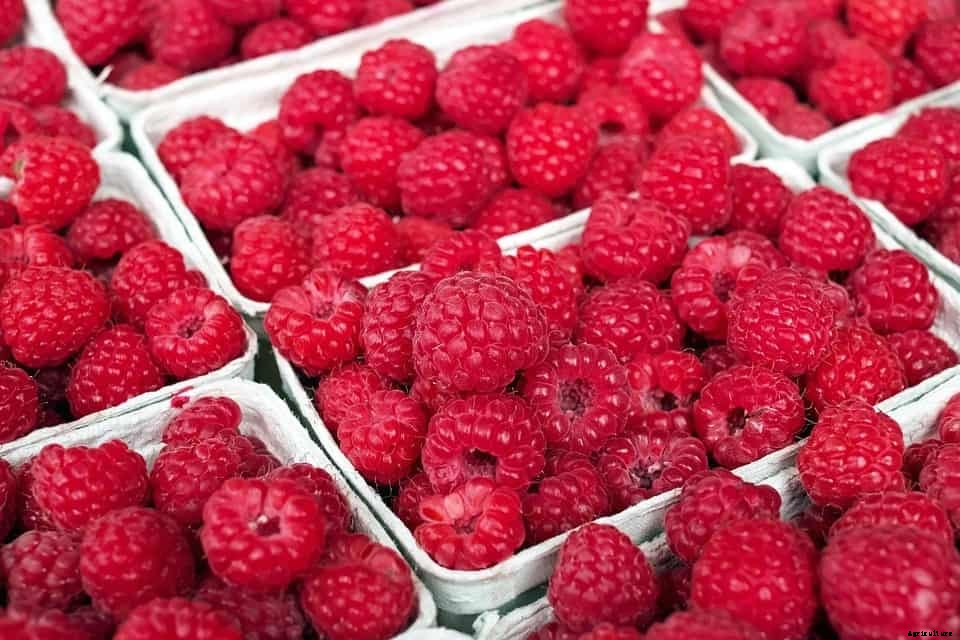
Raspberries are one of the simplest and most rewarding fruits you can grow at home, not to mention they smell amazing. They are a great source of fiber and vitamin C and contain many other important vitamins and minerals as well.
[toc]
They are easy to grow and don’t require much looking after. With raspberries growing in your backyard, the possibilities are almost endless: you can make raspberry jam, raspberry liqueur, eat them with your ice-cream, put them on a fancy cake, or even enjoy a basic fresh bowl of raspberries and cream. They are low in calories so you don’t even have to feel guilty about it!
With these simple growing tips, get everything you need to know about growing raspberries and soon you’ll be growing enough to feed the whole neighborhood!
You may like following gardening guides:
Wooden Raised Bed for Planting Vegetables and HerbsBefore checking out Raspberry growing tips, let us see the variety of Raspberry available.
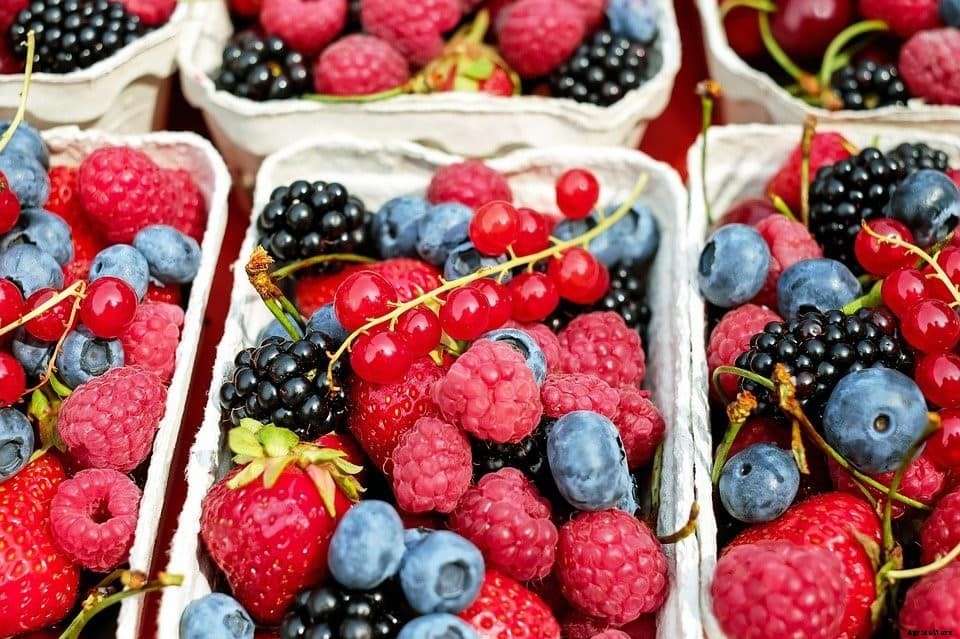
Raspberries come in three common colors: red (varieties such as ‘Latham’, ‘Autumn Bliss’ and ‘Heritage’), black (varieties such as ‘Blackhawk’ and ‘Bristol’, not to be mistaken with blackberries) and yellow (varieties such as ‘Honeyqueen’ and ‘Fallgold’).
Red raspberries are usually stronger, harder and more productive than the black and yellow raspberry plants. Red raspberries are native to Europe and northern Asia and cultivated in temperate areas worldwide. Most US raspberries are grown in California, Washington and Oregon.
These are the two main varieties:
These are generally more common; they develop their fruit on last year’s growth and bear one crop per season, in summertime (usually June or July)
Also called fall bearing or autumn bearing, these produce berries on new canes. They bear a fall crop and can also produce fruit the following summer.
A mix of both types of berries would be the perfect way to maximize the harvest period.
Now, we will see how to grow Raspberry in your garden. Let us check out the Raspberry growing tips like growing conditions, how to plant, how to care, prune raspberries, care Raspberry diseases, etc.
Raspberries are a self-fertile fruit and don’t require much to grow. They’re best pollinated by bees and will start producing fruit a year after planting.
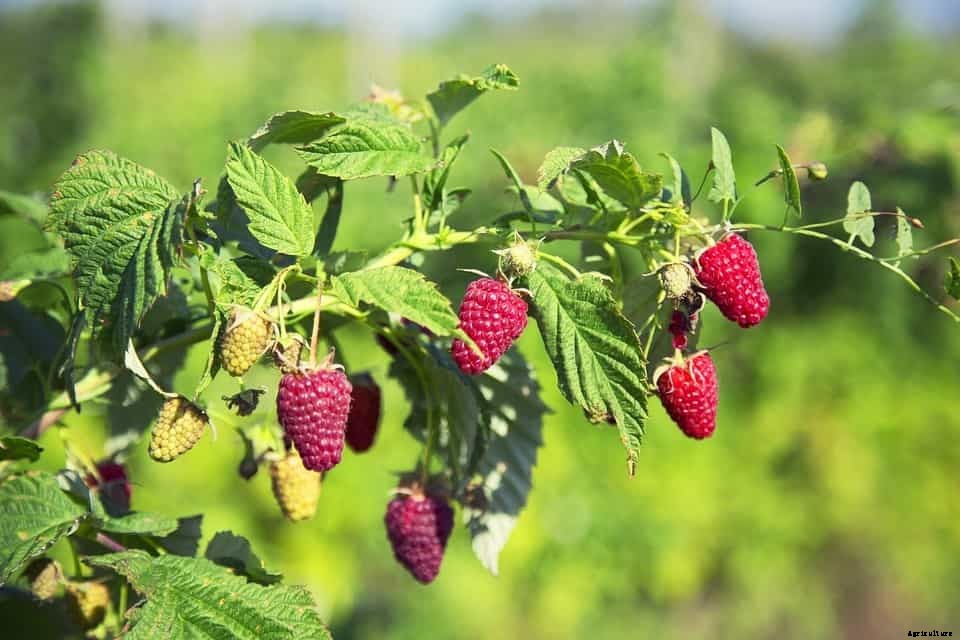
Inspect your ground, making sure the area meets the growing conditions stated above. Also, make sure that the ground is free from weeds. Have on hand some well-rotted manure, compost, organic fertilizer, a water source, and some mulch. Drip irrigation is usually the best way to water raspberries, however, there are other options available too.
Plant far from wild growing berries, otherwise you risk spreading wild pests and diseases to your newly cultivated berry plants.
All raspberries will need pruning annually! They should be pruned immediately after picking. Even though raspberries are perennials, it’s important to recognize that their branches or canes, which bear the fruit, live for only two summers.
The primary aim of pruning is to get rid of older canes in favor of newer canes that will produce fruit. In late summer, some of your newly planted canes will begin to fruit at the top of the cane and continue into the fall. In the early spring of the following year, while the plants are still dormant, it’s time to prune them.
The common method of pruning ever bearing raspberries is simply to cut all of the canes down to about 1 inch from the ground. Though it’s an easy way to go, this method removes the July crop. Fruiting doesn’t begin until early fall – the reason some raspberry growers call everbearing raspberries “fall bearing”.
Because fall-bearing raspberries will give you a second crop the following summer, you can wait to prune them back until the next autumn. Instead of getting two crops, prune back all of the canes to the ground in late winter or early spring. The resulting growth will produce one big late crop, which is usually larger than the two smaller crops combined, and you’ll have an abundance of raspberries when everyone else’s canes are bare.
Everbearing raspberries should be pruned twice a year because this provides two crops a season. You can train these bushes to grow along fences and even to climb up on trellises.
Summer-bearing plants are easy and also should be pruned twice a year. When an individual cane bears fruit, you can cut it back to the ground after you’ve harvested all the fruit from it; individual canes only produce fruit once. Make sure to leave all the new canes that have yet to bear fruit as they’ll produce berries next year. You will want to prune the growing raspberry bushes in the spring and right after you harvest the fresh berries.
It is important to note that this plant produces berries on two-year-old canes while one-year-old canes grow right beside them. You shouldn’t have trouble being able to differentiate which is which; the older canes have brown stems and the young ones are still green. Prune only the older ones, the ones that have finished their fruitful year.
Tie the leftover canes to the supporting wires with garden string. There should not be any more than one cane every four inches of wire, so make sure to cut down extra ones.
Since Raspberries are not very high maintenance to grow, it comes as no surprise that they are one of the few fruits that are rarely bothered by pests and diseases. However, it is interesting to note that black raspberries are more prone to this type of damage than red or purple. Here are some pests and diseases that you should protect your berries from:
A few diseases you may experience are fruit rot, root rot, and spur blight. Fruit rot is a fungus that sets in when canes are too crowded. The cure is to prune for openness and to pick frequently in wet weather. Avoid overhead watering and prune out fruiting canes after harvest.
Root rot results in the sudden death of the plant right after flowering, when the weather turns warm. The only solution is to plant resilient varieties in well-drained, rich soil.
Powdery mildew is another common disease for raspberries; be sure to clean up all fallen fruits and leaves, so that the mildew is at a minimum. This will also help control raspberry rust, which is a disease that produces rusty dots on the leaves.

It is important to ensure that picking raspberries should only be done when they are completely ripe. Berries don’t ripen further once harvested. Size, color and ease of removing from the cane are indicators of whether they are fully harvested; however the best way to find out if they are ready is by tasting them. When in doubt of a berry’s readiness, leave it on the vine for a day or two to ensure it is fully ripe.
During early summer, berries will ripen over a time of about 2 weeks. You will need to pick berries every couple of days in this time.
The best time to pick berries is as early in the morning as possible. Try to harvest berries on a sunny day, when they are dry. If they are still drenched with dew or rain, let them dry prior to picking to lessen the chances of molding.
Be gentle while plucking them from the cane and place, don’t drop them, into a container. A shallow container will help you make sure that you don’t squash all the berries on the bottom with the weight of the harvest atop.
You may like following gardening articles:
When you are done picking for the day, put them in the refrigerator. Don’t wash them until just before you’re ready to eat them since the moisture makes the berries degrade at a fast rate. Don’t store the berries for more than a few days, that is, if you haven’t eaten all of them already! With these raspberry growing tips, you are set to go and grow yourself some raspberries! Make sure to buy healthy plants and give them ample space and sunlight when planting. We guarantee you; it is totally worth it and you will devour your raspberries after all the hard work. Happy growing!


