
Welcome to Modern Agriculture!

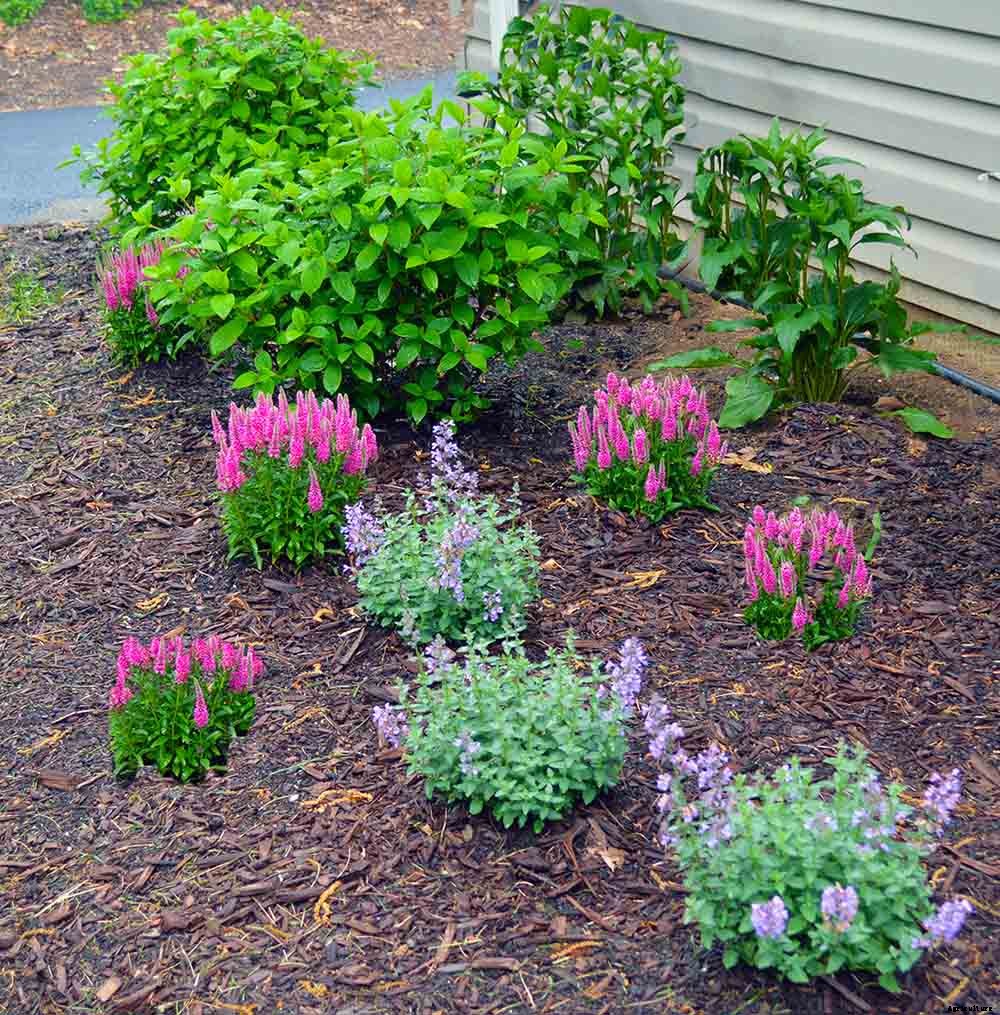
Over the course of the past few years, I have come across articles that talk about creating a new garden bed without digging. I was always a bit suspicious about the process. However, I also realize how hard the work can be to dig up an area for a new garden bed. With that in mind, I did some research on alternate methods to create a new garden bed.
What I found was the concept of lasagna gardening, sometimes referred to as sheet composting or no-till gardening. The basic idea is to create a new garden bed using layers of organic matter. These layers are built directly on top of whatever happens to be in place on the ground. In our case, we created two new ornamental garden beds on top of the grass. With the project complete, I must say this was a brilliant method to create new garden beds. However, you do need patience as the process takes time. Therefore, if you are looking to create a new garden immediately, this is not the process for you. However, if you plan ahead, this is a great method.
Lasagna gardening is a no-till method where the soil is left undisturbed. This method can be used to create both ornamental garden beds and vegetable garden beds. It is based upon the principles of composting. Thus, the basic idea is to create layers of carbon and nitrogen materials. The bed is ‘ready’ when the individual layers are no longer recognizable. While this method can be started at any time, fall is usually the best time. The layers can decompose over the winter and the garden will be ready to plant in spring. It’s a brilliant method to create new garden beds because there is no backbreaking work. Here is what can be used to build layers in a lasagna garden.
Nitrogen sources include:
Carbon sources include:
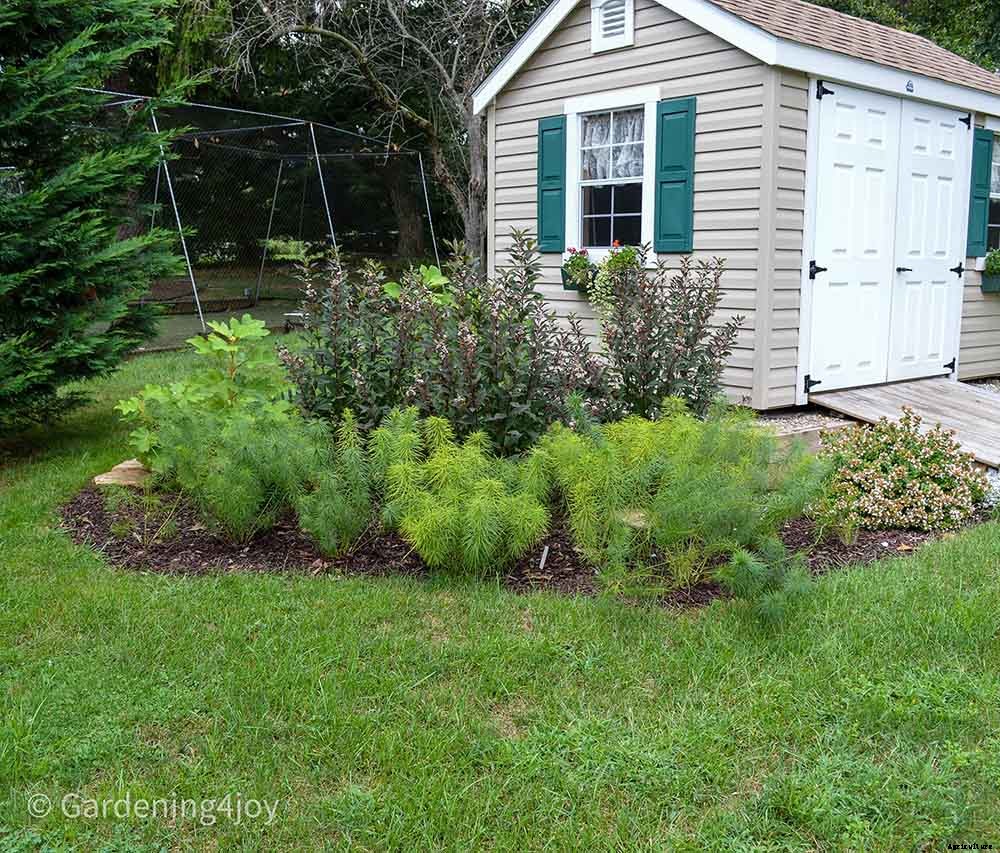
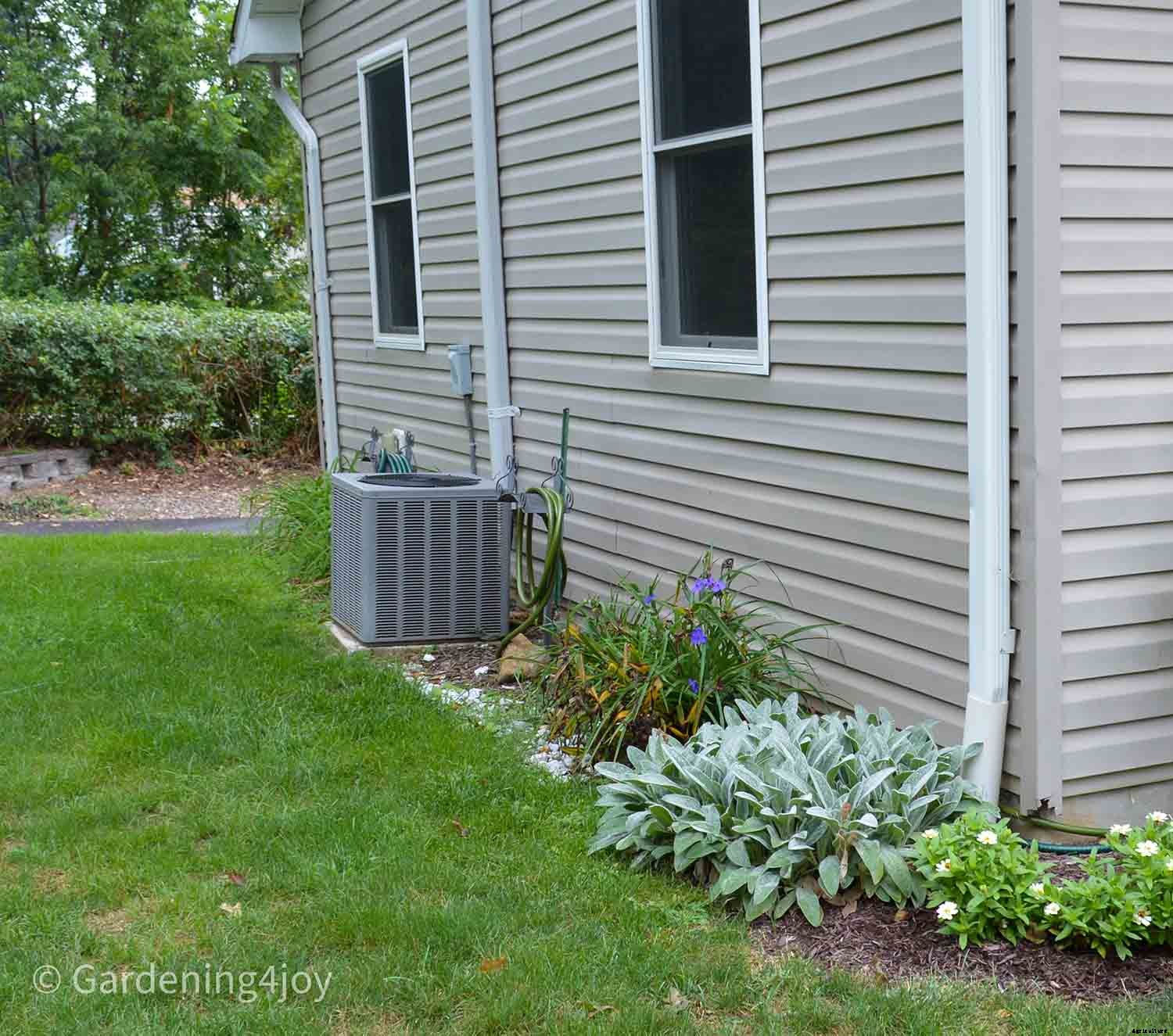
Our project involved creating two new ornamental garden beds. In the first case, we extended an existing garden bed next to our shed. In the second case, we created a new garden bed on the side of our garage. Follow this method to create super easy new garden beds.
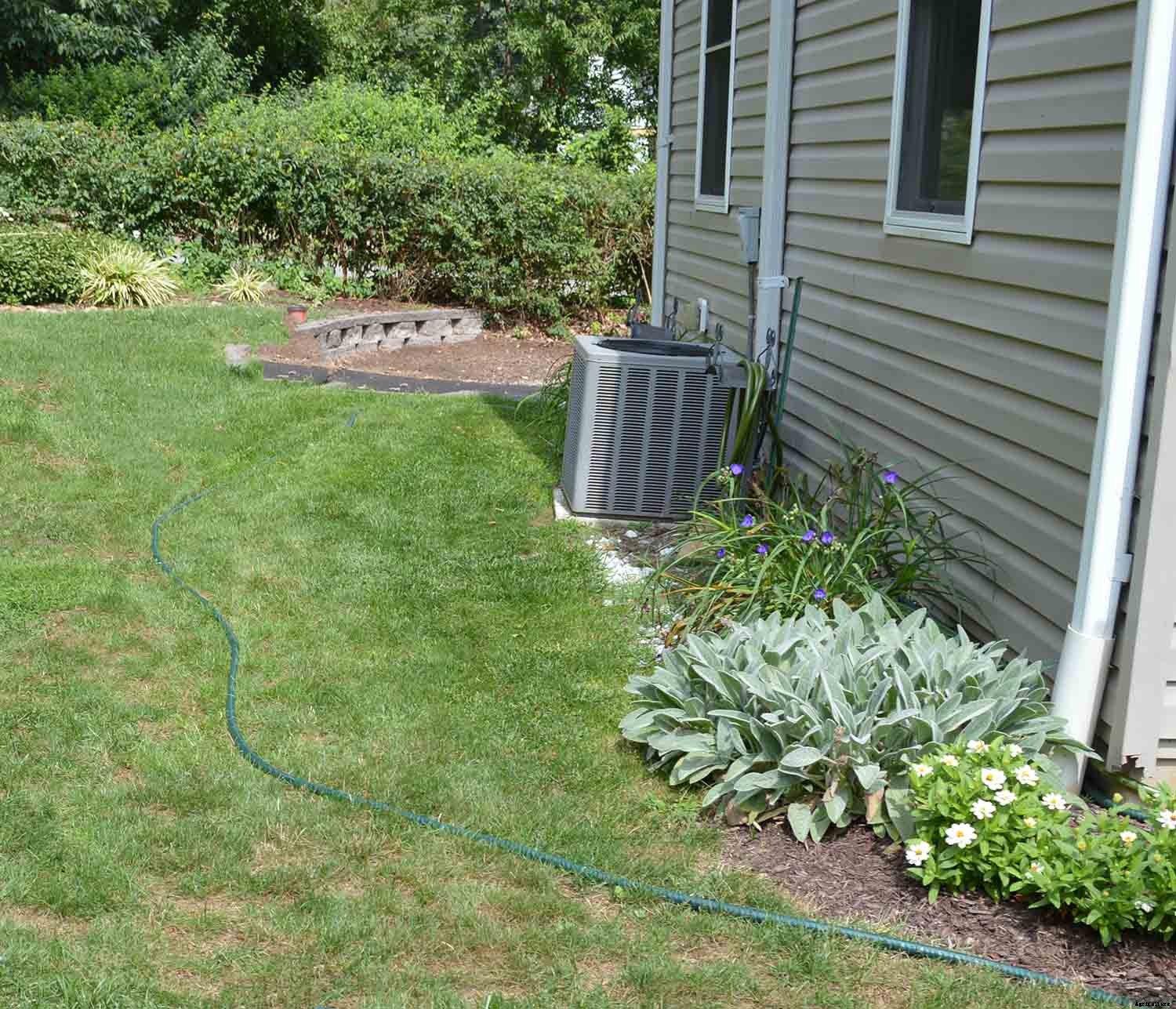
The first step, of course, is to decide upon the location of your new garden bed. Next, it is helpful to map out shape of the new garden bed. A garden hose is a great tool to use to map out the shape of a new ornamental bed. This is especially true when the shape does not involve straight lines.
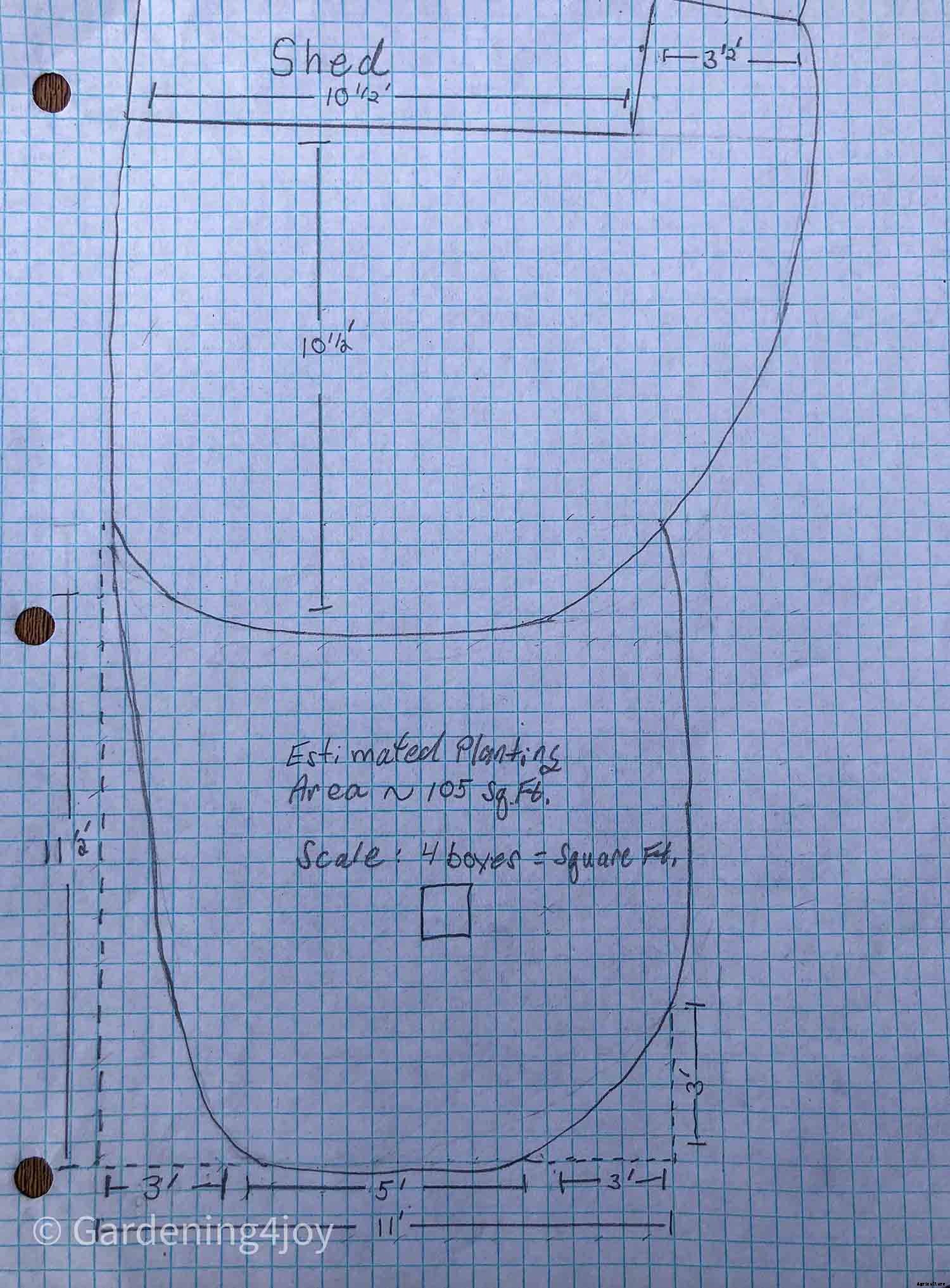
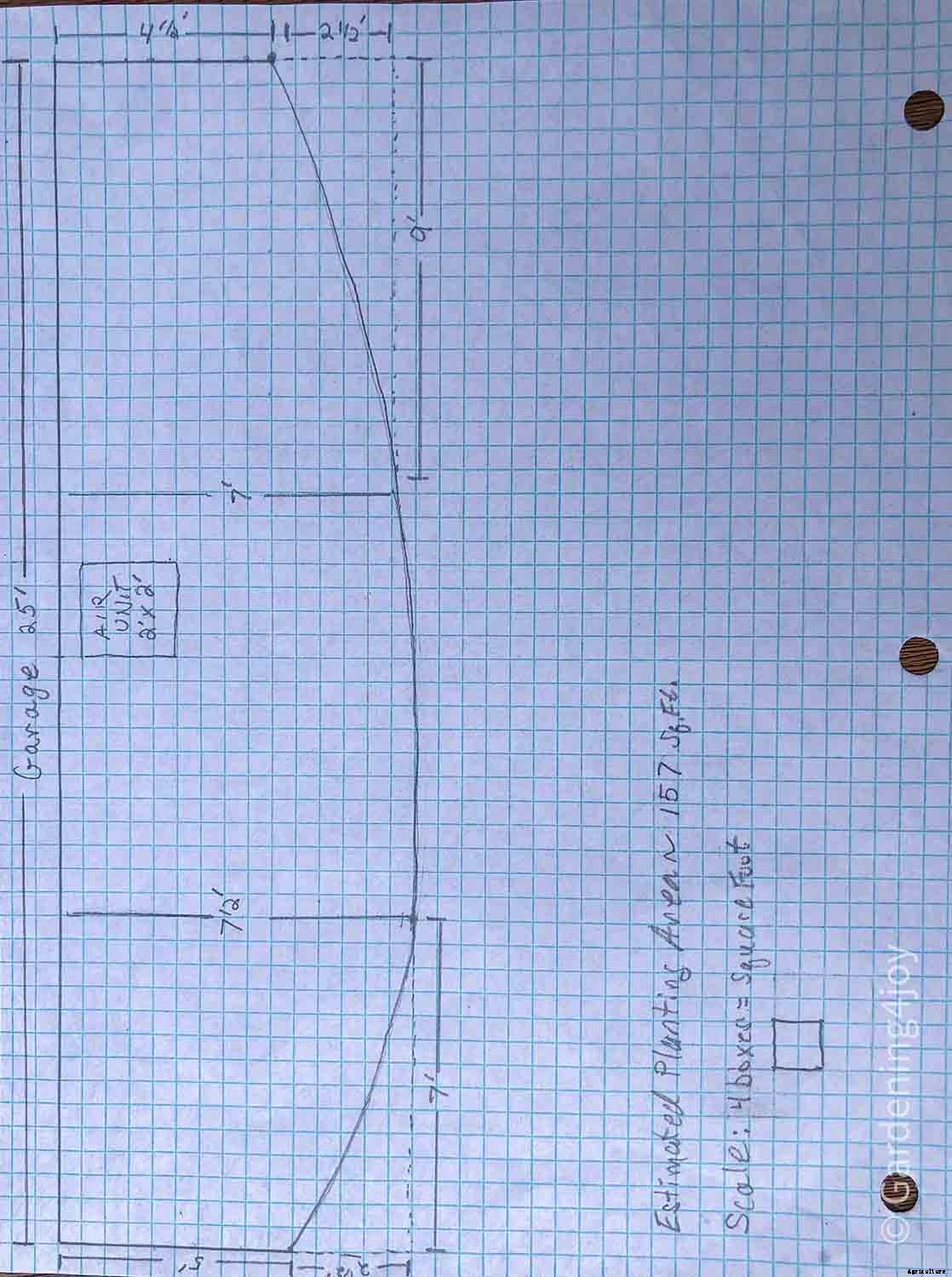
Calculate the dimensions. The dimensions determine the amount of material for each of the layers. We chose to draw out the dimensions of our new beds on graph paper. This provided two key benefits. First, by doing this, we were able to get perfectly accurate dimensions. Second, having the drawing, allowed us to layout the plants. The square footage of the extension of the shed garden bed is approximately 105 square feet. The square footage of the new garden bed next to the garage is approximately 157 square feet. With the dimensions, you are on your way to using this brilliant method to create new garden beds.
In this step, you will decide upon the materials to use in creating the layers. In our case, we did not have access to large amounts of ‘natural’ materials such as leaves, straw, or compost. Therefore, in the absence of having these ‘natural’ materials, we bought materials. However, we did use our own accumulated cardboard for the base layer. Besides the cardboard layer, we built up a 4-inch-high bed. This kept the height of the bed relatively uniform with the other nearby ornamental garden beds.
The 4-inches included peat moss, composted cow manure and wood chips. First, on top of the cardboard, we put a 2-inch layer of peat moss. Next, we added a 1-inch layer of composted cow manure. Finally, for the last layer, we added a 1-inch layer of wood chips.
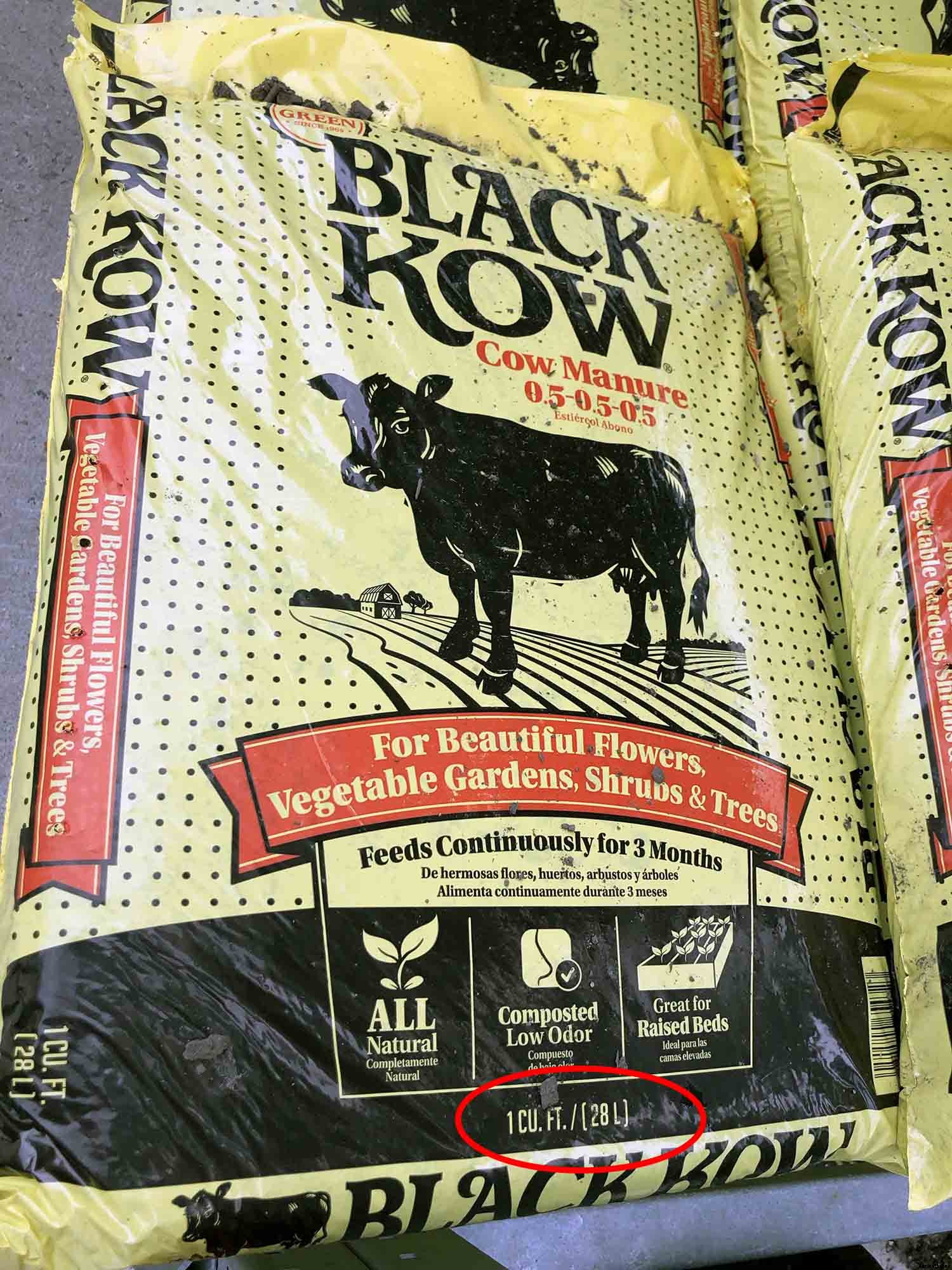
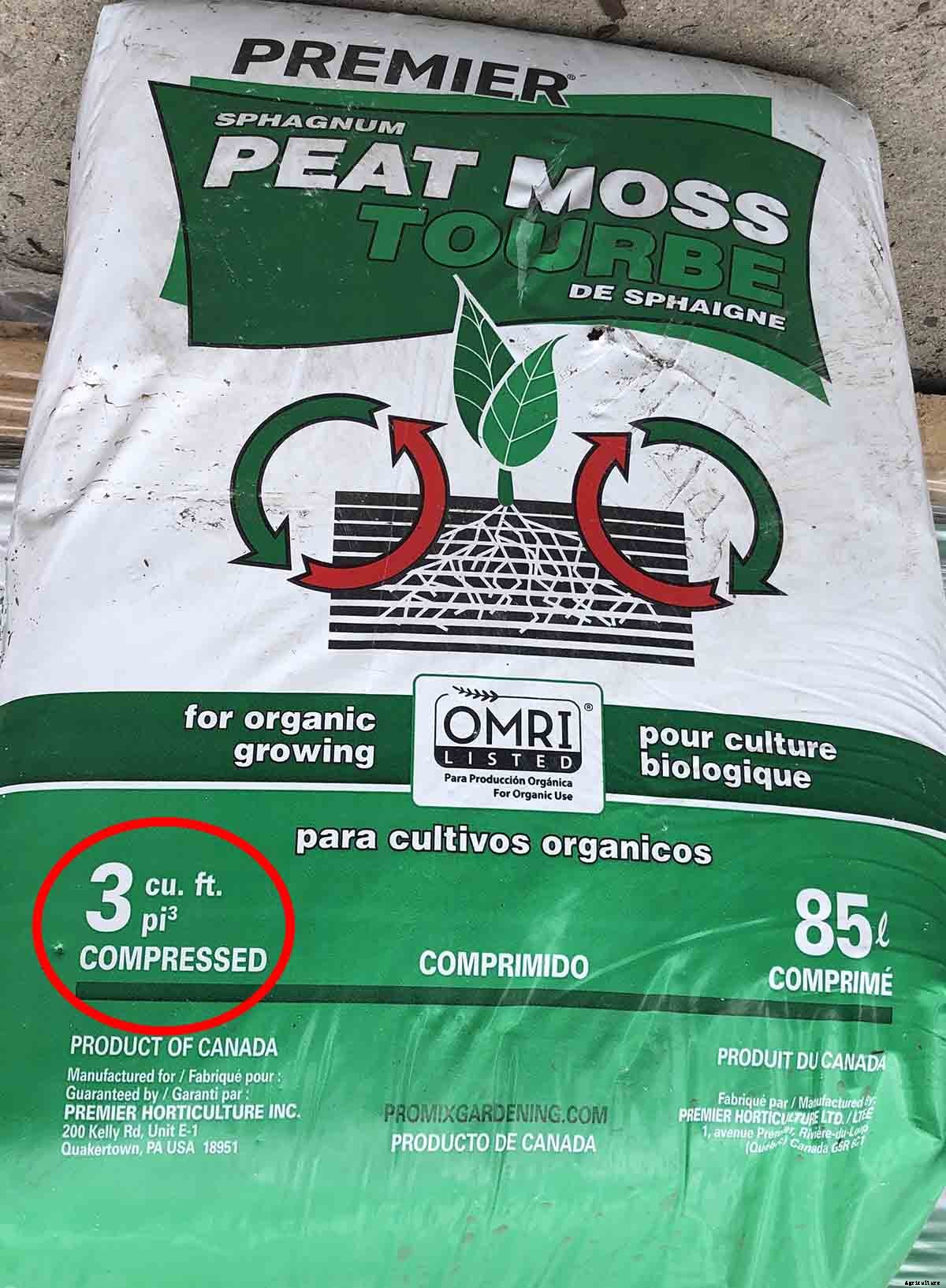
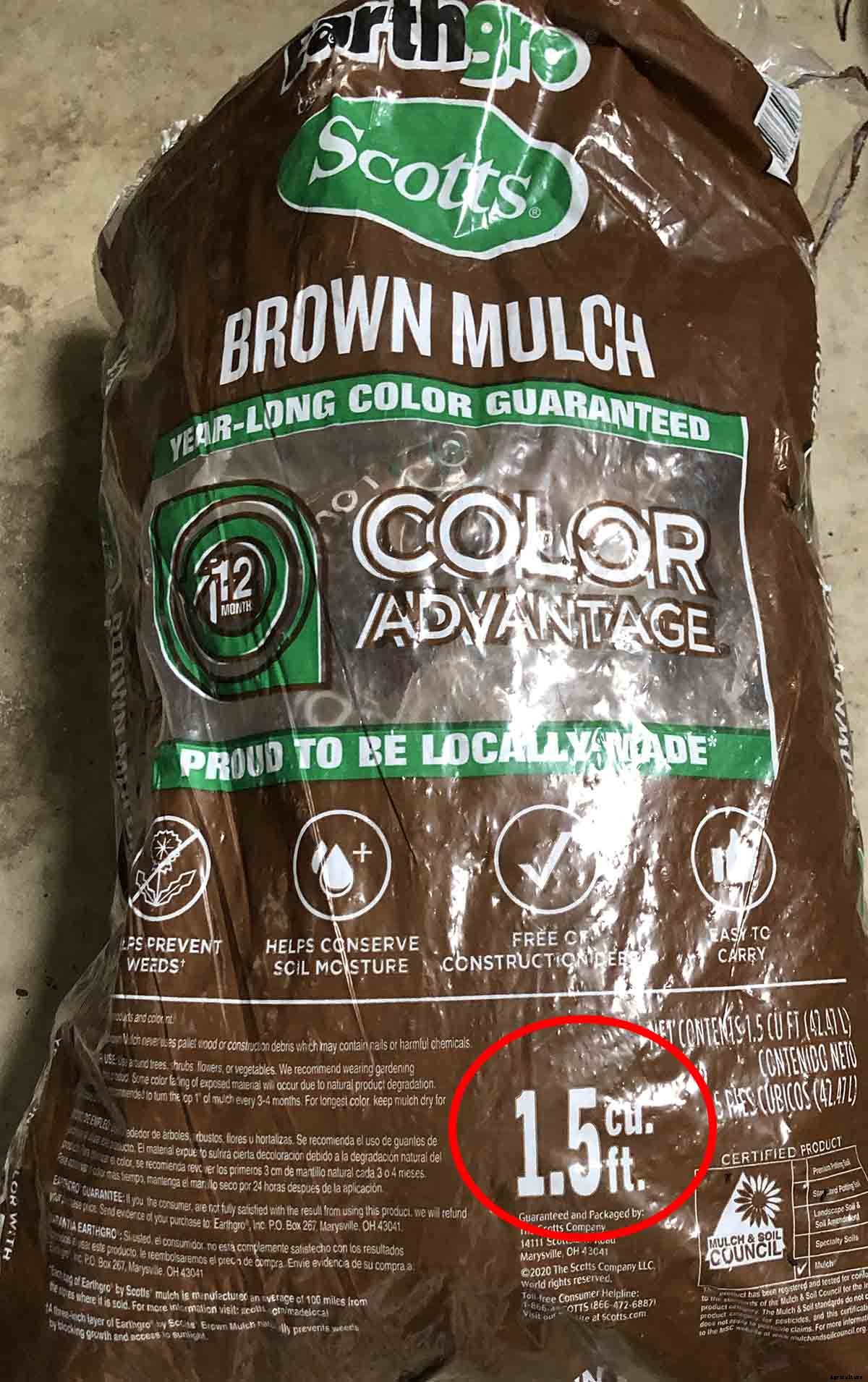
The challenge is to determine how much material to purchase to provide the coverage and depth. The materials we used were sold in bags measured in cubic feet. Therefore, we need to convert our square feet measurements to cubic feet. The good news is that ‘calculators’ exist on the internet to help with this calculation. In general, calculators need the overall square footage and the depth of material. For our project, the overall combined square footage of the two areas was approximately 250 square feet (see dimensions above).
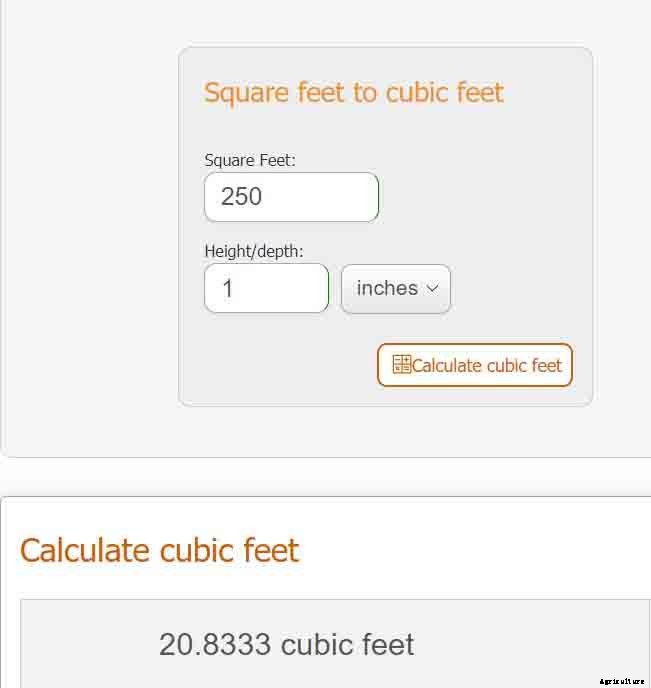
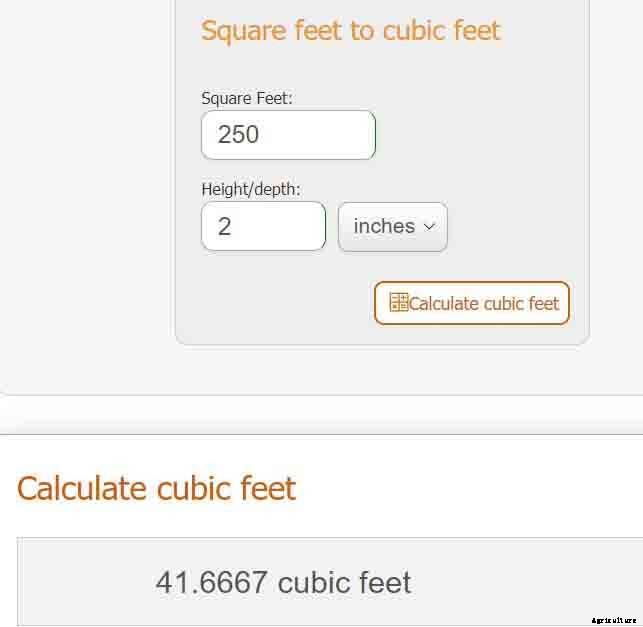
Here is a link to the ‘calculator’ we used. Based upon using this calculator and the cubic feet of the packaged material we purchased, here is what we needed:
The total cost of purchasing the materials for the two new garden beds was approximately $266.
First, the cardboard is laid down. It’s very helpful to have an outline of the bed before the cardboard is laid. For this layer, newspaper also works. However, newspaper is more difficult to work with and multiple layers are necessary.
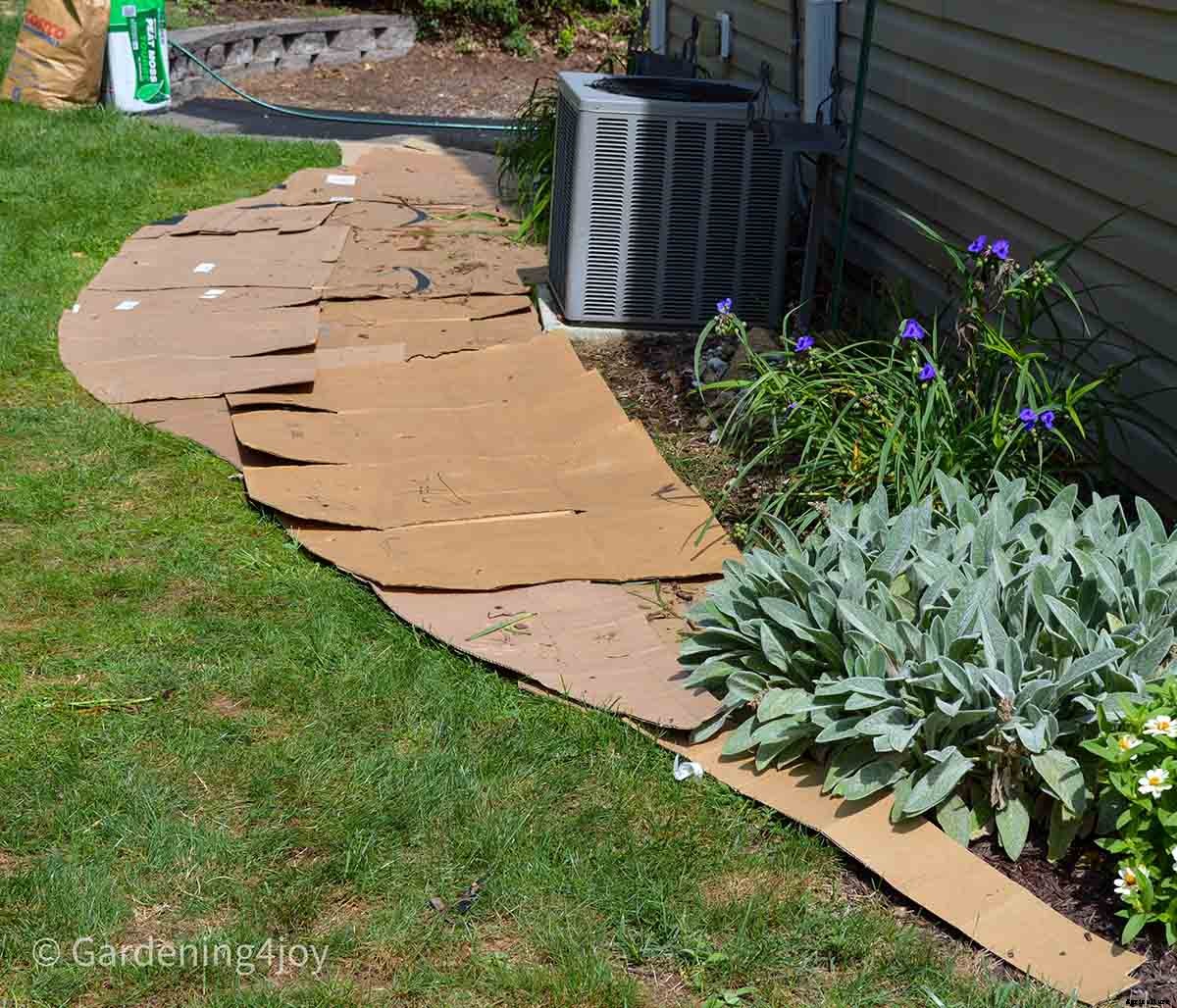
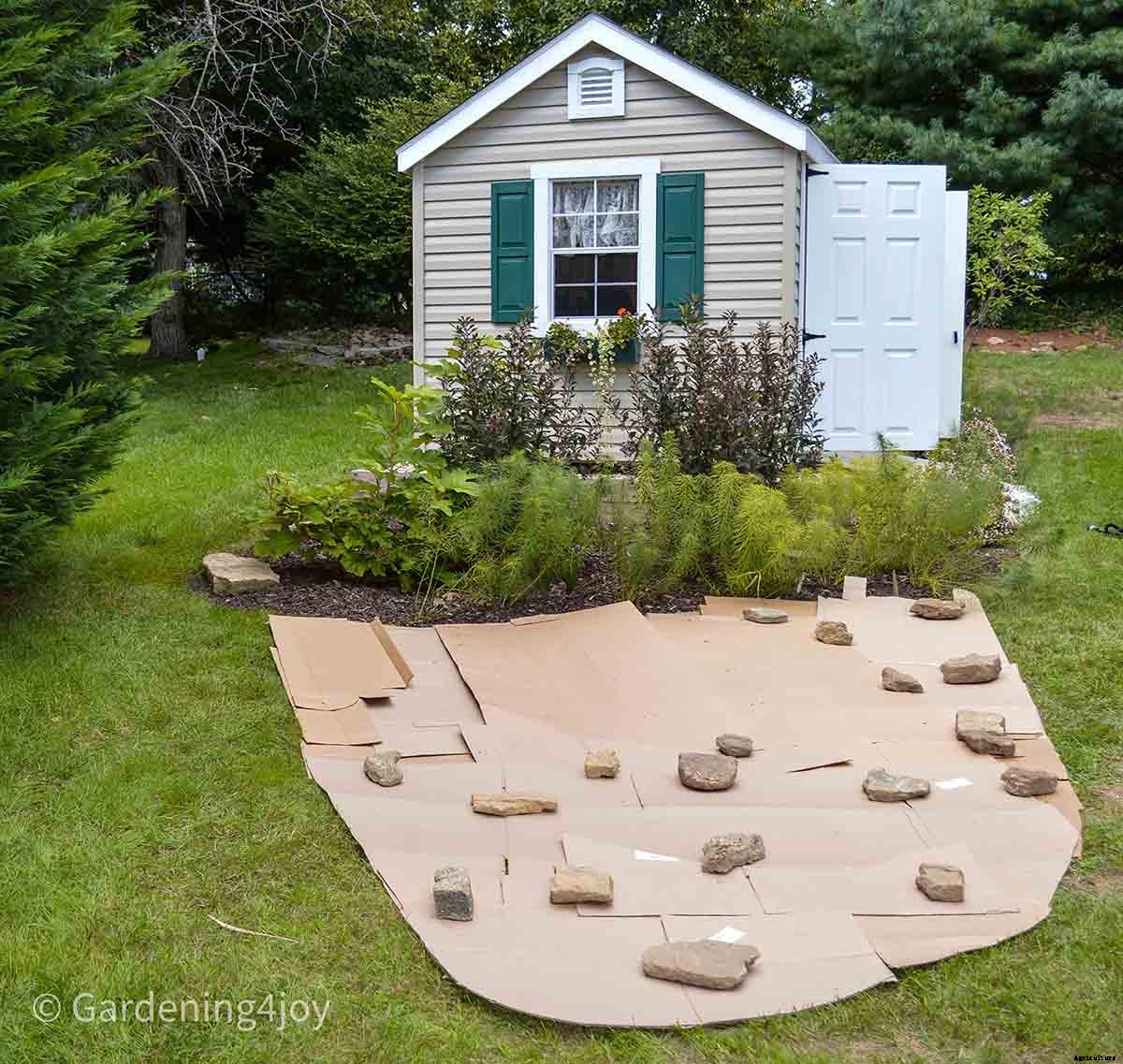
When laying down the cardboard, make sure all the pieces overlap and there no grass is exposed. Use a razor knife to cut the cardboard around the outer edges of the shape of the bed. Next, put rocks on top of the cardboard to hold in place. At this stage, wet the cardboard with a garden hose.
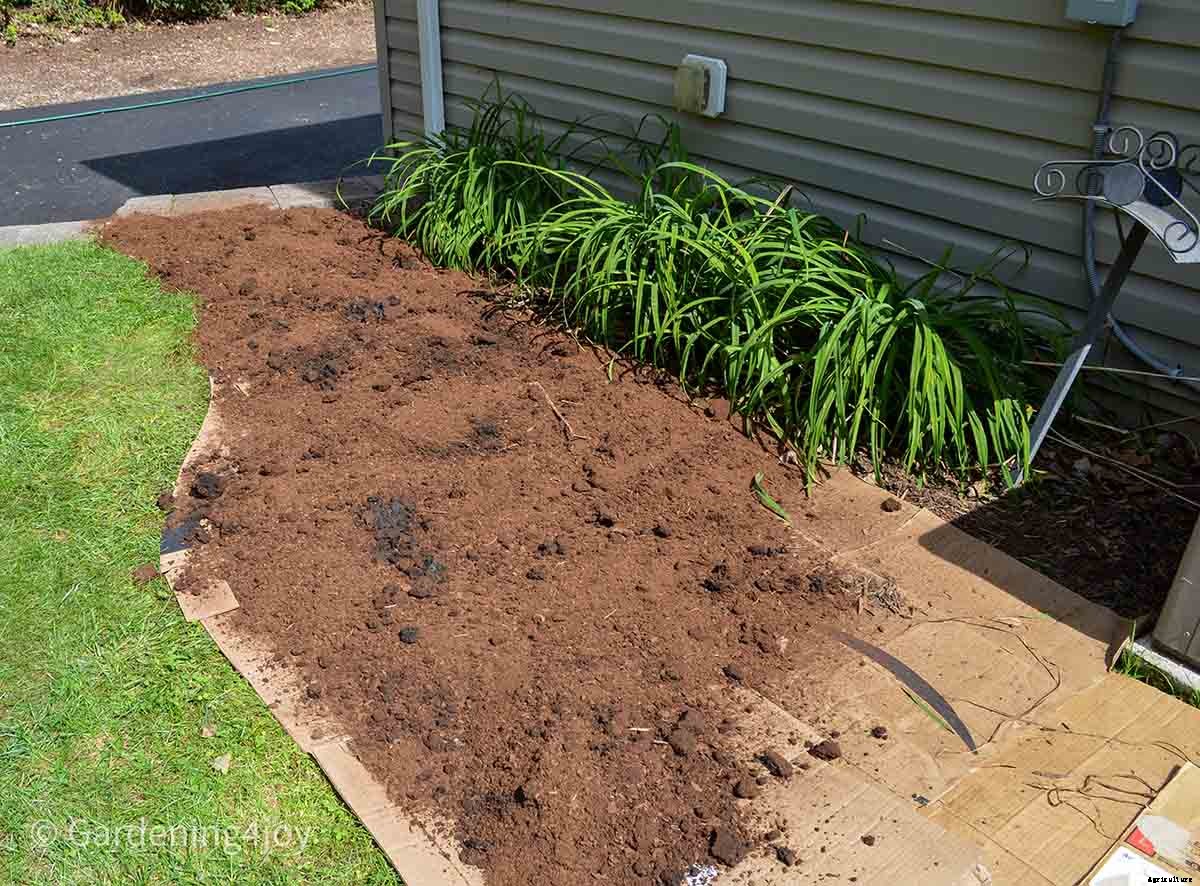
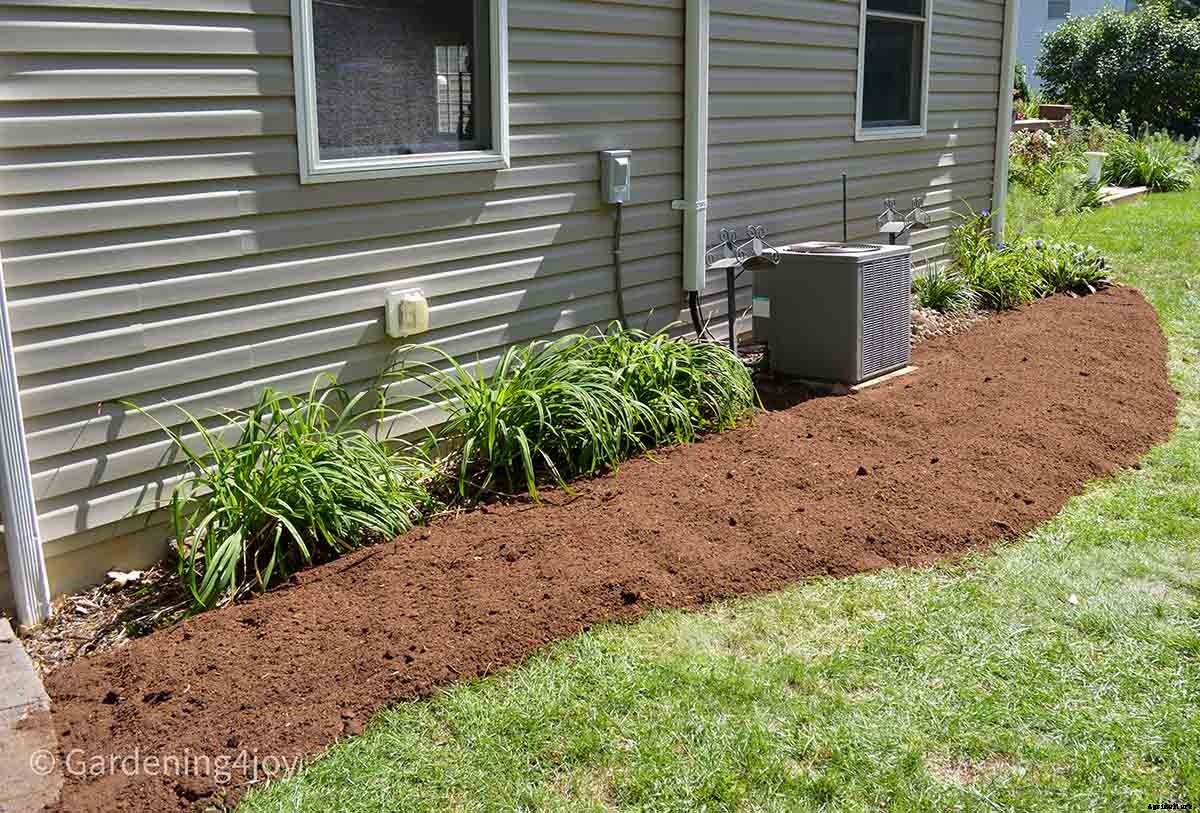
Second, lay the peat moss on top of the cardboard to a 2-inch depth. Use a regular garden rake to spread out the peat moss. Again, after all the peat moss is laid down, wet with a garden hose.
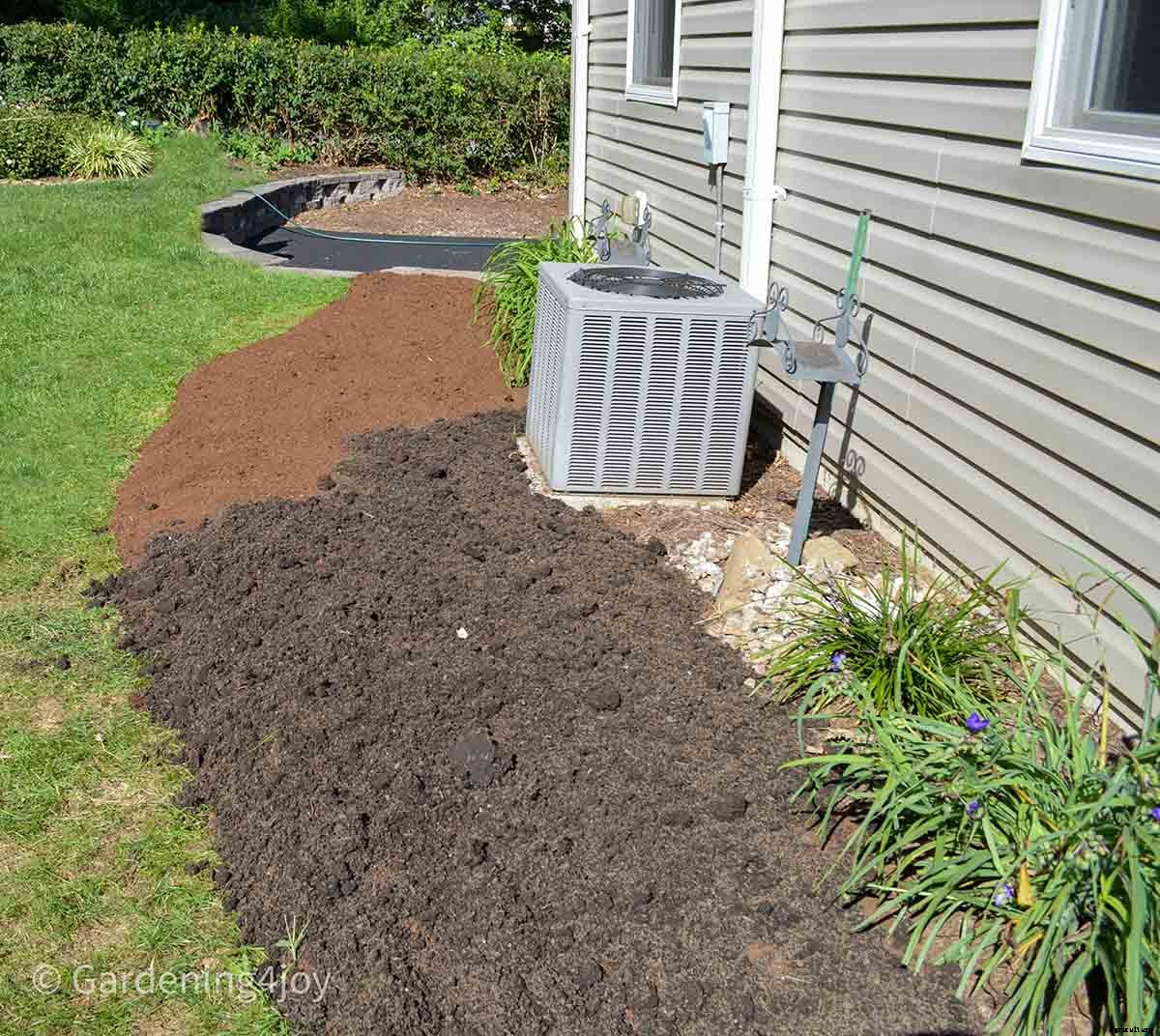
Third, lay the composted cow manure on top of the peat moss. Again, use a regular garden rake to spread out the composted cow manure. Wet the cow manure with a garden hose.
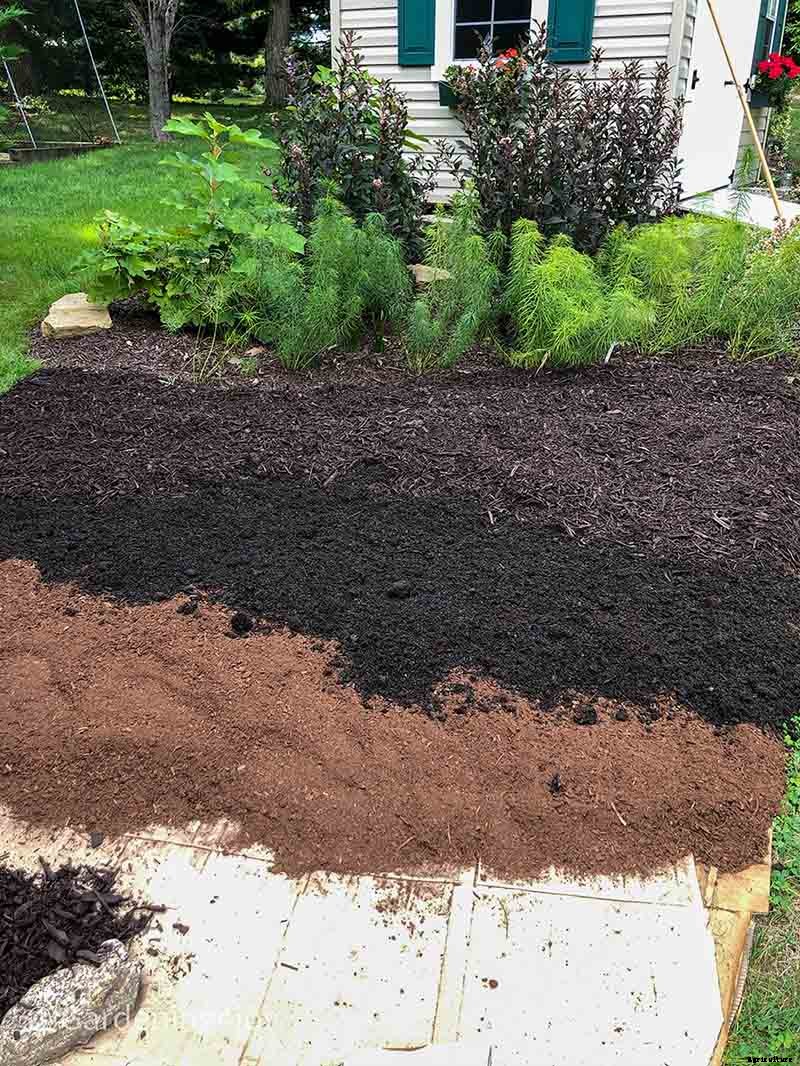
Last, apply the layer of wood chips. Once again, use a regular garden rake to spread.
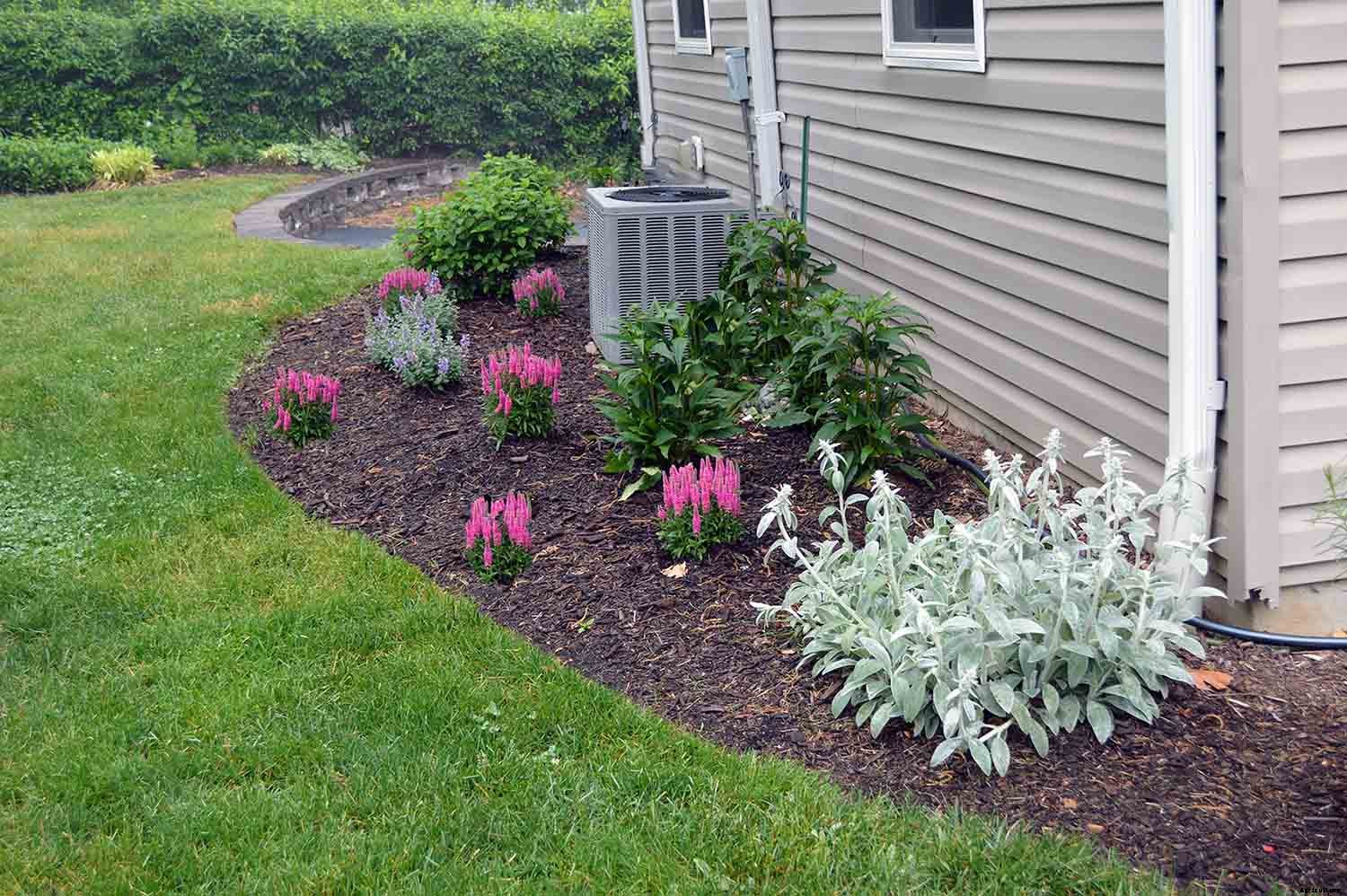
After approximately 4-6 months, the beds should be ready. Our beds were created in mid-September and planted in mid-May of the following year. As we dug the holes for the new plants, the layers were indistinguishable from each other. Even the cardboard and grass layers had composted. What a brilliant method to create new garden beds. Success!
Here are guidelines for determining what and how many plants are needed for the area being planted.
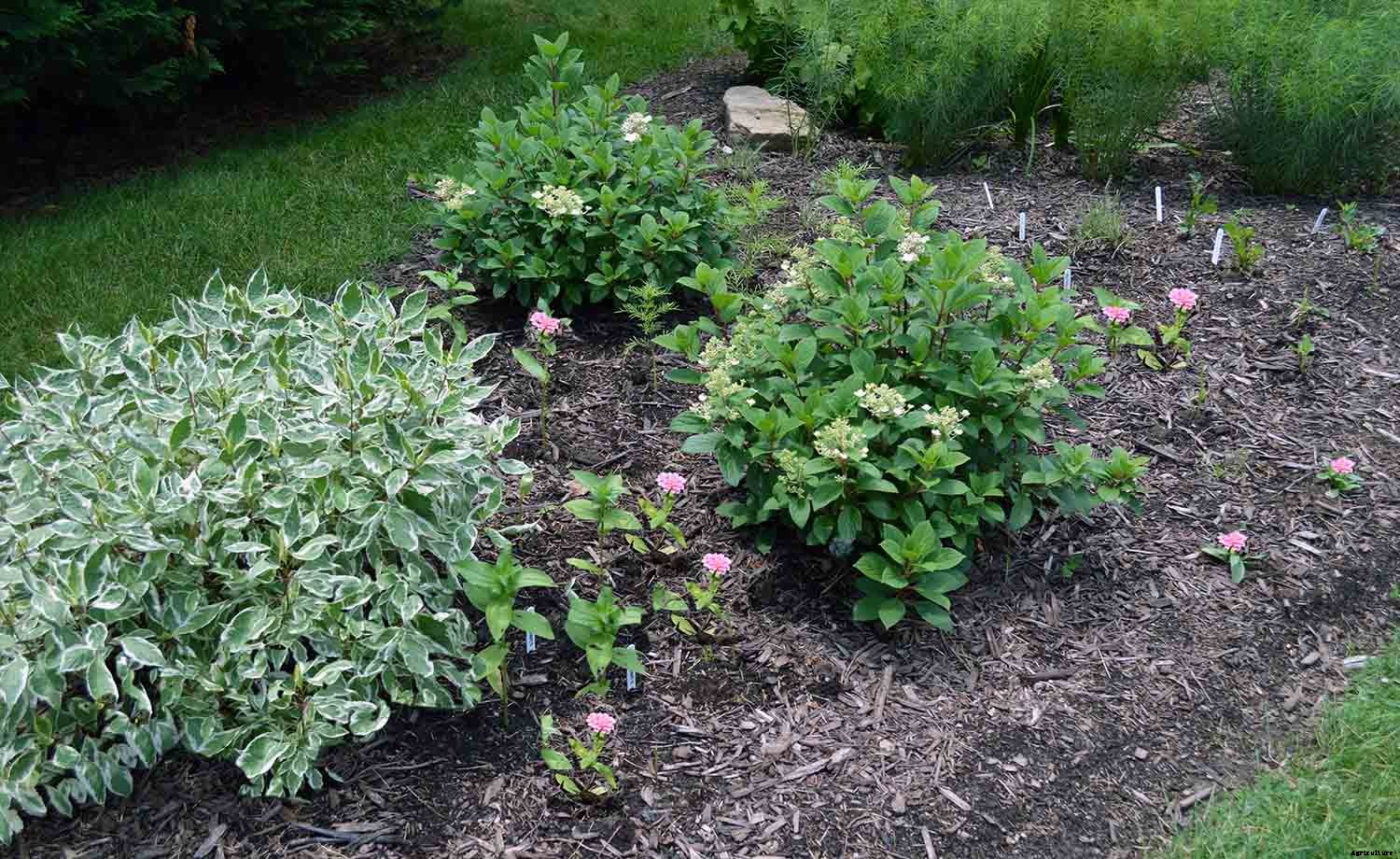
When creating new garden beds, it helps to stop and think about what you want to accomplish. For example, you may want to create a pollinator garden or a vegetable garden. Here are my goals for the new garden spaces:
With these goals in mind, here is a list of the plant material purchased:
In total, we spent approximately $600 to purchase the plant material. Overall, we spent just under $900 to create and plant the two new garden beds. While that may seem like a lot of money, I believe the cost would have been 5 times as much for a landscape company to complete.
This is really a brilliant method to create new garden beds. I would not hesitate to use this method again! Good luck with your new garden beds.


