
Welcome to Modern Agriculture!

I love growing plants for food. Vegetables, herbs, and spices are what I grow most, along with a small variety of fruits. My total garden space is small. However, that has inspired me to create some innovative techniques that allow me to get the most of it.
Vegetables: The Primary Food Source
Choosing vegetables that grow well in your area is important. Climate and geographical location make big differences. Here in the Midwest US, we have five to six months of suitable growing time each year. It usually starts sometime in April and lasts until the end of September.
Tomatoes and peppers are easy to grow almost anywhere. I try to select no more than three kinds each per year. Spacing between plants is usually twelve to eighteen inches but by planting the rows in a staggered, triangular pattern more can be squeezed together without affecting their growth.
I also grow some root crops. With carrots, I do not bother spacing individual plants. Instead, I merely sprinkle the seeds around. I dig up the ones that grow faster first and leave the others with more room to grow. Vegetables such as turnips and beets are nice for a limited space.
They are like having two vegetables in one. Both produce a bulbous, edible root along with greens on top. Beet greens are good raw and can be used in salads. Turnip greens are best when cooked to soften them.
Herbs: For the Perfect Flavor
I prefer growing perennial herbs that require little maintenance. Currently, my herb garden has onion chives, oregano, garlic chives, sage, and a mint hybrid made from planting peppermint together with spearmint. It takes a few seasons of growth to cross the species.
However, they will do this naturally. The level of rain here is enough to sustain all of these without the need to water them. Sometimes I take trimmings of them and dry them out for use all year. As long as the plants are cut and not pulled out of the ground, they will keep growing. They do turn dormant for the winter but start growing again in the spring.
Fertilizers
Compost contains all the nutrients a garden needs. I make liquid compost in a ten-gallon bucket by throwing unwanted weeds and water into it and letting it sit for about a month. Naturally occurring microbes break down the plant materials turning them into liquid manure. This stuff can develop an offensive smell as animal manure thus a lid is useful.
The human brain is an amazing organ; however, it can easily be tricked. You may have looked at a magic eye picture or simply gone to a 3D cinema these are both examples of how the mind can be tricked. So if you have a small garden space to work with there are specific things that you can do to make it appear larger than it actually is, here are five tips of what you need to do:
In a modern garden, the way we use color can help expand the appearance of the space. Warm colors such as reds, oranges, and yellows have an exciting effect on the brain but as a result of this we are drawn towards them and so they appear naturally closer. At the opposite end of the spectrum, blues and light shades appear to fade into the landscape and so look more distant.
The texture is another great way to create distance in the Garden. Plants are in general divided into three main types of textures which are:
Fine-textured plants have small leaves that reflect a lot of light whereas coarse-textured plants have much larger leaves creating more contrast between light and dark. Similarly to color coarse-textured plants attract the eye and fine-textured plants create less visual attention and so seem more distant.
Think about creating a visual line of texture away from the garden’s focal point, keep the coarsest plants closer to the focal point, and fine-textured farthest away, thus creating a false impression.
The Japanese have become masters of illusion and have created several techniques that use perspective to add perceived distance compared to actual distance.
One technique is called ‘altered perspective’. The brain sees small objects as being further away than the larger ones, so by simply placing larger elements closer to the viewer and smaller elements in the distance your garden will appear bigger.
You could try this with your furniture place a garden table, parasol, and chairs close to the start of the garden and then a small garden bench in the distance.
The brain also deduces size vertically, adding visual cues that can draw the eye upward such as a tree or hanging basket can help with this effect. Take care of trees as they may impact the other points mentioned in this article.
A small garden doesn’t mean that you can’t include landscape elements that you want, it just limits the size and shape of those elements and where they might be placed in the garden. Avoid elements such as a large pond; instead, try something such as a birdbath or a small water feature.
Once you have done all the hard work, make sure you keep on top of the garden, if plants and trees are left to overgrow or you not cutting the lawn regularly all your hard work will go down the drain.
Read also: Rules in Successful Gardening
Gardening is a great stress buster after a tiring day. It helps you keep your garden, front yard, back yard, and also your indoors’ green and beautiful. Gardening is a great way to spend a lazy afternoon on a weekend to rejuvenate your body, mind, and soul.
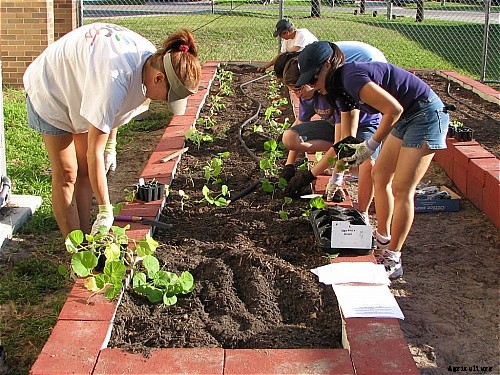
Not only are you helping yourself by distracting from all the worldly worries, but you are also helping the environment and planet earth, at the end of the day, by planting more trees. Gardening is a great way to boost up your spirits and give back positively to society.
Here are the 10 most popular and stylish gardening techniques:
Read also: Getting the Right Tools for your Garden


