
Welcome to Modern Agriculture!

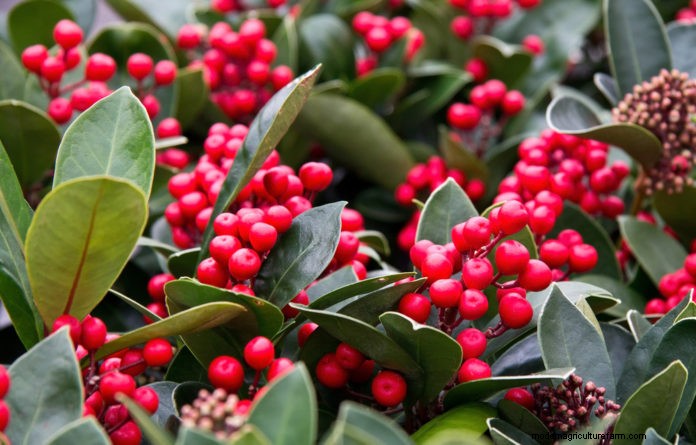
When the air is filled with carol song and shop windows are twinkling with festive decorations, this is also the time of skimmias. Across the country, these beautiful evergreens show off their own Christmas decorations throughout winter.
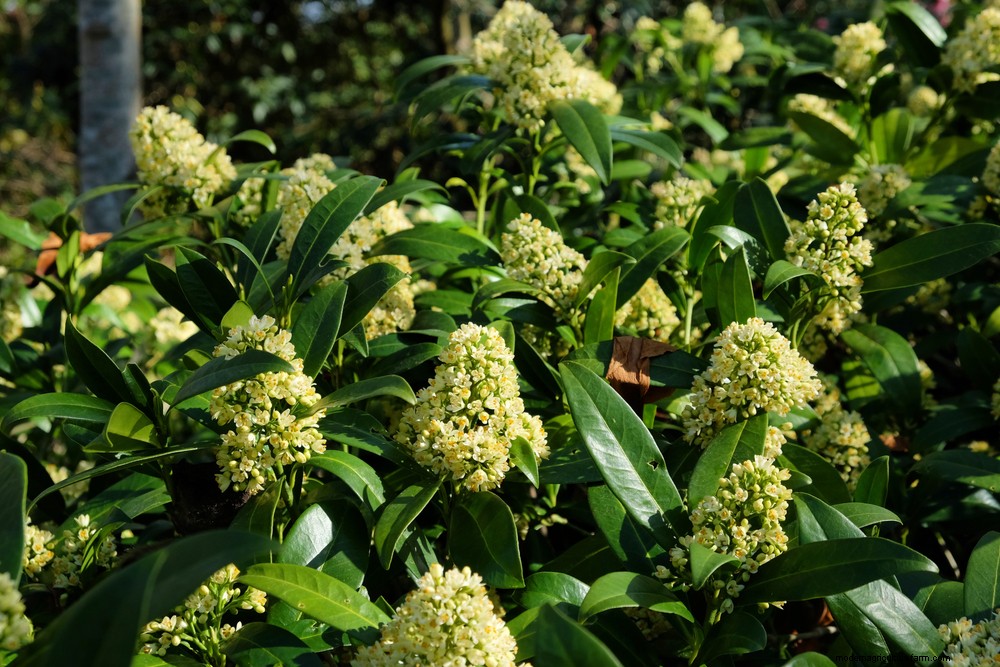
In December the flowerheads of skimmias are made up of scores of tiny pinky-red baubles. Meanwhile, in spring, tight flower buds blossom into a mass of scented white flowers.
Male varieties such as ‘Rubella’ produce the most flowers and and are therefore brilliant for trimming and taking inside as natural Christmas decoration. Consider creating a homemade Christmas wreath with blooms from your skimmia.
Skimmias vary in size. Dwarf varieties such as ‘Red Dwarf’ make the perfect low-maintenance centrepiece for a container display. Try using them as a ‘backbone’ plant in the centre of a container and changing the planting underneath as the seasons change.
Skimmias need acid soil to grow well. Plant them in ericaceous compost or lime-free John Innes compost if growing in pots. Where possible, water with harvested rainwater (rather than alkaline tap water) and feed with a liquid ericaceous fertiliser each spring.
Are the leaves of your skimmia fading? This indicates that the plant is short of nutrients and needs feeding.
Female varieties of skimmia will produce berries in autumn if planted alongside a male variety, presenting a useful source of winter food for garden birds.
Want to get expert advice on fascinating plants all year long? Subscribe to The English Garden’s monthly magazine.


