
Welcome to Modern Agriculture!


Border sedums or ice plants have now been reclassified as Hylotelephium. These beautiful perennials can tough out harsh winters, despite their waxy leaves which seem more suited to hot weather.
Hylotelephium have stems that are tall and upright in comparison to other sedum varieties that provide ground cover. They begin with small rosettes of leaves before developing thick stems.
Ice plants provide brilliant colour. Their waxy, elliptic leaves of grey-green to dark purple contrast with bright pink flowers grouped in flat clusters throughout late summer.
Propagate Hylotelephium by division in spring or autumn, once they have finished flowering. Alternatively, you could take softwood cuttings in early summer. In some cases, they can be prone to self-seeding.
Sedums are hardy perennials that grow best:
Hylotelephium are low maintenance, though it is advisable to:
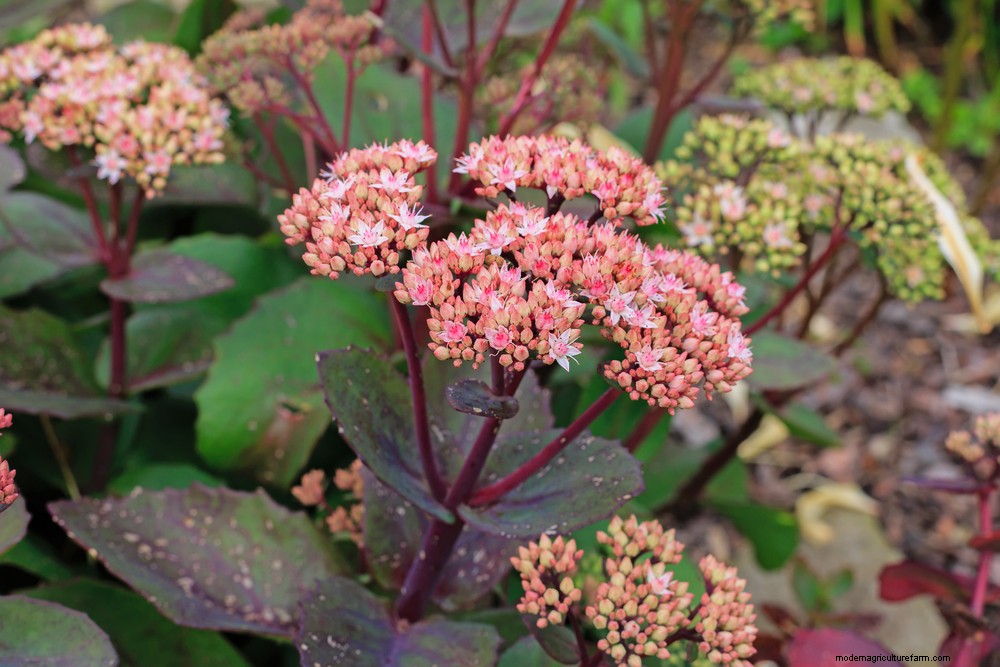
Like other sedums, Hylotelephium suit a wide range of planting styles, from cottage gardens to gravel gardens to prairie gardens. To plant up a border in the prairie style, try them with Japanese anemones, Globe thistles, penstemons and Stipa tenuissima.
Ice plants are also excellent late season bee-forage plants. Their flat tops make an excellent landing stage for bees and butterflies.
It’s easy to get confused over the name of this plant due to its genus name changing from sedum to Hylotelephium in some varieties. This has yet to be recognised everywhere and variations of the name are still used across the world.
Hylotelephium has been popular in gardens from the early 1900s. Changes such as this one occur when scientists discover new data related to the plant’s genetics. Botanical names help them to group plants together with greater accuracy.


