
Welcome to Modern Agriculture!

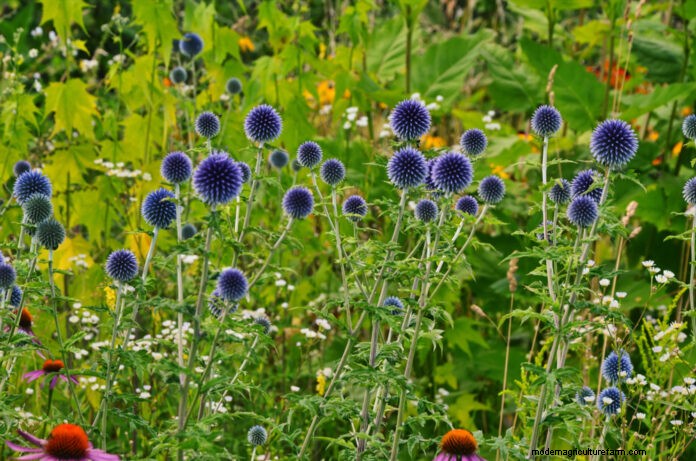
With spiny, cobweb-like leaves in spring to striking, globe-shaped blooms in late summer, Echinops (Globe thistle) makes a stunning addition to beds and borders. The best part? These plants also attract a variety of insects, so by growing them, you’re also doing your bit for the ecosystem.
Globe thistles are clump-forming perennials. They are easily identified by their spiny, grey-green leaves and upright grey, woolly stems. Look out for the prickly spherical blue-grey to blue flowers that appear in early summer and grow to roughly the size of a golf ball.
Find out how to plant and grow Globe thistle.
Although Globe thistle does not require special care, some maintenance is required.
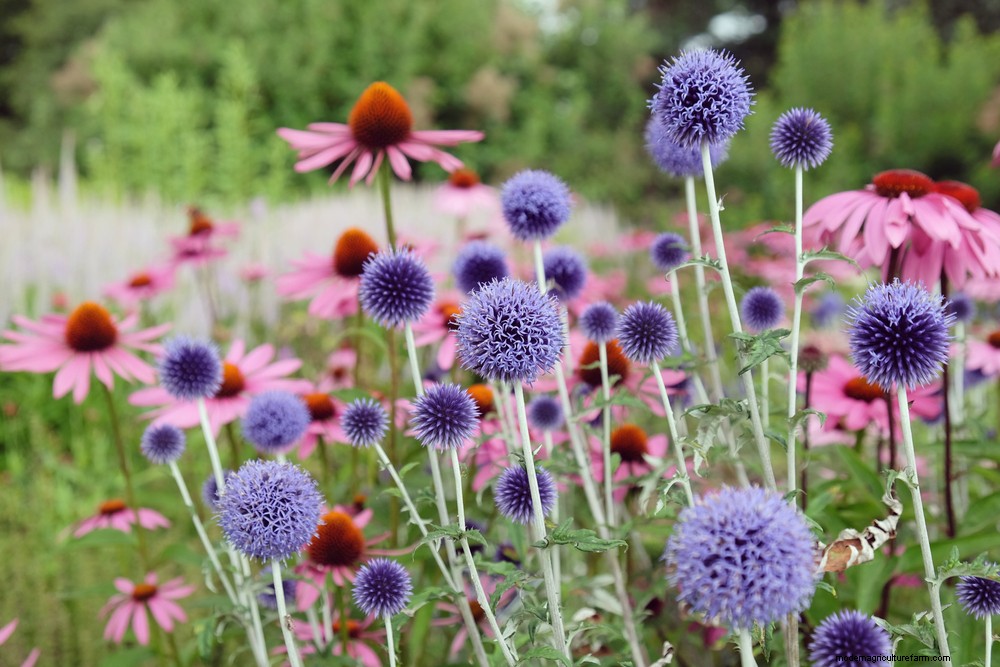
For best results, plant Echinops at the back of borders to achieve a dramatic prairie-style display. Combine it with late summer flowering plants like Cardoon, Echinacea and Miscanthus grasses to complete the look.
Globe thistle also works well in gravel gardens. Read about Beth Chatto’s famous gravel garden and find out how to create one in your growing space.
Echinops is a great addition to any garden that seeks to encourage wildlife. It is attractive to bees and many other pollinators. The beautiful globes also create striking cut flower displays.


