Welcome to Modern Agriculture!

Lavatera, commonly known as mallows, are available as annual, biennial, perennial or shrubby varieties.
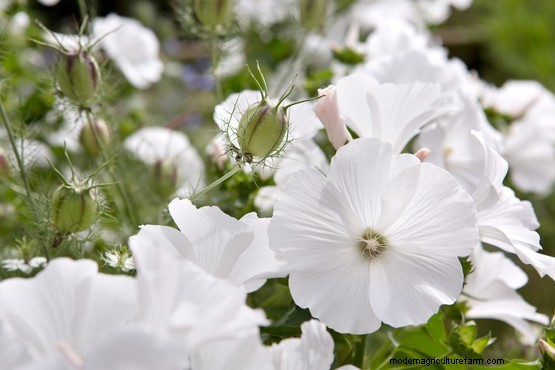
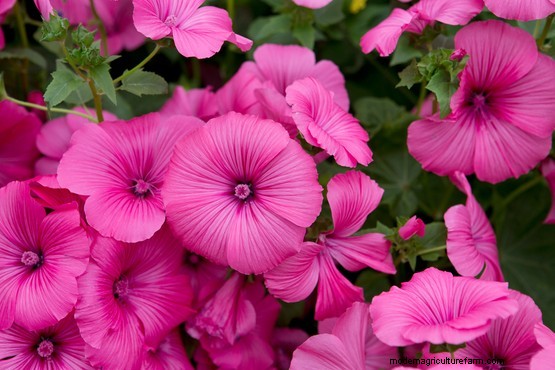
The flowers are large, open blooms, in white or pink and are great for attracting bees and other pollinating insects. With their long flowering season, lavateras are good for filling gaps or including in a summer container display.
Browse our handy lavatera Grow Guide, below.
Grow lavatera in fertile, well-drained soil in full sun. Make sure it’s a sheltered spot out of any cold, drying winds.
Sow annual lavatera seeds in trays under cover in early spring. When seedlings are large enough to handle, pot on and harden off before planting out into borders.
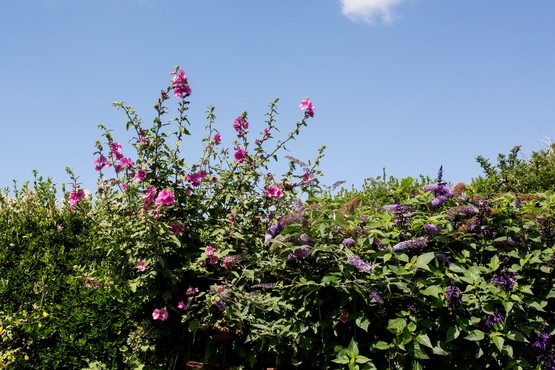
When planting shrubby lavateras, dig a generous hole, adding compost for drainage and a handful of mychorrhizal fungi to encourage good root development.
If you want to grow from your existing plant, let some flowerheads develop into seedpods and save the seeds to sow the following spring. Or, you can take softwood cuttings.
Lavatera is generally pest-free but can be prone to rust and fungal diseases. Remove affected foliage as and when you spot signs of disease.
Deadhead plants through the summer to encourage more flowers. Cut perennial varieties back in autumn and mulch annually with well-rotted manure or compost. The shrubby varieties can cope with a mild frost, but will struggle if the thermometer dips below -5°C. Prune in early spring to encourage flowers on new season’s growth.
Follow our guide to spring pruning.