Welcome to Modern Agriculture!

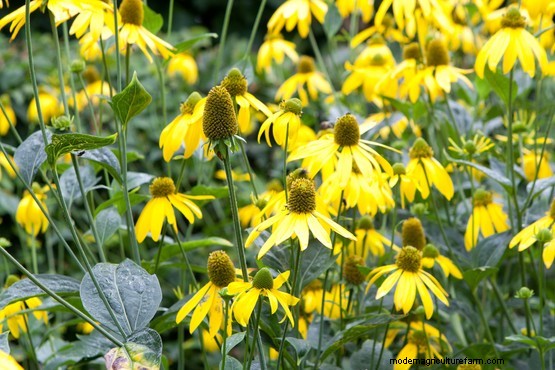
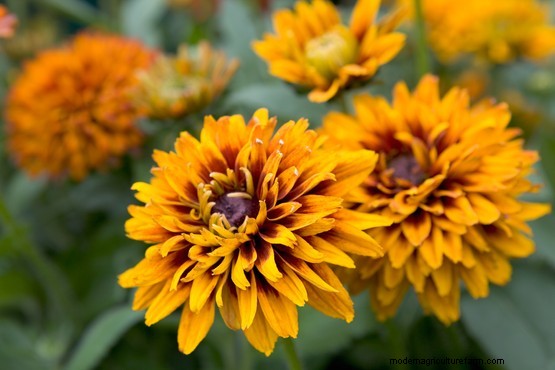
Rudbeckias bring a blaze of burnished glory to the garden in the late summer months with their daisy-style flowers.
Also known as coneflowers, rudbeckias come in a range of colours, from yellow to orange, and sizes. There are also annual, biennial and perennial varieties, so there’s plenty of choice, as long as you have a sunny garden or patio. They can be grown in pots, but probably look best when combined with other ‘prairie style’ perennials and grasses.
Take a look at our handy rudbeckia Grow Guide, below.
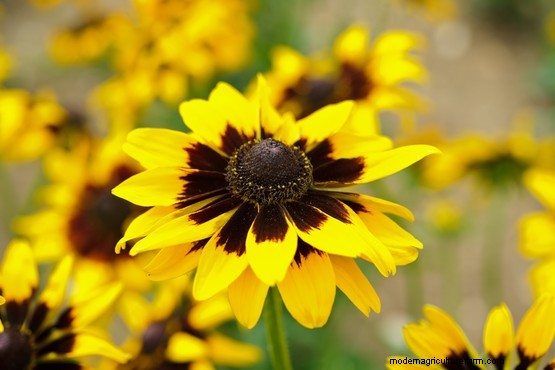
For best results grow rudbeckias in moist but well-drained soil, in full sun. Taller varieties are best at the back of a border, while shorter varieties can be grown in containers or at the front of a mixed border. Some rudbeckias will also tolerate light shade.
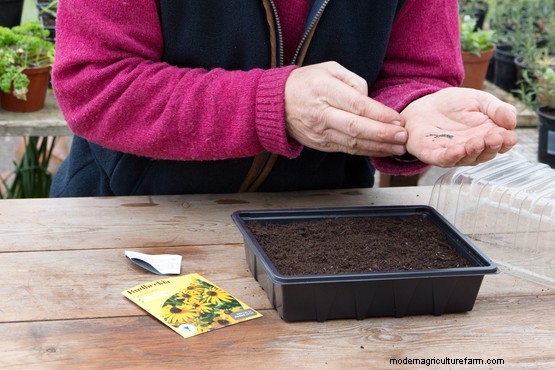
Annual and biennial rudbeckias can be grown from seed. Sow seed in early spring and keep seedlings under cover until large enough to handle and pot on, then harden off after danger of frost has passed. Plant out in May.
Perennial rudbeckias can be planted at any time of year. Dig a generous planting hole and add plenty of compost or leaf mould. Add a general fertiliser as a top dressing, and water in and mulch well.
Watch Monty Don plant rudbeckias in the Jewel Garden.
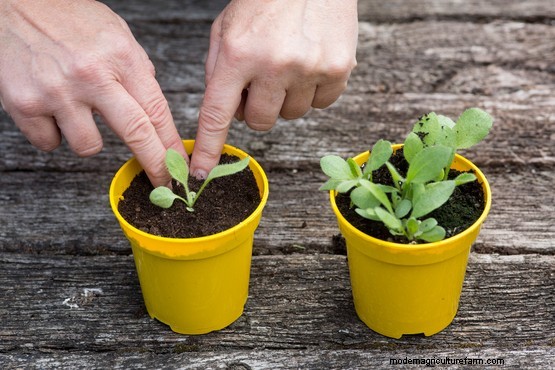
Don’t let the soil dry out, so water as necessary. Apply a generous mulch in spring or after planting out annuals and feed regularly through the growing season. Deadhead spent flowers to encourage more blooms. Divide overcrowded plants every few years.
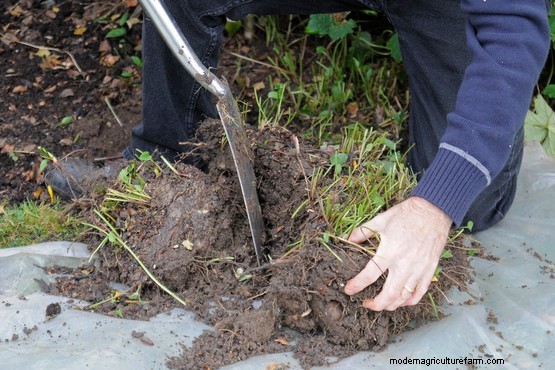
Propagate by division, either in autumn or spring. Lift plants and split into smaller clumps.
Rudbeckias are pretty much pest- and disease-free.