Welcome to Modern Agriculture!

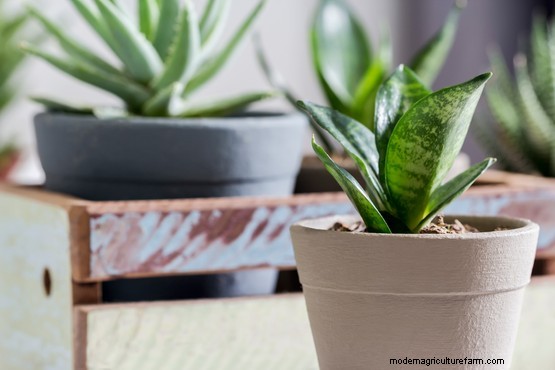
Snake plant (Sansevieria) is a striking house plant, with sword-like leaves. Its pointed leaves have given it the nickname mother-in-law’s tongue. There are several different varieties, all with slightly different shapes and leaf colours.
The snake plant could be described as the perfect house plant – it always looks fresh but is incredibly low maintenance. It needs hardly any care and can survive a long period of neglect. It isn’t fussy about its location and needs little watering. It’s a great plant for beginners as it’s virtually indestructible.
The snake plant is a good air purifier, too – NASA research has shown that snake plants can remove toxins, such as formaldehyde and benzene, from the air inside your home.
Snake plants are midly toxic to humans, cats and dogs if ingested.
Ideally, grow your plant in a bright spot, out of direct sun. Water only when the compost has dried out. It will benefit from a liquid feed once a month, from April to September.
More on growing snake plants:
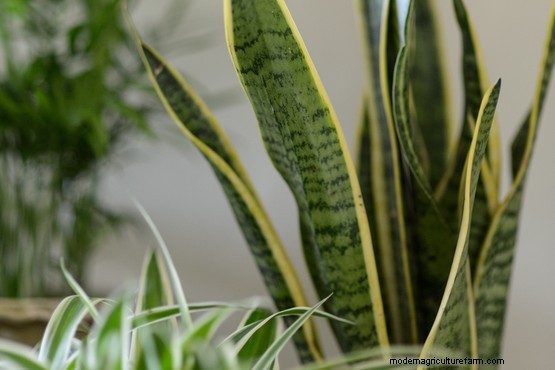
Ideally, give your snake plant a bright spot, out of direct sunshine. It will cope in a dark corner but may lose some of the attractive variegation on the leaves.
You can probably keep your snake plant in its original pot for a while after you have brought it home, unless its roots are bursting out of the bottom of the pot. Snake plants are relatively slow growers so won’t need repotting that often. If it has outgrown its current pot, repot it in spring into a slightly larger one. Use house plant or cactus compost, or ordinary peat-free multi-purpose compost with some horticultural grit added. If your snake plant is tall, you might want to plant it in a heavy pot, to stop it toppling over.
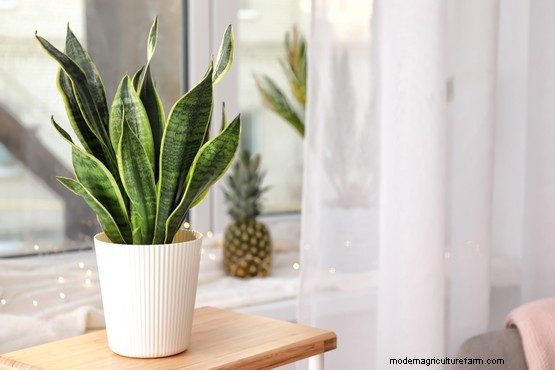
Snake plants don’t need much water – just water whenever the soil is dry. Make sure you let the water drain away fully – do not let the plant sit in water as this may cause the roots to rot. Snake plants need very little water in winter.
Feed once a month from April to September. Wipe the leaves occasionally, to prevent dust building up. Be careful not to damage the leaf tips – this will stop the plant growing. Snake plants can cope with draughts and dry air, and don’t need misting.
You can propagate snake plants by taking leaf cuttings, but the simplest method is by dividing. Using a knife, carefully cut away a leaf and a piece of root, and plant it up in a small pot of compost. Water in well and put the cutting in a bright spot, out of direct sunlight.
Yellow leaves are a sign of overwatering, especially in winter. Check the base of the leaves and the roots for rot. Allow the compost to dry out before watering again and always let the water drain away. Snake plants do not need much water, especially in the winter months.
Wrinkled leaves mean you may have under watered your plant. Lightly water it over a few days and it should perk up.
If leaves are falling sideways, you may have under- or overwatered your plants. It may also not be getting enough light. Tall, older leaves do occasionally collapse.
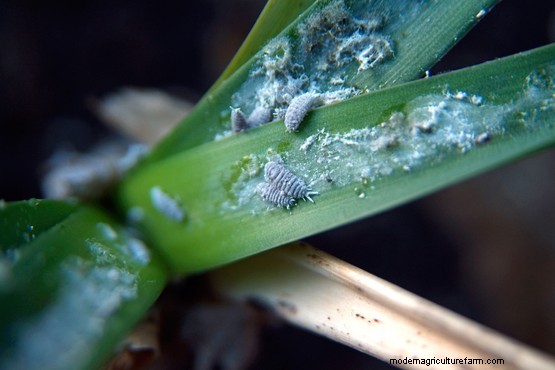
You may spot mealybugs on the foliage. Look out for insects that look like white, fluffy blobs on the undersides of leaves. Wipe them off with a damp cloth or cotton bud that has been soaked in an insecticide that contains fatty acids or plant oils.
Here’s our guide to buying snake plant, or Sansevieria, including where to buy snake plants.