
Welcome to Modern Agriculture!

Our tips on how and when to plant gladioli bulbs are just what you need if you want to grow these gorgeous blooms. They make a beautiful addition to summer flowerbeds or borders, and it's super simple to do once you know how.
Most people consider autumn to be the time for planting bulbs, and in many cases this is true. However, whilst tulips, daffodils, crocuses, and all those other spring flowers need to be planted pre-winter, for gladioli, you need to hang on a few months longer.
It's worth the wait. Although once deemed a little old fashioned, gladioli are making a comeback. With their architectural structure and riot of color, we're not surprised one bit. They look fantastic along the back of a border and, with their long vase life, make an ideal cutting flower. And you can plant them in containers, too.
First things first – you'll need to know when to plant gladioli bulbs. Well, like crocosmia and bearded iris, gladioli are summer-flowering and therefore need to be planted when the weather is warmer.
To get ahead, you can start them off in pots indoors in March. Place them somewhere bright and frost-free, like a windowsill or greenhouse.
If you're planting the bulbs directly into the ground or in containers outdoors (or are moving your pre-planted indoor pots outdoors), do so between May and July.
They will generally begin to flower three months from planting. It's a good idea to stagger your planting with fortnightly intervals – this will reward you with a longer-lasting display of flowers.
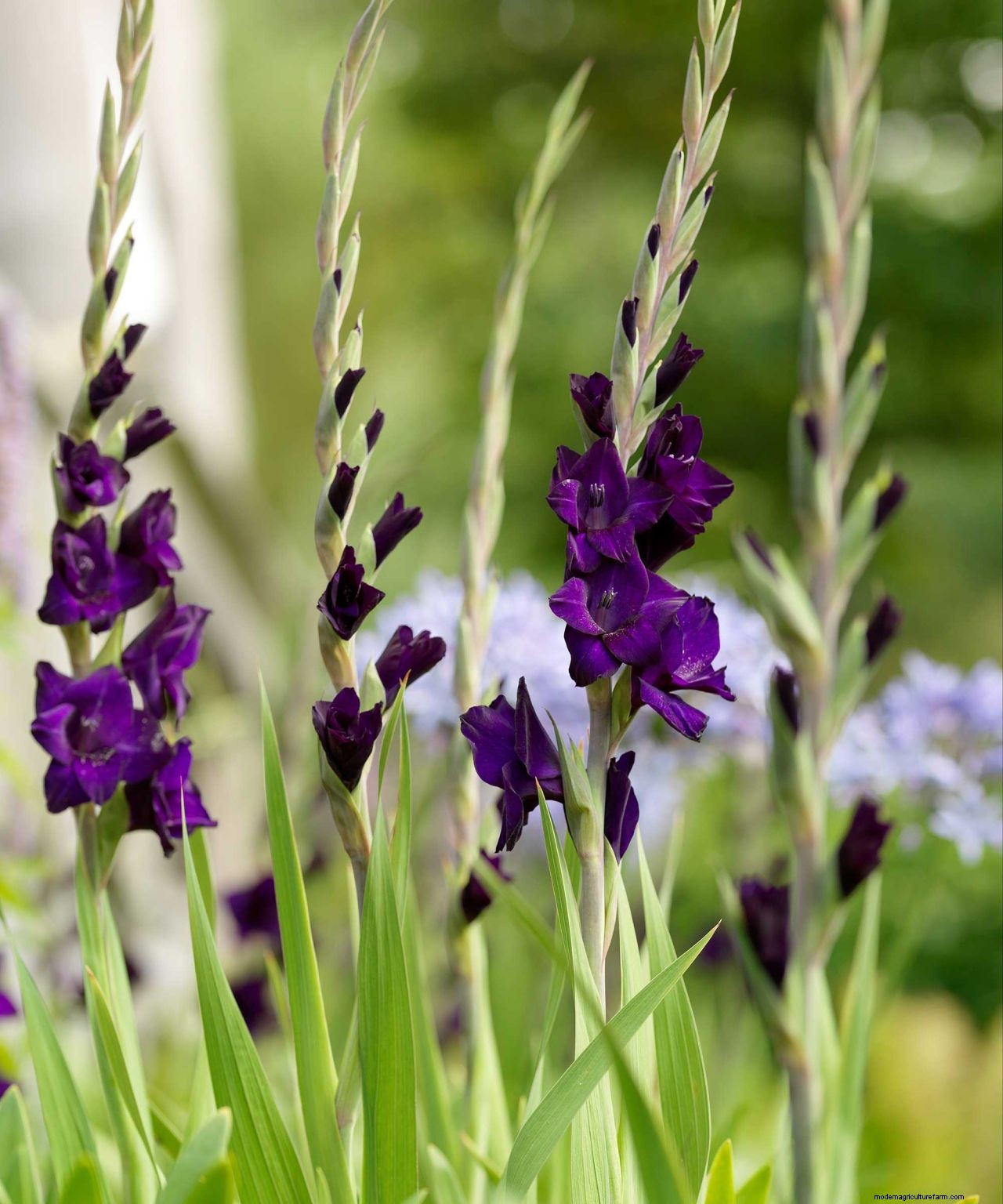
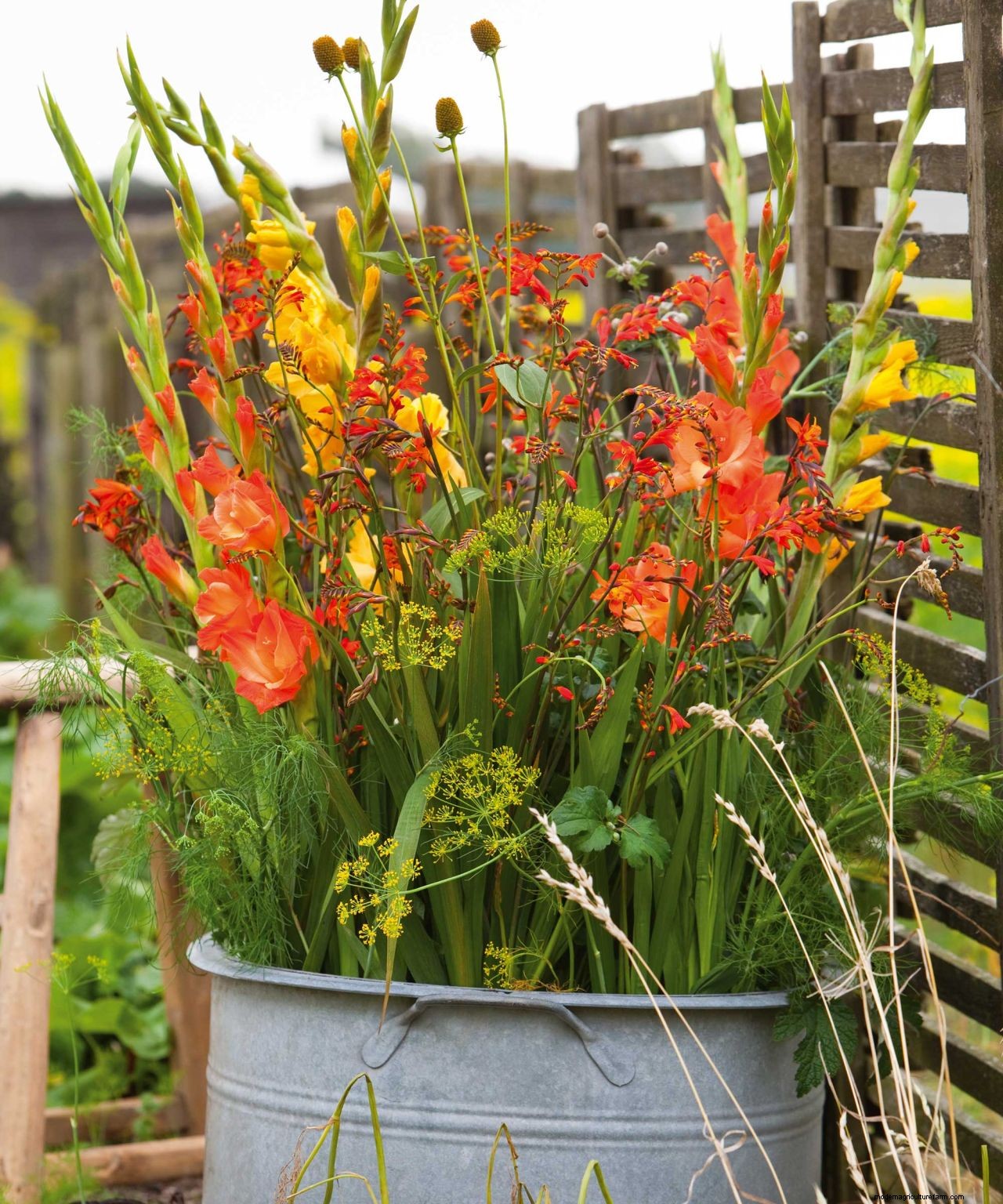
With their vibrant color and eye-catching form, gladioli make lovely additions to container gardening displays. It's simple to do:
For extra flexibility, Monty Don says how you can plant your gladioli bulbs in lattice pots (the same you'd use for aquatic plants). You can then sink them into your border, or into a terracotta pot (which are good for drainage), when you're ready to show them off.
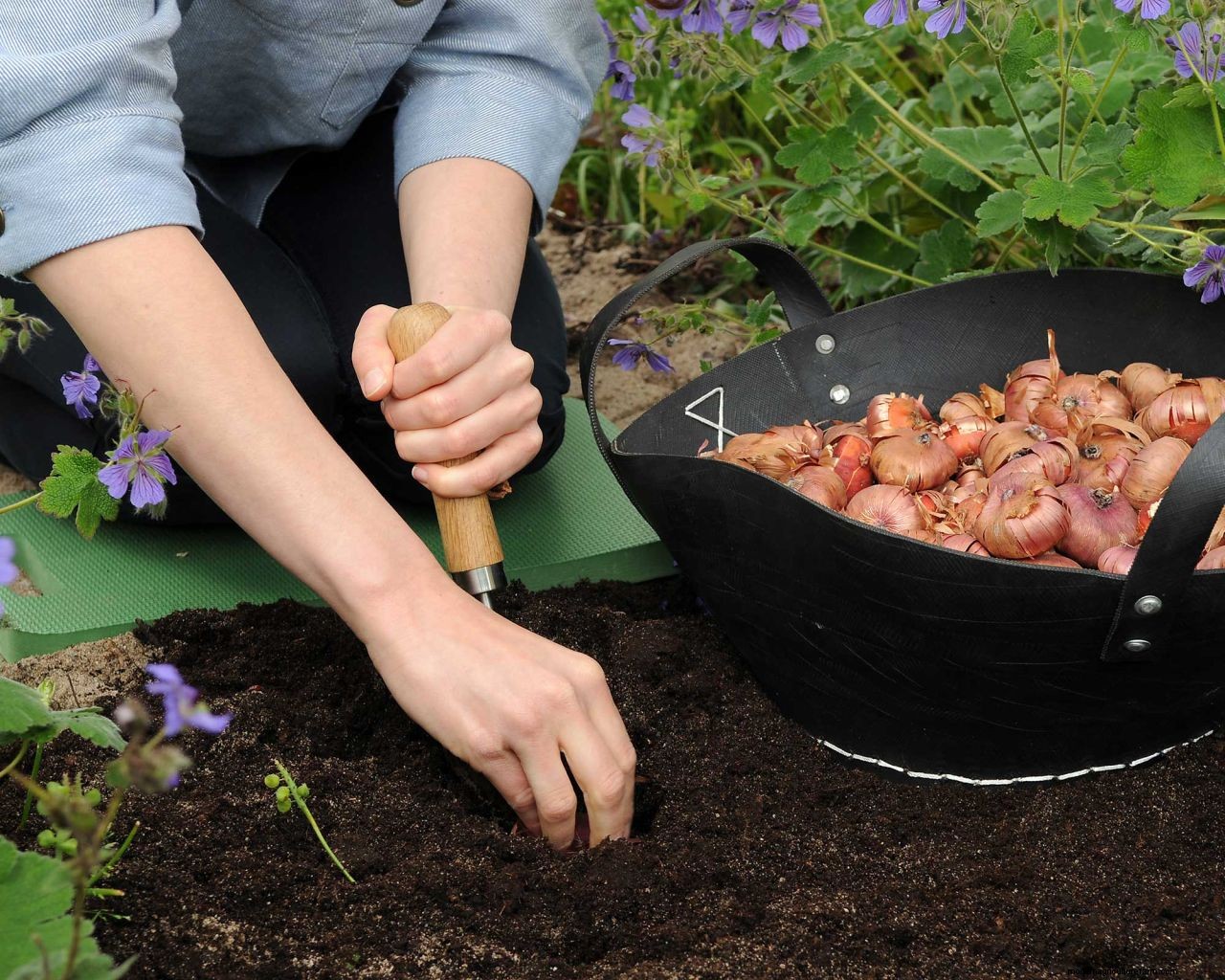
The process of planting your gladioli directly into your borders and flowerbeds is similar to planting them in pots.
You can find more flowerbed ideas in our guide.
Gladioli originate from hot climates, so they perform best when planted in full sun. They like well-drained soil, but ensure it's kept moist.
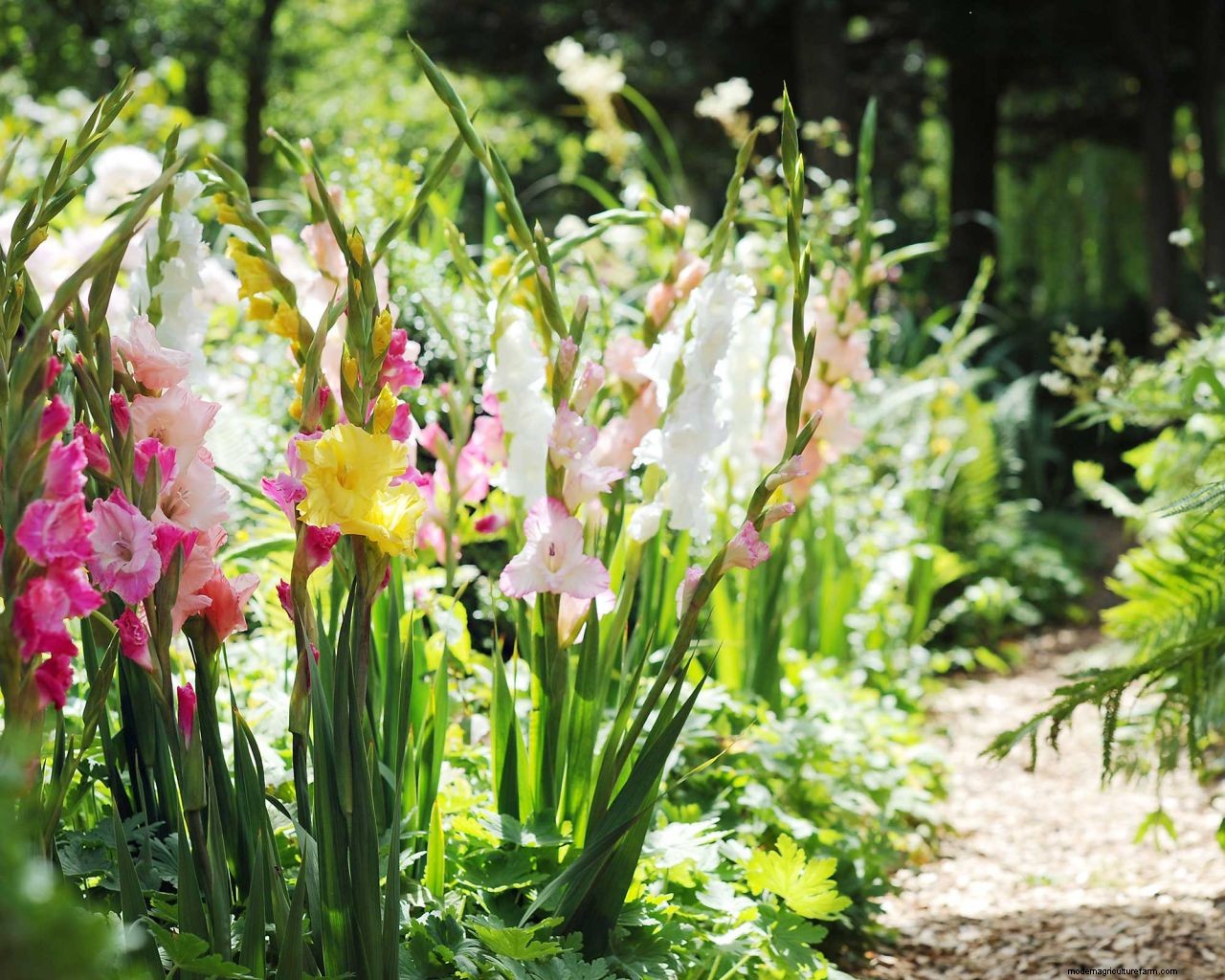
Due to their height, gladioli work well at the back of a border. However, they can also make a striking choice for containers, if you're looking for patio gardening ideas.
They are a classic pick for cottage garden schemes, but work equally well in contemporary plots. Try mixing with dahlias and zinnias for a summertime show – our guide on how to grow dahlias is full of useful tips.
Gladioli are perennials, meaning they will flower year after year.
Some gardeners choose to dig up their gladioli corms over winter, similarly to dahlias. But in slightly warmer climates, such as the south of the UK, this isn't strictly necessary as long as you apply a good, deep layer of mulch. The mulch will help to protect the bulbs from frost. You can find out all about mulching in our guide. If you are leaving the bulbs in the soil all year round, it's a good idea to lift them every couple of years and divide the clumps as cormlets will form over time.
For colder regions (USDA Hardiness Zone 7 or colder) or for containers, cut the stems down to around 4in and lift the corms carefully after the first fall frost. Be sure to do this before the first hard frost.
Once dug up, brush off any loose soil, then lay the corms out somewhere ventilated, frost-free, and dry in trays for winter.
Cormlets (miniature corms that grow on the sides of the main corm) can be removed. Store these and pot them up in spring, but bear in mind that they'll need to be grown for a couple of years until they are large enough to flower.
You can find more advice on what to do with gladioli bulbs when finished flowering in our guide, whilst our feature on how to protect bulbs from frost has more useful tips.
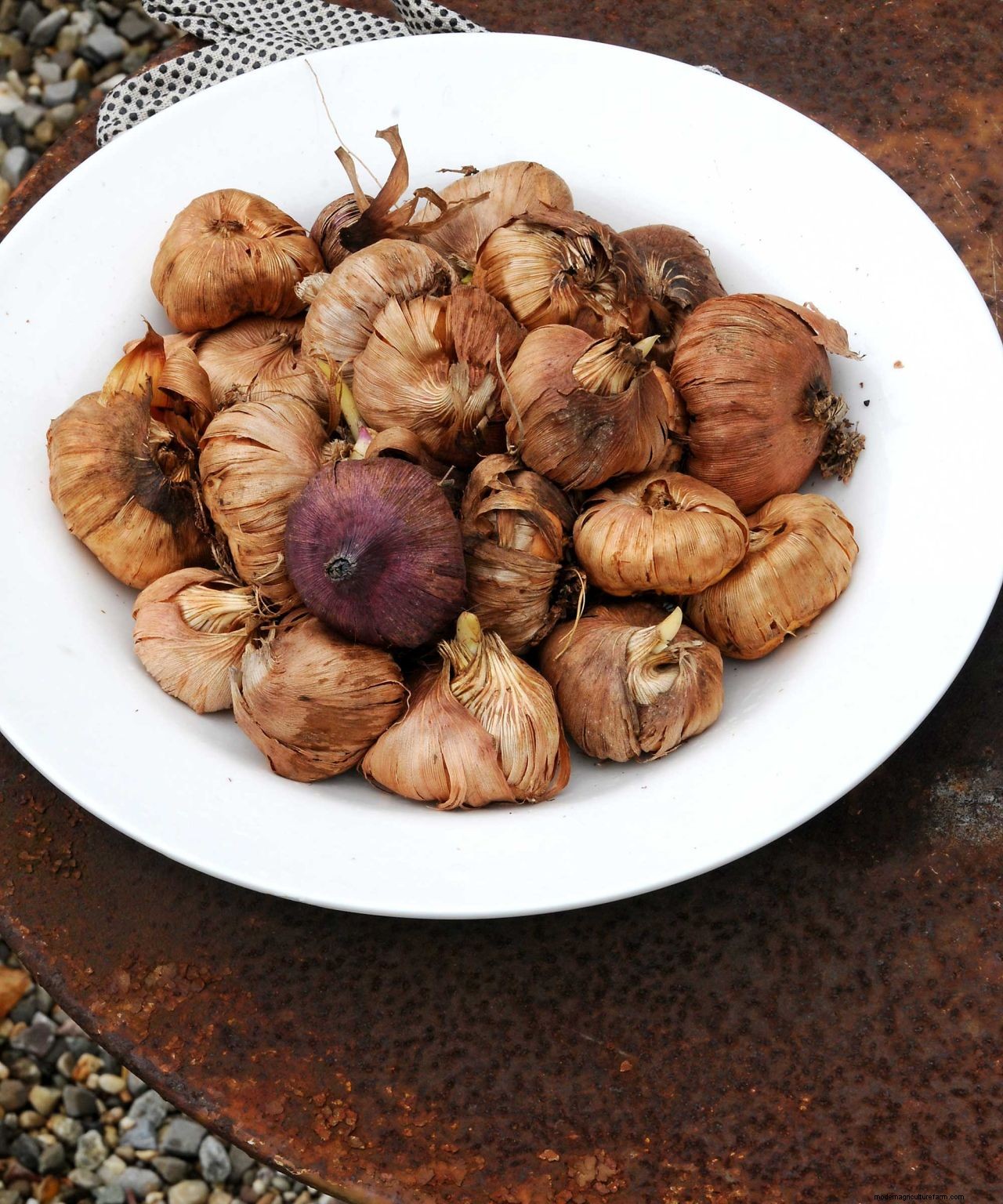
Gladioli will only flower once per season, for around one to three weeks depending on the variety. For this reason, it's best to plant a handful of bulbs every couple of weeks in late spring/early summer for a longer-lasting display.
You can deadhead them once the flowers have bloomed, but this is purely for aesthetic reasons – it won't encourage a second flush.
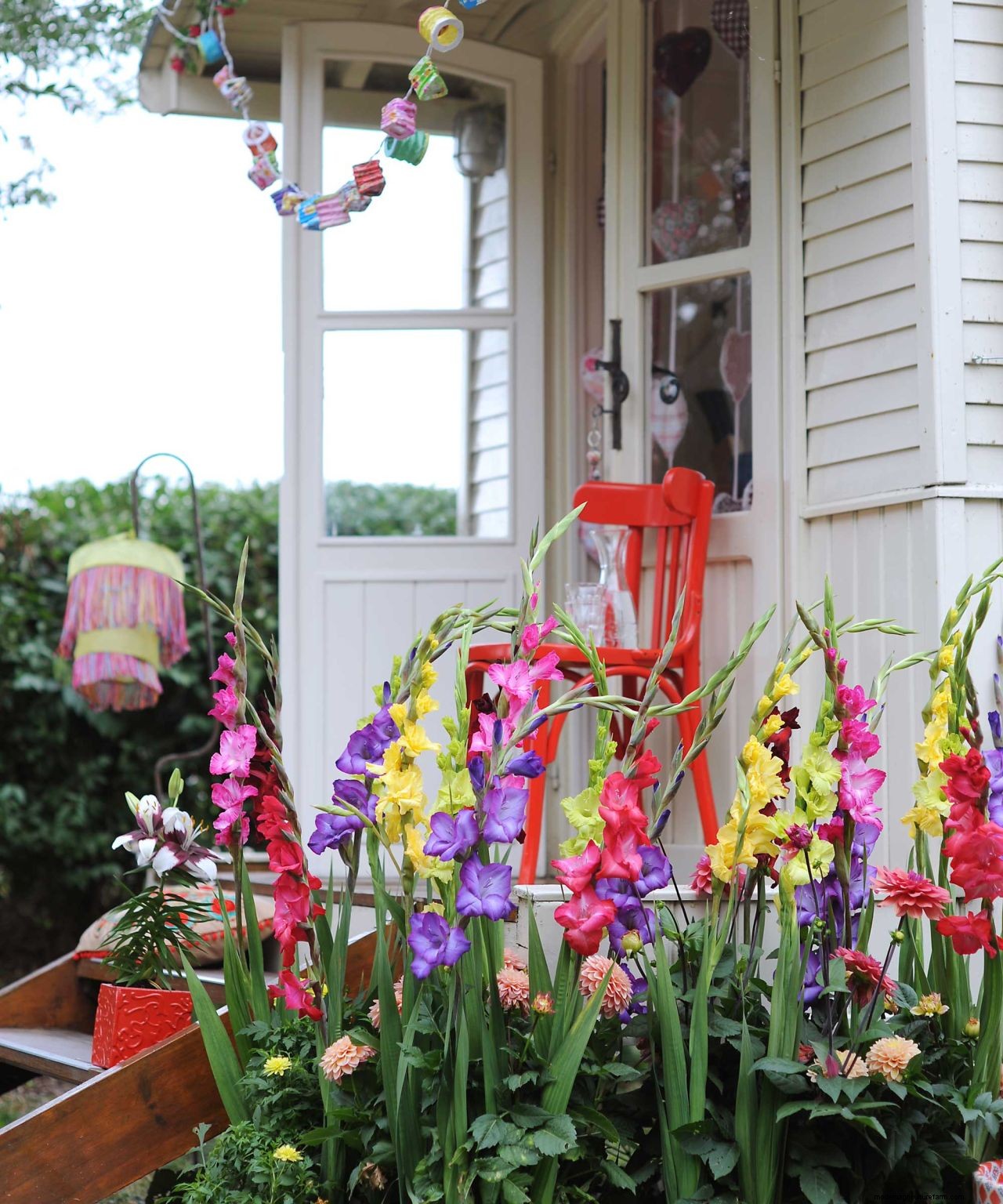
Like most bulbs, gladioli are very toxic to dogs, as well as cats. All parts of the plant are poisonous, but the bulbs themselves are particularly toxic. For this reason, if you've got a four-legged friend who loves to dig, it might be worth avoiding these blooms in your garden. If you suspect your pet is suffering from gladioli poisoning, seek advice from a vet immediately.
There is more advice on the most poisonous plants for dogs in our dedicated guide.
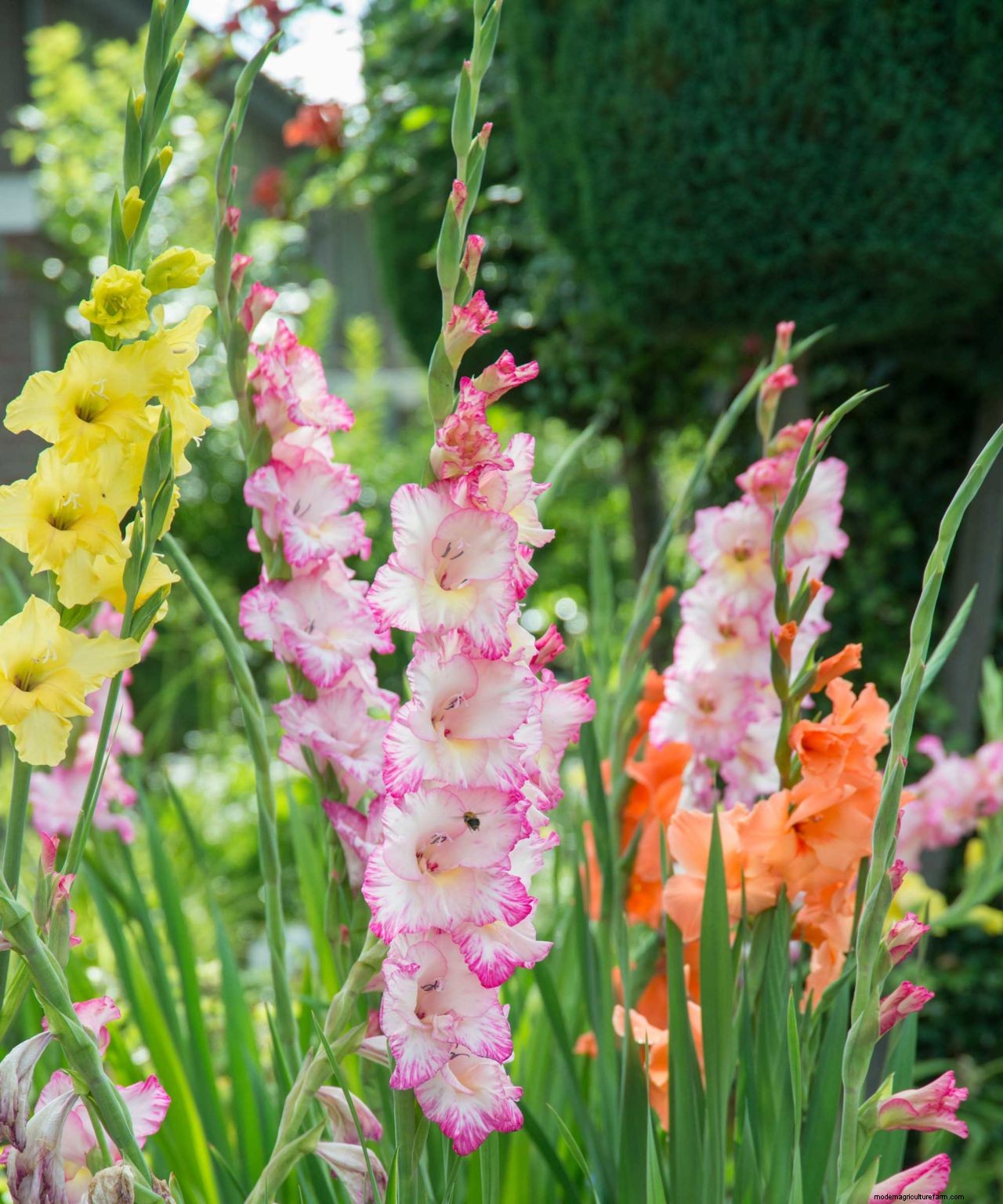
Now you've learnt how and when to plant gladioli bulbs, you're probably eager to get hold of some for your own plot. Although you can buy them at garden centers in early spring, there are lots of places to buy them online. Our quicklinks below will help you get started.
Where to buy gladioli bulbs in the UK:
Where to buy gladioli bulbs in the US:


