
Welcome to Modern Agriculture!

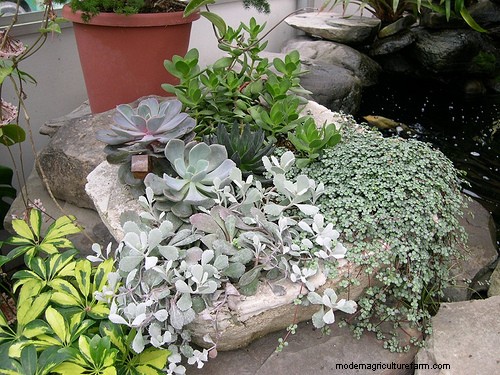 Clockwise from upper left: echeveria, jade plant (crassula), haworthia in center, peperomia and silver-leaf kalanchoe.
Visits to flower shows around the country remind us of how much we love hypertufa planters. The material has an ancient, hand-hewn quality; a perfect home for plants that you might find nestled into crevices in a rock garden, such as alpines, succulents, mosses and even tiny evergreens.
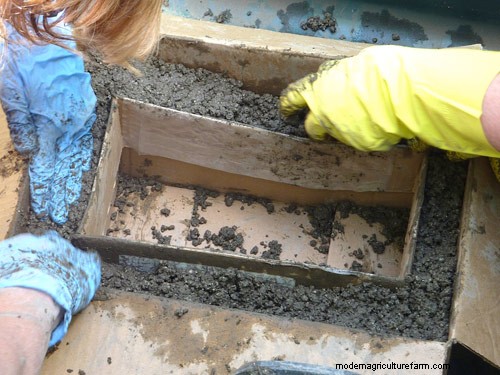
Hypertufa is a versatile and strong material that you can mold into your desired shape. Working with hypertufa is a messy endeavor, but those of us who reminisce about the pleasures of making mud pies will appreciate this opportunity to indulge in a childhood pastime while creating a custom planter with an instantly antique character.
We found step-by-step instructions in an article in Fine Gardening by Michelle Gervais. We have adapted the instructions for our project; you can find the full instructions in the article, Make a Hypertufa Trough.
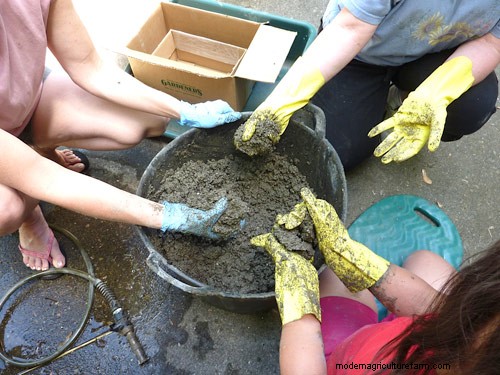
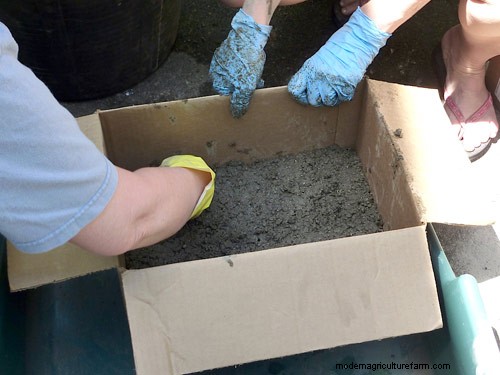
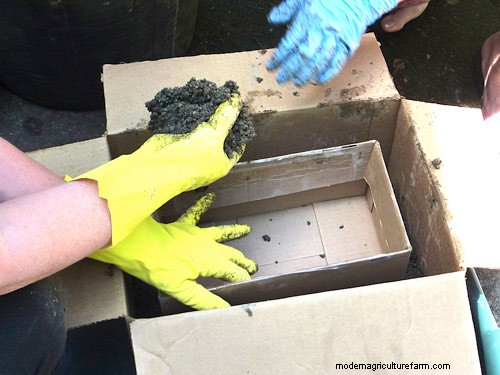
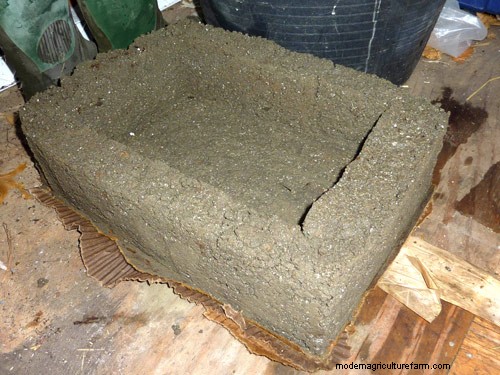
A couple of friends and I gathered our ingredients and followed the recipe and directions below. Once we had all of our materials, it took about two hours to complete several containers. They require several days to cure before they can be planted.
The basic ingredients for hypertufa are readily available at home improvement stores and garden centers. They include peat moss, perlite, and Portland cement. Fine Gardening recommends reinforcing fibers in their ingredient list, but we chose to omit these from our mixture. So far, our containers have held up to freezing temperatures.
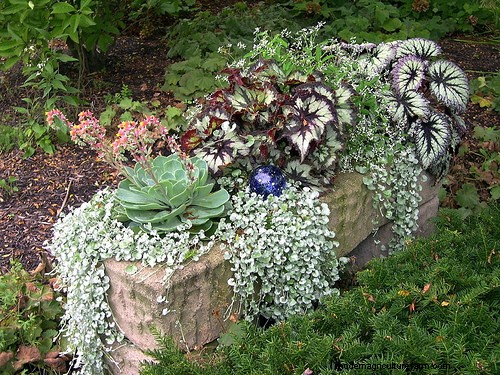
Annual rex begonias, Euphorbia 'Diamond Frost', silver-trailing dichondra and a sedum rosette.
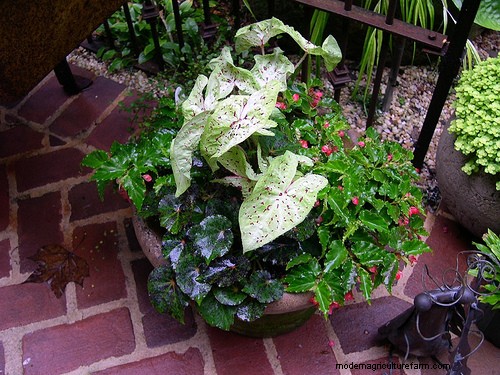
Top a shady step with Caladium 'Miss Muffet', Begonia 'Red Planet' and Begonia 'Tiny Gem'.
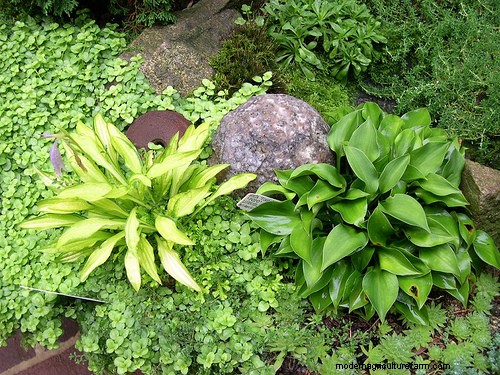
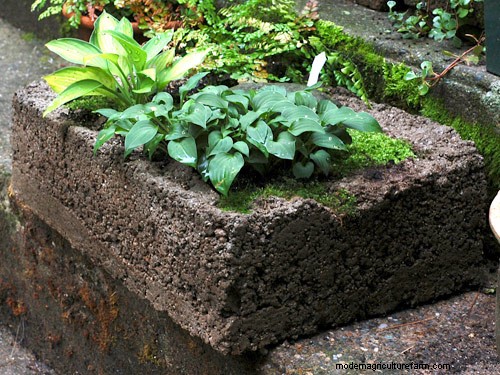
Growing no bigger than your palm, dwarf hostas excel in part-shade with creeping phlox, moss, baby's tears, and hens-and-chicks.
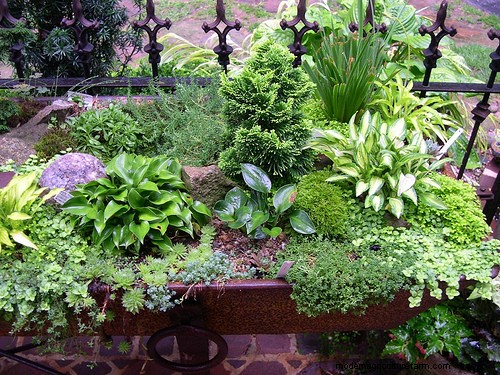
This planter contains 5 miniature hostas, a dwarf chamaecyparis shrub (center), five creeping sedums, selaginella moss, baby's tears, and spiky blue-eyed grass, top right corner.
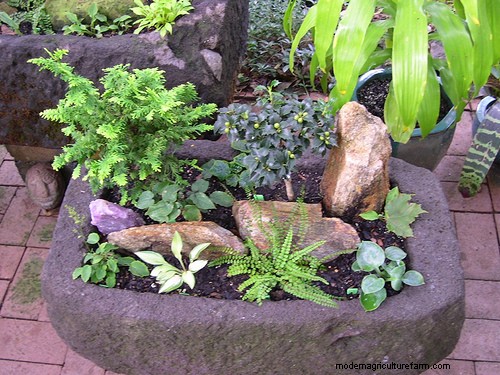
Clockwise from top left: dwarf chamaecyparis, hosta, holly, hosta, fern (Asplenium tricomanes) and two more miniature hostas.
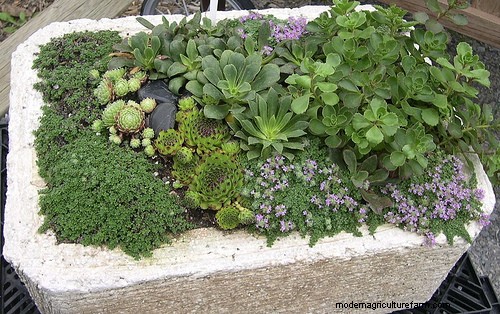
Purple-flowering creeping thyme, hens-and-chicks, sedum and other drought-tolerant plants create a low-maintenance container garden.
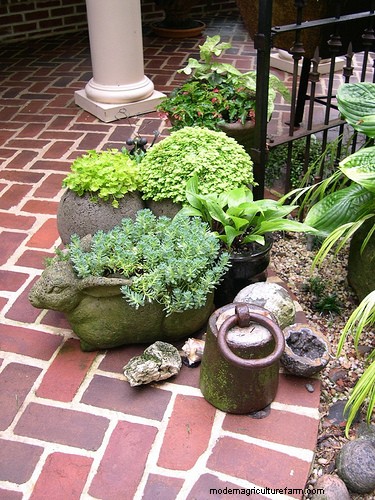
Low-maintenance plants include sedum (in bunny), dwarf heuchera, selaginella, and hosta (clockwise). Begonias and caladiums in background bowl.
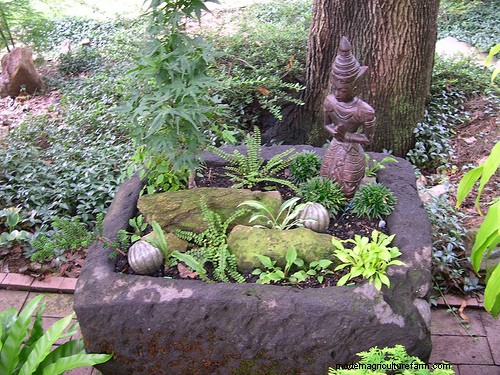
The shady location under a tall tree is ideal for Japanese maple, fern (Asplenium tricomanes), mossy stones, dwarf liriope, and mini hostas.
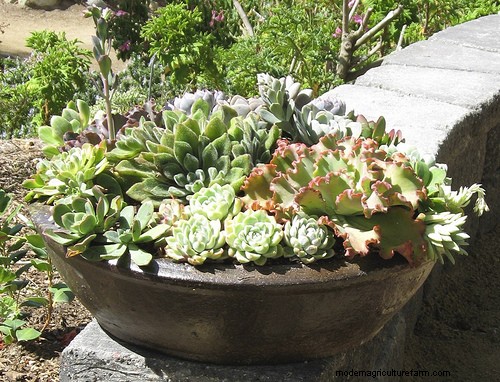
Sedum textures and colors add a focal point to an otherwise boring wall. These drought-loving plants thrive in the hot sun.
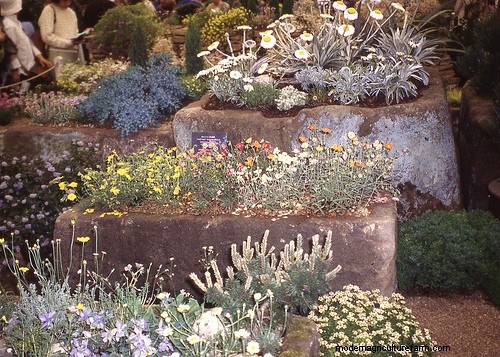
Small alpine plants that naturally grow in gravelly soil do well in stone and hypertufa planters.
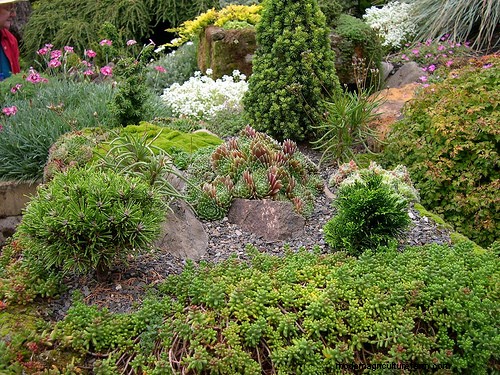
Clockwise from upper left: dianthus (pink flowers), snow-in-summer, dwarf fir, chamaecyparis, sedums, and dwarf mugo pine.
Clockwise from upper left: echeveria, jade plant (crassula), haworthia in center, peperomia and silver-leaf kalanchoe.
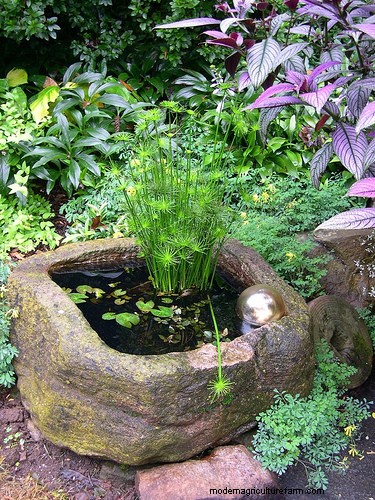
This bowl of papyrus and water lily is surrounded by yellow-flowering corydalis and purple Persian shield in the upper-right corner. Add a few guppies for mosquito control.
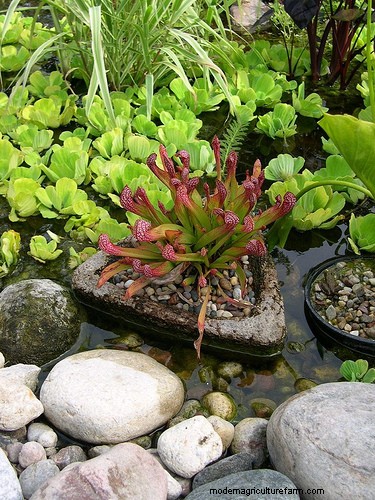
Tuck a tufa planter into the edge of a pond or water garden and add a colorful red cobra pitcher plant. Water lettuce and ribbon grass in background.
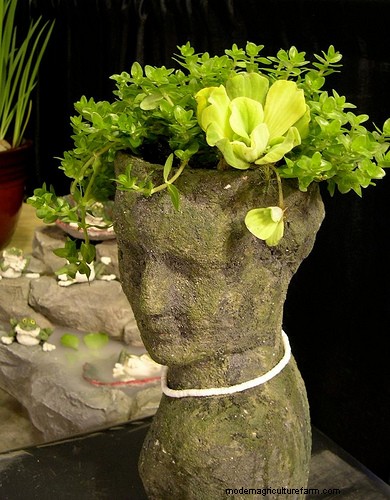
Water plants tucked into a concrete bust include trailing bacopa for hair and a water lettuce bow. Taken at the Koi and Pond Show at the Big E in Massachusetts.
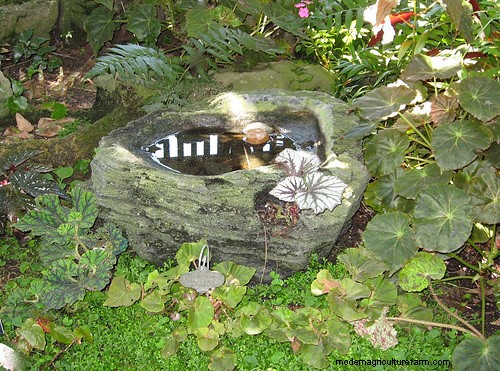
Shallow stone or hypertufa planters make perfect watering holes for birds and butterflies. Tuck a small plant, like this begonia, into a small pocket in the side.


