
Welcome to Modern Agriculture!

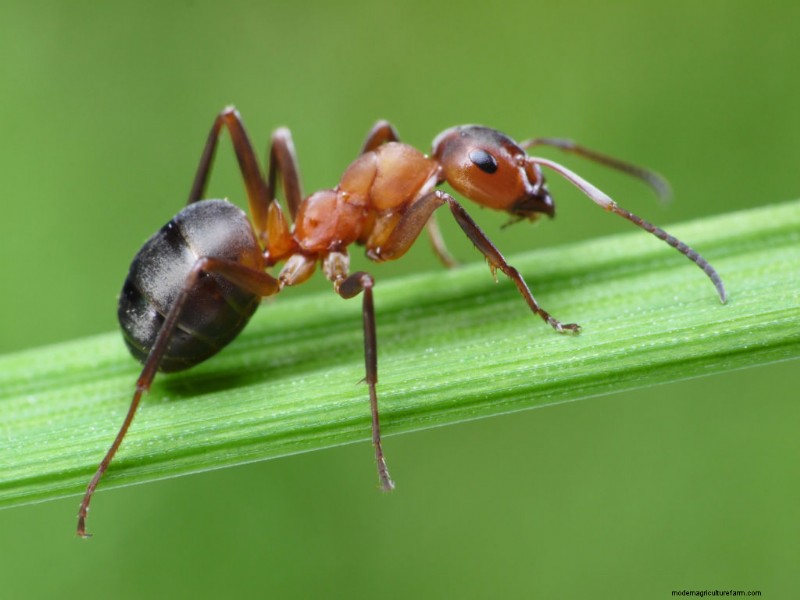
Ants can both be bad and good for gardens depending on your experience. I believe there is a need for a healthy ant presence in any garden because ants are generally beneficial for plant life. A good sign of an out-of-control ant population is the presence of large numbers of aphids that secrete honeydew.
Read on to learn more about whether ants are good or bad for your garden plants. This post also identifies reasons why you have an ant infestation in your garden and how to manage the problem.
Ants are good for vegetable gardens because they help with pest control and assist with the decomposition of organic material, which is good for plants. Ant species build tunnels that break down the soil, and their foraging activities aid seed dispersal, which is beneficial for garden growth.
Although I have had a few previous unpleasant experiences with fire (it still hurts!) and carpenter ants in my vegetable garden, I believe that ants are generally good for garden plants. Seeing these critters scurrying about garden beds may not be to everyone’s delight, but the following benefits of having them around may make you have a change of heart.
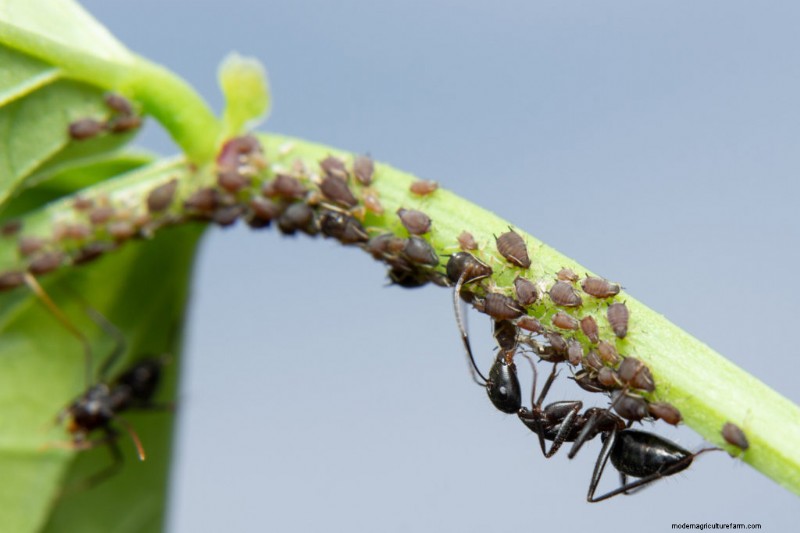
Aphids are tiny, soft-bodied pear-shaped pests that feed on plant sap and secrete a sugar-rich fluid called honeydew, an ant delicacy that is the nucleus of the aphid-ant union. Ants and aphids have developed a symbiotic relationship in which aphids produce honeydew for ants in exchange for protection from predators.
It works this way. During the day, ants guide aphids around plants and guard them while they feed, and carry the aphids to safety within their nests at night for protection.
In return for their trouble, ants feed on the honeydew secreted by aphids, sometimes prodding the aphids with their long antennae to produce honeydew on demand. Ants get to farm aphids to guarantee a continuous supply of honeydew by building enclosures within their nests to prevent aphids from leaving.
The aphid-ant relationship hurts plants in several ways. While studies reveal aphids feeding is harmless to healthy plants, I have seen aphids cause devastating damage to a wide variety of plants and shrubs in my vegetable garden. Some of these harmful effects include:
I often play a simple game while gardening. It is called ant spotting, and it involves watching out for ants in spots where I haven’t seen them previously. This little game has saved my garden from an ant infestation on numerous occasions. It’s a game that I recommend you play on your own.
The general signs that can help you determine if your garden ant population is out of control include:
What to look for when checking raised beds:
Raised garden beds with a dry soil system are ant magnets if not watered often. In my experience, checking if the soil system is dry (moist soils repel ants) is a sign that ants are likely to be present in significant numbers.
Over time, I have stumbled across several highly effective, natural, and environmentally friendly ant-control methods. These techniques have, on numerous occasions, helped reduce the ant population in my garden without harming the vegetable plants.
Here they are:
I have often used the aphid-ant symbiotic relationship as an ant-control technique to great success because a decline in my garden’s aphid numbers means fewer ant populations.
I have removed aphids by spraying them off plants with a garden hose and used neem oil or essential oils spray solutions on my vegetables to rid them of aphids. Natural predators like lacewings, ladybugs, and birds can be very useful in eliminating aphids.
I have had a high success rate using zeolite as an ant-control method. This little known ant and slug remedy works great when sprinkled over ants’ nests.
The zeolite’s honeycomb structure and its other unique characteristics can also be exploited for long-term, slow-release pesticide applications, making them highly effective against ants in your garden.
This naturally occurring product has a devastating effect on ants. It comprises millions of microscopic glass-like shards that cut through the bodies of ants, dismembering them or causing other debilitating physical damage.
Diatomaceous earth penetrates ant skin and drains their body of protective fats and other nutrients until they are dead.
This is a personal favorite of mine, and it is so effective at killing ants that it is unreal. Pour boiling water into any ant-hole in your garden to kill the ants inside. The result is instantaneous death for the ants residing in the colony.
White vinegar is an effective ant-control method. I have eliminated hordes of ants from my garden by spraying a 50-50 solution of 5% vinegar and water on infested plants. You can find a powerful vinegar concentrate here.
Borax (sodium tetraborate) is a lethal ant killer that I often use around my garden in spray or powder form. While borax is naturally occuring, you will need to dilute this effective ant-control product with water to make sure you don’t harm your plants with a high dose.
I like to mix borax with sugar and water and place it the vicinity of nests, to attract as many ants as possible.
Eucalyptus tree leaf extract is a safe bio-pesticide with immense ant-control capabilities. The main ingredient is an active chemical compound called p-menthane- 3,8-diol (PMD), making OLE an effective ant repellent.
Learn more about organic pest control methods for your garden in this detailed article.
Like most gardeners, I have a love/hate relationship with ants. I love them for their beneficial effects on plants and hate them because they can constitute a general and sometimes painful nuisance. Either way, I don’t think I would love to see the end of the critters because they make such a vital part of any garden ecosystem.


