
Welcome to Modern Agriculture!

This post may contain affiliate links, which means that I may receive a commission if you make a purchase using these links. As an Amazon Associate, I earn from qualifying purchases.
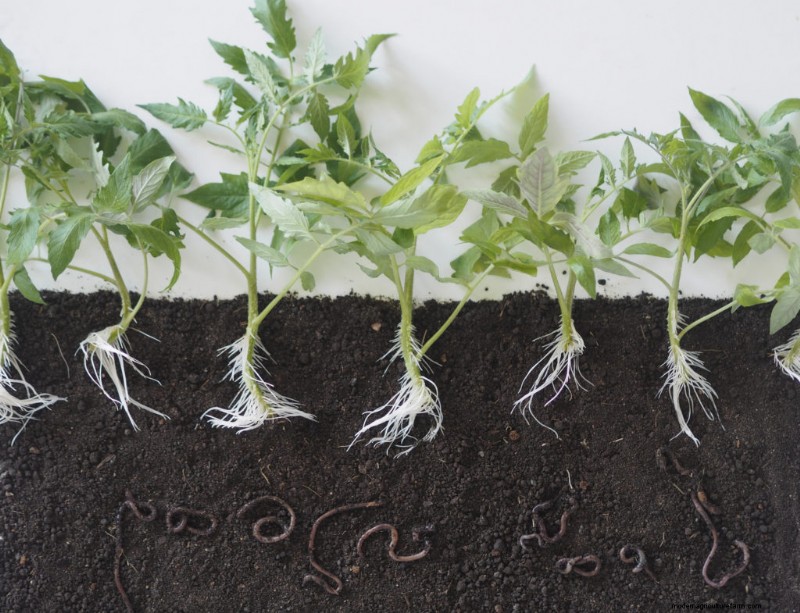
Vermicompost is a natural soil amendment consisting of decomposing organic matter and worms. It contains valuable plant nutrients, which are highly beneficial for garden plants and flowers. In this article, I will share with you four ways you can use vermicompost in your garden. Let’s get started.
Common ways of using vermicompost in your garden include a top dressing for plants, a seed starter to protect and boost seedling growth, or liquid fertilizer for faster root nutrient intake. You could choose these or use other methods depending on your gardening objective.
Vermicomposting is a procedure where gardeners rely on earthworms, specifically the Eisenia fetida species, commonly known as redworm, to convert a variety of active organic waste and debris, including waste from food preparation, food leftovers, scrap paper, yard waste, crop residues, animal waste, and an assortment of organic garbage produced by homes, farms, communities, and businesses into vermicompost.
Vermicompost is, as a result, an organic plant fertilizer and a valuable source of soluble nutrients for your garden plants and trees.
Vermicomposting recycles regular organic waste destined for landfills into nutrients that help your garden plants grow faster and develop deeper roots which result in higher yields. And because the process is 100 percent organic, there are no harmful side effects from eating vegetables or fruits from gardens with vermicompost.
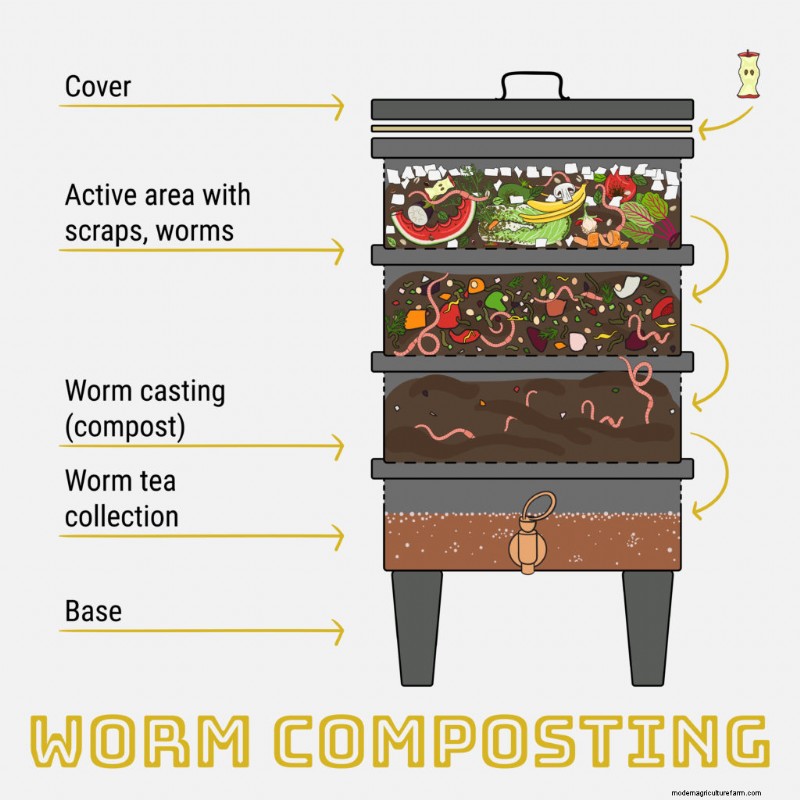
Vermicompost is a nutrient-rich organic soil conditioner that you can use for a wide variety of applications which includes household and landscaping applications. I believe that vermicompost has enormous benefits for small-scale organic farmsteads and in resolving the endemic animal waste problems in the farming industry, such as hog waste and cow manure.
Vermicompost is also beneficial for your garden in the following ways:
Chemical fertilizers are synonymous with the agricultural revolution of the 20th century, which led to massive farm yields and abundant food production. However, this feat was at the expense of the environment, food quality, and our health. People considering using either vermicompost or chemical fertilizers in their garden should take the time to compare the significant differences in their application and the effect of both soil conditioners on human health and the environment.
Below is a table illustrating their differences.
| VERMICOMPOST | CHEMICAL FERTILIZERS |
It is 100 percent organic and contains no toxic chemicals or additives that can harm human health during application. | It contains ammonia and other toxic chemicals that can cause respiratory problems when inhaled or skin irritation after coming in contact with bare skin. |
Vermicompost enriches your garden soil with live microorganisms, and it gives your garden the ability to produce abundant yields each season without compromising soil health. | Chemical fertilizers release nitrates into the soil, giving a short-lived nutrient boost for plants. However, this depletes your garden soil of nutrients, requiring frequent use of fertilizer to produce substantial yields. |
Applying vermicompost enables your garden soil to produce long-term, high-quality vegetables, and fruits. | Using chemical fertilizers only yields high-quality crops for a limited period before producing consistent long-term poor quality crops. |
Vermicompost is a thick sludge of nutrient-rich organisms absorbed into the soil. It isn’t easily washed out by rain which helps plant roots to continue drawing nutrients from the ground for a more extended period. | Unused chemical fertilizers are easily flushed from the soil by rain, preventing plant roots from drawing nutrients when needed. |
Vermicompost possesses insect repellent properties that help fight pest infestation in gardens. The worm castings in vermicompost stimulate the generation of enzyme chitinase, which degrades chitin, a vital component of insect exoskeleton. Allowing plants to grow healthier. | Chemical fertilizers do not reduce garden pests. They are primarily formulated to provide higher crop yields and do nothing to protect plants from insects and other problems. Also, the build-up of ammonia and salts used in chemical fertilizers makes your vegetables susceptible to diseases. |
Vermicompost contains mucus which holds your garden soil structure together. This prevents soil from breaking down and helps it retain valuable nutrients. | Chemical fertilizers contain sulfuric and hydrochloric acids that degrade rock particles in the soil resulting in the breakdown of the soil structure. |
Vermicompost is environmentally safe, and it does not contain pollutants that can contaminate groundwater sources, harm animal life or destroy their natural habitats. | It contains chemicals that can contaminate groundwater, making it unsafe for drinking. Chemical fertilizers can also disrupt the natural habitats of birds and small animals. |
In my experience, using vermicompost provides a significant improvement in plant growth and improved soil performance. Here are four ways you can use to achieve the same benefits for your garden.
Combining vermicompost with fresh seedlings when planting provides vital plant supporting nutrients promoting faster growth. This practice also allows gardeners to grow healthy organic vegetables with minimal soil degradation. Researchers at Cornell University Department of Plant Pathology and Plant-Microbe Biology reveal that beneficial microorganisms in vermicompost form a protective coat around fresh seedlings preventing infection from plant diseases. These microorganisms secrete a chemical blocker, deterring deadly greenhouse pathogens from infecting newly planted seeds.
Using vermicompost as a soil amendment allows your favorite plant to receive an uninterrupted supply of beneficial nutrients, ensuring rapid and disease-free growth. In my experience, the best way to use vermicompost as a soil amendment is by mixing the compost with your garden soil before planting. This method may consume more vermicompost, but you get a more uniform distribution of valuable microorganisms in soil which allows seedlings to sprout and take root faster.
Adding vermicompost to your garden bed is a simple yet effective means of boosting the nutritional composition of your garden soil during periods of active plant growth. I believe that top dressing garden beds with a layer of vermicompost allow gardeners to benefit from its exceptional water-soluble qualities. To top dress your garden bed with vermicompost, apply ½ to 1 inch of the substance around each vegetable plant. Then water deeply to dissolve the compost allowing the nutrient-rich microbes to sink beneath the soil surface where plant roots can access them.
Gardners can use vermicompost as a liquid fertilizer or compost tea, as it is known in some quarters, for their vegetable garden. Vermicompost is water-soluble, and soaking it explodes the population of the beneficial microorganisms creating a dense nutrient-rich tonic that delivers instant nutrients to plant roots. You can spray directly on plants (unlike toxic chemical fertilizers) to prevent pest infestation and diseases.
Vermicompost should have a dark color and a fluffy texture. Beware of products that have fillers or are mixed with sand. If you’re interested in purchasing high-quality vermicompost for your garden, here are some of the brands I recommend:
Vermicompost and traditional compost are both organic nutrient-rich soil amendments created by using natural processes to stabilize organic matter. Despite their similarities, both composite options have significant differences. In my opinion, vermicompost offers more benefits making it a winner over traditional compost.
However, it is important to highlight their critical differences for you to understand better how both vermicompost and traditional compost compare against each other.
| VERMICOMPOST | TRADITIONAL COMPOSTING |
| It relies on red worms to stabilize organic matter. | Use fungi and microbes to stabilize organic matter. Hence, the reason why it is sometimes referred to as microbial composting. |
Vermicompost can retain significant quantities of valuable soil microorganisms, plant enzymes, and growth hormones, including macronutrients like phosphorus (2.25%), potassium (2.25%), and nitrogen (23%), for long periods. | Traditional compost can not provide equal macronutrients, valuable microorganisms, and plant enzymes for long periods. |
It is more expensive than traditional composting. I had to purchase a bin and the correct type of worms before I could begin vermicomposting. Even with a DIY bin, you still need to buy worms. | Traditional compost is free, and you don’t need to spend a dime to make it. All it requires is you pile your lawn/yard/food debris in a bin or an improvised box, e.g., a cardboard box. |
Creating vermicompost (vermicomposting) is faster because redworms convert organic waste directly into bio-fertilizer, eliminating the need for curing. | It takes around eight weeks to complete traditional composting and an additional month to finish curing, which is the breakdown of large organic particles, compounds, and acids that remain after the composting process is complete. |
You need minimal space to create vermicompost. Vermicomposting can be done either indoors and indoors using a size vermiculture container of any size. It is perfect for small apartments and smaller homes. | You need a large space to create traditional compost. The process generally requires adequate outdoor space to install a sizable composting bin. You can not perform conventional composting indoors, making it only suitable for large homes and rural residences with lots of outdoor space. |
Vermicompost is nature’s gift to your garden. It nourishes soil life and gives you a great harvest. And in my experience, it is an environmentally sustainable and high-performance alternative to chemical fertilizers and low nutrient organic soil amendments.

