
Welcome to Modern Agriculture!

If you are looking for an interesting tropical plant that has unique foliage and that is easy to grow and care for, Colocasia Esculenta a.k.a. “Taro” or “Elephant Ear” is a great option.
Colocasia esculenta, commonly known as taro is a root vegetable from the Araceae family that is native to Southern India and Southeast Asia, but nowadays it can be found growing spontaneously in other various regions worldwide. The taro plant is used as a vegetable for its leaves, corms and petioles, but it is also grown as an ornamental plant thanks to its dramatic foliage.
The most important edible part of the plant – the taro corms are commonly used in the cuisine of African, Oceanic and South Asian cultures. Colocasia esculenta is thought to be one of the earliest cultivated plants.
Despite its culinary uses, one thing that you have to be aware of when considering growing taro is that according to the Humane Society of America, the Colocasia plant can be toxic to pets. In fact, taro is mildly toxic when raw as all parts of the plant contain calcium oxalate, which is an irritant. The good news is that this toxin is completely destroyed through cooking.
However, when ingested raw, the plant may cause health issues such as respiratory problems, mouth pain, and digestive problems. The taro plant can also cause skin rashes, so make sure you handle it with care and keep it out of your kids’ and pets’ reach.
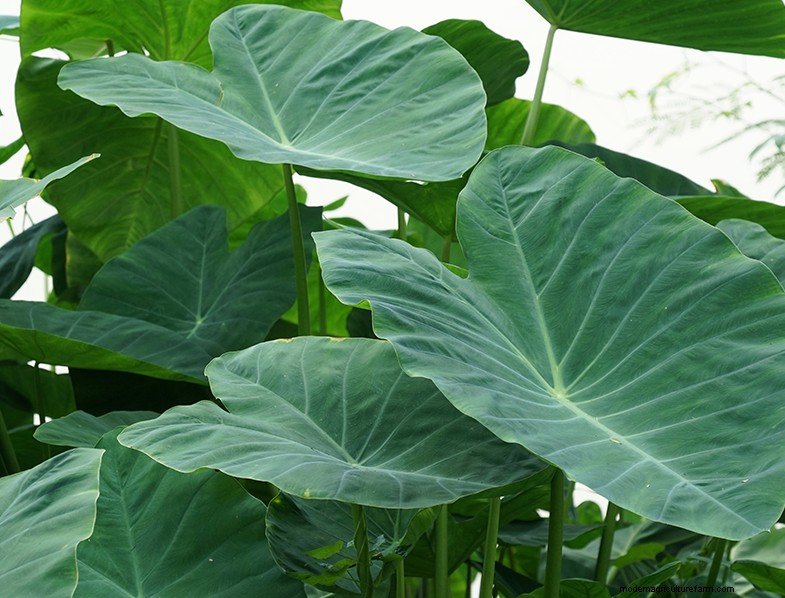 Colocasia Esculenta
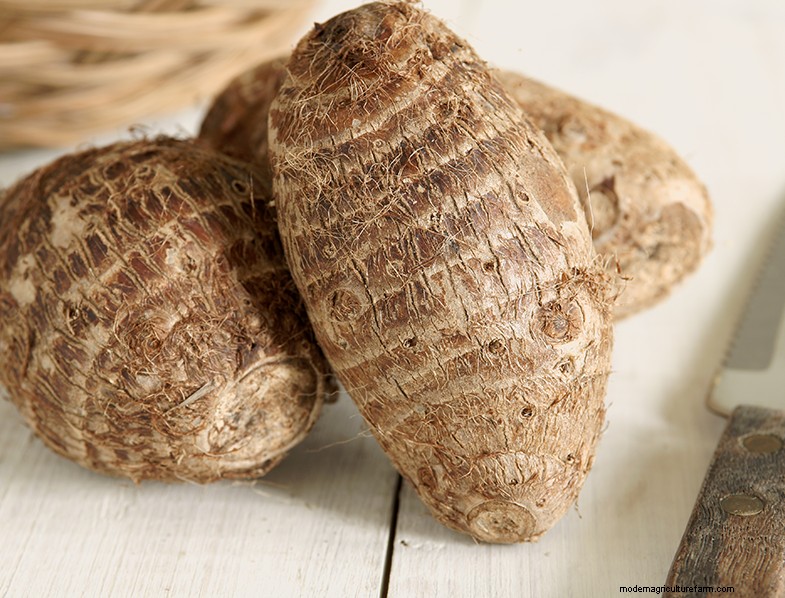 Colocasia Esculenta
Colocasia esculenta needs a worm environment, humidity and moist soil in order to properly develop. If you plan on growing Taro outside, keep in mind that this plant requires dappled shade and moist, rich soil. However, you can also plant it in a plastic container that you can bring back indoors in autumn.
If you intend to grow Colocasia esculenta as a house plant, you will need to ensure that it gets plenty of bright but indirect sunlight and a moderate to high level of humidity, like a steamy bathroom or conservatory. You need to know that colocasia will lose its foliage in winter if the temperatures drop below 21°C (70°F). Regardless of where you are growing your plant, it is recommended to apply a balanced liquid fertiliser feed monthly when the plant is in the growth stage.
Another important aspect to take into consideration is that Colocasia will not survive frosts so, in autumn, dig the plant up, cut off the foliage and store the tubers in a cool but frost-free and dry place, set in dry peat or wood shavings, over the winter months.
In early spring you can replant the tubers in a warm place indoors or in a greenhouse. If you grow these plants in USDA Zones 8-11, you can leave the tubers in the ground year-round. If you are growing your colocasia in a pot, the whole process is much easier as you will only have to bring it indoors and enjoy it as a house plant over the winter.
In order to maintain the desired size and shape of the Taro plant, prune it freely. Pinching plants back makes them dense and bushy and it encourages the appearance of more flowers. After the flowers fade, remove them to keep the plant healthy and prevent seed production that consumes the plant’s energy and prevents it from forming new flowers.
Generally, the pests that may affect the taro plant are armyworms, white-spotted flea beetle, aphids, whitefly, lace bug, thrips or hawk moth so it is advised to control the plant from time to time. These insects attack many parts of the plant and cause serious damage to your plant. So keep an eye on any signs that insects may leave on your plant.
A common problem that can affect the plant is stress – this can happen due to underwatering or sudden temperature changes. Stress can impact the growth and health of taro plants and it can make the plant more susceptible to pests and diseases. To avoid these issues, water and fertilize your plants regularly and keep them in a spot with consistently warm temperatures. The first sign of underwatering is the leaves’ tendency to wilt and curl up.
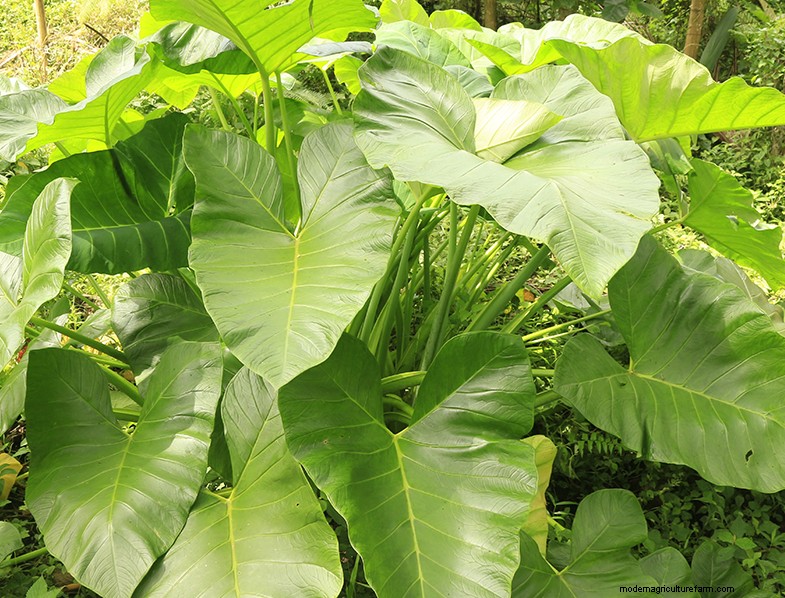 Colocasia Esculenta
Before planting the Colocasia esculenta plant, prepare your garden by breaking up the existing soil. After that, enrich the soil with organic matter such as manure, peat moss or garden compost until the soil is loosened and very easy to work with. The organic ingredients help to improve drainage, add nutrients and encourage earthworms and organisms that keep soil healthy.
When you plant the colocasia esculenta take into consideration the fact that if you want to grow many plants you will need a bigger area as the plants need light and space to grow. If you will plant them crowded, the plants will have fewer blooms and weak growth.
In the next stage of the plantation, you will need the seedlings. If they are stored in individual plastic containers, just squeeze the outside just a little so that the plant comes undamaged. The hole needs to be up to two times larger than the root ball and deep enough so that the plant will stay at the same level in the ground as it was at the soil level from the container. Gently grasp the roots of the plant, pull them apart and then plant them.
After planting the seedlings, push the soil lightly around the roots and take care to fill all the empty spaces around the root ball. Push the soil that surrounds the plant down with your hand or you can use any flat gardening tool to tamp the area. The soil that covers the plant hole has to be even with the surrounding soil or up to 3 cm higher than the top of the root ball.
If you are planting Colocasia in a pot, choose a large one (approximately 25 cm, with drainage holes) and plant it in multi-purpose peat-free compost. Also if you plant Colocasia corms in a pot, be sure to put them with the pointed side facing up. The tip of the tuber should be a couple of centimetres below the soil surface. You can keep the new plantings on a sunny window or in a warm greenhouse.
Bestseller No. 1
Fresh Taro Root - 8 oz of Root, Premium Quality, Nutritious, and Versatile - Perfect for Poi, Chips, and More! Plant Taro Root for Large Elephant Ear Plants. for Growing Plants or Kitchen use.
Bestseller No. 2
Ready 2 Grow 25 Live Bulbs Colocasia Esculenta Elephant Ear Taro Gabi Kalo Eddo
Bestseller No. 3
Last update on 2025-11-13 / Affiliate links / Images from Amazon Product Advertising API
When it comes to new plantings, keep in mind that they usually need more attention when it comes to water as they need to be watered daily for a couple of weeks. After this stage, depending on the weather and soil type, you can adjust the frequency with which you will water them every two or three days. If the soil is sandy then you will have to water them more often, while if the soil holds moisture longer, like the clay soils, the plant will enjoy the water for a larger period of time.
Generally, water should only be applied to the root area and not to the entire plant. If you want to keep your Taro plant healthy and reduce water loss through evaporation, you can take into consideration purchasing a soaker hose.
Another best way to water them is by using a watering wand with a sprinkler head attached. If you have colocasia esculenta planted in a larger area, a sprinkler is the best. Try to water your plants in the morning so that the plant foliage has time to dry through the day. If the plant remains moist it may encourage disease and mould that can weaken or damage your plants.
If you are not sure whether you need to water or not your colocasia esculenta plants, check the soil moisture and use your finger or a small trowel to dig in and evaluate the soil. If the first 5 to 10 cm of soil is dry, it means that is time for watering.
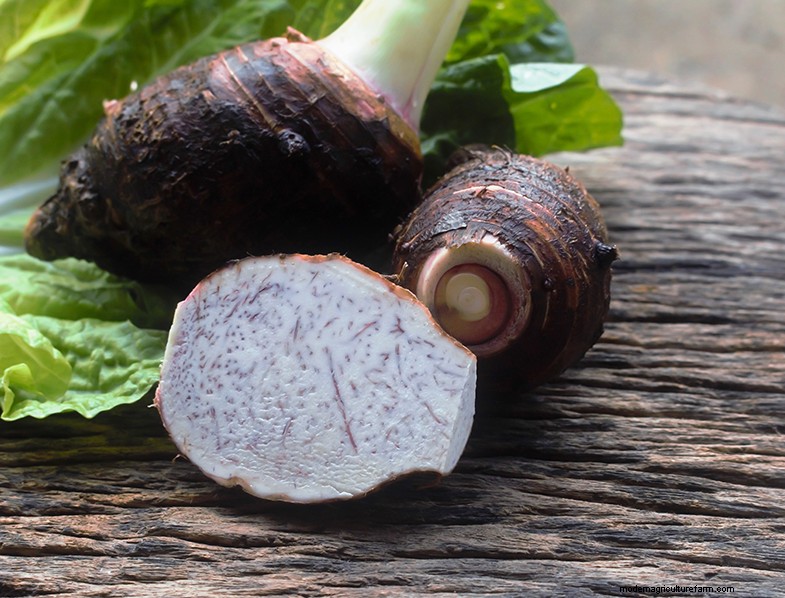 Taro
TaroAs they reach maturity, Taro foliage starts to turn yellow and die off. According to experienced Taro growers, this indicates that it is time to harvest the tubers. As mentioned above, in warm climates, taro can stay in the ground until the frost comes, so you don’t have to stress about harvesting them or rush the process. The Taro tubers can only be harvested once from a plant, so you will have to replant if you wish to enjoy these plants again next year.
To harvest the Taro tubers, grab the plant preferably wearing gardening gloves, slightly lift it, chop off the leaves, and clean off the soil. In most cases, a Taro plant will produce one big tuber and several smaller ones. You can either eat the small tubers as well or save them for the following season.
You might be tempted to think that taro tubers are similar to potatoes, but there is an important difference between these two types of tubers. Taro tubers will soften much quicker than potatoes after being harvested, so make sure you plan ahead before you harvest as you will need to eat them pretty quickly. The best way to store Taro tubers is in a dark, dry, and aerated place, but not in the refrigerator). Taro leaves, however, can be stored in the fridge for up to one week.
As previously mentioned, all parts of the Taro plant are toxic when raw due to calcium oxalates. To make them edible, you can roast, bake, fry, or boil them. You can cook them in similar ways you would cook potatoes, but experienced Taro growers advise against mashing them.
If you harvested your Taro tubers and realized that you can’t possibly eat them all, you can keep them in the freezer. Cook the taro roots by blanching them, place them in airtight containers, and store them in your freezer.
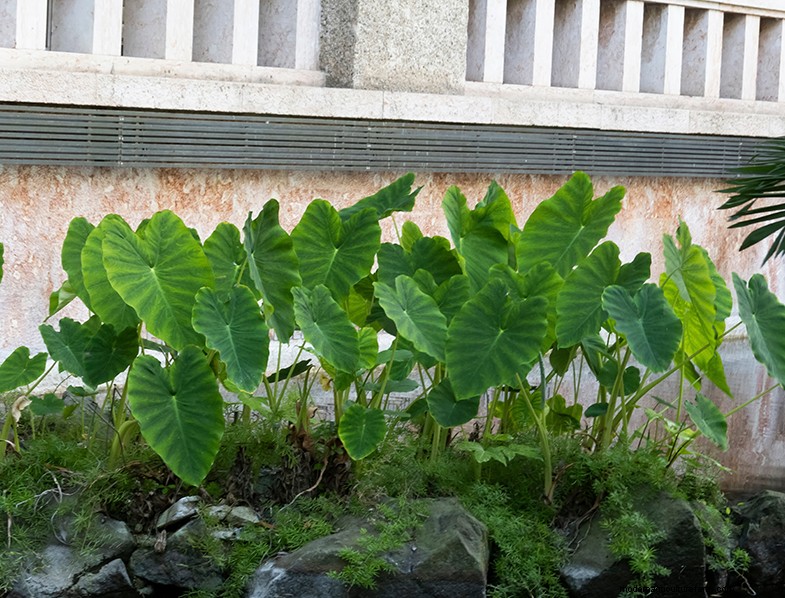 Taro
TaroThe easiest way to propagate Colocasia esculenta is through rhizomes. The first step is cutting the rhizomes into pieces that are at least 5 cm in length and have a minimum of one noticeable bud. The next step is to plant the rhizomes at approximately 13 cm deep in the soil. It is very important to maintain the entire area of soil moist during the process. It takes more or less 3 months for the plant to be sufficiently developed so that you can transplant it, but it can take a whole year for colocasia to reach maturity and bloom.
If you prefer to propagate colocasia in a home setting, you have to select a rhizome from the base of an existing plant and cut it off gently with a sharp knife. Avoid cutting any roots on the rhizome, what we want to achieve with this procedure, is to separate the rhizome completely from the parent plant. Immediately after you have divided the corms from the parent, plant them in a mixture of soil and compost and after that water generously. Now you can put find a place where there is plenty of indirect sunlight and airflow for your taro plant.
Colocasia esculenta may be propagated from seeds too, but this procedure can be challenging because seeds are rarely produced by the plant. Moreover, the time you will have to wait until for the entire process of germination and after that growing of the seedling until becoming a well-developed plant is longer. Because this type of plant propagation is more time-consuming, is avoided by many growers.
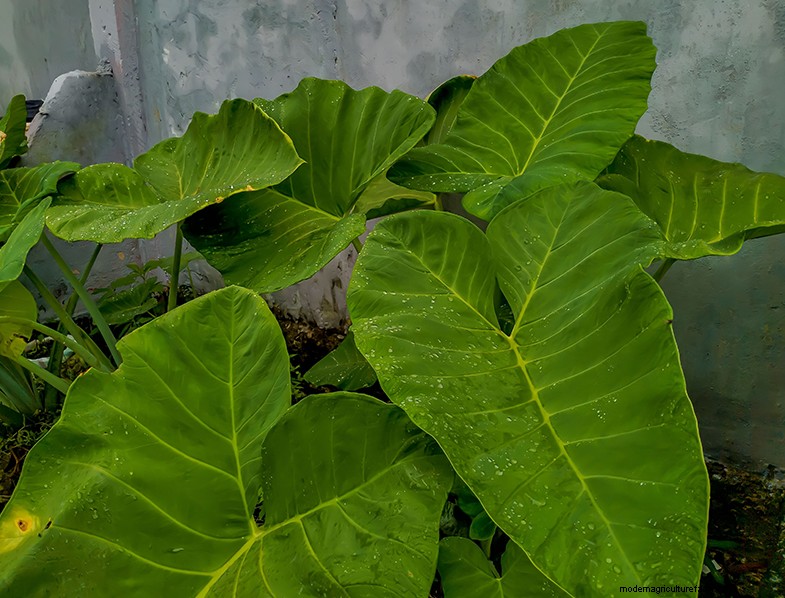 Taro
TaroColocasia esculenta or the taro plant is a deeply rooted plant in the Southern Indian, African, Oceanic and Southeast Asian cultures. The Taro plant can be used as a vegetable for its leaves, corms and petioles and also as an ornamental plant for your home or garden.
When used in dishes, colocasia esculenta can make great additions to both sweet and savoury dishes. It is also used as a flavour for milk-based beverages in the Philippines. Although is a relatively easy plant to grow it has some special needs: it needs humidity, and the soil has to be moist constantly when the temperatures outdoors start to fall you will have to bring it in the house or in a warm greenhouse. Also, if the temperature in the house goes below 21°C the leaves may fall. So, even though Taro is not a difficult plant to grow, it is recommended to remember its few, but important demands.
Are you growing Colocasia esculenta a.k.a Taro? Share your experience in the comment section!
Colocasia, or Elephant Ears, prefer partial shade, especially in hotter climates. However, they can tolerate full sun if they receive ample water to prevent the soil from drying out. In cooler climates, they can benefit from more sunlight.
Colocasia esculenta, also known as Taro, can grow quite large. Depending on the specific variety and growing conditions, the plants can reach heights of 3 to 6 feet (and sometimes even taller). The individual leaves can be 2 to 3 feet long and wide, giving them their distinctive “elephant ear” appearance.
Yes, Taro refers to the plant Colocasia esculenta which is commonly called “Elephant Ears” because of its large, ear-shaped leaves. However, while “Elephant Ears” is a common name for several plants with large leaves, Taro specifically refers to Colocasia esculenta. Taro is also known for its edible corms, which are a staple in many tropical diets.
Here’s how to overwinter Colocasia:
184


