
Welcome to Modern Agriculture!

Do you enjoy a slice of peach cobbler with some fresh whipped cream? How about a cool, tall glass of peach ice tea on a hot summer afternoon? What if you had a never-ending supply of peaches growing right in your garden?
Planting a peach tree in your yard is a great idea if you’re a fan of the fruit. With so many varieties available, you can grow your favorite peaches right in your backyard. Sun-ripened, homegrown peaches are a delicious delight.
When your tree starts producing fruit, it will give you fresh peaches for years, provided you give the tree the right care and attention. Peach trees enjoy growing in USDA Zones four through nine, but they do best in Zones six through eight.
There are several varieties of peach trees, and they all suit different climates. Choose the type that suits your growing climate conditions and your taste in peaches. When harvest time rolls around, you’ll have fresh peaches available for months and more than you know what to do with – preserve them or hand them out to neighbors and friends.
This guide gives you everything you need to know about growing and caring for peach trees.
You’ll need to purchase your peach tree from the nursery and plant it in the late winter during the trees dormancy phase. Hold off on your planting in regions where the ground freezes during the winter. Wait for the soil to thaw and the water to drain from the snow melting away.
To reduce stress in your peach tree, it’s a good idea to plant it on the same day you buy it. If you purchase a potted peach tree, it can stay in the pot for a few weeks before planting it out into the garden.
When viewing trees at the nursery, select one that’s around a year old. Check the root system to ensure it’s healthy and there’s no presence of root rot. Choosing an old tree isn’t the best idea as it may slow growth and fruit production.
When planting your peach tree, choose a spot in the yard that gets full sun. The peach tree needs at least eight hours of direct sunlight each day to produce the best fruit.
The more sun the tree gets, the bigger and tastier the peaches. Plant it in an area of the garden where the tree receives early morning sunlight that dries away the dew.
Your planting site should have well-draining soil rich in nutrients. The tree won’t grow well if you plant in compacted or clay-like soils. The ground requires moisture throughout the growing season, and the pH needs to be in the acidic range, between 6 and 6.5.
Avoid planting your peach tree in a low area of the yard. Cold air hangs in these low spots, affecting the size and quality of the fruit.
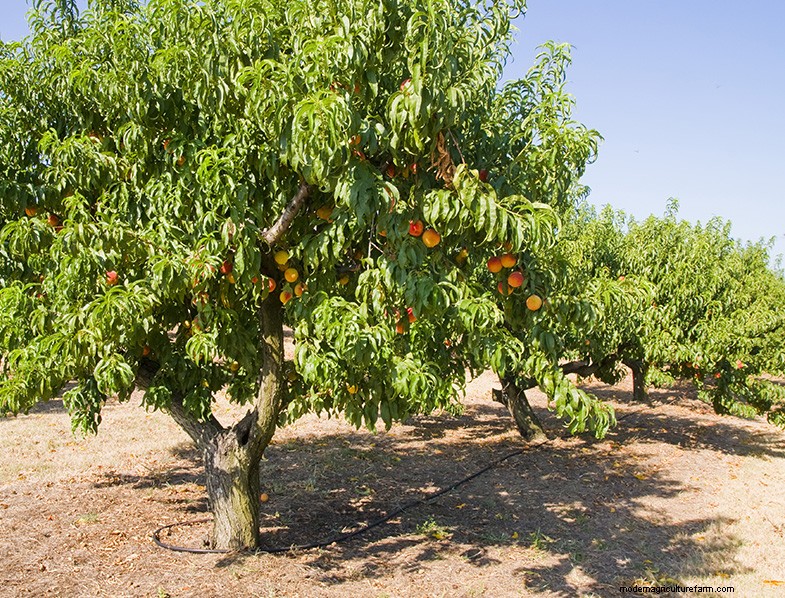 Peaches growing
Peaches prefer growing in moderate temperatures. However, there are several cultivars that you can choose from to suit your local growing conditions.
Peach trees require a minimum of 600 chilling hours at temperatures of 45F or lower to start the fruiting process. However, extended periods in sub-zero temperatures may kill or damage the tree.
Peach trees can deal with humidity. However, excessive humidity may lead to the development of disease on the tree.
Dig a hole in the planting spot that’s around 6-inches deep and 12-inches wider than the width of the root ball. Back the soil into the hole and keep the base of the tree-level with the soil line. Don’t fertilize the tree after planting.
When the tree starts to bloom, wait four to six weeks and thin the fruit to be around 6-inches apart on the branch. Growing too many peaches close together results in smaller fruit and less juicy peaches.
Thinning allows the tree to focus its energy on the remaining fruit, resulting in large, juicy peaches come harvest time.
Around six weeks after planting, fertilize the peach tree with a balanced 10-10-10 NPK fertilizer. We recommend spreading a granular formulation around the base of the tree. Keep the fertilizer 18-inches away from the bottom of the trunk.
In the second year, fertilize using a ¾ pound of nitrogen-based fertilizer in the spring and early summer. In the third year, add around 1-pound of the same fertilizer.
To ensure you grow a hardy tree, don’t fertilize it within two months of the first frost date in your area. Only apply your fertilizer between the spring and mid-summer months.
Bestseller No. 1
Belle of Georgia Peach Tree, Cold Hardy, Deciduous, Self-Pollinator, 1 gal Nursery Pot, 1-2 ft Tree Height (Due to Agricultural Laws, we Cannot Ship to CA, AZ, AK, or HI)
Bestseller No. 2
Florida Glo Peach Tree - Low Chill - Self Pollinating Live Fruit Plant Shipped 3 to 4 Feet Tall by DAS Farms (No California)
Bestseller No. 3
Contender Peach Tree - Self Pollinating Live Fruit Plant Shipped 2 to 3 Feet Tall by DAS Farms (No California)
Last update on 2025-11-12 / Affiliate links / Images from Amazon Product Advertising API
The gardener will need to prune the tree each season. Pruning is a vital task, and it’s important for you to conduct seasonal pruning for the health of your peach tree. If you neglect the tree and don’t prune it, the branches and stems become vulnerable to infection with fungal disease. As a result, the tree starts producing less fruit.
Pruning also ensures that you get the best crop production the following growing season. Peach trees bloom and start to bear fruit in the second year after establishing themselves. For the tree to begin bearing fruit, you’ll need to look out for the red shoots that form on the branches.
Typically, trees that fruit require the development of red shoots before you start seeing results with the fruiting process. When the shoots reach 18 to 24-inches in length, the tree is ready to start fruiting.
If the gardener doesn’t prune the tree, the shoots start moving higher, towards the canopy. Eventually, the tree will stop fruiting altogether. Giving your peach tree a moderate pruning at the end of the harvest season ensures it keeps producing as much fruit as possible each year.
Prune your peach tree into an open shape. During the first summer, cut back the shoots forming on the top of the tree by a couple of buds. Check the tree again after a few months, and cut back any branches other than the three main ones you’re using for fruiting.
In the second year, cut back the middle branches in the tree’s center to stubs a prune the lower shoots. In the third year and beyond, remove the nodes forming at the tree base to help it retain its shape. It’s best to prune your fruit tree in mid to late April, and pinching the tree in the summer is a useful strategy to enhance growth.
The fruit of the peach tree tastes delicious, and it’s safe to eat. However, the stone of the fruit contains a natural form of cyanide, a very toxic substance.
The cyanide also exists in the stems and leaves of the tree, keeping deer from feeding on it. When the stems and leaves start to wilt, they have peak concentrations of cyanide in the tree.
Some signs of cyanide poisoning include shortness of breath and trouble breathing, salivation, vomiting, confusion, incontinence, and shock.
Some of the pests and diseases affecting peach trees include the following.
You can remove the pests by spraying the tree with diluted neem oil to chase the bugs away. Prune away and disease on the tree, and throw the plant matter in the trash, not the compost heap. If you experience severe infection on the tree, visit your local nursery and ask for a fungicidal treatment for your peach tree.
You can harvest your peaches after they ripen in June through August, depending on your plant variety. Peaches are temperamental and require harvesting at the right time to avoid problems occurring with the fruit.
Typically, gardeners will know its harvest time by the color of the peaches on the tree. When your peaches ripen, they change from green to yellow. Pick them from the tree by lightly twisting the fruit. Don’t eat peaches that fall to the ground as they taste funny and may have insects feeding on them.
The peaches on the exterior and top of the tree are the first to ripen. Some cultivars bruise easily, so take care when picking your peaches. To ripen your peaches fast, keep them in a paper bag in an airy room at ambient temperatures.
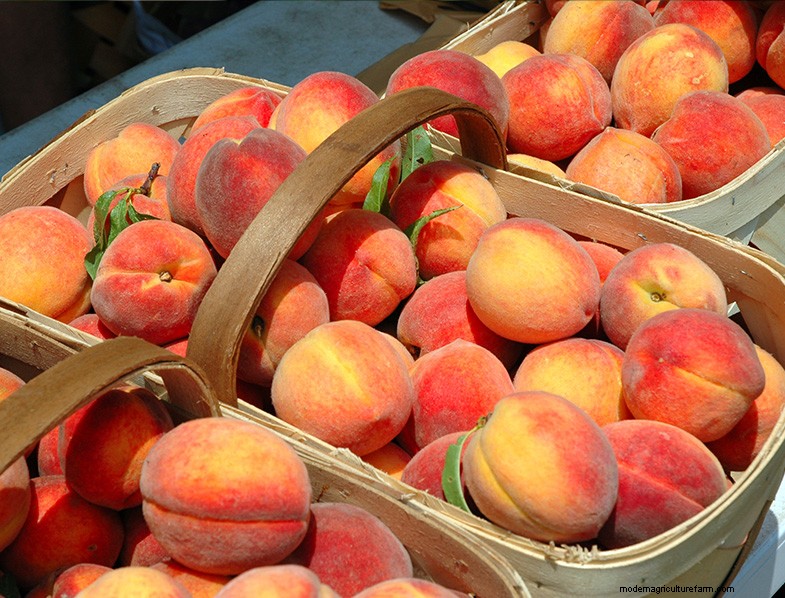 A Basket Of Peaches ripe from Harvest
Peach trees come in hundreds of varieties to suit any climate location. Peach trees produce either freestone or clingstone fruits, and most cultivars suitable for growing a home are the freestone variety. You also have options for choosing white or orange flesh and early or late-fruiting peach trees.
Here are our favorite varieties that will suit your garden.
Peach trees typically start bearing fruit when they are about 2 to 4 years old. However, the exact time can vary depending on the specific peach tree variety and growing conditions.
From planting a peach tree, it usually takes about 3 to 4 years for the tree to reach maturity and start producing fruit. During this time, the tree goes through different stages of growth, including establishment, vegetative growth, and fruiting.
Most peach tree varieties are self-fertile, which means they can produce fruit with their own pollen. However, having two or more peach trees in close proximity can enhance cross-pollination and increase fruit production. Cross-pollination between different varieties can improve fruit quality, yield, and extend the harvest period.
Peaches can be moderately challenging to grow compared to some other fruit trees. They require specific soil and climate conditions, regular pruning, and pest management. However, with proper care and attention to their needs, they can be successfully grown by home gardeners and orchardists.
Yes, a single peach tree can produce fruit. As mentioned earlier, most peach tree varieties are self-fertile and capable of producing fruit with their own pollen. However, having multiple trees or different peach varieties nearby can improve pollination and potentially increase fruit production.
The height of a 2-year-old peach tree can vary depending on the specific variety and growing conditions. On average, a 2-year-old peach tree can be around 2 to 4 feet tall. However, it’s important to note that the growth rate and size can differ based on factors such as rootstock, pruning, and overall plant health.
153


