
Welcome to Modern Agriculture!

Mushrooms are unusual organisms that are neither plants nor animals. They fall into a kingdom of their own, Kingdom Fungi, that includes mushrooms, molds, rusts, smuts and yeasts.
Although initially classified as plants, scientists soon realized fungi were more similar to animals.
Unlike plants that use photosynthesis to produce the nutrients they need, fungi and animals get the nutrients they need by digesting organic material.
And, like animals, fungi breathe in oxygen and exhale CO2, whereas plants do the opposite.
But although they have their own kingdom, they’re often considered vegetables, and you’ll find mushrooms, the fruiting bodies of fungi, in the vegetable section of most grocery stores.
Because they’re rich in nutrients and active compounds, mushrooms are an excellent addition to a healthy diet.
And their meaty texture and earthy flavors make them ideal as meat substitutes in vegetarian and vegan dishes.
But do mushrooms have protein?
Yes, they do, and in the sections below, we’ll look at how much protein they have and compare the protein in mushrooms to meat and other vegetables.
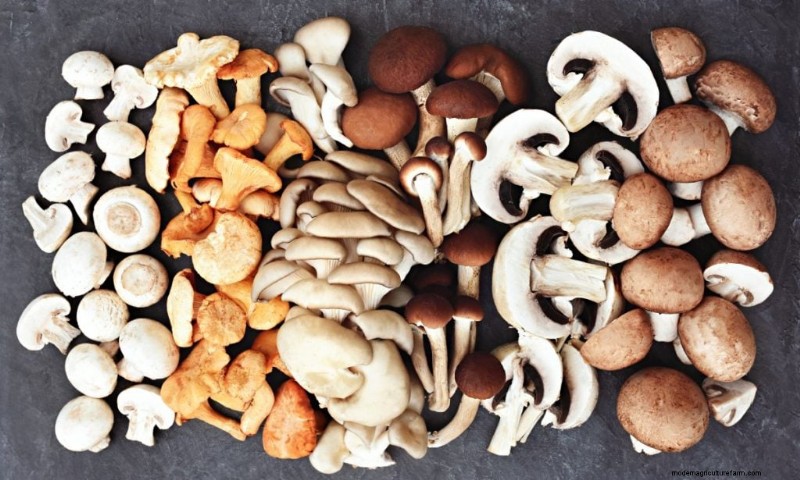
Although mushrooms contain high-quality protein that’s easily absorbed, when compared to meat, they have a lot less protein.
You would have to eat a lot of mushrooms to meet your daily protein requirements if they were your only source of protein.
But mushrooms are low in calories and contain lots of beneficial vitamins, minerals and active compounds, making them a desirable source of protein.
And many mushrooms, including delicious oyster mushrooms, are complete proteins because they contain all nine essential amino acids. Although not in as high a concentration as meat.
The human body needs 20 different amino acids to function optimally.
We produce 11 of these amino acids, called non-essential amino acids, internally. But we need to get the other 9 amino acids from our food. These are the essential amino acids.
To enjoy the benefits of mushrooms and get enough protein, people often mix mushrooms half and half with meat to create delicious pasta sauces, casseroles, chili and hamburger patties.
Or, use them as a source of high-quality protein combined with other protein-rich vegetables in vegetarian and vegan meals.
The result is tasty, satisfying dishes that are lower in calories and full of the beneficial nutrients found in mushrooms.
Because mushrooms are a high-quality source of protein, researchers have conducted several studies on ways to use them to meet the protein requirements of future generations.
And mushroom mycelium is proving to be a very versatile source of protein.
While mushrooms might not have enough protein to be a protein replacement, mushroom mycelium-based products claim to contain enough protein to be meat replacements.
My Forest Foods uses vertically grown mycelium to create sustainable, plant-based meat replacements, like MyBacon, to help feed future generations.
Quorn has developed Mycoprotein, a protein derived from fungi, that they use together with other protein sources to create plant-based products that can replace meat in dishes.
 Image from myforestfoods.com
Mushrooms are a low-carb, low-calorie source of protein, fiber and nutrients.
They’re ideal for use as part of a low-carb keto diet, as many of the carbs in mushrooms are from beneficial dietary fiber that’s very good for our digestive system.
The quantities of protein and carbs in mushrooms vary from species to species.
For example, a 3.5oz (100g) serving of raw white mushrooms has 0.11oz (3.09g) of protein and 0.12oz (3.26g) of carbs, with 0.03oz (1g) being dietary fiber.
While 3.5oz (100g) of raw enoki mushrooms have 0.09oz (2.7g) of protein and 0.27oz (7.8g) of carbs, with 0.09oz (2.7g) being dietary fiber.
Our article, “Are Mushrooms Keto + Keto Mushroom Recipes,” has more information on using mushrooms as part of a keto diet with some delicious recipes.
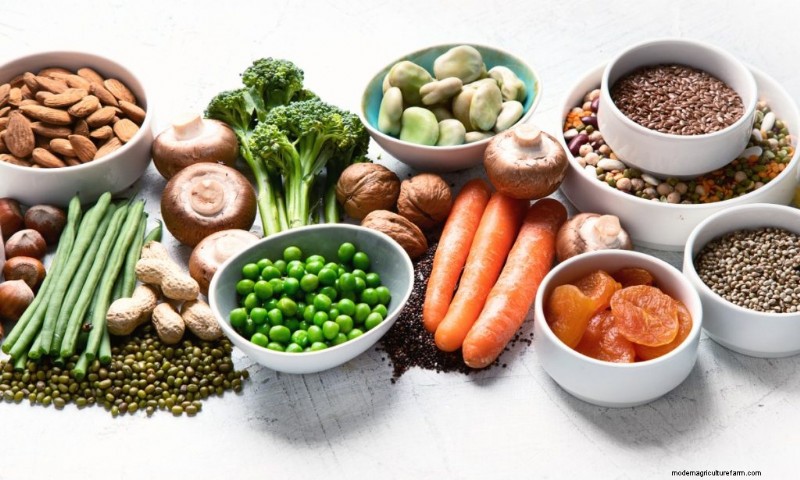
On their own, mushrooms are not a nutritional substitute for meat as they do not contain as much protein and have less iron, zinc and vitamin B12 than meat.
But mushroom proteins are rich in leucine and lysine, essential amino acids not found in many plant-based foods.
And mushrooms also contain other beneficial vitamins, minerals and antioxidants not found in meat, making them an excellent addition to a vegetarian or vegan diet.
Vegetarians and vegans often use mushrooms as a substitute for beef, chicken or fish in recipes because many gourmet mushrooms have firm textures similar to these meats.
But are mushrooms a protein replacement?
On their own, mushrooms are not a protein replacement. But when used in a meal with another good source of vegetable protein, such as beans, soy or nuts, you’ll get all the protein you need.
We have put together 25 of our all-time favorite vegan mushroom recipes to give you ideas and help you use mushrooms to create savory meat-like vegan dishes.
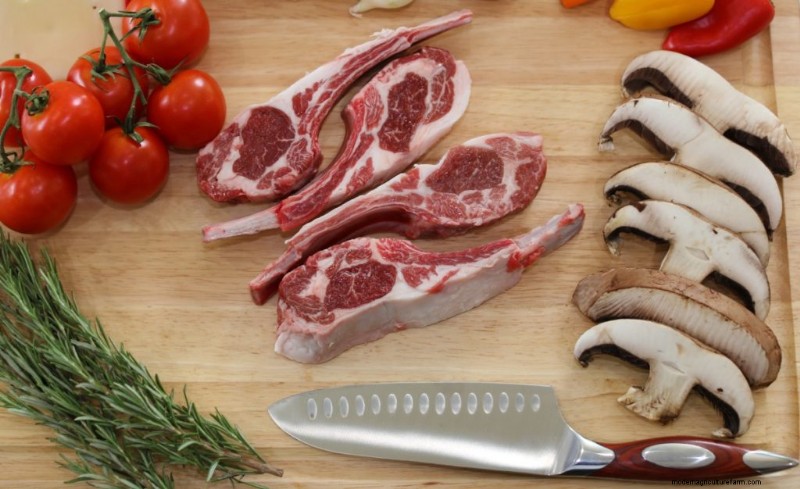
The quantity of protein in a 3.5 oz (100g) serving of meat is significantly higher than in 3.5 oz (100g) of mushrooms.
But mushrooms are one of the few plant-based proteins that are similar in quality to animal proteins and an excellent source of several amino acids.
And studies suggest that a meal containing mushrooms instead of meat makes people feel fuller for longer.
The table below shows the protein in a 3.5 oz (100g) serving of some popular meat choices vs common mushrooms.
Protein SourceProtein per 3.5oz (100g) servingRoasted chicken breast1.09oz (31g)Pork chops1.09oz (31g)Grilled Tbone steak0.98oz (27.9g)Roast duck0.83oz (23.5g)leg of lamb0.63oz (17.9g)Hard boiled egg0.44oz (12.6g)Oyster Mushrooms0.12oz (3.3g)White button mushrooms0.1oz (3.1g)Cremini mushrooms0.09oz (2.5g)Portobello mushrooms0.07oz (2.1g)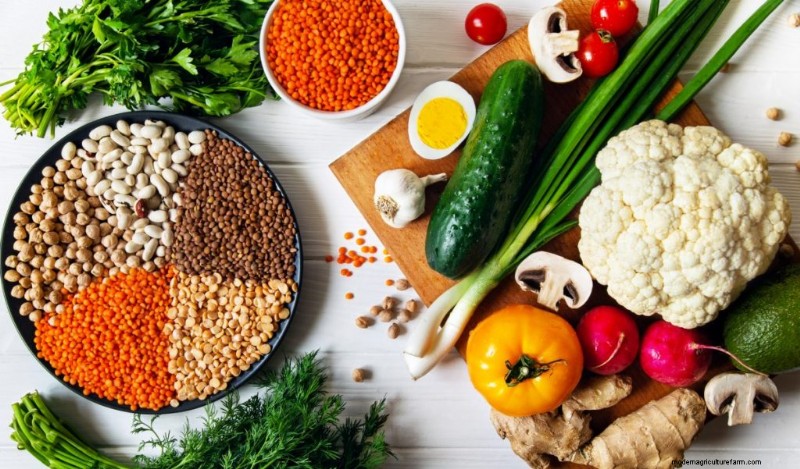
Mushrooms are a good source of vegetable protein as they contain essential amino acids that most other plant-based proteins lack.
But, some vegetables contain more protein than mushrooms, and nutritionists recommend combining mushrooms with other high-protein vegetables on a plant-based diet.
The table below shows the protein in a 3.5 oz (100g) serving of some popular vegetables vs common mushrooms.
Protein SourceProtein per 3.5oz (100g) servingLentils (cooked)0.32oz (9g)Black beans (cooked)0.31oz (8.9g)Peas0.19oz (5.4g)Spinach0.1oz (2.9g)Broccoli0.1oz (2.8g)Baked potato0.07oz (2.1g)Carrots0.03oz (0.9g)Oyster Mushrooms0.12oz (3.3g)White button mushrooms0.1oz (3.1g)Cremini mushrooms0.09oz (2.5g)Portobello mushrooms0.07oz (2.1g)Protein content differs between types of mushrooms and even between different mushroom species.
And it’s not only the type of mushroom that affects the protein content. Other factors also play a role, including:
Below, in order, are 9 well-known gourmet mushroom species that have the most mushroom protein per 3.5oz (100g).
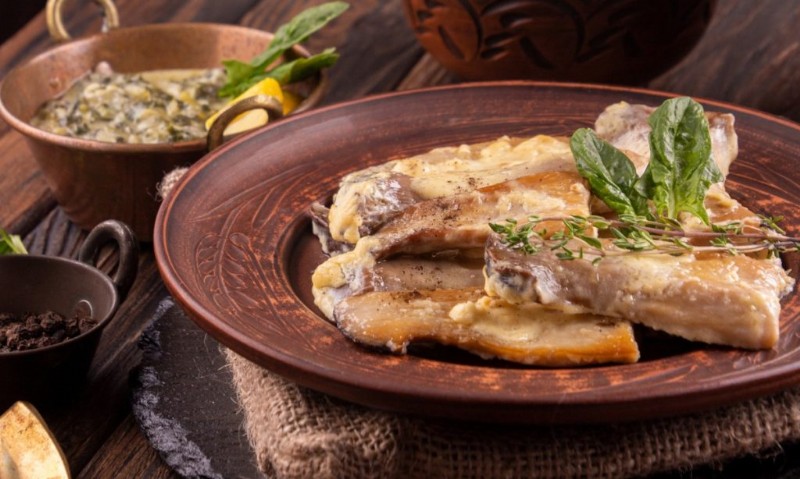
Oyster mushrooms are one of our favorites because they’re healthy, delicious and easy to grow at home.
They get their name from their oyster-shaped caps that are typically a light gray to grayish-brown in color, but you do get striking blue, yellow and pink varieties.
People cultivate oyster mushrooms worldwide, and you’ll find them in most grocery stores and farmer’s markets.
Oyster mushrooms come in at the top of the list with 0.12oz (3.3g) of protein per 3.5oz (100g) serving, and that is not the only nutritional benefit they offer.
Apart from protein and fiber, oyster mushrooms contain numerous vitamins and minerals and are a great source of vitamin B, potassium, phosphorus and copper.
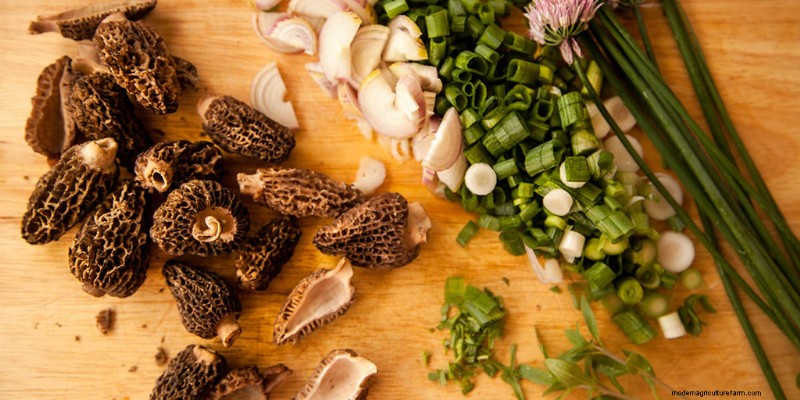
These unusual mushrooms are some of the most sought-after mushrooms in the world as they’re not easily cultivated, and you have to harvest them in the wild seasonally.
Because of this, people often dry morel mushrooms, so they can enjoy their unique nutty flavor throughout the year.
Morels are very nutritious, with 0.1oz (3.1g) of protein per 3.5oz (100g) serving and lots of vitamin D, iron and copper.
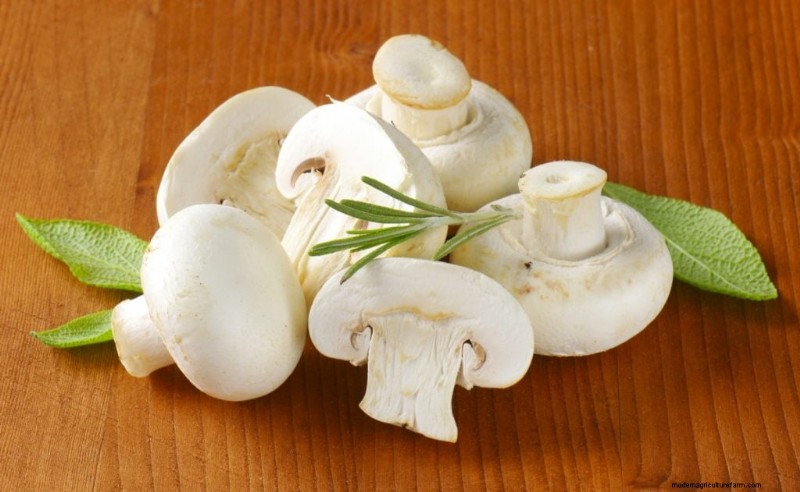
White or button mushrooms are the most cultivated mushrooms worldwide. They’re found in many grocery stores, and most people know and use them.
Their mild flavor makes them very versatile, and you can enjoy them raw in salads, sauteed on toast, as a pizza topping, or in sauces, soups and stews.
But, even though they have a mild flavor, like other mushrooms, they’re full of beneficial nutrients, and raw white mushrooms contain 0.1oz (3.1g) of protein per 3.5oz (100g) serving.
White button mushrooms are also a rich source of vitamin B and copper.
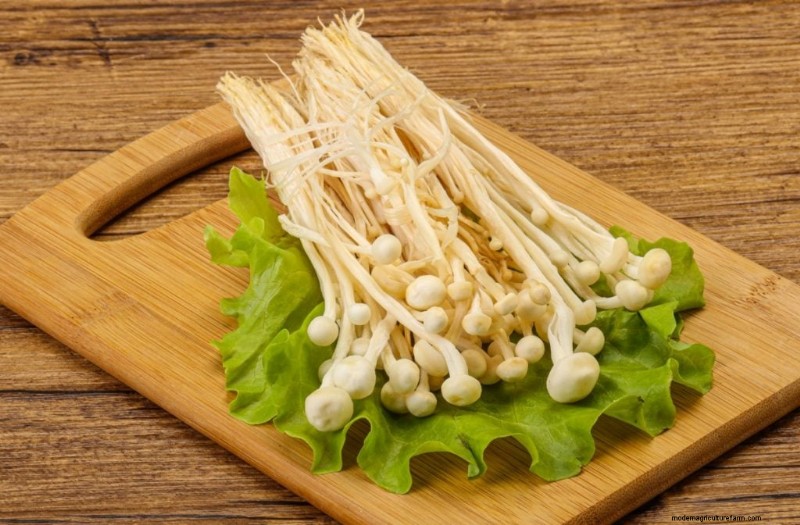
Enoki mushrooms are native to Japan, China and Korea but are now cultivated and available worldwide.
They’re exotic looking, with long stems and small caps, and a common ingredient in Asian cuisine where they’re consumed raw or lightly cooked.
Enoki mushrooms are prized for their delicate flavor, crunchy texture, nutritional value and health benefits.
These distinctive mushrooms contain 0.09oz (2.7g) of protein per 3.5oz (100g) serving and are a good source of vitamin B.
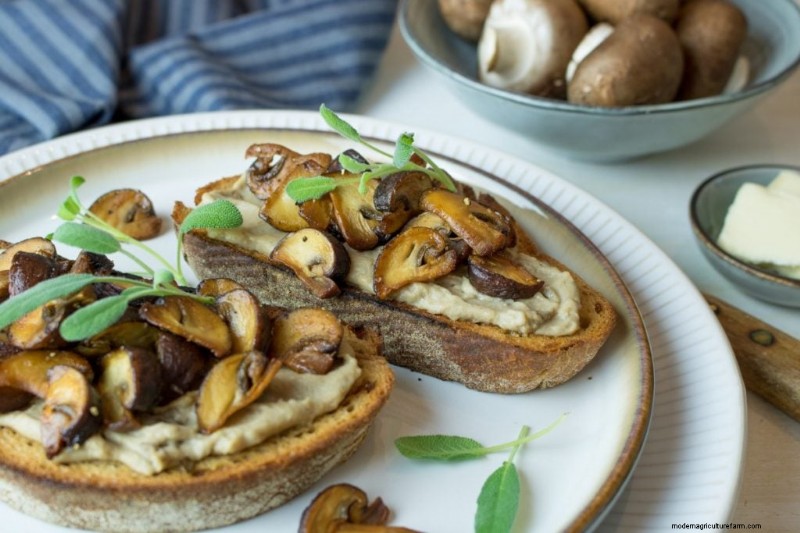
Cremini mushrooms are the same mushroom species as white button and portobello mushrooms. The difference between them is the age they’re harvested.
A cremini is slightly more mature than a button mushroom and, as a result, has more pronounced flavors.
Cremini mushrooms contain 0.08oz (2.5g) of protein per 3.5oz (100g) serving and loads of nutrients. They’re a good source of vitamin B, copper and selenium.
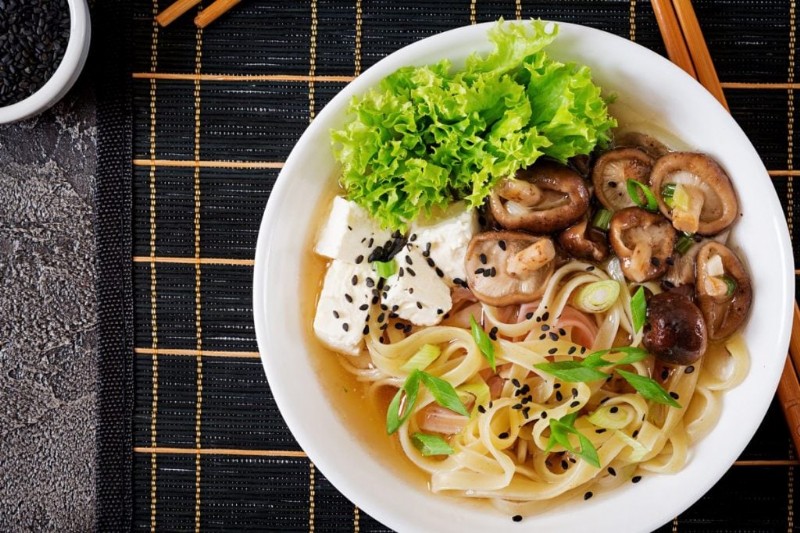
These popular mushrooms, prized for their medicinal properties and rich flavor and aroma, are available year-round, fresh and dry, as they’re widely cultivated.
The flavor and texture of shiitake mushrooms make them a nutritious meat substitute, and people use them to replace ground beef in burgers, lasagna and spaghetti bolognese.
They’re one of the healthiest mushrooms for a meat-free diet with 0.07oz (2.2g) of protein per 3.5oz (100g) serving and 17 different amino acids.
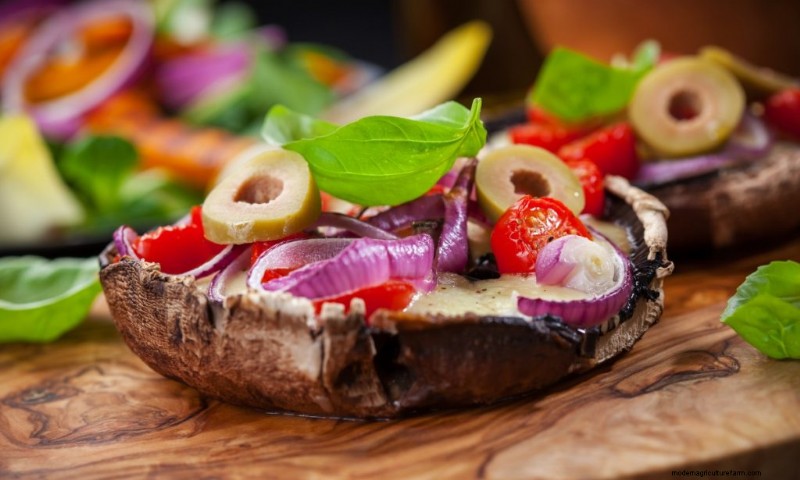
These large, ultra-versatile mushrooms are the same as button and cremini mushrooms, but growers allow them to fully mature.
Because of their size and meaty texture, they’re often referred to as steak mushrooms and are delicious when stuffed, grilled or used in place of burger patties.
Apart from the 0.07oz (2.1g) of protein per 3.5oz (100g) serving, these nutritious mushrooms are a good source of niacin, vitamin B5, copper and selenium.
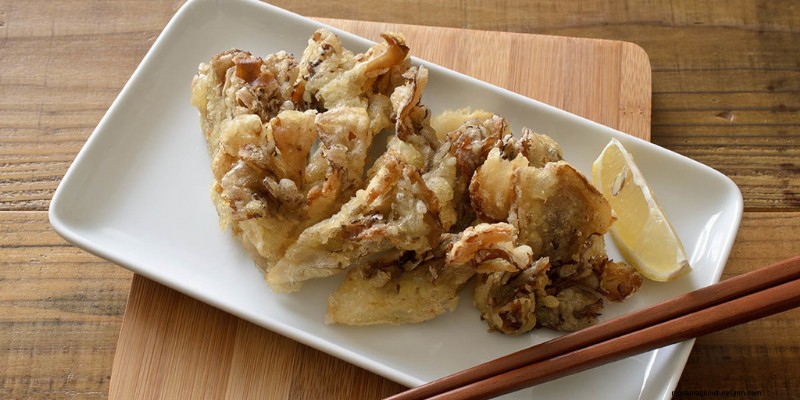
Also known as hen of the woods because of their appearance, maitake mushrooms are popular in China and Japan but not always easy to find fresh elsewhere.
You’ll often find dried maitake sold as medicinal mushrooms, but young, fresh maitake are delicious edible mushrooms with an earthy aroma, delicate taste and unique texture.
If you can’t find them at your local farmers market or grocery store, you can forage for them in the wild or even cultivate them. But they’re not one of the easier species to grow.
Nutritious maitake mushrooms contain 0.06oz (1.9g) of protein per 3.5oz (100g) serving and are an excellent source of vitamin D.

Chanterelles are sought-after edible mushrooms commonly used in French cuisine. As they’re challenging to cultivate, most people harvest chanterelles in the wild.
When first picked, these bright yellow to orange mushrooms have a fruity aroma, but that’s not how they taste. Chanterelles have an earthy flavor with undertones of black pepper.
Although Chanterelles have less protein than the mushrooms above, they’re full of other beneficial nutrients and add a splash of color to soups, sauces and stir fries.
Chanterelle mushrooms have 0.05oz (1.5g) of protein per 3.5oz (100g) serving.
Mushrooms are a great source of high-quality protein, but as they contain relatively small amounts, they’re best combined with other high-protein foods.
But mushrooms are not just a source of high-quality protein. They’re also very nutritious and full of antioxidants, vitamins and minerals that offer numerous health benefits.
In fact, many consider mushrooms functional foods as they provide many health benefits over and above meeting our nutritional needs.
Eating mushrooms daily, provides several health benefits, including:
Our article on the, “health and nutritional benefits of mushrooms,” has more information with links to relevant studies.
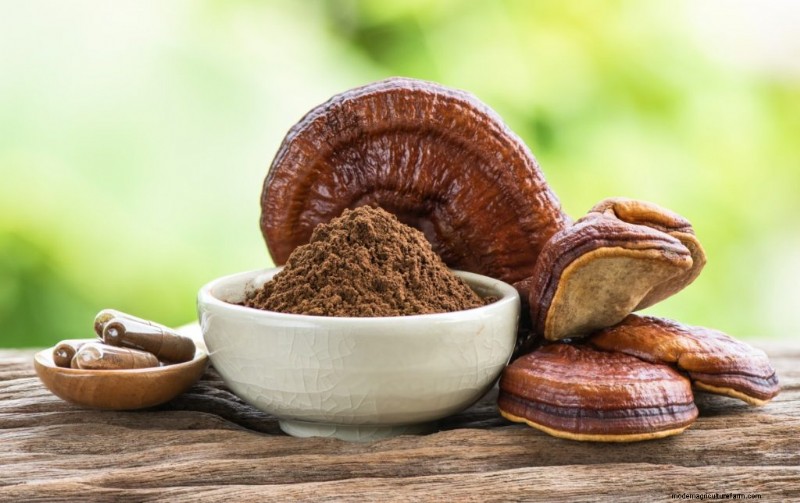
Mushrooms are very versatile, and you can saute, grill or roast most species or add them to soups, sauces and stews.
But not everyone is a fan of a mushroom’s earthy taste and texture.
Fortunately, you can still get the health benefits they offer in other ways. Here are 6 ways to include mushrooms in your diet:
Learn how to make a medicinal mushroom tincture with protein rich medicinal mushrooms.
While mushrooms have significantly less protein than meat, they have a higher protein content than most vegetables, making them very useful for people on plant-based diets.
They also contain numerous bioactive compounds, all the essential amino acids our bodies need and are very low in fat.
Studies show that regularly eating mushrooms helps boost the immune system and reduces the chances of cancer.
One of the best ways to ensure an ongoing supply of fresh mushrooms is to grow your own at home.
To learn more about growing mushrooms, visit our Mushroom Growing Hub or sign up for one of our mushroom cultivation courses.


