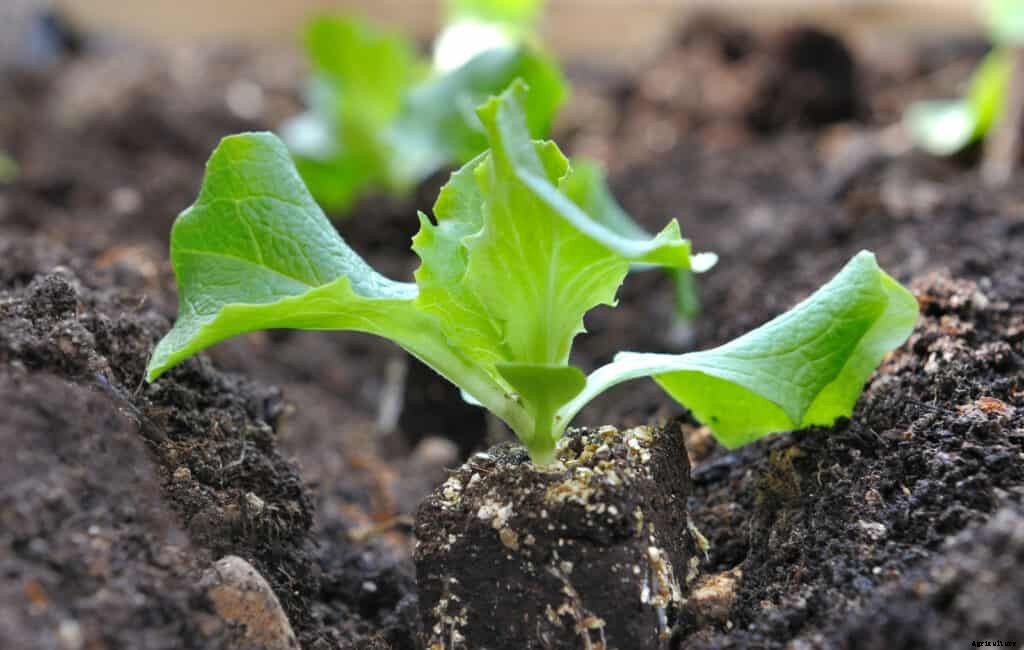
Lettuce grows best in the cool weather of spring and fall.
Time lettuce seed sowing so plants come to harvest before very warm and hot weather, Hot weather will trigger bolting and seed-stalk formation. Bolting can be slowed by picking the oldest leaves first but it can’t be stopped. Lettuce that bolts will be bitter flavored, so it is best to harvest lettuce before the weather gets too warm.
There are many types of lettuce to choose from: butterhead or Bibb is loose textured with a loose head; looseleaf has a loose, rosette of leaves; romaine or Cos has an elongated, erect head; crisphead or iceberg has a solid, tightly folded head.
Lettuce matures in 40 to 80 days depending on the type planted: looseleaf in 40 days, butterhead in 40 to 70 days, and romaine and iceberg in 80 days.
Lettuce Sowing and Planting Tips
- Lettuce is grown from seeds or transplants.
- Seed is viable for 5 years.
- Start lettuce indoors 4 weeks before transplanting; sow or transplant lettuce into the garden as soon as the soil can be worked.
- Seed germinates in 2 to 10 days at or near 70°F (21°C)—but sometimes seed can take up to 2 weeks to germinate if the soil is cold.
- Keep the soil evenly moist until seeds germinate then keep the soil moist until seedlings are well established.
- Sow seed ¼ to ½ inch (6-13mm) deep.
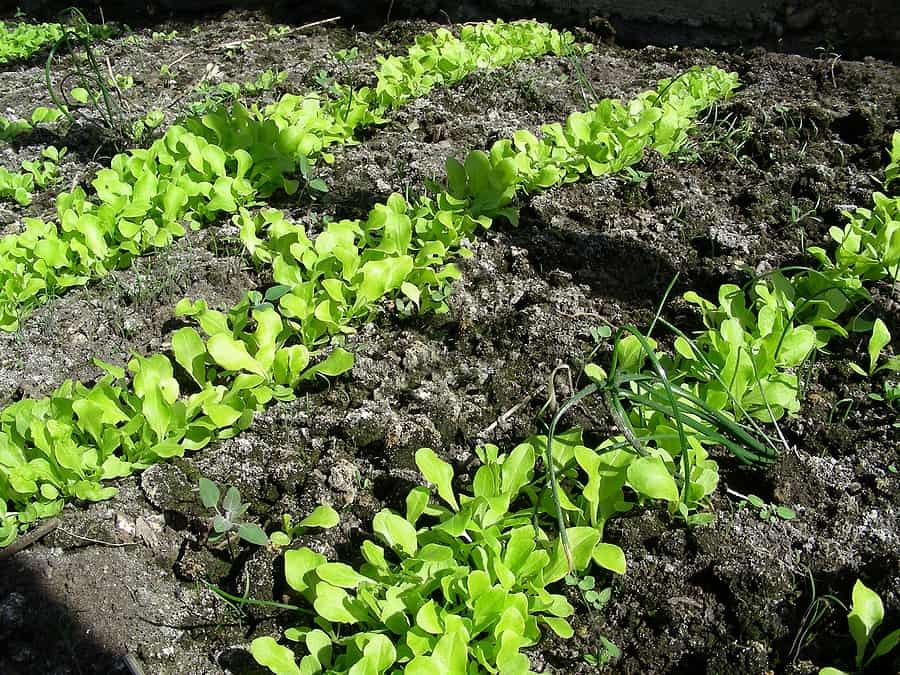
- Sow seeds 4 inches (10cm) apart; later thin seedlings according to type: leaf, 6-9 inches (15-23 cm) apart; head, 10-12 inches (25-30 cm) apart. Make sure there is good air circulation around maturing plants to avoid disease.
- For intensive planting, space plants 10 inches (25 cm) apart in a staggered pattern.
- Lettuce grows best in full sun but can tolerate light shade.
- The optimal growing air temperature for lettuce is 40°-75°F (4-24°C).
- Lettuce prefers a soil pH between 6.0 and 6.8.
- Add aged compost to planting beds in advance of sowing; compost will feed the soil and aide moisture retention.
- Avoid planting lettuce where radicchio, endive, escarole, or artichokes have recently grown.
- Make successive sowings every few weeks for an extended harvest.
- Fertilize with an organic fertilizer such as fish emulsion at half strength.
- Aphids, flea beetle, cutworms, earwigs, leaf miners, snails, and slugs can attack lettuce.
Interplanting: Interplant lettuce with beets, carrots, cucumbers, onions, radishes, and strawberries.
Container Growing: A single head of lettuce does well in a 6 inch (15 cm) pot; in larger containers plant on 10 inches (25 cm) centers.
Lettuce Planting Calendar
- 10-8 weeks before the last frost in spring: direct-sow in a plastic tunnel or cold frame.
- 6-4 weeks before the last frost in spring: direct sow in the garden
- Every 3 weeks sow succession crops for continuous harvest; hot weather will cause bolting.
For Fall Harvest:
- 8-6 weeks before the first frost in fall: direct-sow or transplant seedlings into the garden.
- 6-4 weeks before the first frost in fall: sow or transplant in a plastic tunnel or cold frame for fall and winter harvest.
Lettuce Recommended Varieties
- Butterhead type: ‘Bibb’, ‘Buttercrunch’, ‘Migonette’, ‘Boston’, ‘Four Seasons’, ‘Tom Thumb’.
- Leaf types: ‘Black-Seeded Simpson’. ‘Lolla Rossa’, ‘Black Oak’, ‘Red Sails’, ‘Salad Bowl’, ‘Ruby’.
- Romaine type: ‘Little Gem’, ‘Parris Island’, ‘Rogue d’Hiver’.
- Iceberg type: ‘Great Lakes’, ‘Nevada’, ‘Sierra.’
Botanical Name: Latuca sativa
Lettuce belongs to the Compositae (Asteraceae) or sunflower family.
More lettuce growing tips: How to Grow Lettuce.


