Welcome to Modern Agriculture!

Some grasses add background height and color, as well as drama and movement in a small garden as the wind ripples through them. In larger spaces, I grow edible grasses like barley, wheat, corn and oats in small quantities.
Today’s seed versions are based on centuries of crossing and breeding by our ancient ancestors and nowadays we can enjoy these staple foods as a result.
If you spend a lot of time weeding out natural wild grasses, it is a lot easier to work alongside Mother Nature and allow them some space in your garden design. Some grasses can even be used medicinally. Let’s see what will work for your garden.
Whether it’s for ornamental, edible or medicinal use, grasses can add a very professional and distinctive look to any garden.
Let’s look at some grasses suitable for the UK garden.
 What Are the Best Ornamental Grasses to Grow Outdoors?
My allotment is absolutely full of edible grasses like oats, sweetcorn and even a small patch of barley. Seen on a windy day, these plants ripple with a wave-like movement and it is wonderful to watch with a cuppa late in the evening.
I used to sow a few rows of barley and wheat seeds in spring, mainly to feed my chickens. I learned that an autumn seeding of barley is also useful because it can tolerate the cold and ensures that your precious topsoil is not blown away in high winds. These two grasses are difficult to tell apart and I do not claim to be an expert! See more on how to identify them below.
These are beautiful crops to watch growing. If sown in the autumn, as they germinate little spikes of green appear in rows and then grow taller and after a few months, it is as if the soil has entirely disappeared and a sea of green is growing.
You won’t be feeding your family on the amount of grain that results and of course, I harvest the barley grains for chickens to eat but the remaining dried barley stalks and leaves (known as chaff) get a second life in my garden too.
Among pond owners, it is a well-known secret that adding a small net stuffed full with barley chaff keeps our ponds free of pondweed like spirulina. Seen in windy conditions, these plants ripple with a wave-like movement and it is wonderful to watch as you pass by doing other jobs or with a cuppa late in the evening.
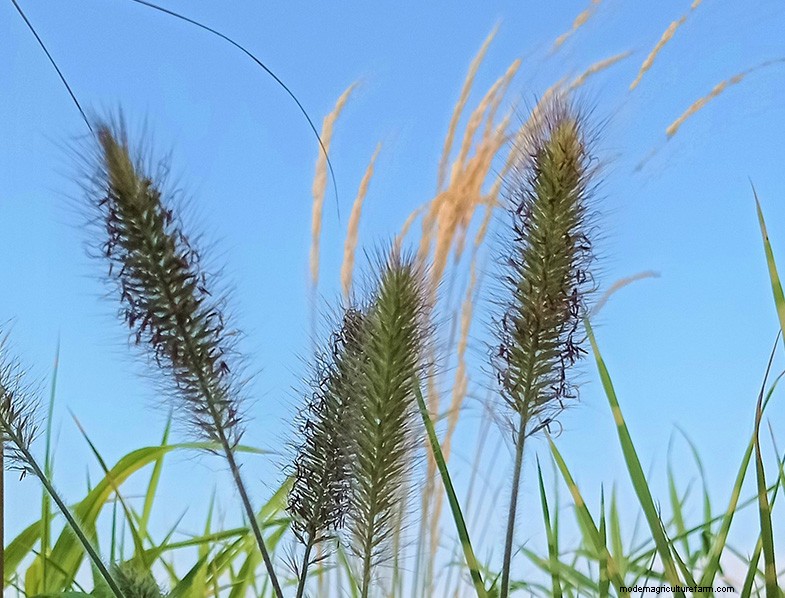 The Author’s Barley and Wheat at home, Image © Tina Lawlor Mottram
Both barley and wheat stems are topped with a sheaf of grain, on top of which grows a long set of straight, grassy trailing stems, which is known as a beard. However, barley spikes are known to bend in the direction of the wind, whereas wheat spikes tend to remain more upright in windy conditions.
Barley has these trailing grasses coming from the top of the grain and wheat has horizontal grass growing out from the grain sheaf. The colour is another clue. Wheat tends to be whiter when ripe, that image we all have of ripe grain on the bread packaging, while barley is a yellowy colour when ripe.
Barley is processed into malt for alcoholic beverages (eg beer and whiskey), it is given to animals for winter feed and it is eaten in many countries as a grain.
Wheat is a staple grain food all over the world and it is usually milled for bread; wholegrain flour keeps the external husk while plain flour removes the husk.
Wholegrain flour is more nutritious and is full of fibre but humanity seems to prefer processed white wheat more for bread, pastries and cakes. A specialised Durum wheat is also used to make pasta.
These are tall grasses if grown ornamentally, which fade to a creamy-white colour in late autumn and add a beautiful background right through the winter. They can be troublesome to process and once the husk is removed, they also need to be pounded.
As I was expecting to fill my saved porridge bags full to bursting, I must admit to being slightly disappointed when I first processed my batch of oats! Oats have quite a small seed head, but I am informed that larger seed heads can be grown here in the UK so it is a matter of planting the right seeds.
Although troublesome to process, freshly grown oats are gorgeous to eat (see more below), and their seed heads are so pretty and delicate, that they always have a site somewhere in my garden and my allotment. These organic oats self-seed around my allotment quite happily. This year, they found some ground in front of my blackberries!
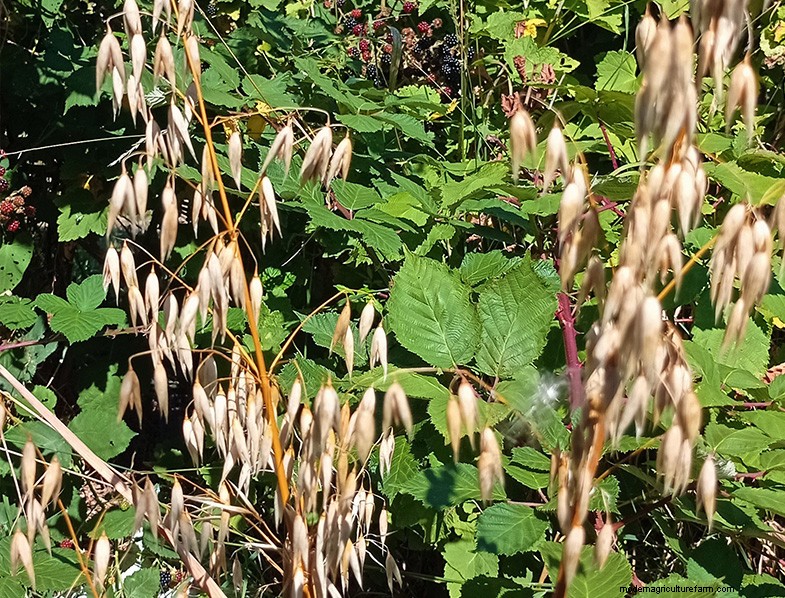 The Author’s Oat Plants at home, Image © Tina Lawlor Mottram
Also known as maize by the farming community, corn is next on my list both for its sculptural qualities in the field and its amazing taste. Farmers grow fields of maize as animal feed but for me, sweetcorn provides fresh tasty cobs from late August through to the end of September and I also freeze some for winter use.
It is essential to save at least 2 healthy cobs for next year’s seeds and because these are organic seeds to start with, I can be confident they will be the same the following year.
It’s not just the taste I love about corn though! I have to admit that it is the whole block of corn moving artistically in the wind that I love. The lower layers are bright green and the cobs hang to the side while the almost bamboo-like stem sway in any gust of wind.
Birds hop from one to the next feeding on insects, so it is a gorgeous, constantly moving crop to observe. As they age, the tips turn almost white while the green stems remain that verdant shade until cut.
This year, I planned layers of successively taller vegetation. At the front, rhubarb and salads with herbs like fennel. Behind these, the sweetcorn grew all summer with pumpkins interplanted and in the distance, the cherry tree added distinctive green foliage to complement the ripening corn.
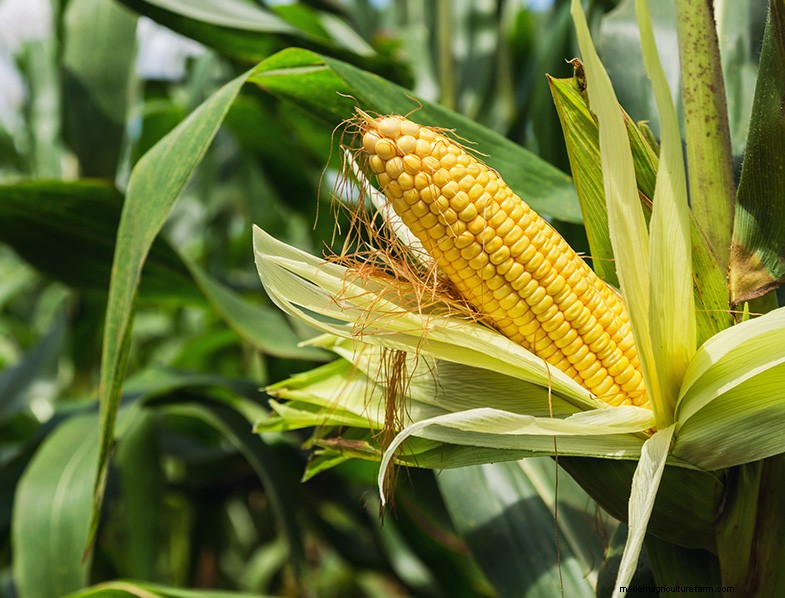 Sweetcorn
Of the 1,462 varieties of bamboo that grow all over this planet, there are hardy bamboo varieties that can be grown in the UK for their edible bamboo shoots, which everybody recognises from Chinese cuisine. Bamboo enjoys sunny, damp climates but like the tropical rainforest where it originates, it prefers the soil to have good drainage so that its roots are not sitting in wet soil.
A final point about bamboo is its carbon sequestration ability. It is being trialled in Africa as a method of growing a crop in poor soil, in order to avoid soil erosion.
It becomes a crop that can be harvested for food, used for building and paper supplies but also counted as a method to save carbon being released.
It may help poor areas to reclaim some land for agricultural use when the bamboo crop finishes its cycle. It tends to have a maximum 25-year cycle, after which the remaining canes often burst into flame, leaving a layer of useful ash on the ground to nourish the next crop. Humans can use this to grow food while the bamboo re-grows.
 Bamboo
Oats can be troublesome to process is the first thing to say!
Barley grain for eating can be picked from the sheaf, then added fresh to soups and casseroles or dried and stored in jars. It will keep for about 3-6 months if not opened too much.
Check for any going mouldy and remove them. An old wives tale insists that barley water is good for kidney infections and nutritionally it is a healthy grain to eat cooked like rice.
For malting, you can visit some brewing websites for advice or just be lazy and buy some!
Keep checking the cob for how full it feels protected under leaves.
Cook corn on the barbecue, or plunge it into boiling water for a few minutes and turn it once to ensure the cobs on both sides are cooked. For a treat, add a few knobs of butter and you’re in heaven!
Sweetcorn soup uses fresh corn and any stock you can find in your freezer, add a few sage or thyme leaves, and then whizz the whole mixture to a smooth consistency.
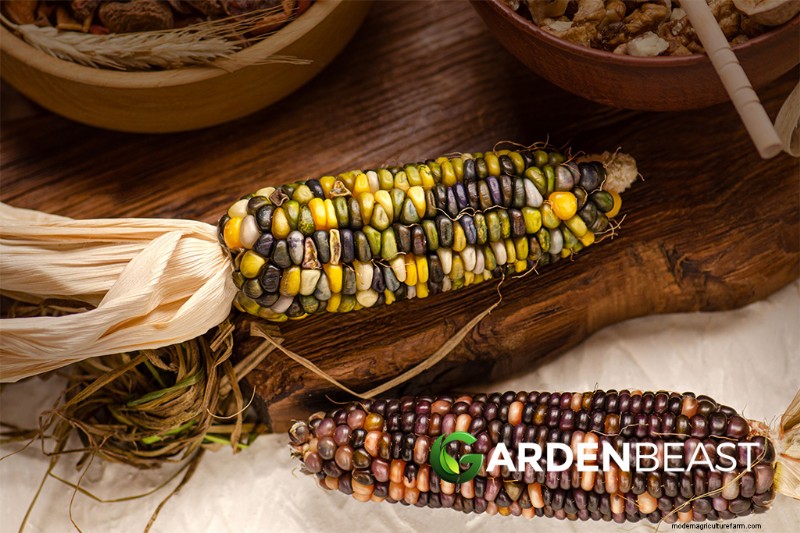 Glass Gem Corn Guide: How to Grow & Care for This Beautiful Plant
From food to ornamentals, you can see some of my favourites pictured. I include bamboo again for its wonderful canes and also the seed heads of Pennisetum, the flashy red foliage of Uncinia Everflame, the yellow and green patterned Miscanthus, and Pampas grass.
None of these are native to the UK but my local gardening centre, Elm Court, has so many colourful grasses I cannot fail to be tempted! You can allow native grasses some space amongst these beauties too.
Wildlife such as butterflies and moths lay eggs on many wild grasses, so they add to the overall environmental quality of your space too.
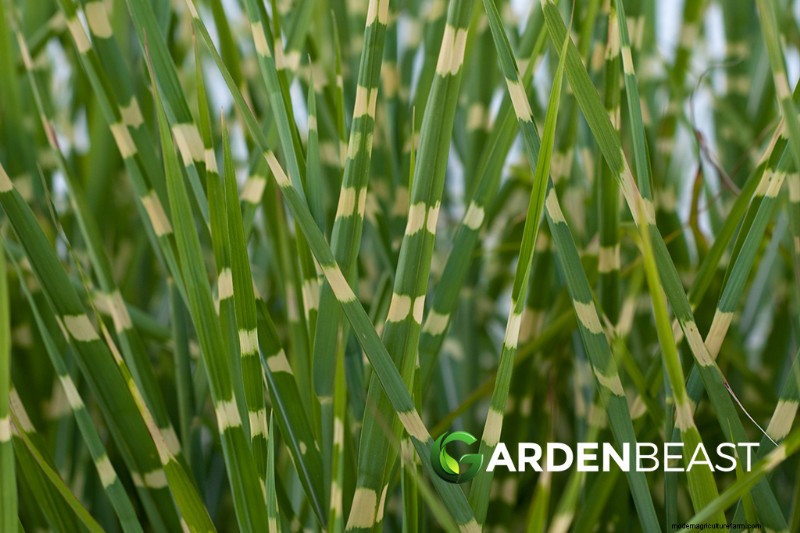 Zebra Grass Guide: How to Care for Miscanthus Sinensis ‘Zebrinus’
With careful planning, you can add taller grasses to the background and shorter ones at the front of a border. Some of these also add a “touch” factor, in particular the Pennisetum, which comes in various varieties but all have that cheeky velvety-soft seed head.
Miscanthus has paler blocks of colour on each stem adding a distinctive, sunny feel to your flower bed.
Bamboo needs some additional notes! I saw bamboo in abundance when I travelled in Latin America and Brazil, bamboo is used for everything from furniture to building materials and its rapid rate of growth means it is a sustainable paper and a wood substitute.
Some hardy bamboo varieties will thrive here in the UK but I will add a word of warning. Bamboo is the fastest growing grass on the planet and some grow as you watch so make sure you keep it contained indoors or out!
Many grasses die back in the winter and appear again in spring so planted with winter bulbs, these will add colour just as the grape hyacinths, snowdrops and crocus finish. Some may need winter protection so check the label carefully and then lay fleece or mulch for winter protection.
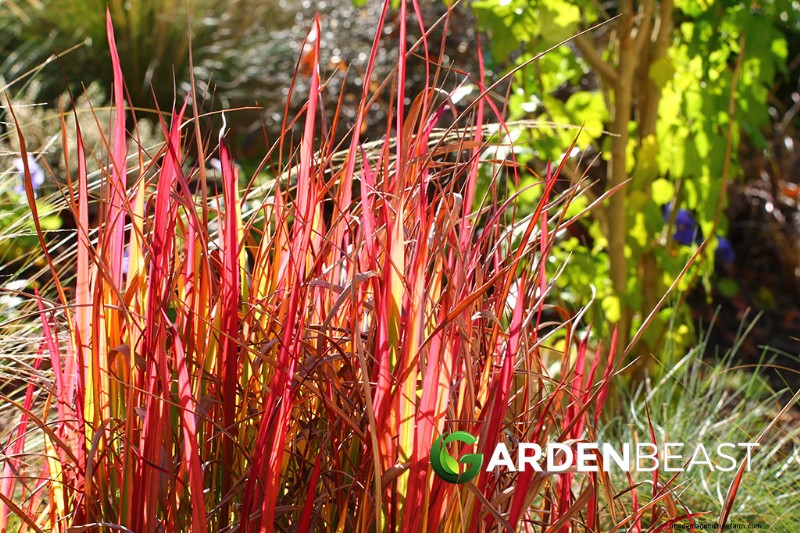 Imperata Cylindrica Guide How to Grow & Care for “Japanese Blood Grass”
Plantain and Couch grass are traditionally seen as weeds, a curse in UK lawns and they often grow side by side, but Plantain seed heads are adored by the birds for winter food and its crushed leaves have been used medicinally for centuries to ease inflammation. You can also eat them as a vegetable, cooked like spinach or chard.
Couch grass has spreading roots which is why gardeners dread it but the roots contain substances helpful for a tincture or tea to ease sore throats, and also to aid the kidneys when water retention or kidney stones is the problem. Dig up the roots and process them or buy the tincture in your local health food shop.
Oats are often made into a tincture and used for many medical conditions.
Barley water, when the grain is boiled with water and sweetened, is given to those with urinary infections, bladder problems or cystitis to ease the pain.
Bulrushes (Cattails in the US), long reeds growing in river beds and ponds with a long seed head, have been used for centuries both as food, or as emergency first aid. A section of the roots was applied to a bleeding cut to stop the flow and because it proved to be antiseptic. The fluff is reported to help soothe burns too. Not to mind that the roots, the young green shoots, the stalks, the flower and the seed head are all edible.
 Purple Fountain Grass Guide: How to Care for Pennisetum Setaceum ‘Rubrum’
The grasses that our ancestors tended have given us a legacy of grain heads that can be eaten, admired and used as medicine. Now is the time to look carefully at the grasses you have in your garden with a new eye. Consider using them in your flower bed designs to brighten your view with whispering seed heads, provide your household with some food and maybe use to soothe a cut.
91