Capsicum annuum and its numerous cultivars are commonly called ornamental peppers, ornamental chili peppers, or Christmas peppers. It will surprise nobody that these peppers belong to the Capsicum genus of beautiful flowering plants, many of which give rise to fruits that are not just edible but also incredibly tasty. Ornamental peppers fall into the Solanaceae (nightshade) botanical family, which counts just under 3,000 known species among its members.
Although Capsicum annuum produces edible fruits, this species and its cultivars are primarily popular for ornamental reasons — and if you chop the peppers up to use in the kitchen, you may find yourself a little disappointed.
As ornamental plants, Capsicum annuum will, on the other hand, unquestionably spice up your garden! Some people also choose to grow ornamental peppers as houseplants, which can be very successful and instantly brighten up any space.
Although “Capsicum annuum” is the name of a single species within the Capsicum genus, it is crucial to be aware of the fact that most ornamental peppers are cultivars. That means that each ornamental pepper variety has its own unique features, appearance, and taste profile. Depending on the cultivar, ornamental peppers can also be called sweet peppers or cayenne peppers.
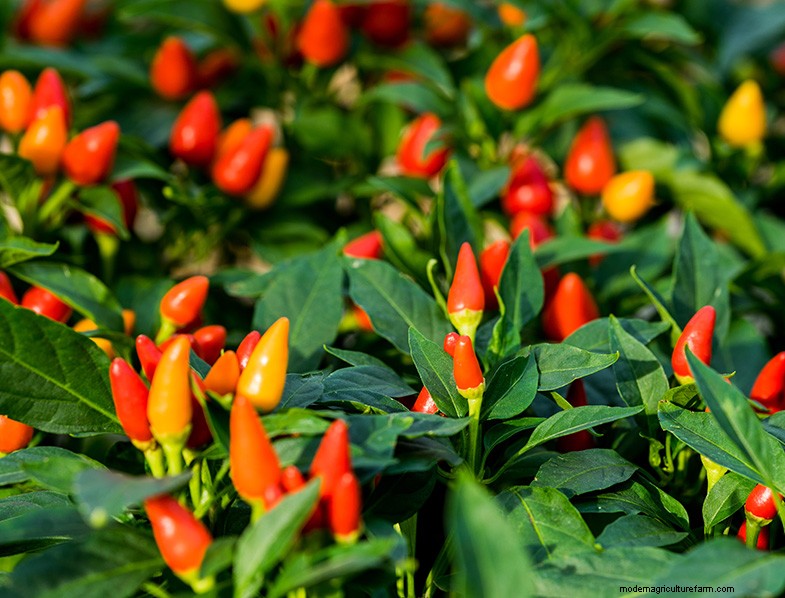
- Capsicum annuum is a beautiful herbaceous plant. While there’s a lot to say about Capsicum annuum, it’s immediately apparent that their fruits — the peppers — are their most treasured feature. Ornamental peppers may be red, yellow, black, green, or orange, and their size and shape depends on the cultivar. Once you add ornamental peppers to your garden or home, you are bound to keep finding new and exciting cultivars that are just too good to miss out on.
- You’ll instinctively know that the “annuum” in Capsicum annuum means “year”, and come to the conclusion that ornamental peppers are annuals. That’s not true. Ornamental peppers are perennials. However, due to the fact that they are extremely frost-sensitive, they are often grown as annuals in regions with cold winters.
- Capsicum annuum is native to the tropical regions of North and South America, as well as the Caribbean. Their ornamental appeal has, in combination with the fact that the peppers are edible, made them interesting to gardeners all over the world, however, including in the United Kingdom.
- Capsicum species have been a staple in the human diet for over 10,000 years now — and Capsicum annuum has actively been cultivated for more than four centuries. Ornamental peppers are the most aggressively cultivated of all the pepper species, so no matter your aesthetic and taste preferences, a cultivar just to your liking is guaranteed to be out there.
- The peppers Capsicum annuum produces can range from nearly tasteless to extremely spicy, depending on the cultivar.
- It would take an entire book to cover all the wonderful cultivars, but we can at least mention some of the more popular ones. Capsicum annuum ‘Aurora’ produces purple, orange, and red peppers that are purely decorative and can’t be eaten. Capsicum annuum ‘Basket of Fire’ produces peppers with a green and red gradient, and the ‘Black Pearl’ has leaves of such a deep purple color that they may as well be entirely black.
- Although ornamental peppers are safe for human consumption, animal lovers should be aware that Capsicum annuum is toxic to cats and dogs. They will often instinctively stay away from these beautiful plants, along with deer, but if your pet ingested ornamental peppers, it is best to give your vet a call.
- Although you can grow ornamental peppers successfully in the garden, most people prefer to plant them in containers and around walkways, as accent plants.
- These stunning plants can develop a few diseases. Gardeners should be on the lookout for aphids, whiteflies, cutworms, and paper maggots, as well as Colorado potato beetles. Ornamental peppers can also develop Verticillium wilt and other fungal diseases.
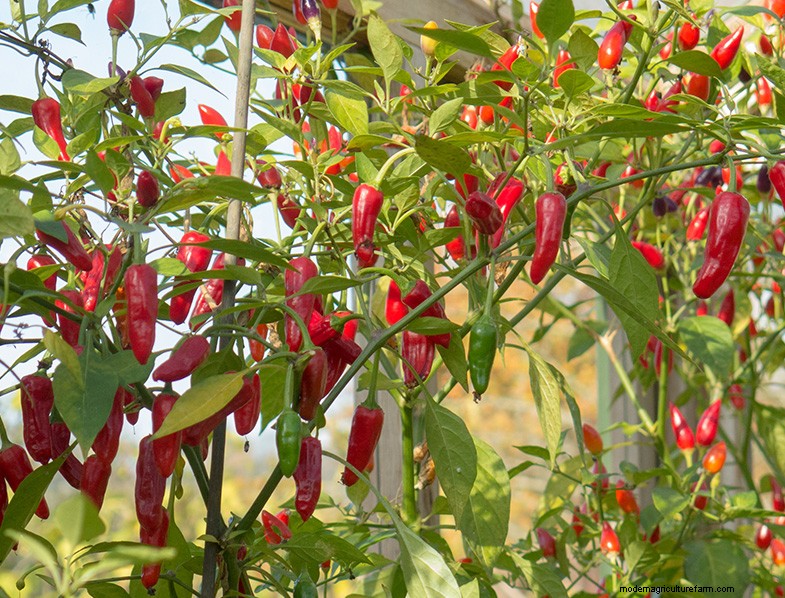
Capsicum Annuum
Ornamental Pepper Features: An Overview
- Capsicum annuum is a herbaceous multi-stemmed perennial often grown as an annual, with straight green stems and (frequently) purple nodes.
- The size of ornamental pepper plants varies greatly, and these plants can range from a modest six inches to an impressive three feet (16 centimeters to nearly a meter).
- The features of their leaves depend on the cultivar, but are usually either green or purple in color. Ornamental peppers have strong and glossy leaves, ovate in shape, with smooth edges and pointy tips. The leaves, which can be between one and three inches (three and eight centimeters) long, are arranged in an alternating pattern.
- The peppers, the most distinctive feature of the Capsicum annuum plant, can vary greatly in shape, size, and color, and their flavor profile is also highly diverse. Most ornamental peppers are edible, but not all — so check. The peppers will be on display throughout the summer.
- Ornamental peppers also give rise to white, purple, or lavender blooms with five petals. These tiny flowers bloom in clusters during the summer period, and are not the most attractive feature of these plants.
- While this plant is self-pollinating, the peppers are said to grow to larger sizes when visited by pollinators. Ornamental peppers are attractive to songbirds, and are a good choice for people who would like to liven their garden up with wildlife.
- Ornamental peppers are usually grown in pots, containers, in walkways, or as houseplants indoors (especially in colder climates, including in Europe). Capsicum annuum can make a great addition to almost any garden, given the right conditions, but are an especially good choice for people hoping to create edible gardens, or those who are looking for plants that can withstand periods of drought.
Growing Ornamental Peppers
Being native to warm tropical regions, ornamental peppers thrive in full and direct sunlight — preferring at least six daily hours of sun exposure. For these plants to remain healthy and grow quickly, it is best to ensure a temperature of at least 75 °F (24 °C). That does mean that people attempting to grow Capsicum annuum as a houseplant will need a grow light to support their peppers’ growth.
Although ornamental peppers do need moist roots to remain healthy, they are not picky about humidity, and can easily withstand periods of drought. These plants are extremely frost-sensitive, which is precisely why they are grown as annuals in climates with colder winters, despite the fact that they are perennial plants. With the right care, ornamental peppers grown in containers can successfully overwinter indoors.
Capsicum annuum has a very strong preference for rich loamy soil, rich on organic matter. Ornamental peppers will also grow in sandy or clay-based soils, and are not too picky about pH levels.
Bestseller No. 1
Pepper Masquerade Seeds – Annual Ornamental Hot Pepper (Capsicum annuum) | Multicolor Decorative Chili, Compact, Open-Pollinated
- ✅ Striking Multicolor Display – Pepper Masquerade (Capsicum annuum) showcases upright, cone-shaped peppers that change color from purple to yellow, orange, and red – all at once on the same plant.
- ✅ Annual Ornamental Chili – Grown as an annual, this variety adds bold color to containers, borders, or garden beds throughout the season.
- ✅ Edible & Spicy – Though primarily decorative, the peppers are hot and edible, ideal for those who love heat and color.
- ✅ Compact Growth Habit – Dwarf plants stay tidy and dense, making them perfect for pots, balconies, or small-space gardens.
- ✅ Open-Pollinated & Easy to Grow – A reliable open-pollinated variety that’s low-maintenance and thrives in full sun.
Bestseller No. 2
Bestseller No. 3
Seeds Decorative Pepper Masquerad Ornamental Hot Chili Pepper Multicolor 25+ Seeds for Planting Ideal for Pots
- A fun multicolor mix of hot peppers that can be grown indoors or outdoors; The peppers are edible but are extremely hot and therefore not recommended for eating
- Fruits progress through different color stages: first purple, then orange and then red; So all peppers start purple, but as they mature they change color at different times and speeds
- Usually it is grown in containers, pots, hanging baskets, or in a patio planter or a garden bed
- The plant require little care; They are annuals and grow best in full sun in warm areas; Maturity period is 69-80 days
- We would be happy to help may you have any questions or problems with your orders; please send us a message
Last update on 2025-11-05 / Affiliate links / Images from Amazon Product Advertising API
These plants have an upright growth habit and heavy fruits, so they perform best when staked. Because ornamental peppers easily get stressed if their roots are interfered with, it is best to avoid repotting them unless absolutely necessary.
Fertilizer-wise, ornamental peppers are moderately demanding — your Capsicum annuum will do best with a 5-10-10 fertilizer regimen rich in phosphorus and potassium. This will bring out an abundance of colorful peppers, while suppressing the leaves, which are not considered the most attractive feature for most cultivars.
The fact that ornamental peppers are quite vulnerable to a number of pests, ranging from aphids to spider mites and thrips, means that you will want to keep a close eye on your plants. When you spot pests, treat the plant with citrus oil or insecticidal soap. Fungal infections are another fairly common problem, especially if air cannot properly circulate around the plant. To help prevent this, give each ornamental pepper plant plenty of growing room, and treat them with antifungal spray where necessary.
It’s not necessary to prune your Capsicum annuum cultivars. If you like, you can pinch them to encourage bushier growth, or you could trim them into a desired shape. Never prune flowering stems, as this will prevent peppers from forming.
Watering Ornamental Peppers
While ornamental peppers are fairly drought tolerant, they prefer mildly moist conditions and won’t perform as well if placed in either excessively moist or extremely dry conditions. These stunning plants will show you their true potential if they receive just under an inch of water each week. If you’re not sure when to water your ornamental peppers, check to see if the soil one inch below the surface is moist — if not, it’s time to water your ornamental peppers, but modestly.
Ornamental peppers might prefer moist soil, but if their soil becomes waterlogged or soggy, they will suffer and begin to wilt. Make sure that the water can drain well and if you are growing Capsicum annuum in a pot, empty the tray frequently.
Propagating Ornamental Peppers
Ornamental peppers are challenging to propagate through stem cutting. If you go this routine, it may take several tries before your cuttings root successfully. Because of this, most gardeners prefer to start their ornamental peppers from seed, as it is a much easier process.
Gardeners who want to plant several ornamental peppers or who are looking to create a border edge will want to grow Capsicum annuum from seed, as this is the only way to get a lot of ornamental peppers quickly.
Let’s have a look at the steps you need to take to propagate ornamental peppers from seed:
- Ornamental peppers grown from seeds should first be planted just around two months before the final spring frost. Pick a container for your ornamental peppers and fill it with seed starter mix and about one or two inches of moist soil on top.
- Your ornamental pepper seeds will need to be kept at a temperature of 80 °F (27 °C) — a heating mat can be used to get the perfect temperature.
- Ornamental peppers should take up to 20 days to begin germinating.
- Once you notice signs of germination, your ornamental plant pepper seedlings should be kept in a slightly cooler environment and then transported outside. Your ornamental peppers will take about six to eight weeks to grow into a good size that will allow you to transplant them to a container garden.
Capsicum Annuum
To (attempt to) propagate ornamental peppers through stem cuttings:
- Pick a healthy, strong, and mature ornamental pepper plant to take stem cuttings from. Any plant propagated through stem cuttings will be a replica of the original plant.
- Before you start, you will need to prepare a pot — with draining holes — with moist soil for your stem cutting, because you will need to plant your Capsicum annuum cutting right after taking it.
- Grab a sharp tool, like a knife or pruning shears, and sterilize it. Pick the healthiest stem you find and diagonally cut off five inches (13 centimeters) with two or more leaf nodes. Cut off the leaves at the bottom of the stem.
- You can opt to dip your ornamental pepper stem cutting in powdered rooting hormone for a higher chance of success, shaking off any excess before planting the cutting.
- Put a hole in your soil using a pencil and place your ornamental pepper stem cutting in around an inch down. Make sure it is tightly in place and that there’s soil all around it.
- Place your new ornamental pepper cutting in a really warm spot with plenty of sunlight, and make sure to keep the soil moist.
- Once about eight weeks have passed and you have noticed that your ornamental peppers are starting to grow, you will be able to move it to a bigger pot.
In Conclusion
Capsicum annuum is a beautiful species, and with so many cultivars to choose from, just about any gardener hoping to spice their garden decor up can find the perfect variety. Depending on your choice of cultivar, you will not only be able to feast your eyes — you may also be able to enjoy genuinely flavorful chili peppers in the kitchen!
Most people grow ornamental peppers in containers, and as annuals, but these stunning plants can do well as houseplants too, and can grow as perennials in warm, dry, climates. What’s not to like? If you don’t already have ornamental peppers in your life, now’s your chance to change that!
111


