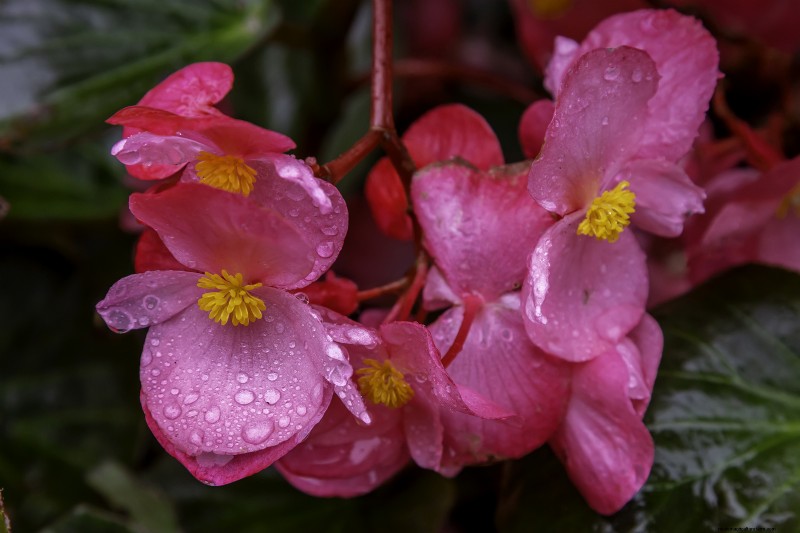
Bedding begonias–also called wax begonias, fibrous begonias, or annual begonias–are colorful tender perennials commonly grown as annuals. One-inch pink, white, red, or bi-color blooms are either single or double. Flowers appear from spring through fall.
There are many strains or cultivars of bedding begonias. Foliage is nearly as colorful as the blooms in some cultivars. Leaves can be green, red, bronze, or variegated.
Bedding begonias can grow 10 to 12 inches (25-30cm) tall; there are dwarf varieties that grow 6 to 8 inches (15-20cm) tall. Bedding begonias can be featured at the front of borders, in low mass-plantings, and in containers and window boxes. Bedding begonias require little care.
Garden Success Products at Amazon:
- 10 pcs Stainless Steel Garden Hand Tool Set
- Flexi Hose with 8-inch Nozzle
- Gorilla Cart 4 Cu. Ft, 300-pound Capacity
- Neem Bliss 100-% Cold Pressed Neem Oil
- Safer Brand Insect Killing Soap
- Wildflower Seed Mix Attracts Hummingbirds and Butterflies
- Eden Brothers All Perennial Seed Mix
Bedding begonias are fibrous-rooted, unlike tuberous begonias that grow from tubers. In mild-winter regions. bedding begonias will bloom through the winter and can live for several years.
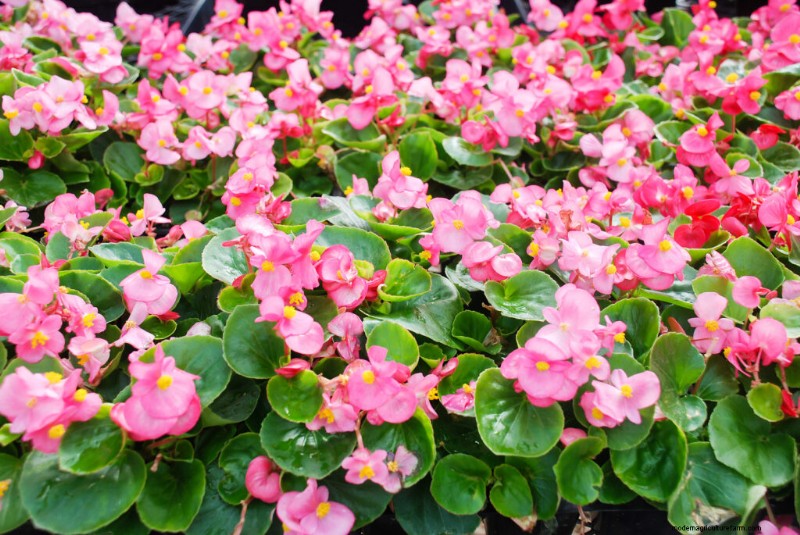
Pink Begonias, semperflorens begonias in the garden, potted begonia
Get to know Bedding Begonias
- Plant type: short-lived perennial grown as annual; perennial in Zones 10-11
- Growing Zones and range: annual in all zones; grow best in temperatures between 60° to 80°F (15.6-26.7°C)
- Hardiness: Killed by frost
- Height and width: 6 to 8 inches (15-20cm) tall and wide
- Flower form and colors: Single or double flowers, borne in clusters or singly from 1/4 to 6 inches wide; flowers are pink, red, white, and peach.
- Bloom time: Spring through fall
- Uses: bedding and container plant
- Common name: Bedding begonia, wax begonia
- Botanical name: Begonia x semperflorens-cultorum hybrids
- Family: Begoniaceae
Three types of Begonias
Three types of begonias commonly grown are fibrous begonias (also called bedding or wax), tuberous begonias, and rhizomatous begonias. These names refer to the types of roots each has. The roots of fibrous begonia are stringy. Rhizomatous begonias have creeping surface stems and roots. Tuberous begonias have a round, flattened brown tuber. This article is about fibrous begonias; see links to others below.
Where to plant Bedding Begonia
- Grow bedding begonias in full sun or partial shade, partial shade is best in most gardens. Bedding begonias can be grown in deep shade in Zones 6-11. Brown-leaved types tend to be more sun- and heat-tolerant.
- Plant bedding begonias in compost-rich, well-drained soil.
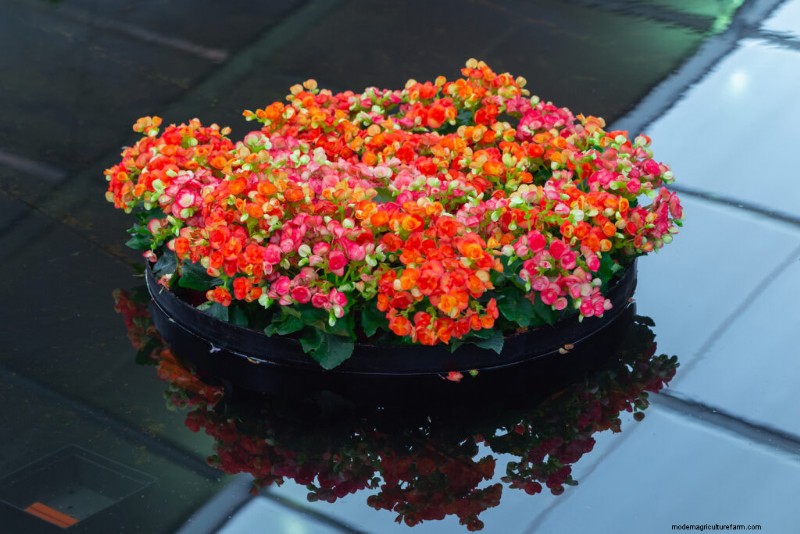 Begonia tuberhybrida
When to plant Bedding Begonia
- Start seeds indoors 12 weeks before the last frost.
- Under most conditions, it is best to start seed indoors.
- Set out bedding begonias in spring after the last frost.
Planting and pacing Bedding Begonia
- Thin or transplant seedlings to larger pots whenever they become crowded or plant them in the garden.
- Space plants every 6 to 8 inches (15-20cm) apart.
- Sow seeds 1/8 inch apart in evenly prepared soil; sow plants indoors in light potting soil,
How to water and feed Bedding Begonia
- Keep the soil evenly moist for best growth. Avoid over-watering which can result in root or crown rot.
- Feed begonias and all-purpose fertilizer every 4 to 6 weeks through the growing season.
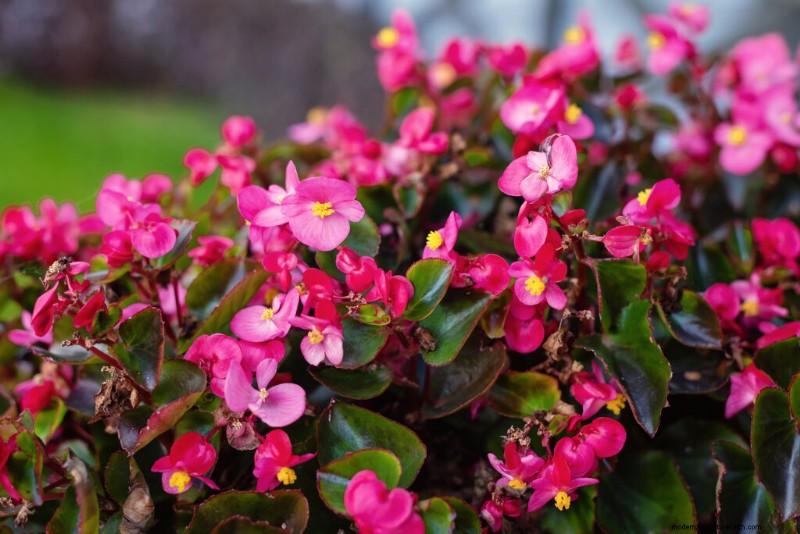 Begonia semperflorens
Bedding Begonia care
- Pinch away spent blooms to encourage more flowers.
Growing Begonia as a houseplant
- Most begonias grow best in bright light (an exception is rex begonias which prefer limited light).
- Begonias prefer average to warm temperatures.
- Most begonias like high humidity (the exceptions are tuberous and rex begonias).
- Grow all begonias in rich potting medium and keep the medium evenly moist except in winter, when it should be allowed to dry out slightly between waterings.
- All begonias like monthly fertilizing when they are in growth or in flower.
- Wax begonias like to be pot-bound and can be pinched to keep them compact.
Begonia pests and diseases
- Begonias are susceptible to attack by mealybugs, mites, thrips, whiteflies, powdery mildew, stem rot, rhizome rot, and nematodes invasion.
Bedding Begonia propagation
- Sow minute seeds at least 12 weeks before the last frost date. Don’t cover seeds; just press them into the soil.
- Divide fibrous-rooted begonias with many stems during warm weather.
- Plant stem or tip cuttings at any time the temperature is greater than 65°F (18°C).
Bedding Begonia varieties to grow
- ‘Cocktail’ series has bronze leaves.
- ‘Excel Mixed’ produces green- or brown-leaved plants with red, pink, or white blooms.
Bedding or Fibrous Begonia frequently asked questions
Q: What kind of soil and how much moisture do bedding begonias want?
A: Bedding begonias or fibrous-rooted begonias wat light, humusy, well-drained soil. Never let the soil become really dry, but also avoid saturated or soggy soil. Grow these begonias in sun in winter and in partial shade in summer. Indoors, increase humidity with pebble-filled saucers or trays under the plants.
Q: What is the best way to repot fibrous-rooted begonias?
A: Here at the steps for repotting a begonia: (1) Water the plant thoroughly before repotting. (2) Repot to a pot that is just an inch or two wider than the old pot. (3) Make sure there is a drainage hole. (4) Avoid damaging the roots when repotting. (5) Moderately firm the soil about the root ball. (6) Water again. (7) Keep the plant in the shade and mist it for a few days.
Q: Can I lift wax begonias from the garden and grow them indoors in winter?
A: Yes. Wax begonias (Begonia semperflorens) will bloom profusely indoors given the right conditions. Lift and repot them without damaging the roots. Give wax begonias a sunny window in winter. The ideal night temperature is not below 50°F and not greater than 65°F. It is important that you not overwater begonias growing indoors. Wax begonias are one of the most dependable of all house plants.
Also of interest:
Begonia Types and Care
How to Grow Foliage Begonias
How to Grow Tuberous Begonias


