
Welcome to Modern Agriculture!

One of the most rewarding parts of growing strawberries is watching them expand your garden all on their own. Every season, I find myself with more plants than I started with, thanks to the magic of runners. If you’ve ever wondered how to turn one productive strawberry plant into many, here’s how to do it—based on what’s worked best for me year after year.
Strawberries are perennials, and most varieties naturally propagate by sending out runners—long, leafless stems that extend from the mother plant, typically after it’s done fruiting. These runners develop tiny new plants, called daughter plants, about a foot away. By late summer, those daughter plants often have roots and are ready to grow independently.
In my garden, I rely on this cycle to renew my beds each fall, ensuring I always have fresh, vigorous plants for next season. It’s not only cost-effective, but it’s also incredibly satisfying to grow a whole new patch from what you already have.
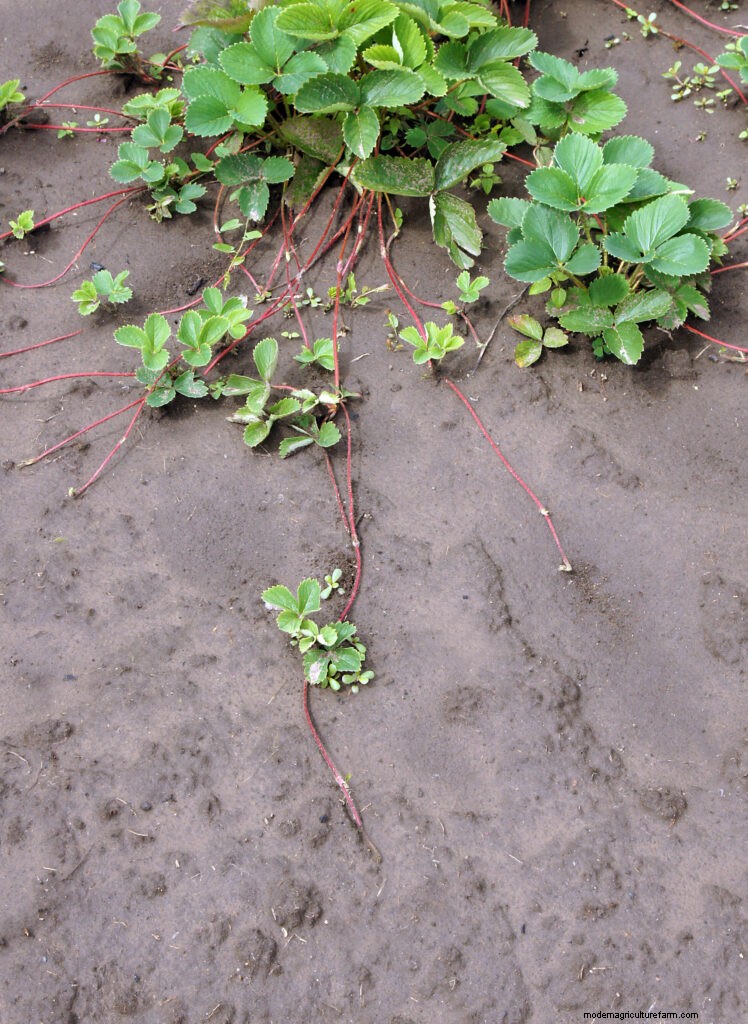 Strawberry runners – long flexible stems with little strawberry plants at the end
Here’s the method I use each year to grow strong, new strawberry plants from runners:
Look for healthy, well-rooted daughter plants that are still attached to the mother plant. I usually pick the ones closest to the base, as they tend to root best.
Gently dig up the runner and clip it from the parent plant, keeping as much of the root system and surrounding soil intact as possible. This reduces transplant shock.
Snip away all but two or three leaflets on each new plant. This helps reduce water loss while the roots settle into their new home.
I plant the runners about 6 to 8 inches apart in a freshly prepared bed. If I’m renovating a bed, I remove the older, less productive plants and compost them, then replace them with the new runners. I rotate locations every couple of years to keep soil healthy.
Dig a 3–5 inch wide hole, nestle the young plant in, and firm the soil around the roots. Make sure the crown (where the leaves meet the roots) sits just above soil level.
After planting, water gently. I swear by a mix of water and liquid fish-and-seaweed emulsion for giving new runners a boost—it’s made a noticeable difference in my plant survival and early growth.
If your plant doesn’t send out many runners, you can also divide the crown with a sharp, sterile knife. I’ve done this in a pinch and while it’s a bit trickier, it’s a reliable way to multiply your plants.
By propagating strawberries from runners each year, you’ll save money, keep your garden thriving, and always have fresh plants to enjoy. With just a little care and attention, your strawberry patch can renew itself year after year—something I’ve come to truly appreciate in my own gardening journey.
1. Select Healthy Runners
☐ Choose strong, rooted runners from your healthiest strawberry plants
☐ Prefer those closer to the base of the mother plant
2. Detach the Runner
☐ Gently lift the runner, keeping soil around the roots intact
☐ Use clean, sharp scissors or pruners to cut the stem connecting it to the mother plant
3. Trim the Leaves
☐ Clip off all but 2–3 leaflets from the new plant
☐ Helps reduce stress and moisture loss during transplanting
4. Prepare the New Bed
☐ Choose a sunny spot with well-drained, compost-rich soil
☐ Space plants 6–8 inches apart
☐ Remove old plants if reusing a bed
5. Plant the Runner
☐ Dig a 3–5 inch wide hole for each plant
☐ Set the crown slightly above soil level
☐ Firm the soil around the roots
6. Water and Feed
☐ Water thoroughly after planting
☐ Feed with a mix of water and liquid fish-and-seaweed emulsion for best results
🧤 Pro Tip: Rotate your strawberry beds every 2–3 years and replace aging plants to keep your patch healthy and productive.
Related Posts:
🌱 Getting Started with Strawberries
🍓 Choosing Strawberry Varieties
🪴 Growing Techniques & Care
🌞🌨️ Growing by Climate & Season
🍽️ Harvest & Enjoy


