Quick Guide to Growing Okra in South Carolina
- Scientific Name: Abelmoschus esculentus
- Plant Type: Warm-season annual vegetable
- Height: Tall, upright growth habit
- Edible Part: Immature seed pods
- Best Temperatures: 75 to 90 °F
- Optimal Soil Temp for Planting: 70 to 95 °F (minimum 65 °F at 4-inch depth)
- Light: Full sun
- Soil Type: All soil types; prefers sandy loam, well-drained
- Planting Spacing:
- Rows: 3 to 6 feet apart
- Plants: 9 to 12 inches apart
- Planting depth: ¾ inch
- Harvest Window: 60 to 70 days after planting
- Pod Size for Harvest: 2 to 3 inches
- USDA Region: All South Carolina regions
- Common Issues: Root-rot diseases, pod rotting, nematodes, stink bugs, aphids
- Ratooning: Yes; prune to regenerate late-season crop
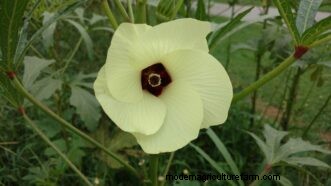
Okra (Abelmoschus esculentus) is a tall, upright plant with a hibiscus-like flower.
Barbara H. Smith, ©2018 HGIC, Clemson Extension
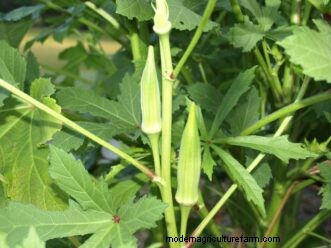
Okra growing in the garden.
Millie Davenport, ©2018 HGIC, Clemson Extension
Okra (Abelmoschus esculentus) is a warm-season crop grown throughout South Carolina. It is a tall, upright plant with a hibiscus-like flower that originated in Africa.
The immature, young seed pods of this plant are the edible part and an important ingredient in southern cuisine.
How to Plant Okra in South Carolina
Best Time & Soil Temperatures for Planting Okra
Okra grows best at temperatures between 75 °F and 90 °F. When planting okra, gardeners want to ensure that the soil temperature is warm enough to allow seeds to germinate and begin growing, as cool soils can lead to slow growth and seedling diseases.
The optimum soil temperature for seed germination ranges from 70 °F to 95 °F, so gardeners should check the soil temperature at a depth of 4 inches before planting. If soil temperatures are less than 65 °F, at a soil depth of 4 inches, gardeners should hold off on planting until soil temperatures are warmer.
The crop can be grown on all soil types, although sandy loam soils with high organic matter content are the most desirable. The soil must be well-drained; plant in full sun for best productivity.
Many gardeners soak the seed in water before planting to improve germination. This may help; however, seedling death may still occur if the seed is planted in cold soil.
Okra Planting Dates by Region in South Carolina
Area
Spring
Fall
Piedmont
May 15 – Jul 15
Not recommended
Coastal
May 1 – Jun 30
Not recommended
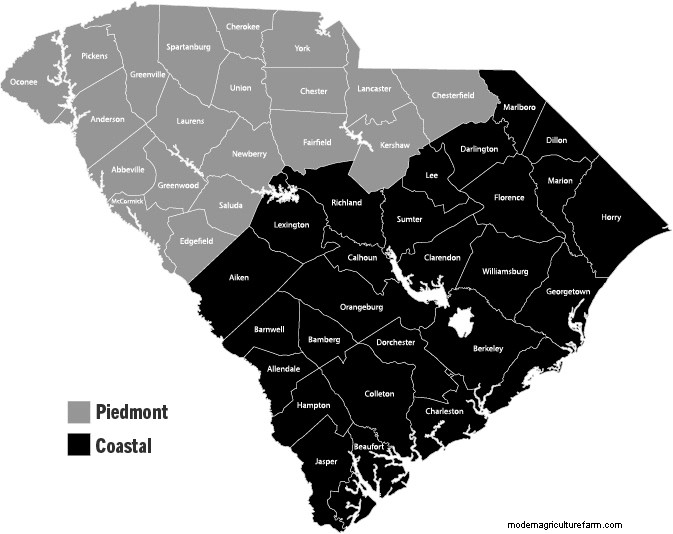 South Carolina Gardening Regions
- Piedmont: Abbeville, Anderson, Cherokee, Chester, Chesterfield, Edgefield, Fairfield, Greenville, Greenwood, Kershaw, Lancaster, Laurens, Marlboro, McCormick, Newberry, Oconee, Pickens, Saluda, Spartanburg, Union, and York Counties.
- Coastal Plain: Aiken, Allendale, Bamberg, Barnwell, Beaufort, Berkeley, Calhoun, Charleston, Clarendon, Colleton, Darlington, Dillon, Dorchester, Florence, Georgetown, Hampton, Horry, Jasper, Lee, Lexington, Marion, Orangeburg, Richland, Sumter, and Williamsburg Counties.
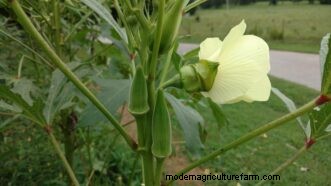
Clemson Spineless 80 okra produces dark green pods without spines.
Barbara H. Smith, ©2018 HGIC, Clemson Extension
Row Spacing & Seeding Depth
Okra should be planted in rows 3 to 6 feet apart with 9 to 12 inches between seeds in the row at a depth of ¾ inch.
Many gardeners plant multiple seeds per hole to ensure a good stand and then go back and thin out the extra okra seedlings, leaving only one plant per hole.
If this method is used, it is imperative that only one plant be allowed to grow every 9 to 12 inches, or competition between plants will severely impact yields.
Recommended Okra Cultivars for South Carolina
- Clemson Spineless 80
- Lee
- Annie Oakley II
- Cajun Delight
- Burgundy (red okra variety, but will turn green when cooked)
How to Fertilize Okra in South Carolina
A soil test is always the most effective method for determining a crop’s fertilization needs. Information on soil testing is available in HGIC 1652, Soil Testing.
Follow the results of a soil test to maintain a soil pH between 5.8 and 6.5 and optimal fertility levels.
If a soil test has not been taken
- Apply 25–50 lbs. of 10-10-10 before planting. 1
- Avoid excess nitrogen early in the season (causes leafy growth instead of pods). 2
1 Provides between 2½ and 5 pounds of nitrogen, phosphorus, and potassium per 1,000 square feet.
2 The okra plant has a sensitive balance between vegetation (leaf production) and reproduction (pod production). The use of additional nitrogen should be avoided on vigorous plantings until fruiting begins to manage plant growth and ensure pod production.
Sidedressing schedule
- Apply 3 to 6 pounds of calcium nitrate (15.5-0-0) per 1,000 square feet.
- Or 1 to 2 pounds per 100 feet of row.
- Sidedressing should occur at 3 to 4 weeks and again at 6 to 8 weeks after planting.
Additional applications of calcium nitrate may be needed later, depending on rainfall and the duration of okra production.
It is important to supply additional nitrogen late in the season when the blooms are concentrated at the top of the plant.
For more information on fertilizing vegetables, please see HGIC 1254, Fertilizing Vegetables.
How to Ratoon (Rejuvenate) Okra Plants
When to Ratoon Okra
During the hottest and often driest parts of the summer, okra production may slow down. If okra production slows or flower production ceases, gardeners can ratoon okra (mid-July to mid-August).
Ratooning is the process of cutting the stem of a plant, causing it to produce new growth and another crop later in the fall.
For more information about ratooning, visit Clemson HGIC publication, Getting More Bang for Your Buck By Ratooning Spring Vegetables.
Ratooning Steps
- Mow or prune to 6 to 12 inches above the soil line.
- Fertilize with a 1:2 nitrogen to potassium ratio fertilizer (4-0-8, 5-0-10, or 10-0-20).
- Apply 2 to 3 pounds per 100 feet of row.
- Water frequently during high heat.
- Expect renewed pod production in about 4 to 6 weeks, continuing until first frost.
How to Water Okra in South Carolina
Watering Basics
Water the garden to provide a uniform moisture supply to the crop.
Choosing a Watering Method
- Water in the morning, allowing the foliage to dry before dark.
- A drip irrigation system is an alternative method to a hose or sprinkler.
- These systems can be installed relatively easily.
- Conserves water, keeps foliage dry, and allows targeted application.
Soil Moisture Depth & Timing
- Water the garden sufficiently to moisten the soil to a depth of 6 inches.
- Light watering encourages shallow root growth.
- The critical period for soil moisture is during pod set and pod development.
Cultural Practices for Growing Okra in South Carolina
Weed Management Techniques
- Weed control is important in this crop, especially when the plants are small.
- Among the most effective methods for weed control are:
- Cultivation
- Use of organic mulches
Cultivation Guidelines
Cultivation should be shallow to prevent damage to the roots of the crop.
Benefits of Mulching
- Organic mulches (2- to 3-inch layer) conserve moisture and control weeds.
For more information, visit HGIC 1253, Controlling Weeds by Cultivating & Mulching.
How to Harvest & Store Okra
When to Harvest Okra
- Harvest about 60 to 70 days after planting, when pods are 2 to 3 inches long.
- 2- to 3-inch-long pods are still tender.
- Larger okra pods are tougher and more fibrous in texture.
- Round-podded okra varieties remain tender even at larger pod sizes.
- They are suitable for slicing and freezing.
- 25 to 50 row-feet of okra can feed a family for a few months.
How to Harvest Okra
- Okra grows very quickly; therefore, it must be harvested at least every two days.
- Do not allow pods to mature on the plant; this inhibits further pod development and reduces plant productivity.
- Harvest by hand, or use pruners or a sharp pocketknife, to minimize plant damage.
- Handle pods carefully; they can bruise easily.
- Harvest for up to twelve weeks when properly watered, fertilized, and picked promptly.
- Leave okra pods on the plant to dry after harvest to save seed for next year.
- Use dried okra pods and stalks as attractive additions to flower arrangements or holiday decorations.
How to Store Okra
- The optimum conditions for storing fresh okra are a moist environment and temperatures of 45 °F to 50 °F.
- Do not wash okra before storing it in the refrigerator, as this can speed up decay.
- If properly harvested, handled, and stored, good-quality pods can last up to seven days in the refrigerator.
Common Problems with Growing Okra
Root-decaying diseases
- Root-decay diseases, causing young seedling death, are the most serious okra disease problems.
- More prevalent when the crop is planted in cold, wet soil.
Pod rotting
- Small pod rotting after the flowers drop is a common problem with okra.
- Plant in full sun and ensure good air movement to help reduce the problem.
- Proper plant spacing also helps to minimize this problem.
- The exact cause of this disorder is not known.
Bumps on pods
- Small bumps sometimes develop on the pod.
- The cause of these bumps is unknown.
- Bumps are often confused with stink bug damage.
Nematode damage
- Root-knot nematodes can be a serious problem with okra.
- Pull out stunted, yellow, or poorly producing plants to inspect for root galls.
- Nematodes (microscopic worms) cause the galls.
- An effective nematode control program should include:
- Crop rotation
- Sanitation
- Remove infected plants and their roots
For more information on controlling nematodes in the home garden, refer to HGIC 2216, Root-Knot Nematodes in the Vegetable Garden.
Crop Rotation for Okra
- All crops should be planted on a rotation to help reduce disease and nematode problems.
- Okra plantings should not follow crops that are susceptible to nematodes, such as:
- Tomatoes
- Peppers
- Squash
- Sweet potato
For more information on crop rotation, visit HGIC 1330, Crop Rotation.
Insect Pests of Okra
Common insect pests found on okra include:
- Aphids
- Corn earworm
- Stink bugs
- Leaffooted bugs.
Aphids & Ant Interaction
- Aphids often feed on the sap of the okra plant and can attract ants.
-
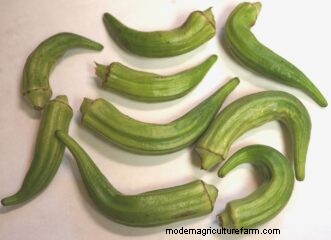
Stink bugs will cause the pods to be twisted and distorted.
Barbara H. Smith, ©2018 HGIC, Clemson Extension
The ants farm the aphids so that they can harvest the honeydew from the aphid excretions.
- Limiting and properly managing nitrogen can help control aphids and ants.
Corn Earworms
Corn earworms are often found feeding on the pods.
Stink bugs and leaf-footed bugs
Stink bugs and leaf-footed bugs will cause the pods to be twisted and distorted.
References
- https://content. ces. ncsu. edu/southeastern-us-vegetable-crop-handbook (2019 Southeastern U. S. Vegetable Crop Handbook. Page 55)
- https://plants.ces.ncsu.edu/plants/abelmoschus-esculentus/common-name/okra/
- https://fieldreport.caes.uga.edu/publications/C941/home-garden-okra/
- https://union.ces.ncsu.edu/2023/05/growing-okra-in-the-home-garden/
Document last updated on 12/25 by N. Jordan Franklin.
Originally published 12/99
If this document didn’t answer your questions, please contact HGIC at hgic@clemson.edu or 1-888-656-9988.


