
Welcome to Modern Agriculture!

Pea shoots are a quick-growing crop suited to tiny spaces either outside in the ground or pots, or indoors on a windowsill. Within just three weeks, they produce delicious, crunchy shoots that can be eaten raw, in salads and sandwiches, or cooked in stir-fries. As well as being delicious to eat, pea shoots are nutritious, with good levels of vitamins A, B6, E and K, and are particularly high in vitamin C. They are easy to grow and can be grown all year round.
Pea shoots are the tender young growing tips of pea plants, comprising the shoots and the thin twining tendrils. Growing peas for shoots is different to growing actual peas: pea shoots take up very little space and are ready to harvest in two to three weeks, while pea pods take around three months to develop. Pea shoots can be grown indoors or outdoors, while plants for pea pods can be grown outdoors only. What's more, you can grow pea shoots at any time of year indoors, while pea pods can be grown only during spring and summer, outdoors.
You can grow pea shoots in the ground in well-prepared, weed-free soil, or in pots. If growing pea shoots in the ground, use a rake or draw hoe to make a shallow trench 15-20cm wide and 8-10cm deep. If growing in pots, choose a wide, shallow container around 8-10cm deep. This can include a deep seed tray, an old mushroom punnet or a strawberry box, but do ensure there are drainage holes in the bottom. Fill the tray to two-thirds deep with peat-free potting compost and firm gently.
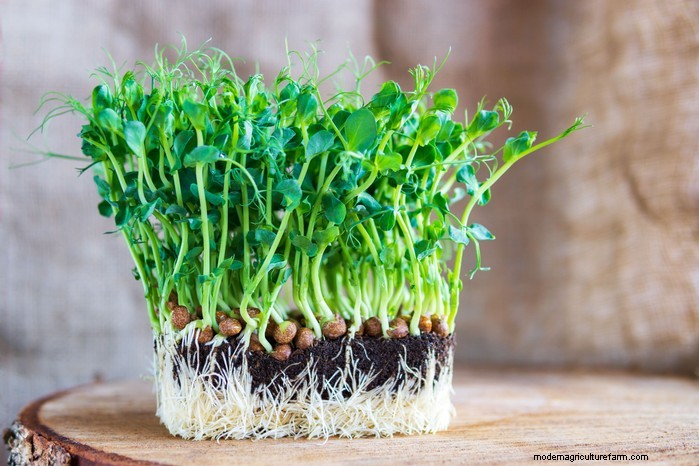
Pea shoots ready to harvest. Getty Images
For growing pea shoots, you can either buy large packs of pea seeds, or rehydrate dried peas sold for eating – simply soak them in water for 24 hours before sowing.
If growing pea shoots in the ground, use a rake or draw hoe to make a shallow trench 15-20cm wide and 8-10cm deep. If growing in pots, choose a wide, shallow container around 8-10cm deep. This can include a deep seed tray, an old mushroom punnet or a strawberry box, but do ensure there are drainage holes in the bottom. Fill the tray to two-thirds deep with peat-free potting compost and firm gently.
If you've sown pea shoots in a seed tray, it's not really necessary to transplant them as you are just harvesting them for their leafy shoots, so they don't need as many nutrients as pea plants grown for peas. But if you want to plant them outside, prepare the soil and plant them into the ground at the same depth they were growing in the tray, and water well.
Keep pea shoots well watered and protect young plants from slugs and snails.
Slugs and snails are the biggest pests of pea shoots. Try slug collars, which can prevent the slugs from reaching the plants.
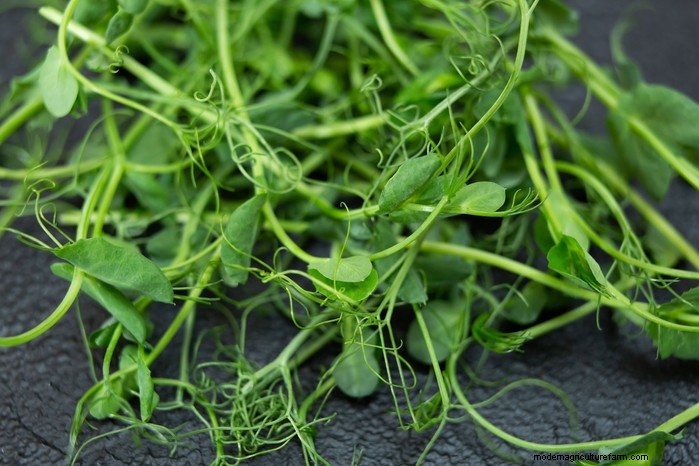
Pea shoots ready to eat. Getty Images
Pea shoots are ready to harvest when the young plants are around 10-15 cm tall. Use scissors, or your finger and thumb, to pinch or cut the shoots back to just above the first pair of leaves. Don’t allow the shoots to get too tall, as they will become fibrous and chewy.
Pea shoots can be stored for a couple of days in the fridge after harvesting, but are best eaten fresh.
Eat pea shoots raw, in salads and sandwiches, or cooked in stir-fries. They also make an excellent and delicious garnish to dishes like summer soups, risottos, crushes peas on toast and even hearty breakfasts.
Pea shoots 'Anubis' – quick growing, with a crop ready in three weeks.
Pea shoots 'Serge' – can be grown for pea shoots, mangetout or full pea pods.
Pea shoots 'Style' – quick growing, producing crunchy shoots.
Are pea shoots the same as peas?
Yes. Pea shoots are the young plants that peas eventually grow on. If you didn't harvest the shoots the plant would grow and flower, and develop pea pods.
Are pea shoots good for you?
Yes. Pea shoots are highly nutritious, with good levels of vitamins A, B6, E and K, and are particularly high in vitamin C.


