
Welcome to Modern Agriculture!

This crop can have several problems. They can be pale, rot in the ground, or not germinate at all. If you’ve found your carrots oddly shaped, growing a pair of legs, or bunched together in a jumbled mess, there are a few possible reasons. Here are some of the causes of deformed carrots and how to treat them.
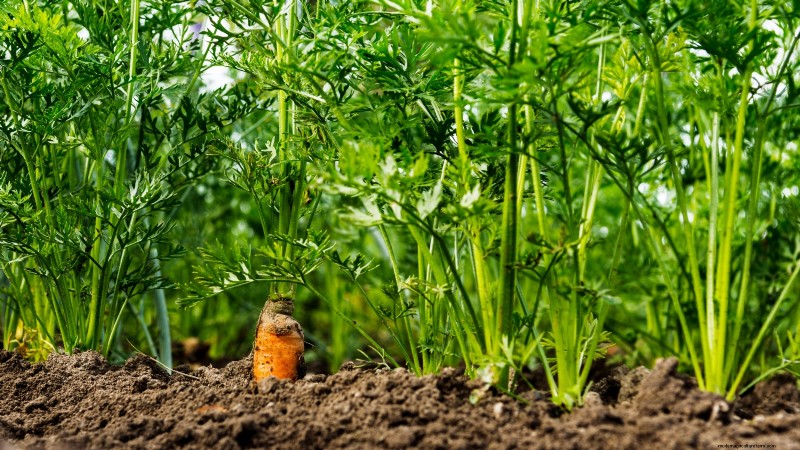 Carrots aren’t big feeders, so they only need to be fertilized twice during the growing season.
Nitrogen is the macronutrient responsible for leafy growth. Nitrogen-rich fertilizers are great for the veggies we prize for their foliage, like herbs and leafy greens. But since we prize this crop for its roots that we can’t see, too much nitrogen is a bad thing.
Symptoms of too much nitrogen include hairy roots, forked deformed growth, and excessive foliage at the expense of root development. They can also form into a jumbled mass instead of a single taproot. Manure compost can be laden with nitrogen. If you decide to use this type of compost, lay no more than one inch in the fall and allow it to overwinter before planting in spring.
Pre-plan where you’ll plant before prepping your bed, and then conduct a soil test. Phosphate(P) and potash(K) encourage more root development. A balanced 10-10-10 before planting is OK, but during their growing season, fertilize them with moderate P and high K. A 0-10-10 or 5-15-15 or similar fertilizer ratio is ideal.
This famous orange root crop is not a heavy feeder. Beds only need to be fertilized twice during the growing season. Fertilize them once when the tops reach three to four inches tall and again when they reach six to eight inches tall.
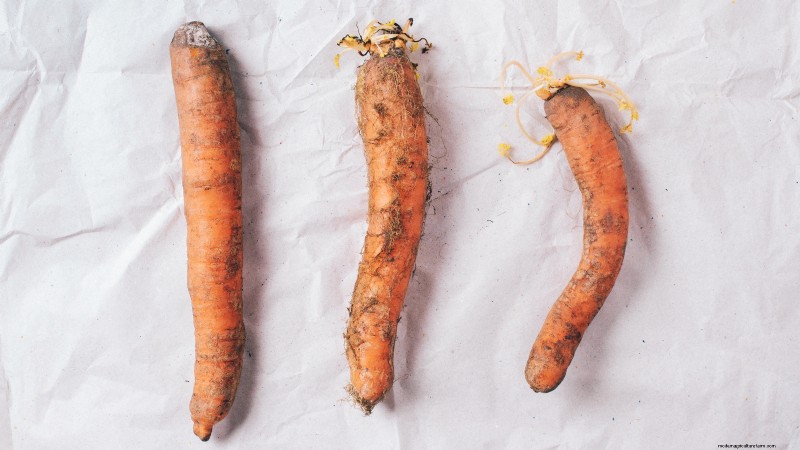 A three-inch layer of mulch can help prevent overheating.
Carrots are a cool-season vegetable that prefers soil temperatures between 55 and 75°F (24°C) for germination. Seeds can be planted as soon as the belowground temperature has reached 40°F (4°C), likely in the early spring or fall. While a kiss of frost makes them sweeter, consistently cold temperatures will cause spindly growth.
However, too-hot temperatures can also reduce seed germination, stunt growth, and alter their flavor. Use a soil thermometer to check the temperature before planting.
A three-inch layer of mulch can help keep the roots cool in hotter climates. If you live in a hotter climate, consider planting a heat-tolerant variety like ‘Shin Kuroda,’ which can also be sown in late spring.
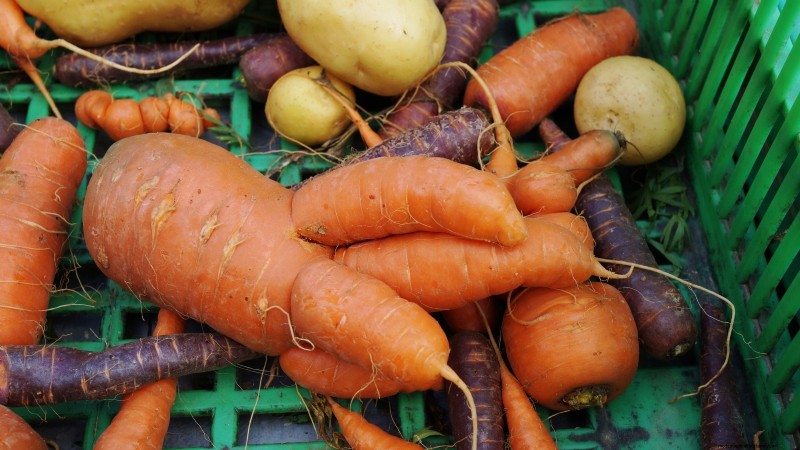 These root crops need underground space to grow.
Like all root vegetables, any obstructions can and will alter their growth, including other carrots. These root crops need underground space to grow. Crowded carrots open the door to all sorts of issues from plant stress and leave them susceptible to fungal diseases from reduced airflow. As they compete for resources under and above ground, they’ll take on a stretched, skinny, and scrawny appearance.
Carrot seeds are so tiny it’s hard to plant just one per inch! Even if that was easy, as with most plants, it’s best to plant extra seeds since they may not all germinate. When the carrots are about one inch tall, thin them to one every three inches, removing the smallest plants.
There are two ways to remove the carrots: either chop the tops off with garden shears or carefully pull them. Chopping them prevents soil disturbance, while pulling them gives you baby carrots and greens that you can either eat, compost or feed to hens.
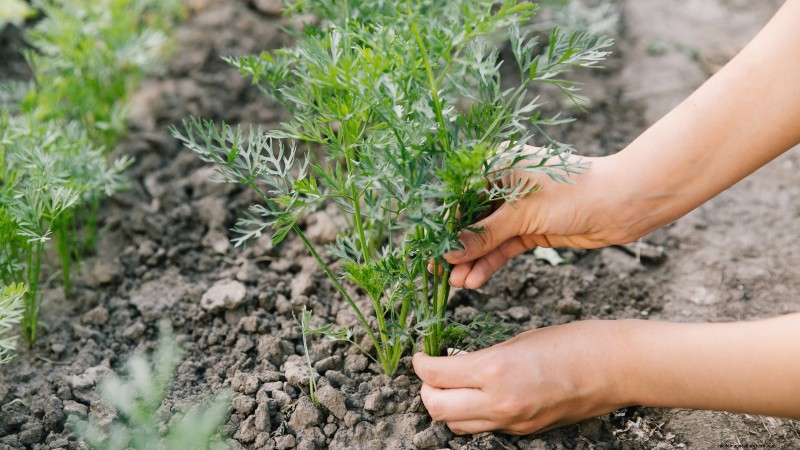 Your container will need to be at least one foot deep for most carrots to grow.
Carrots hate moving (hey, I can relate!). As soon as the seed germinates, it sends down a long taproot that becomes the carrot we eat. When they germinate in a small container, the taproot cannot go deep into the ground, resulting in stunted growth.
The good thing about carrots is that their seeds can be planted directly in the garden in late winter or early spring when soil temperatures hit as low as 40°F (4°C). In winter, mulch also helps to insulate the ground and keep it a bit warmer.
If you live in a cold climate where direct sowing is difficult or you have a short growing season, you can grow nearly every type of carrot in a container. The caveat here is providing enough space for the roots to grow and keeping the containers cool in summer. Your container will need to be at least one foot deep for most carrots to grow.
Some short-rooted carrot species, such as Parisian Market, Tonda Di Parigi, or Red Cored Chantenay, are particularly well-suited to container growing.
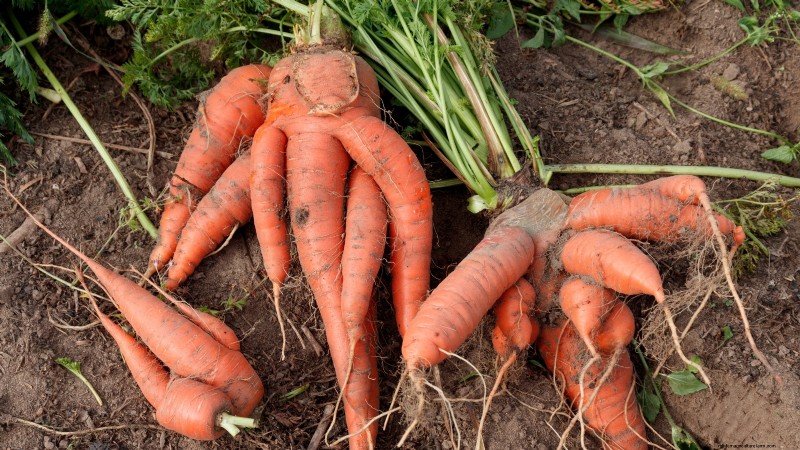 Good aeration aids in proper growth and absorption of water and nutrients.
As the taproot makes its way down, if it hits a hard, compacted layer of dirt, it will stop growing. When this happens, the result is short, stubby, or deformed carrots. These root veggies need loose, fluffy soil that will give them the freedom to grow without fighting compaction. The bed needs to be amended to the desired length of your carrot roots, so double-check your seed packet.
Some carrot types, such as Danvers or Chantenays, have stronger roots that can handle clay or compaction. But varieties with long, slender roots like Nantes and Imperators absolutely need properly aerated beds. Good aeration aids in proper growth and absorption of water and nutrients.
Compaction can happen for a number of reasons. Sometimes it’s the soil type (looking at you, heavy clay!) But many times, a hardpan is the result of rototilling, a lack of organic matter, or compaction from vehicles and foot traffic. Fortunately, compaction can be fixed! Use a broadfork or digging fork to aerate about a foot deep. Add in organic matter like worm castings or biologically active compost to break up the compaction.
Another low-maintenance way to aerate your beds is cover cropping. It requires advanced planning but significantly enriches the ground. Cereal rye and oats are two great deep-rooted cover crops that help break up compaction and prepare for root crops.
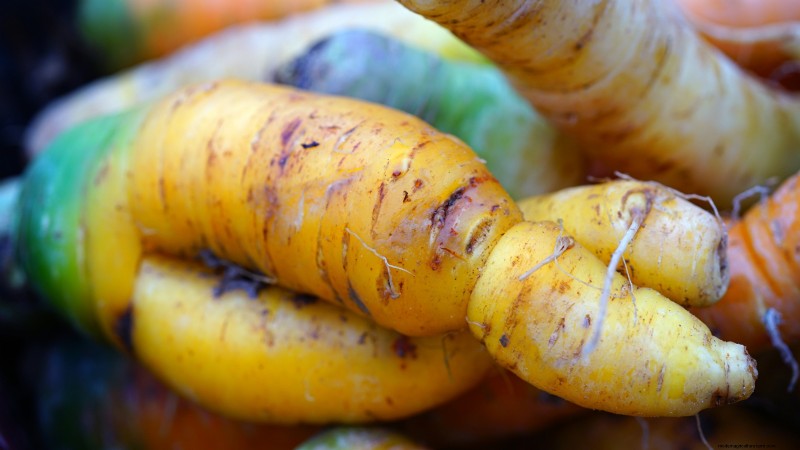 Deformities can include stunting, branching, or curving to go around the obstacle.
Related to heavy or compacted soil is soil laden with debris and obstacles. As it sends down its taproot, any rock, stone, stick, soil clump, or forgotten artifact the carrot hits will cause the taproot to dodge and deform. Deformities can include stunting, branching, or curving to go around the obstacle. The good news is that the carrot will still be perfectly edible, just odd-looking.
The best way to avoid this from happening is to prepare your carrot patch carefully. Sandy, loam is ideal. Use a broadfork or shovel to fluff up the bed and remove any debris. Add in some rich organic matter or compost to help aerate and provide nutrients.
If you have particularly rocky ground, opt for a tall Birdies raised bed instead! In a raised bed, the soil will warm faster, and you can create the best possible growing environment for your favorite sweet orange roots. No digging required.
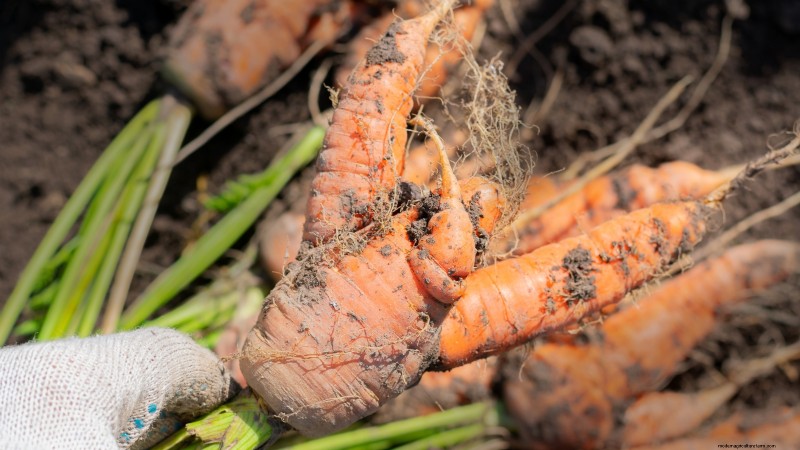 These soil-dwellers eat away at carrots underground and can cause stunted or deformed growth.
Root-knot nematodes are parasitic nematodes that feast on the root systems and root cells of affected plants. While detrimental to root vegetables, they also attack thousands of plant species, ranging from vegetable crops to trees, shrubs, and ornamentals.
These soil-dwellers eat away at carrots underground and can cause stunted or deformed growth. Another sure sign you have a nematode problem is small, beady galls on carrot roots. These galls are caused by chemicals nematodes release in order to develop large feeding cells. You can also verify through a soil test.
The good news is that there are several ways to treat this pest if you discover this is the culprit of your deformed carrots. Here are some of the best ways to reduce the infestation of nematodes so that your next carrot crop will fare better.
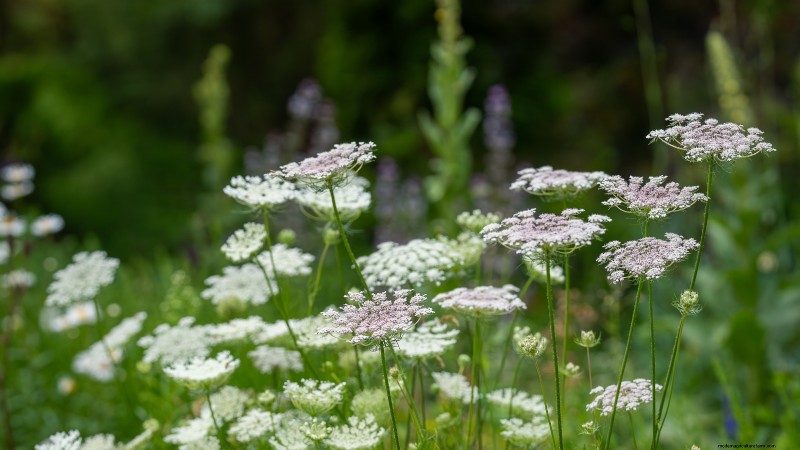 If they’re left in the ground too long, they become woody and not at all tasty.
Carrots are biennials—but to enjoy their tasty taproot, they need to be harvested by their maturity date in their first year of growth. The maturity date depends on the cultivar but is typically between 70 and 100 days. If they’re left in the ground too long, they become woody and not at all tasty.
If left in the ground until the following year, carrots will produce flowers and seeds. The taproot will send out whitish secondary roots and a stem. Roots at this stage aren’t edible, so this is a great opportunity to collect carrot seeds to plant in the spring or fall.
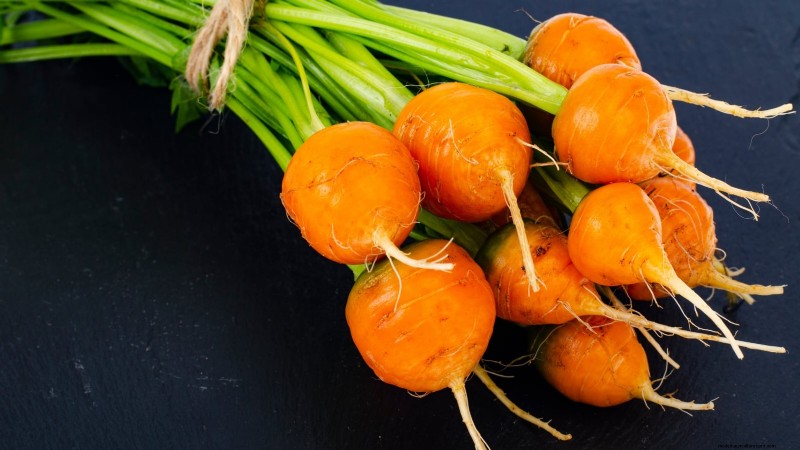 They’re flavorful, great for containers, and make a statement on the dinner table.
This might seem like an obvious step, but bear with me! If you’re dealing with unusually shaped carrots that aren’t forked or have other deformities, have a look at your seed packet.
Here are a few examples of unusually shaped carrot varieties:


