Welcome to Modern Agriculture!

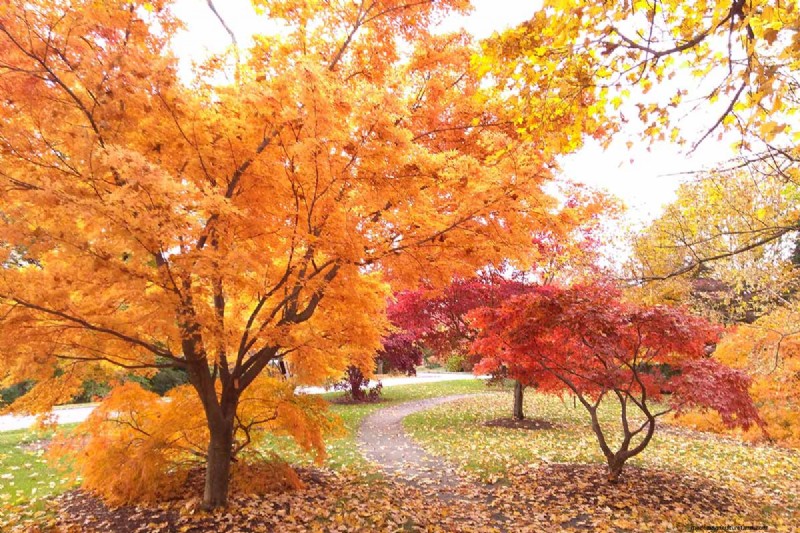
For gardeners, the arrival of fall signals the culmination of a season’s hard work. Spring planting, summer maintenance, and diligent care yield abundant blossoms and harvests—now, the leaves turn to gold.
We link to vendors to help you find relevant products. If you buy from one of our links, we may earn a commission.
Cooler days and peak leaf‑peeping events draw visitors to forests to marvel at the changing foliage. If you have room to introduce new landscape trees, this guide will help you choose.
When selecting trees, weigh shade, fruit, flower, size, and most importantly, the hue of their autumn foliage.
This article highlights 21 trees that transform into brilliant yellow in the fall. Here’s our lineup:
Let’s get started!
Native Ostrya virginiana thrives in USDA Zones 3‑9. It develops a symmetrical, rounded to oval canopy, reaching 30‑40 ft tall and 20‑30 ft wide at maturity.
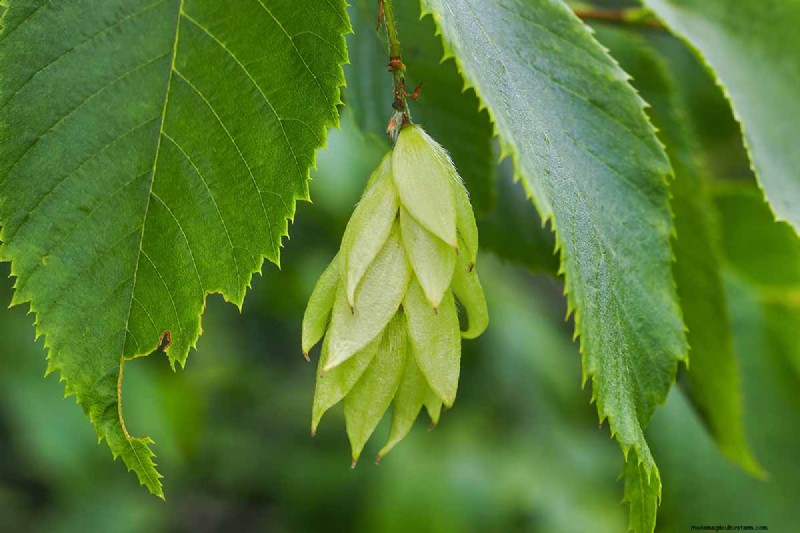
Full sun and organically rich soil are preferred, but it tolerates partial shade, sand, and clay. Lance‑shaped leaves are deeply serrated and turn soft yellow in autumn, accented by catkins and dry female flowers that resemble hops. Each papery capsule contains a nutkin that attracts songbirds. Hop hornbeams are pest‑ and disease‑resistant, have sturdy wood, and tolerate drought and pollutants—ideal for windbreaks or roadways.
Cold‑loving Larix laricina (tamaracks) suits Zones 2‑5. As a deciduous conifer, it bursts into golden hues before shedding needles in winter.
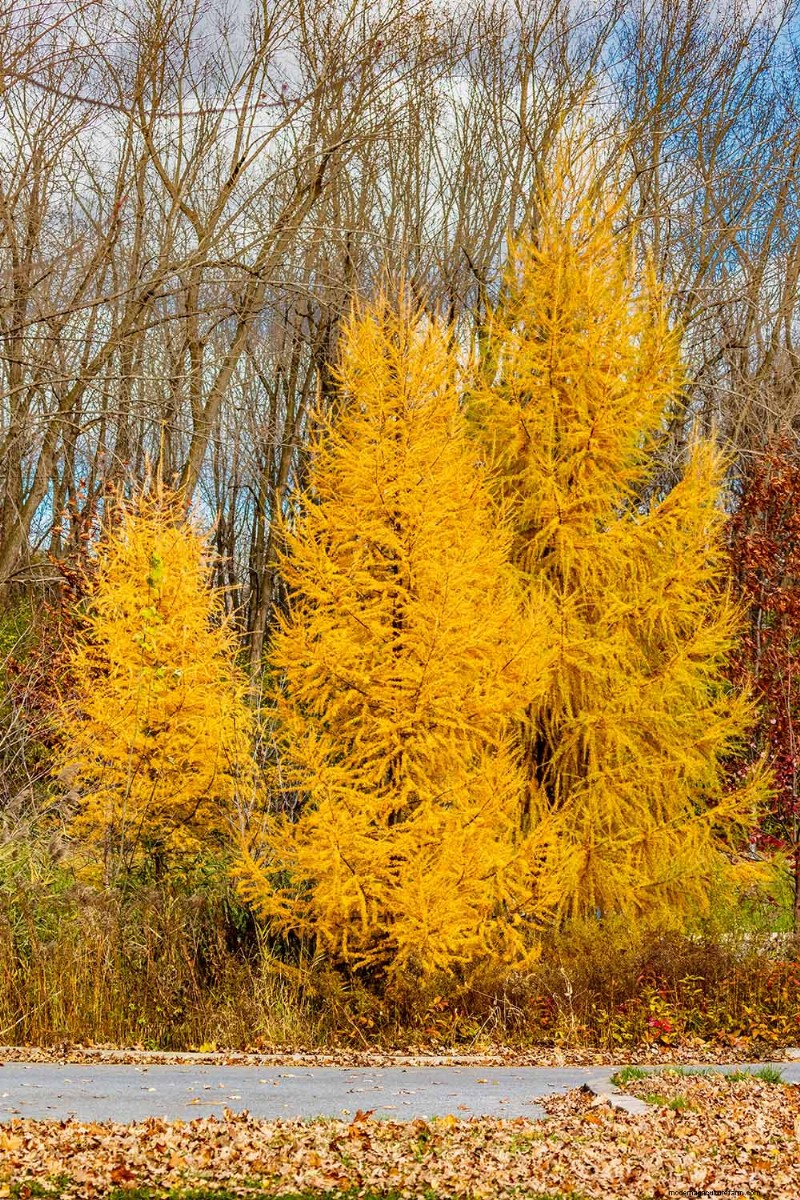
It grows 40‑80 ft tall with a 15‑30 ft spread, prefers full sun, and tolerates varied soils and moisture levels. Grouping them in boggy wetlands creates an impressive color display. For more details, see our guide to growing larches.
Native Asimina triloba thrives in Zones 5‑9. Mature trees reach 15‑30 ft tall and wide, preferring full sun to partial shade and moist, well‑draining soil.
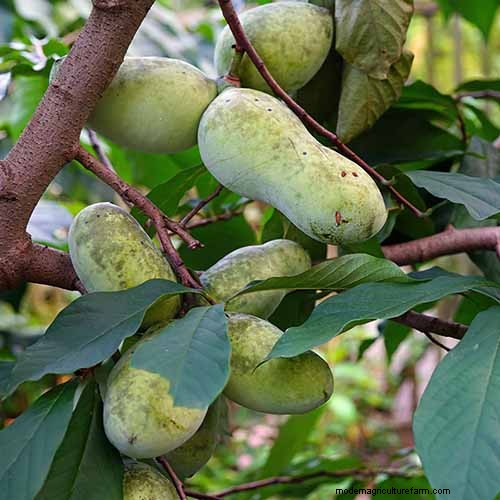
Its palm‑like shape features a tall trunk and umbrella‑like canopy. The tree produces brownish, malodorous flowers and oblong, fleshy yellow‑green fruits that are edible in moderation. Leaves are club‑shaped and turn bright yellow at season’s end. American pawpaws are available from Fast Growing Trees. For planting tips, consult our guide to growing pawpaws.
Ginkgo biloba ‘Autumn Gold’ is suited to Zones 4‑8. It has a free‑form shape, extensive horizontal branching, 40‑50 ft height, and 25‑30 ft spread. Full sun is preferable, and it tolerates varied soils.
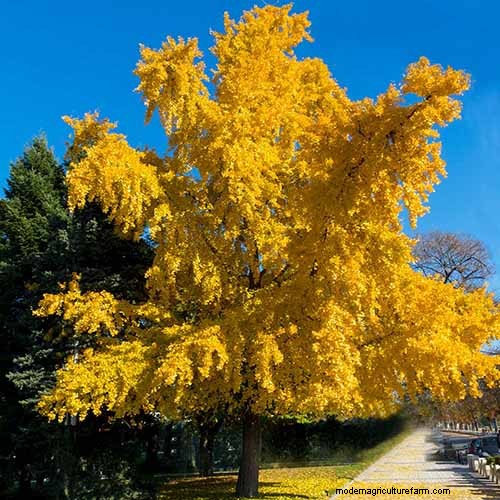
Fan‑shaped leaves turn sizzling gold in autumn. This cultivar is male, producing no foul ginkgo fruits. Ginkgos are highly tolerant of pollution and drought, making them excellent for perimeter plantings along busy streets. ‘Autumn Gold’ ginkgos are available from Fast Growing Trees. See our guide to growing ginkgos for more information.
Beacon® swamp white oaks, Quercus bicolor ‘Bonnie and Mike,’ grow in Zones 4‑8. Mature height is 30‑35 ft with a 12‑16 ft spread.
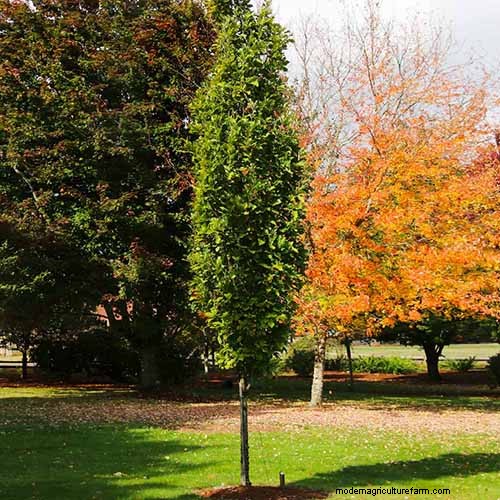
They combine oak strength with a narrow, columnar shape, making them ideal accents or windbreaks. Full sun is preferred, and they tolerate wetness but not alkalinity. Leaves are glossy, club‑shaped with shallow lobes, producing rich bronze‑yellow fall color. Beacon® swamp white oaks are available from Fast Growing Trees. For care details, see our guide to growing oaks.
Greenspire™ lindens, Tilia cordata ‘PNI 6025,’ thrive in Zones 4‑7. Straight trunks, uniform branching, and a pyramid shape make a striking landscape statement. Mature trees reach 40‑50 ft tall with a 30‑35 ft spread.
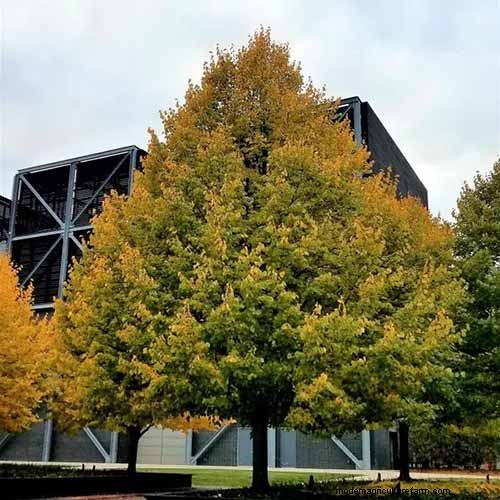
Full sun is best, and these trees tolerate various soils. Yellow, early‑summer blossoms emit a spicy scent, attracting honeybees. Heart‑shaped foliage turns dazzling gold in fall. Greenspire lindens are excellent urban trees, tolerating pollution. Note: never plant below power lines. Trunk is bare for the first six feet after utility pruning. Available from Nature Hills Nursery. Read our linden growing guide for more care tips.
Native hardy pecan trees, Carya illinoinensis, grow in Zones 5‑9, reaching 70‑90 ft tall and 45‑70 ft wide. They prefer full sun and diverse soils, making them suitable for large properties.
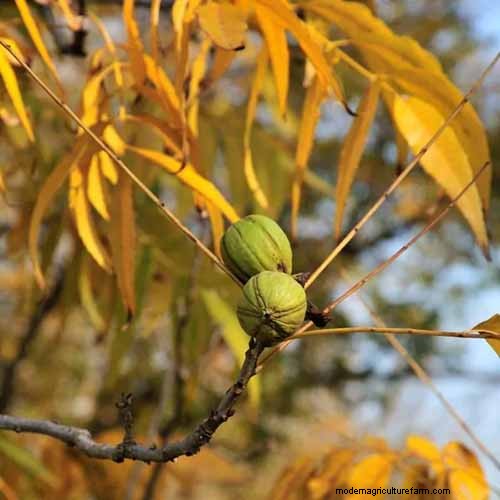
Leaves consist of pinnate leaflets that burst into harvest gold late in season. Plant a second pecan variety nearby to ensure pollination. First nuts appear in 7‑15 years. Hardy pecans are available from Nature Hills Nursery. See our pecan growing guide.
Cold‑hardy red pomegranates, Punica granatum, are small trees with an oval habit, suitable for Zones 7‑11. Mature dimensions are 8‑10 ft tall and wide. With winter protection, they fruit even in Zone 6; zones 3‑5 may require potting indoors.
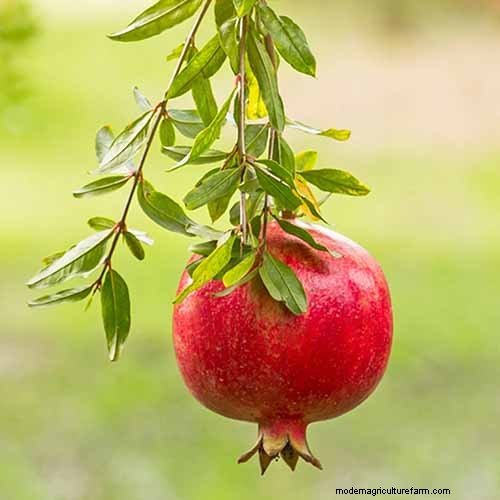
They are pest‑ and disease‑resistant, drought tolerant, and rarely split fruit. Spring flowers are orange‑red; branches are thorny, and foliage turns golden yellow in fall. Hardy red pomegranates are available from Fast Growing Trees. Check our guide to growing pomegranates for more details.
Harvest Gold® crabapples, Malus x ‘Hargozam’, thrive in Zones 4‑8, reaching 20‑25 ft tall with a 15‑25 ft spread. Symmetrical and rounded, they make focal specimens.
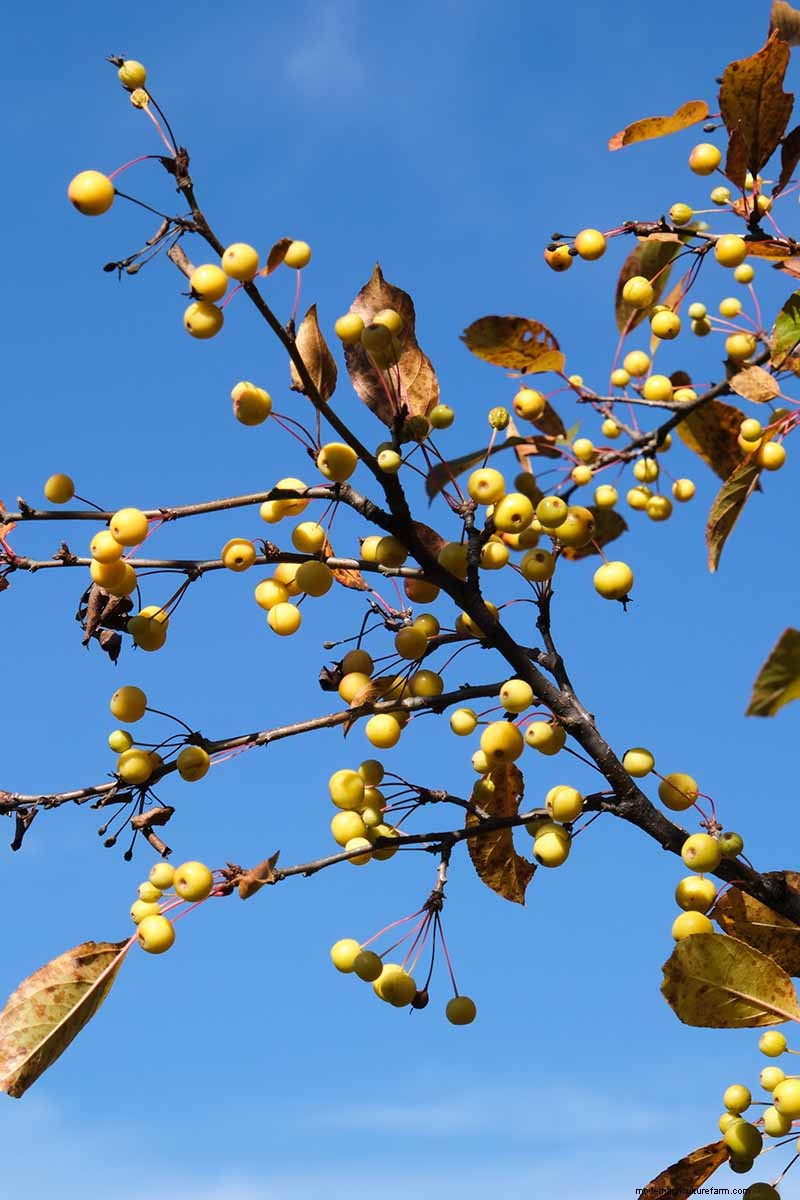
Elliptical, serrated leaves precede white spring flowers, followed by yellow, berry‑like fruits that persist into winter—ideal for birds. They prefer full sun, well‑draining soil, and tolerate clay and occasional wetness. Disease and pest resistance are notable. Note: this variety’s fall foliage is yellow, contrary to the short product summary. For planting guidance, see our crabapple growing guide.
Katsuras, Cercidiphyllum japonicum, are suited to Zones 4‑8. Mature trees reach 40‑60 ft tall with a 25‑60 ft spread and may have multiple trunks.
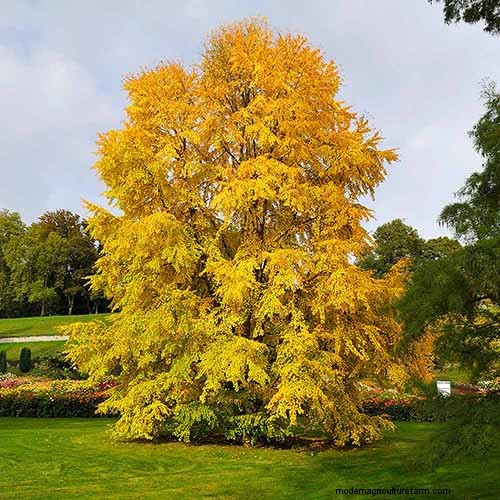
Full sun to partial shade and well‑draining soil are preferred. In early years, consistent moisture is key. Leaves are almost round, slightly teardrop‑shaped, and brilliant yellow in fall. Katsuras tolerate pollution and have a shallow root system that minimizes infrastructure damage. Available from Fast Growing Trees.
Lombardy poplars, Populus nigra ‘Italica’, are suitable for Zones 3‑9. Their columnar shape makes them ideal for privacy screens when planted in rows.
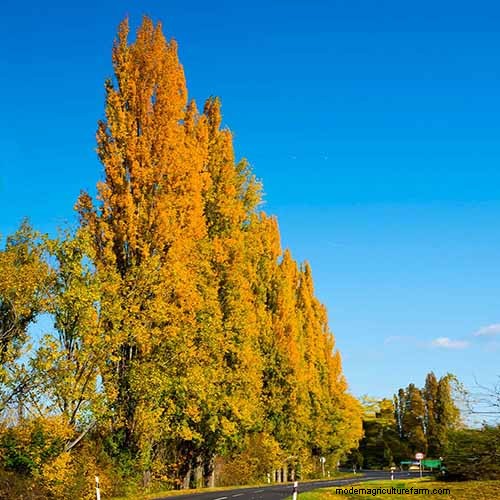
Mature heights reach 40‑60 ft with a 10‑15 ft spread. They prefer full sun, thrive in various soils, and are drought tolerant. Triangular leaves rustle pleasantly in breeze, turning bright yellow in autumn. Lombardy poplars are available from Fast Growing Trees.
Niobe or golden weeping willows, Salix alba ‘Tristis’, grow in Zones 4‑8, reaching 50‑60 ft tall and 30‑40 ft spread. They thrive in full sun and moist soil of any type.
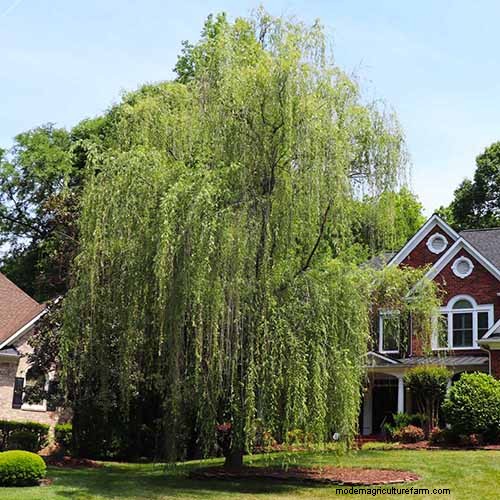
Finely serrated, narrow leaves turn golden in autumn, and airy branches cascade gracefully. Avoid planting near sewer pipes due to invasive roots. Niobe weeping willows are available from Fast Growing Trees. See our weeping willow growing guide for more information.
Native paper birches, Betula papyrifera, thrive in Zones 2‑7. Their statuesque trunks feature ornamental white, peeling bark and a loosely pyramidal shape—great as focal points.
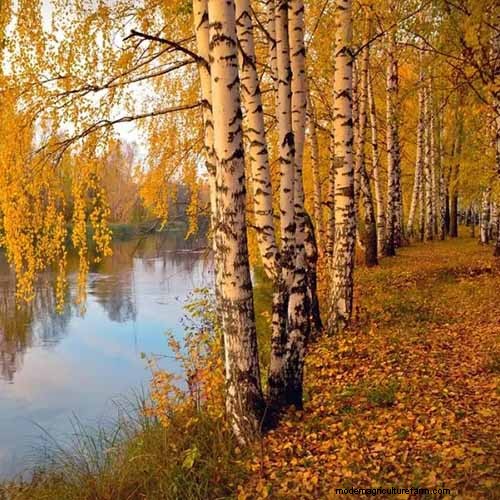
They reach 40 ft tall with a 30 ft spread, prefer full sun to partial shade, and grow in most soils. Moderate moisture is required; they are not drought tolerant. Teardrop‑shaped leaves are serrated and turn bright yellow in fall. Paper birches are available from Nature Hills Nursery.
‘Patmore’ green ashes, Fraxinus pennsylvanica ‘Patmore’, thrive in Zones 3‑9. They have a rounded, lollipop shape, making them eye‑catching stand‑alone specimens.
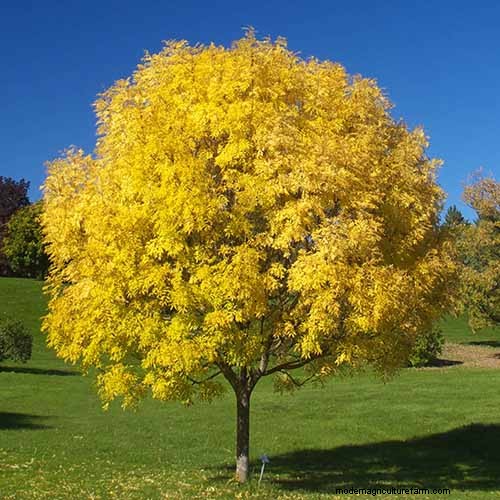
Mature heights are 50‑70 ft with a 35‑40 ft spread. Pest and disease resistance is high. They prefer full sun and moist soil but tolerate various soils and some drought. If emerald ash borer is present in your area, consider preventative integrated pest management. Growing 2 ft per year, they produce shiny, lance‑shaped leaflets that turn bright, sunny yellow in fall. ‘Patmore’ green ashes are available from Fast Growing Trees.
‘Princeton’ elms, Ulmus americana ‘Princeton’, are suited to Zones 4‑9. Mature dimensions are 60‑80 ft tall and 40‑60 ft wide—excellent stand‑alone shade trees.
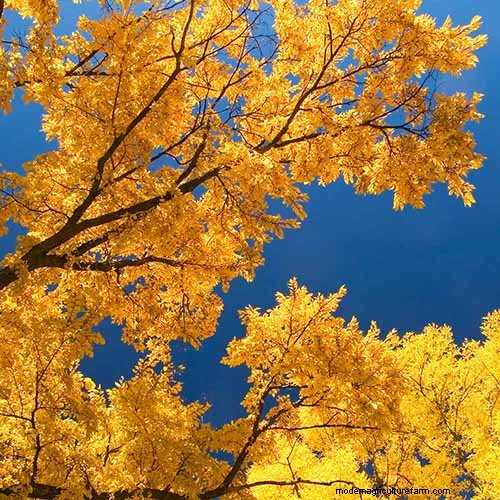
They have a vase‑like shape with dense, upwardly arching branches. Elliptical, serrated foliage turns yellow at season’s end. ‘Princeton’ elms are highly resistant to Dutch elm disease, prefer full sun, and adapt to most soils. Available from Fast Growing Trees. For cultivation details, see our guide to growing elms.
Native quaking aspens, Populus tremuloides, thrive in Zones 2‑6. They grow 40‑50 ft tall with a 20‑30 ft spread.
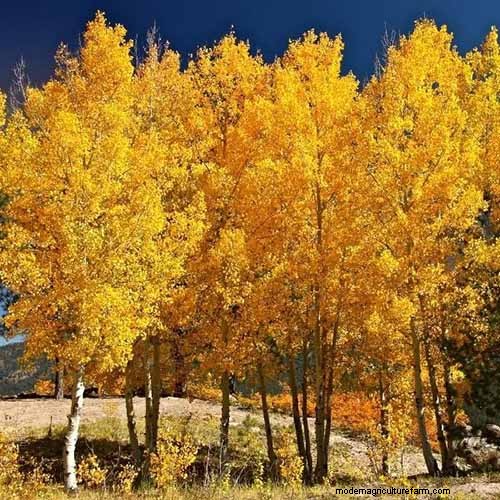
Full sun and a range of soils support their growth, while the rustling leaves create a soothing soundscape. Tall trunks and a pyramid shape showcase crisp white bark. Leaves are near heart‑shaped with serrated margins, turning golden in fall and sometimes revealing subtle red tones. Quaking aspens are available from Nature Hills Nursery. Find our guide to growing quaking aspen here.
River birches, Betula nigra, are stunning in Zones 3‑9. They feature buttery, serrated, diamond‑shaped leaves and reddish‑green catkins that persist into winter, with cinnamon‑brown exfoliating bark.
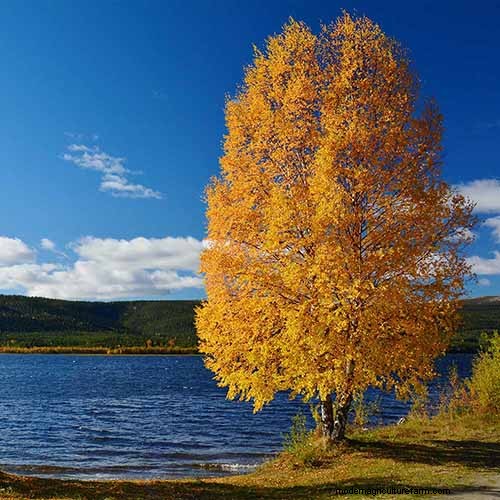
Mature heights are 25‑50 ft tall and 25‑35 ft wide. As they age, the form shifts from pyramidal to rounded. They prefer full sun to part shade and tolerate drought, varied soils, and wind.
Plant in naturalized areas or in clumps for privacy. Avoid planting near buildings, as branches may fall into gutters. River birches are available from Fast Growing Trees.
Shagbark hickories, Carya ovata, suit Zones 4‑8. They are large shade trees with a rounded crown, maturing to 70‑90 ft tall and 50‑70 ft wide.
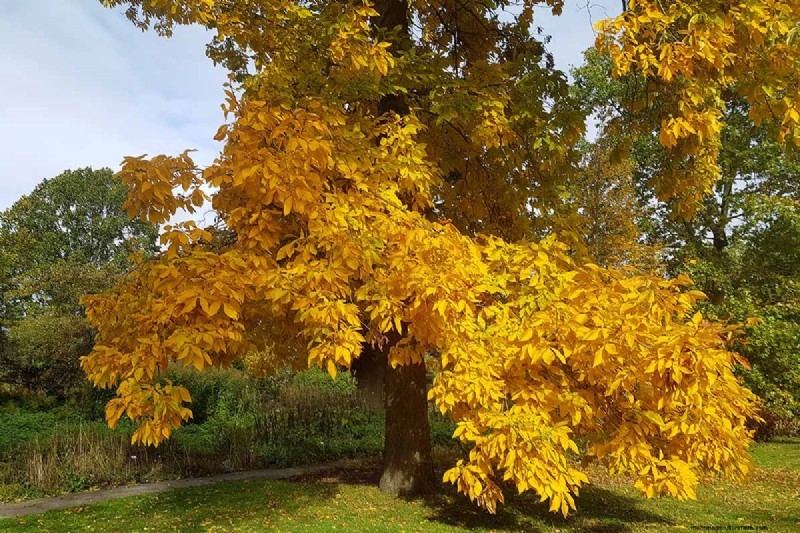
Leaves are lance‑shaped, slightly serrated, and turn golden yellow in fall. Mature specimens produce round nuts, have gray, exfoliating bark, and make impressive stand‑alone trees in expansive settings. They prefer full sun to part shade, organically rich, well‑draining soil, and tolerate clay and black walnut juglone. Pests and diseases are uncommon. Check our guide to growing hickories for more information.
Vase‑shaped silver maples, Acer saccharinum, thrive in Zones 3‑9. They reach 50‑80 ft tall with a 35‑70 ft spread, adding roughly three feet per year until maturity.
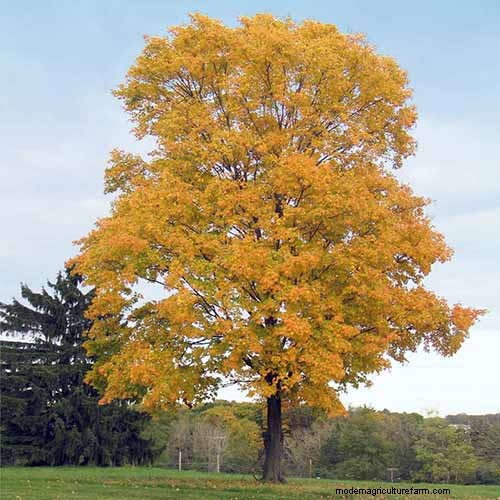
Full sun to part shade and medium to wet soil are preferred; drought tolerance is good. Deeply lobed leaves are characteristic of maples. Winged seed pods (“samaras”) disperse in spring. Fall color is pale lemon yellow.
Best placed in moist areas like streambeds or riverbanks away from structures, as limbs can break in high winds and ice storms. Silver maples are available from Fast Growing Trees. Read more about growing maples here.
Fast‑growing, native, thornless honey locusts, Gleditsia triacanthos var. inermis, suit Zones 4‑9. They reach 50‑70 ft tall with a 40‑50 ft spread, adding about two feet per year until maturity.
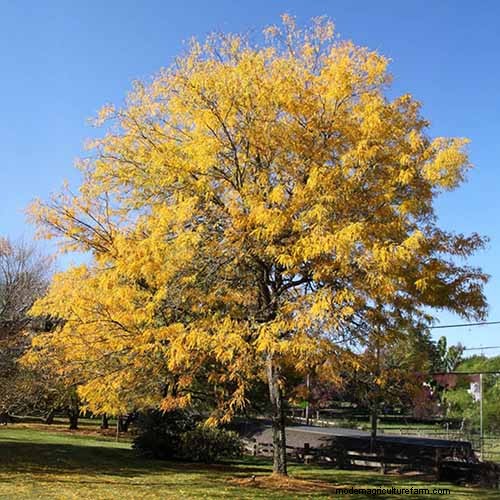
The overall shape is upward arching and oval, with pinnate leaflets that are narrow and oblong. Spring produces fragrant, nondescript blossoms and long, reddish‑brown seed pods. In fall, leaves turn golden. Thornless honey locusts provide bold statements and ample shade in large yards. Available from Fast Growing Trees.
Native tulip poplars, Liriodendron tulipifera, thrive in Zones 4‑9. Mature dimensions are 60‑90 ft tall and 30‑50 ft wide. They require full sun with loose, loamy, well‑draining soil.
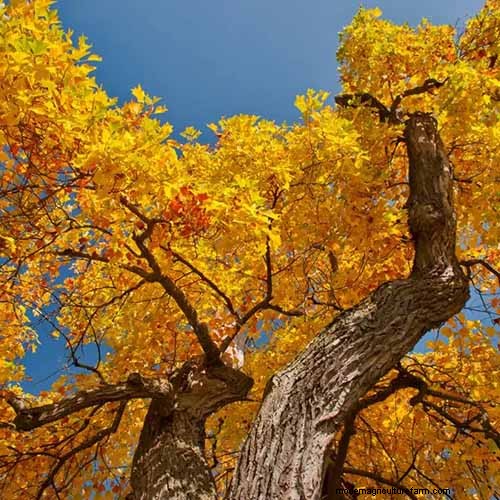
Called tulip trees, they belong to the magnolia family and are unrelated to tulips or poplars. Tulip‑like flowers bloom high in the canopy in spring, ranging orange, yellow, and green. They thrive in wooded, naturalistic settings where wind is moderated. Mature trees adopt an oval form. Palmate, hand‑like leaves resemble tulips. Fall foliage is golden.
Tulip poplars are available from Nature Hills Nursery. Get tips on caring for tulip poplars here.
With 21 landscape trees that offer exciting yellow hues, it’s time to pick your favorites and add them to your garden planner.
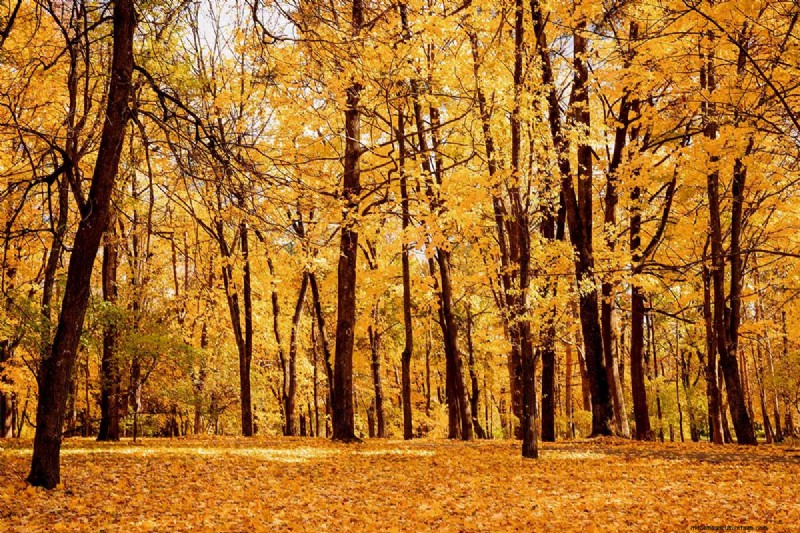
When cool, crisp days arrive, you’ll be glad you chose landscape trees with yellow fall foliage. Yellow hues form the backbone of a late‑season display punctuated by oranges, russets, and scarlets.
What yellow‑leafed trees grow in your outdoor living space? Tell us about them in the comments below.
And for more information about growing trees in your landscape, add these guides to your reading list next: