
Welcome to Modern Agriculture!

Urban lots can feel restrictive, but a thoughtfully chosen small tree can transform a tight space into a vibrant, functional landscape. Whether you need shade, a splash of color, or a habitat for pollinators, the right tree can meet multiple goals while fitting neatly into your yard.
For this guide, we define “small” as a mature height and spread of no more than 30 feet—ideal for most city gardens and apartment balconies alike.
We partner with trusted vendors to help you find the best trees for your plot. If you purchase through a link on this page, we may receive a commission at no extra cost to you.
Beyond size, consider pollution tolerance, heat resistance, and sun‑soil compatibility. Urban trees must cope with higher carbon dioxide, particulate matter, and the heat‑island effect. This list highlights species that excel in those conditions, plus practical guidance for selecting the right one for your space.
Before diving into the list, here’s a quick planning note: a sapling’s current size is only a hint of its eventual footprint. Measure your plot’s width, depth, and sun path, then choose trees whose mature dimensions align with your layout goals—whether that’s a single large shade tree or a layered mix of smaller specimens.
For example, a 40‑by‑40‑foot yard can accommodate a single 30‑foot tree that provides substantial shade, or several 10‑ to 15‑foot trees that leave room for a vegetable bed or patio.
When maximizing sun exposure, favor species that grow taller than they spread and plant them toward the south side of your yard. This orientation ensures they capture the most light while still fitting comfortably.
The American hazelnut is a versatile, pollution‑tolerant tree that offers both shade and a seasonal harvest of edible nuts. With a mature canopy of roughly 12 feet tall by 13 feet wide, it stays compact yet impactful. Native to the eastern and central United States and Canada, it produces winter catkins, summer hazelnuts, and striking fall colors ranging from gold to deep red.
Hardiness zones 4‑9 and well‑drained soil make it an excellent hedge or focal point. Two‑to‑three‑foot saplings are available from Fast Growing Trees.
Known for its dramatic, cloud‑like summer flower heads, the American smoke tree reaches up to 30 feet tall and wide. It thrives in heat‑and pollution‑prone environments, making it a top choice for urban yards in zones 4‑8. The tree’s late‑fall foliage offers a vivid orange display that lingers longer than many other species.
It prefers full sun and adapts to a range of soils. Images: 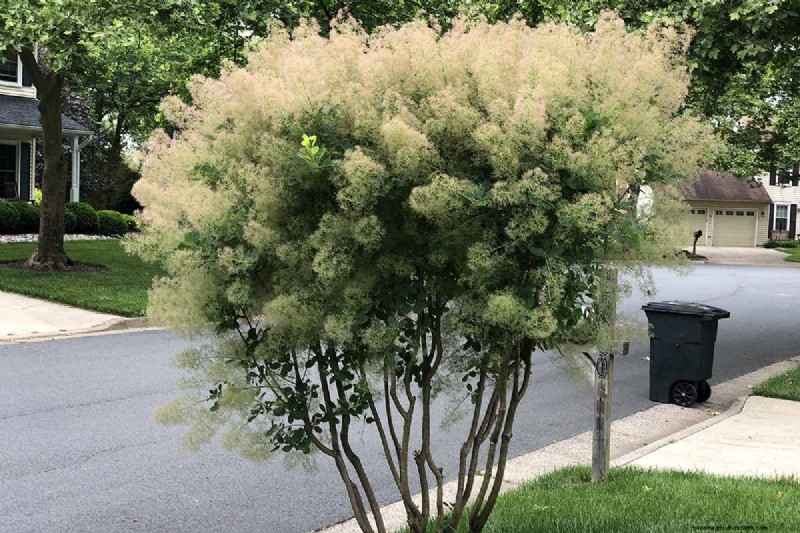
Blackhaw viburnum is a pollinator magnet, drawing butterflies with its early‑spring white blooms and providing bird‑friendly berries. This deciduous tree matures to about 15 feet tall and wide, and its foliage turns a brilliant crimson in autumn.
Suitable for zones 3‑9, it tolerates full sun or part shade and performs well in compacted, well‑drained soils. Products can be found at Nature Hills Nursery.
For a narrow, columnar evergreen that withstands urban stress, the Blue Arrow Juniper is an excellent option. It grows to 10‑15 feet tall and only 1‑2 feet wide, keeping its footprint small while delivering a striking blue‑green canopy and attractive blue berries.
Pollution‑tolerant and adaptable to a variety of soils, it is ideal for use as a hedge or a solitary accent tree. Five‑to‑six‑foot specimens are sold by Fast Growing Trees.
Witch hazel brings color to the winter months with its bright yellow and red flowers that bloom in late fall and early winter. The tree can reach 30 feet tall by 20 feet wide, offering a dramatic presence in any urban yard.
Native to eastern North America, it thrives in zones 3‑9, full sun, and moist, well‑draining soils. More information is available in our witch hazel growing guide.
Crabapples combine ornamental value with practical fruit production. Ranging from 14 to 40 feet tall, many cultivars remain within 20 feet, making them suitable for small spaces. They offer early spring blooms, edible fruit, and vivid fall foliage.
These trees prefer full sun and moist, well‑drained soils, and they are tolerant of urban pollution. The ‘Prairifire’ cultivar stays under 20 feet and produces long‑lasting pink flowers. Available from Fast Growing Trees.
Desert willow is a heat‑tolerant, drought‑resistant tree that adds a splash of color with its trumpet‑shaped, fragrant pink and purple flowers. It reaches up to 26 feet tall and 20 feet wide, and attracts bees, butterflies, and hummingbirds.
Best suited for zones 7b‑11b, or zones 5‑6 with winter protection, it thrives in full sun and low rainfall (<30 inches/year). The ‘Bubba Jones’ cultivar offers two‑tone blooms and fewer seed pods. Purchase in five‑gallon pots from Fast Growing Trees.
Douglas hawthorn is a multi‑stemmied deciduous tree that produces edible black fruit and showy white flowers. Maturing to about 25 feet tall and wide, it can be planted as a single specimen or grouped into a flowering hedge.
Native to the Great Lakes, Pacific Northwest, and Alaska, it tolerates full sun or part shade, well‑drained soil, and both drought and pollution. Learn how to care for hawthorns in our dedicated guide.
The eastern redbud is one of the earliest spring bloomers, boasting striking pink or purple flowers that blanket a rounded, multi‑stemmed canopy. It can grow up to 30 feet tall and 35 feet wide, but remains compact enough for most urban plots.
Hardy in zones 4‑9, it tolerates a range of soils, including compacted beds, and is a safe choice for planting under black walnut trees due to its lack of juglone sensitivity. Saplings of 2‑4 feet are available from Nature Hills Nursery.
Fringe trees produce airy, white blossoms and edible, olive‑like fruits that deepen to bluish‑black. They are slow‑growing, with mature dimensions of 12‑20 feet tall and wide, making them suitable for mass plantings or as a single specimen.
Hardy in zones 3‑9, they thrive in full sun or part shade, adapt to various soils, and are both drought and fire‑resistant. The species’ pollution tolerance makes it a reliable urban choice.
This compact male cultivar of the ginkgo offers a six‑to‑12‑foot canopy with a width of three‑to‑nine feet, avoiding the notorious ginkgo odor and fruit mess. Its broad, butterfly‑shaped leaves turn a golden hue in fall.
Adaptable to all soil types, it tolerates heat and pollution, making it ideal for city yards in zones 4‑8 and full sun. Two‑to‑three‑foot saplings can be sourced from Fast Growing Trees.
Japanese maple is a perennial favorite, offering elegant, lobed leaves in a spectrum of colors from deep red to muted green. Most cultivars mature to 20‑25 feet tall and wide, with many staying within 15 feet for tighter spaces.
They thrive in dappled sun, well‑drained, moist soil, and perform best in zones 5‑8. Pollution tolerance varies, so consider a hedge maple (Acer campestre) if air quality is a concern. The ‘Bloodgood’ cultivar, a 20‑foot tree with striking red foliage, is available from Fast Growing Trees.
Boasting late‑spring white to pink blooms and edible red or purple fruit, Kousa dogwood remains under 30 feet tall and wide, making it a striking urban tree. Its fall foliage turns vivid reds or purples.
Pollution‑tolerant and hardy in zones 5‑8, it prefers full sun or part shade and acidic, well‑drained soil. Two‑to‑three‑foot saplings can be purchased at Nature Hills Nursery.
Olives add a Mediterranean flair to city yards in zones 8‑10. While some varieties can reach 30 feet tall, compact cultivars stay under 20 feet and 12 feet wide. Their silvery evergreen foliage and edible fruit make them both ornamental and practical.
Full sun, well‑drained, drought‑tolerant soils are essential. The ‘Arbequina’ cultivar, known for its small stature and oil‑producing fruit, is available from Fast Growing Trees.
Red buckeye, also called firecracker plant, showcases large, scarlet flower clusters that attract hummingbirds and other pollinators. It remains under 25 feet tall and 20 feet wide, with a rounded, multi‑trunked form and striking red fall foliage.
Hardy in zones 4‑8, it thrives in partial shade, moist soil, and tolerates urban pollution. Note that all parts are toxic if ingested.
Serviceberries, or juneberries, offer white spring flowers and edible fruit resembling blueberries. Most species mature to 15‑25 feet tall and wide, making them ideal for small urban gardens.
Hardy in zones 4‑9, they flourish in full sun or part shade and prefer well‑drained, moist soil. The ‘Autumn Brilliance’ cultivar displays bright fall foliage and is available in two‑to‑three‑foot sizes from Fast Growing Trees.
Techny is an evergreen screen that offers a 15‑20‑foot tall, 10‑foot wide mature canopy. Its pollution tolerance and upright pyramidal form make it ideal for year‑round privacy screens.
Grown in zones 3‑8, it prefers full sun or part shade and moist, well‑drained soil. One‑to‑two‑foot saplings can be found at Nature Hills Nursery.
Armed with this expert list, you can confidently select trees that fit your space, climate, and design vision. Whether you plant one statement tree or a layered mix, these species will deliver shade, color, and wildlife support in any urban setting.
Still missing a favorite? Let us know in the comments. For deeper insights, explore our additional guides:


![Best Root Vegetables to Start from Seed in August | [Your Website Name]](https://modernagriculturefarm.com/article/uploadfiles/202605/2026050823005083_S.jpg)