
Welcome to Modern Agriculture!

This guide has been vetted for horticultural accuracy by Oliver Parsons.
Honeysuckle (genus Lonicera) offers a stunning array of forms—from classic twining climbers with fragrant tubular flowers to evergreen shrubs perfect for hedging or topiary. Native to regions across Europe, Asia, the Mediterranean, and North America, the species Lonicera periclymenum (wild honeysuckle or woodbine) is a familiar UK native.
Climbing honeysuckles bloom in summer with flowers ranging from white and cream to lemon yellow, pink, orange, and raspberry red. Their nectar-rich blossoms attract bees, butterflies, and nocturnal moths, while the subsequent red berries are prized by birds (though they are toxic to humans). Deciduous climbers often display more spectacular blooms, whereas evergreen varieties provide year‑round foliage cover with subtler flowers.
Evergreen shrubby honeysuckles such as Lonicera nitida (now Lonicera ligustrina var. yunnanensis) feature small, box‑like leaves and are ideal for formal hedges or topiary. Deciduous or semi‑evergreen options—like Lonicera fragrantissima and Lonicera x purpusii—offer wonderfully scented winter blooms.
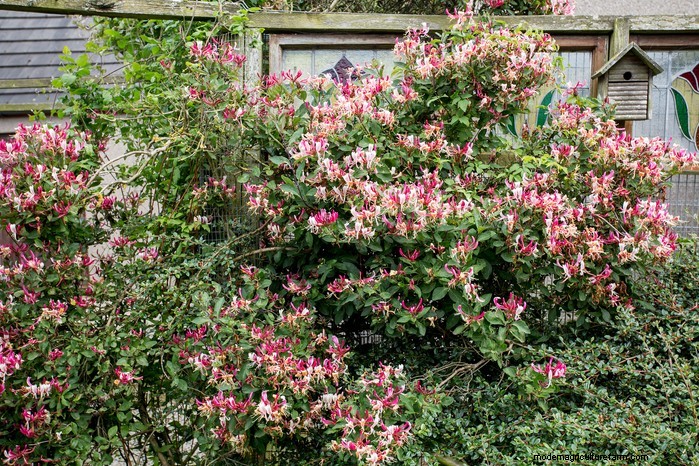
Climbing honeysuckle against a fence
All honeysuckle types thrive in most soils but prefer a free‑draining, humus‑rich mix. Climbing varieties have evolved as woodland plants, so shade‑tolerant roots and sunlit stems mimic their natural habitat. The scent of climbing honeysuckle intensifies in warm conditions. New low‑growth cultivars, such as ‘Strawberries and Cream’, are suited to containers.
Shrubby honeysuckles—including winter honeysuckle, Lonicera fragrantissima, and Lonicera nitida—perform best in full sun to partial shade.
Climbing honeysuckles can be planted year‑round, but avoid the scorching summer or frozen winter soil. Deciduous climbers are ideally planted in late winter when soil is workable but not frozen.
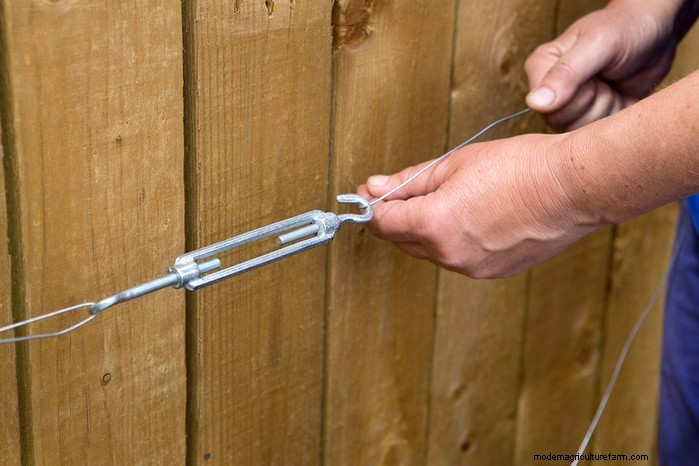
Putting up wire supports for honeysuckle
Because honeysuckles develop deep roots, they perform best when planted in the ground rather than in pots. Before planting, amend the soil with well‑rotted compost or manure. Dig a hole the same depth and width as the rootball, place the plant, firm the soil, water thoroughly, and mulch with organic matter to conserve moisture.
Young climbers will need guidance. Install galvanized wires on walls or fences and direct stems with bamboo canes or ties. Shrubby honeysuckles can be purchased as bare‑root plants in autumn or winter; plant five per metre to create a dense hedge.
Water deeply during dry spells and apply a balanced fertiliser in spring to encourage robust growth and abundant blooms. Mulch around the base, especially in the “rain shadow” beneath walls, to retain moisture. During hot, dry summers, supplement with extra watering.
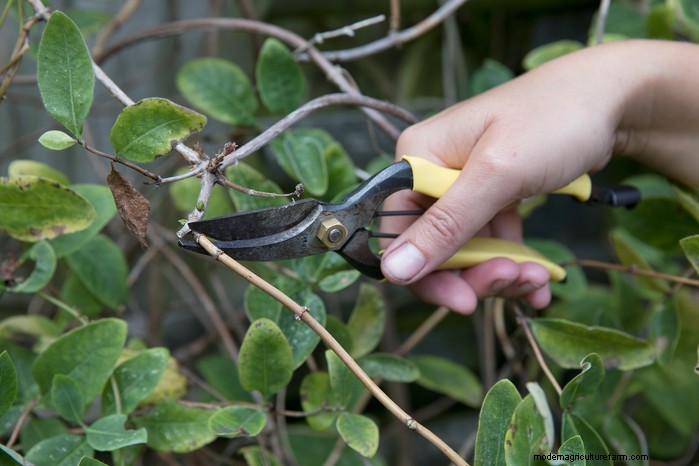
Pruning climbing honeysuckle after flowering
Pruning strategies differ for climbers and shrubs.
Climbing honeysuckles
Early‑summer flowerers should be trimmed after fruit set, cutting back roughly one‑third to maintain shape while preserving berry‑producing stems. Late‑summer varieties benefit from a light spring prune—these flower on current season growth, so avoid excessive cuts that could reduce blooms. Overgrown climbers can be renovated in late winter by cutting back hard.
Shrubby honeysuckles
Deciduous varieties are pruned after flowering in late spring or summer; heavily overgrown plants can be cut back hard in late winter or early spring. Evergreen shrubs like Lonicera nitida are best pruned in summer to shape and stimulate new growth.
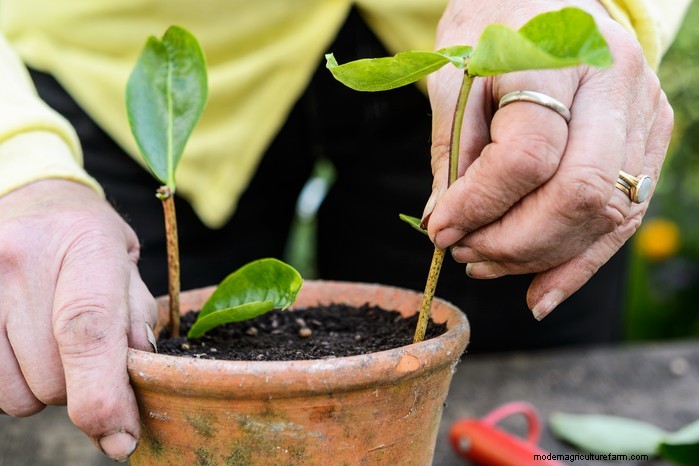
Honeysuckle cuttings
Take semi‑ripe cuttings in July or August when stems are firm yet flexible. Alan Titchmarsh demonstrates the technique in a step‑by‑step video guide. Layering is another effective method: bend a shoot to ground level and encourage it to root.
For climbers, seed propagation is also possible. Harvest ripe berries, extract the seeds, and sow in loamy compost pots. Place the pots in a cold frame over winter; seeds require a cold period and typically germinate in spring when temperatures reach ~15 °C.
Aphids can distort leaves and produce honeydew that fosters sooty mould. Prune heavily infested shoots or apply an organic insecticide if necessary. Growing in partial shade reduces aphid pressure. Powdery mildew is another common issue; again, partial shade and spring mulching mitigate infection.
Yellowing leaves
Yellowing or leaf drop often signals nutrient deficiency or water stress. A generous watering and a liquid seaweed or balanced organic fertiliser can restore vitality.
Bloom loss
If a honeysuckle stops flowering, consult Alan Titchmarsh’s video for strategies to re‑stimulate flower production.
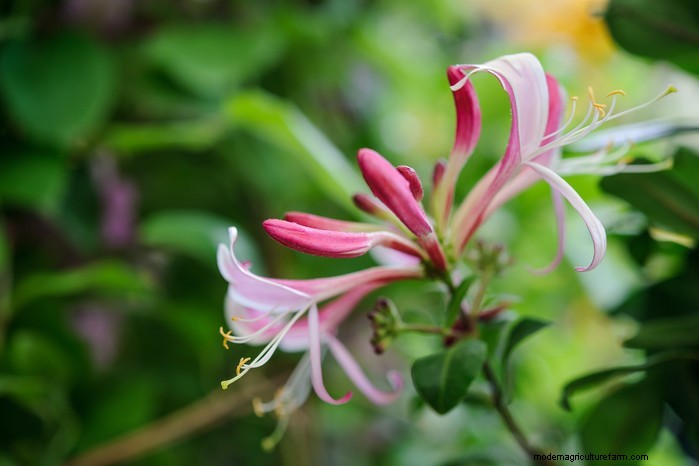
Lonicera periclymenum ‘Serotina’ – a vigorous climber with creamy‑white flowers streaked in raspberry red, holder of the RHS Award of Garden Merit (AGM). Height × Spread: 7 m × 3.5 m.
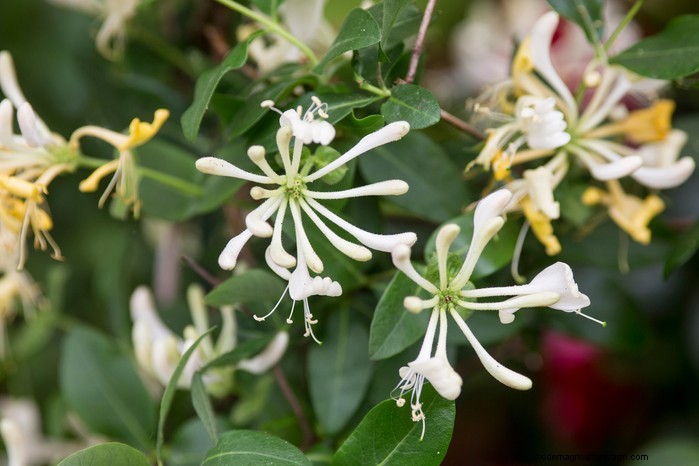
Lonicera periclymenum ‘Scentsation’ – strong‑scented white and pale yellow blooms, flowering from midsummer to September. H × S: 7 m × 1 m.
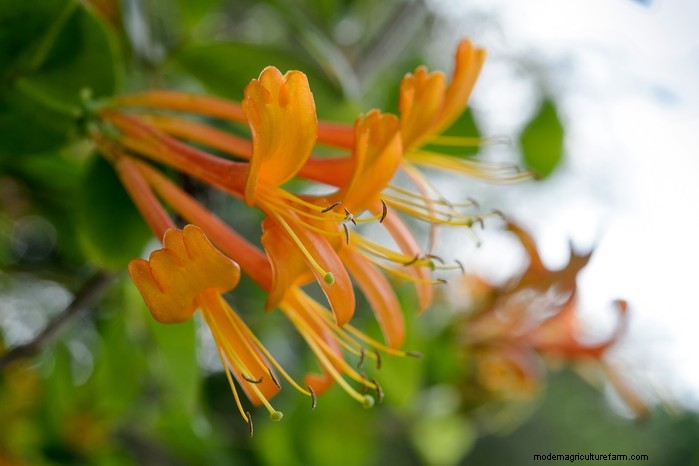
New, unscented orange‑flowering variety with a rich‑bronze foliage. Vigorous climber with AGM. H × S: 6 m × 2 m.
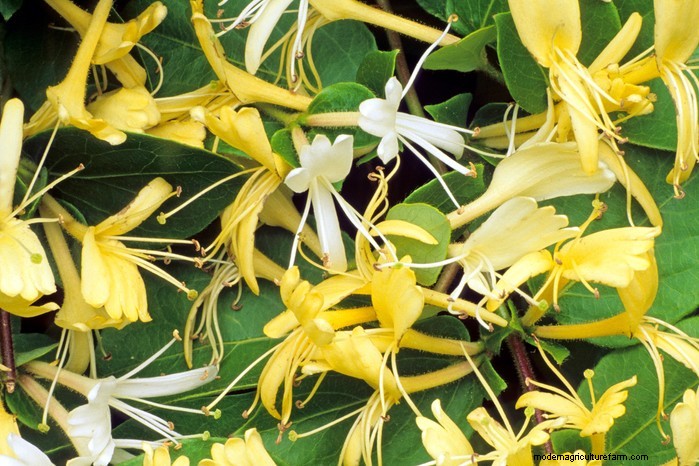
Evergreen honeysuckle with scented yellow and white flowers. AGM holder; may become invasive in some areas (noted as non‑native in Northern Ireland). H × S: 3 m × 4.5 m.
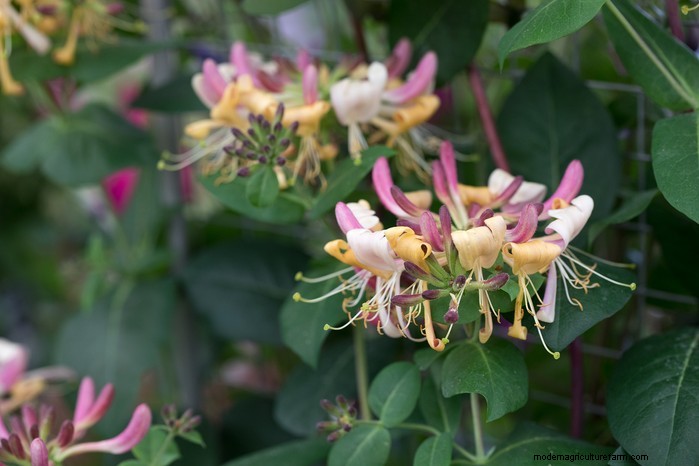
Compact climber with custard‑yellow and rhubarb‑pink flowers. Ideal for smaller gardens. H × S: 2 m × 1.5 m.
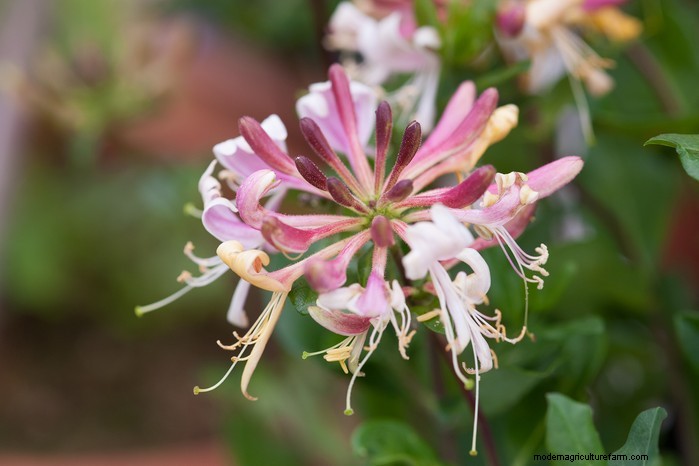
Non‑climbing, mounded shrub; blooms pink and pale yellow. Perfect for front borders and pots. H × S: 60 cm × 60 cm.
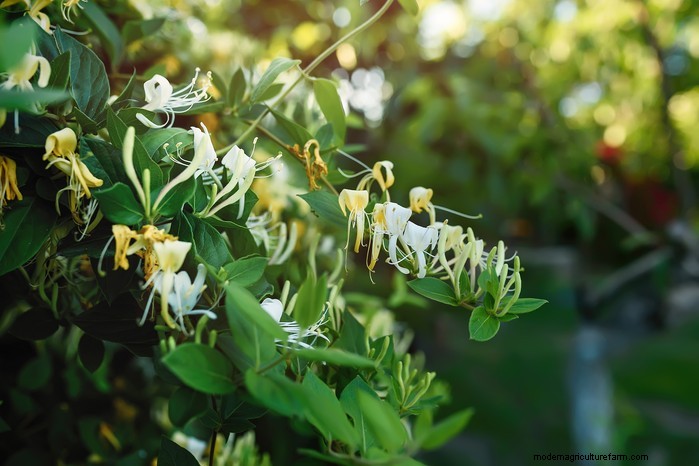
Lonicera periclymenum ‘Graham Thomas’ – scented, white to butter‑yellow flowers. AGM holder. H × S: 7 m × 1 m.
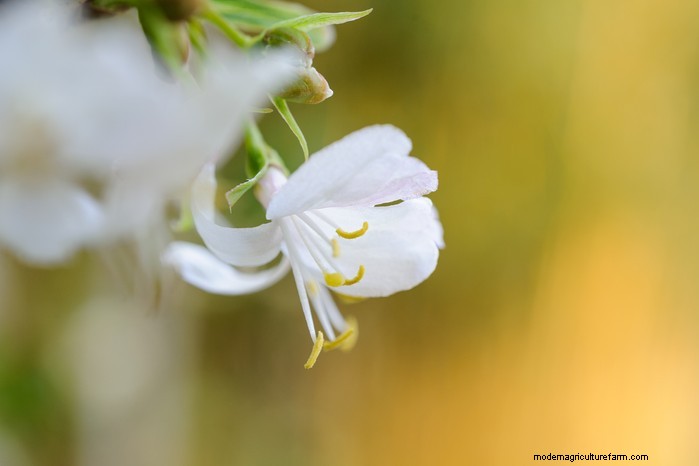
Winter‑flowering honeysuckle with white, highly scented flowers on leaf‑less branches from January to March. Fully hardy, 2 m × 3 m.
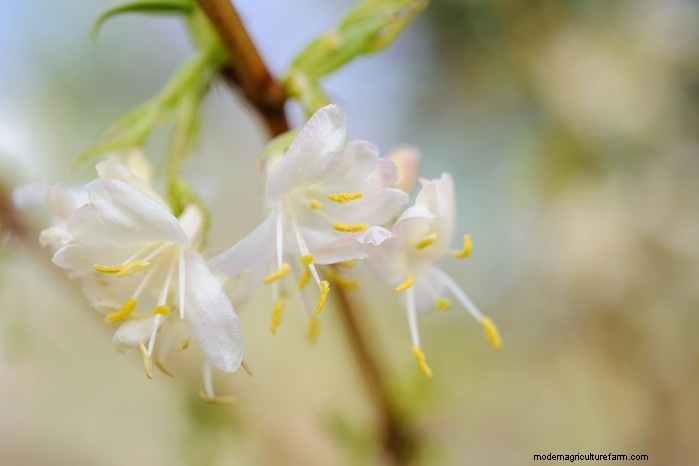
Deciduous shrub with creamy‑white, fragrant flowers on bare stems in late winter. AGM holder. H × S: 3 m × 2 m.
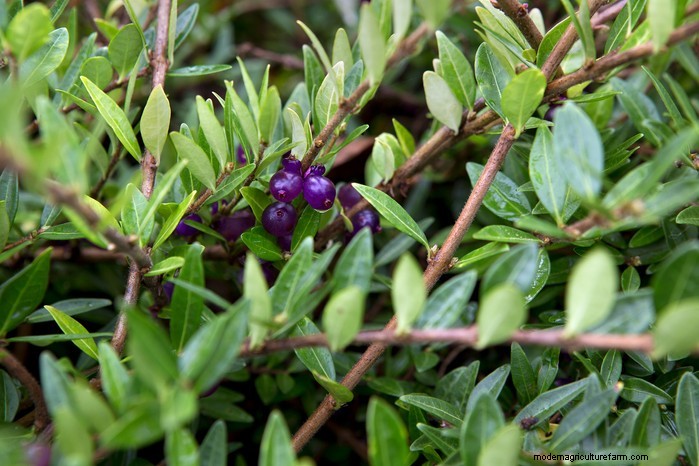
Dense evergreen shrub with box‑like leaves, suitable for topiary or low hedges. Small creamy‑white flowers in spring and purple berries in autumn. H × S: 1 m × 2.5 m.
My honeysuckle has powdery mildew—what can I do?
Powdery mildew often indicates dry roots. Keep the plant well watered during summer, mulch annually with bark or compost to retain moisture, and consider placing a small crock around the roots to reduce evaporation.
Why doesn’t my honeysuckle smell?
Not all honeysuckles are scented. Verify the label before buying. If a scented variety lacks fragrance, ensure moist soil and warm conditions; honeysuckle scent is strongest at night, so check flowers at dusk.
How can I grow honeysuckle up a fence?
Climbing honeysuckles are not self‑clinging. Install galvanized wires or a trellis, and tie stems to the support with vine eyes or cord. Painting the fence before training the plant helps prevent paint damage.


