Welcome to Modern Agriculture!

Type: Evergreen climber
Height × Spread: 10 m × 3 m
Hardiness: H4 (UK); USDA 7‑9
Why it’s tropical‑looking: Passiflora caerulea (AGM) is a vigorous evergreen that sports dark foliage and striking purple‑white summer blooms, reminiscent of jungle gardens.
Fruit: It does set fruit, but the berries are mild and not typically harvested for eating.
Ideal site: A sheltered, sun‑baked fence with well‑drained soil.
Pruning: Trim lightly in early spring if necessary.
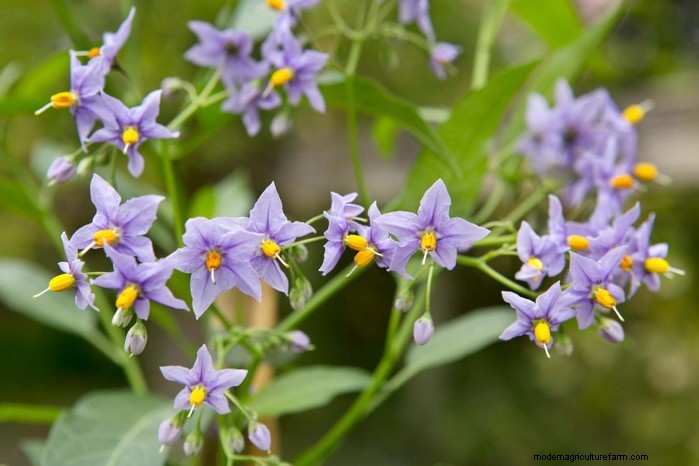
Although its habits differ, the Chilean potato tree is a relative of the potato.
Type: Semi‑evergreen climbing shrub
Height × Spread: 4 m × 6 m
Hardiness: H4 (UK); USDA 8‑11
Long‑lasting blooms: Solanum crispum ‘Glasnevin’ (AGM) delivers fragrant lavender‑purple flowers from June to September. In warmer climates it remains evergreen.
Edibility: The plant bears fruit, but all parts are poisonous; it is not a potato crop.
Ideal site: Sheltered sun, well‑drained, moist neutral to alkaline soil.
Pruning: Early‑spring trim; wear gloves to protect against sap irritation.
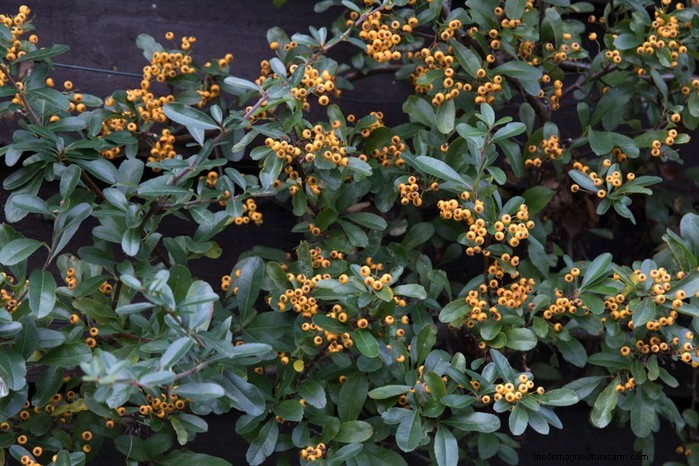
The colourful berries of firethorn attract birds in autumn.
Type: Evergreen wall shrub
Height × Spread: 3 m × 3 m
Hardiness: H6 (UK); USDA 6‑9
Ornamental berries: Pyracantha ‘Orange Glow’ (AGM) produces vivid orange berries in autumn. They’re ornamental only.
Wildlife value: Sharp thorns deter predators, while June blossoms feed bees.
Ideal site: Sun or semi‑shade, well‑drained soil. Check local regulations—some US states consider firethorn invasive.
Pruning: Two annual trims—mid‑spring and late summer—protecting yourself with gloves.
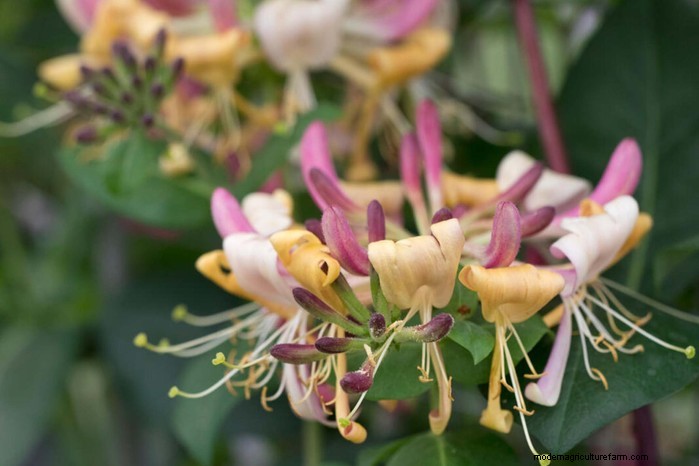
Honeysuckle ‘Rhubarb and Custard’ offers a compact form with gorgeous flowers.
Type: Deciduous, evergreen or semi‑evergreen climber
Height × Spread: 5 m × 3 m
Hardiness: H5 (UK); USDA 5‑9
Fast coverer: Semi‑evergreen honeysuckles grow vigorously, adding colour for most of the year. Fruits are ornamental and inedible.
Invasive note: Lonicera japonica ‘Hall’s Prolific’ is invasive in the UK and USA; avoid it near rural borders. The less aggressive Lonicera × heckrottii ‘Gold Flame’ (AGM) offers amber and pink flowers and attracts wildlife.
Ideal site: Part shade, rich, well‑drained soil.
Pruning: Trim L. japonica in early spring; L. periclymenum after flowering. Gloves are essential.
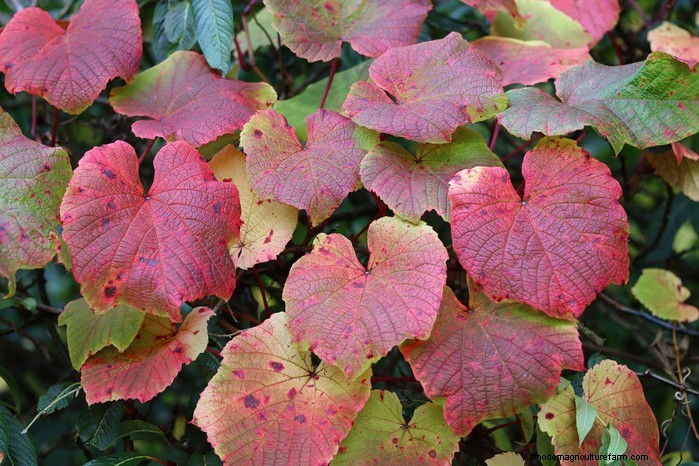
Crimson glory vine boasts large leaves and vigorous growth.
Type: Deciduous climber
Height × Spread: 15 m × 4 m
Hardiness: H5 (UK); USDA 5‑9
Autumn spectacle: Vitis coignetiae (AGM) covers fences swiftly and turns a riot of red, purple and amber in fall.
Relation to grape: Close relative of true grape vines; berries are toxic to dogs and not edible.
Ideal site: Full sun for best colour, rich, well‑drained neutral to alkaline soil.
Pruning: Mid‑winter trim.
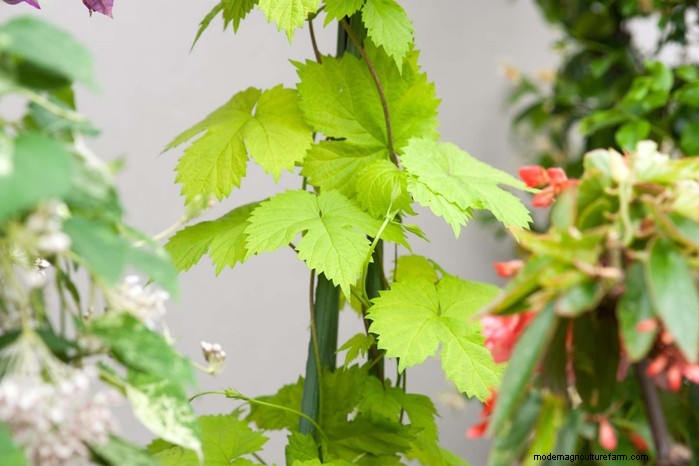
Golden hop leaves support butterfly caterpillars.
Type: Deciduous climber
Height × Spread: 6 m × 2 m
Hardiness: H6 (UK); USDA 3‑8
Cheerful foliage: Humulus lupulus ‘Aureus’ (AGM) produces large lime‑yellow leaves that turn butterscotch in autumn. Cone flowers in August, followed by attractive hops.
Wildlife: Food source for comma butterfly caterpillars and moth larvae; toxic to pets if ingested.
Ideal site: Sheltered full sun, moist, well‑drained soil.
Pruning: Cut back hard in autumn. Gloves and protective gear recommended—hops can irritate skin.
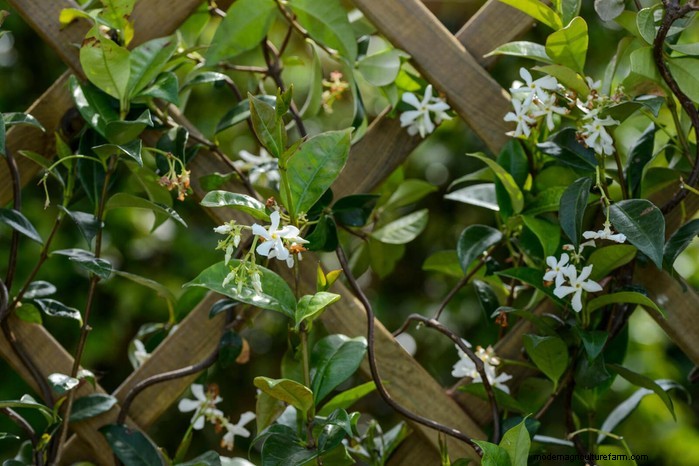
Enjoy the sweet vanilla perfume of star jasmine mid‑summer.
Type: Evergreen climber
Height × Spread: 6 m × 3 m
Hardiness: H4 (UK); USDA 8‑10
Stylish choice: Trachelospermum jasminoides (AGM) features glossy green leaves that turn red and bronze in winter, with jasmine‑scented white flowers in summer.
Growth: In warm regions it can reach 12 m quickly; a larger starter plant speeds coverage.
Ideal site: Sheltered sun or part shade, well‑drained fertile soil.
Pruning: Light trim in spring if needed.
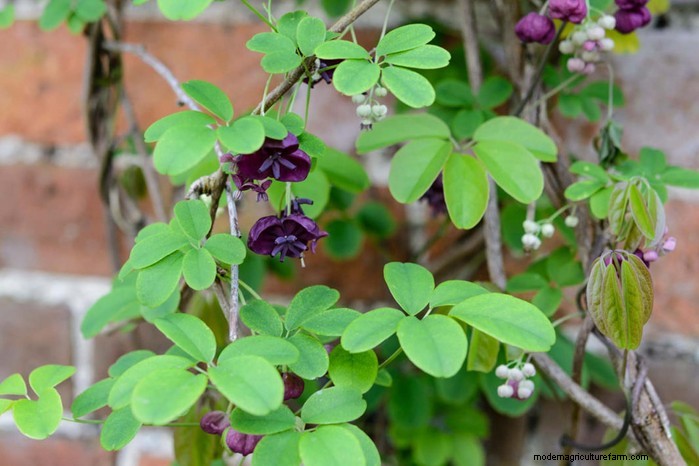
Chocolate vine offers unique fragrance.
Type: Semi‑evergreen climber
Height × Spread: 9 m × 2 m
Hardiness: H6 (UK); USDA 5‑8
Distinctive scent: Akebia quinata impresses with apple‑green leaves and maroon spring flowers that smell of spiced vanilla. Warm‑climate pollination can yield purple fruit.
Invasiveness: Generally well‑behaved in the UK, but listed as invasive in some US states.
Ideal site: Sun, well‑drained moist fertile soil.
Pruning: Control size after flowering as needed.
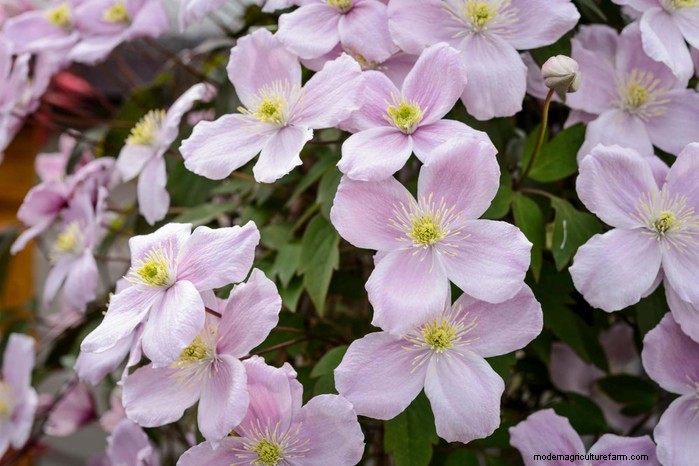
Himalayan clematis smothers walls with pink blossoms.
Type: Deciduous climber
Height × Spread: 12 m × 3 m
Hardiness: H5 (UK); USDA 6‑9
Impressive size: Clematis ‘Mayleen’ (AGM) reaches towering proportions, ideal for long fences. In May and June, its green‑bronze foliage pairs with ballet‑pink flowers scented with vanilla and cloves.
Winter form: After leaf drop, the woody stems form an attractive backdrop for bird nesting.
Ideal site: Well‑drained, moist neutral to alkaline soil, sun or part shade.
Pruning: Trim after flowering if required; gloves recommended due to skin irritation.
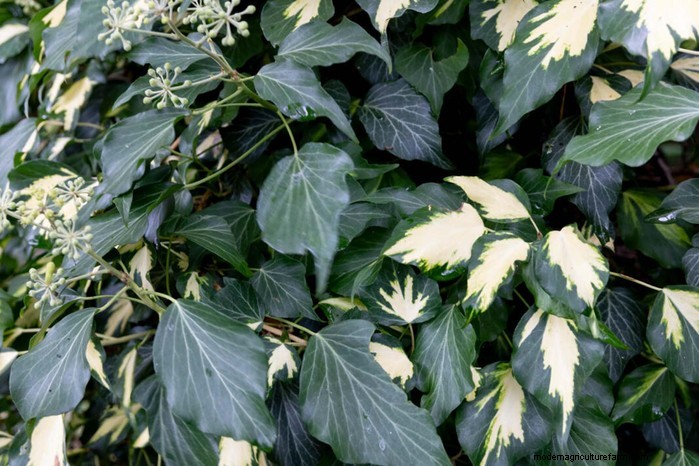
Ivy offers dense habitat for birds.
Type: Self‑clinging evergreen climber
Height × Spread: 5‑10 m × 3 m
Hardiness: H5 (UK); USDA 6‑9
Wildlife support: Hedera provides year‑round shelter and winter berries for thrushes and other birds. It is toxic if ingested by pets or people.
Best variety: Hedera helix is a reliable fast climber in the UK; check local authority lists for invasiveness. ‘White Wonder’ excels in baskets and indoor settings.
Ideal site: Part shade, well‑drained neutral to alkaline soil.
Pruning: Late‑winter trim if necessary; gloves protect against skin irritation.
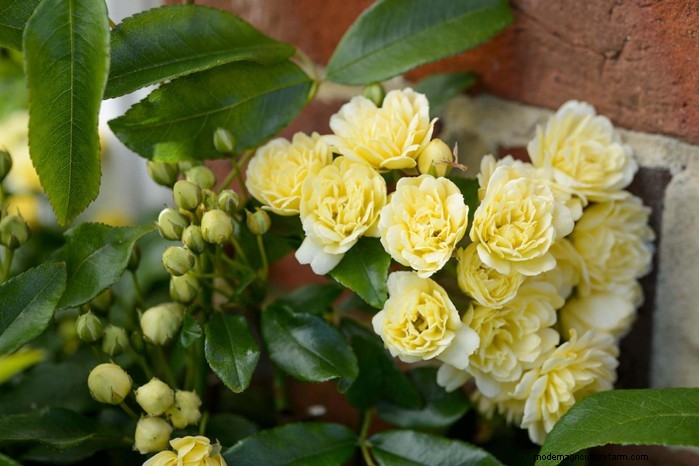
Rambling roses bloom profusely in late spring.
Type: Rambling rose
Height × Spread: 6 m + × 3 m
Hardiness: H5‑H6 (UK); USDA 5‑10
Fast coverage: Ramblers such as Rosa ‘Adélaïde D’Orléans’ (AGM) and Rosa banksiae ‘Lutea’ (AGM) grow rapidly, providing lush foliage.
Benefits: Although most flower once a year, their profusion feeds bees and other pollinators. Thorny varieties like Rosa ‘Rambling Rector’ (AGM) offer natural security and an informal cottage charm.
Ideal site: Sun, well‑drained fertile soil.
Pruning: Late‑summer after flowering; choose a variety suited to your wall’s size. Gloves recommended.
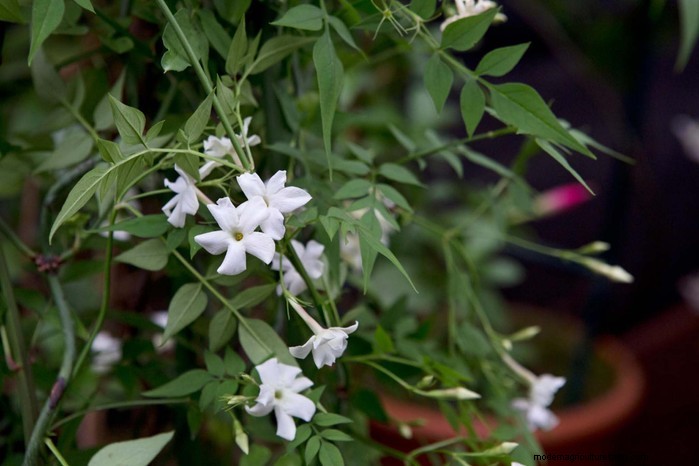
Common jasmine is fragrant and wildlife‑friendly.
Type: Deciduous or semi‑evergreen climber
Height × Spread: 8 m × 4 m
Hardiness: H5 (UK); USDA 7‑10
Fastest jasmine: Jasminum officinale is vigorous—up to 12 m in hot climates—producing starry white flowers that perfume evenings and glow in moonlight.
Wildlife: Flowers provide nectar for moths; dense foliage offers cover for birds.
Ideal site: Sheltered sun, well‑drained soil.
Pruning: Cut back after flowering.
Provide Support: Most climbers and wall shrubs need a trellis or wire frame attached to the fence. They are not self‑clinging.
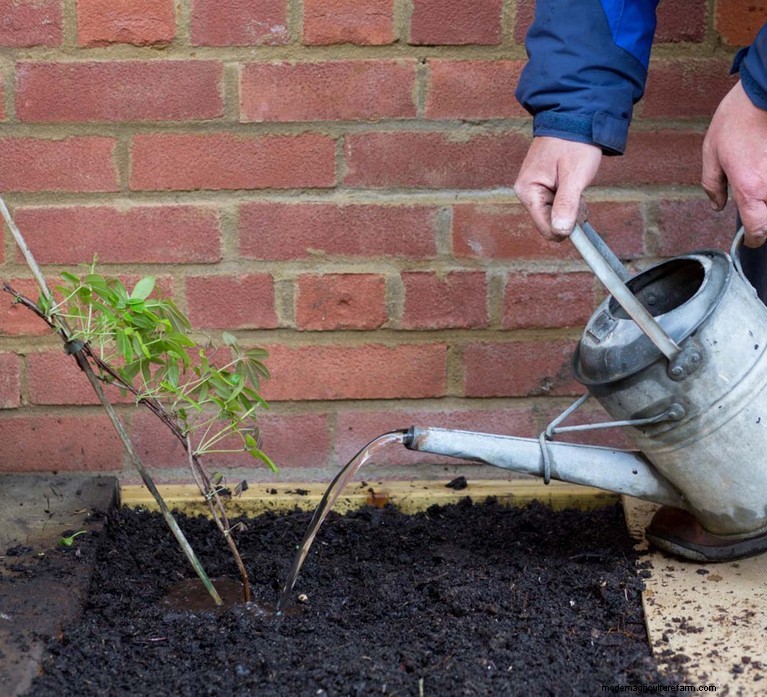
Planting Technique: Dig a hole 45 cm from the fence, enrich with compost, and plant the climber at an angle toward the fence.
Watering: Young plants require regular watering, even those that become drought‑tolerant, until they are established.
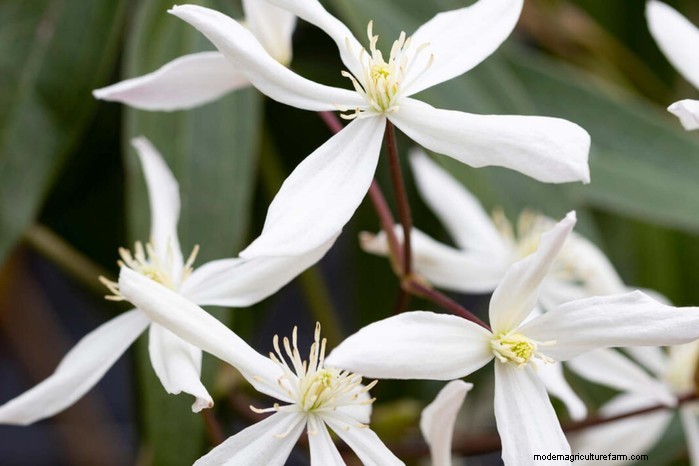
Armand clematis thrives on sunny south‑facing walls.
Type: Evergreen climber
Height × Spread: 6 m × 3 m
Hardiness: H4 (UK); USDA 7‑9
Elegant leaves: Clematis armandi ‘Snowdrift’ coats fences with dark, evergreen lanceolate leaves up to 15 cm long, topped in spring with starry white blooms smelling of marzipan.
Safety: The plant is toxic; avoid planting near puppies or curious children.
Ideal site: Sheltered sun, moist well‑drained soil.
Pruning: Light post‑flowering trim only; gloves protect against skin irritation.
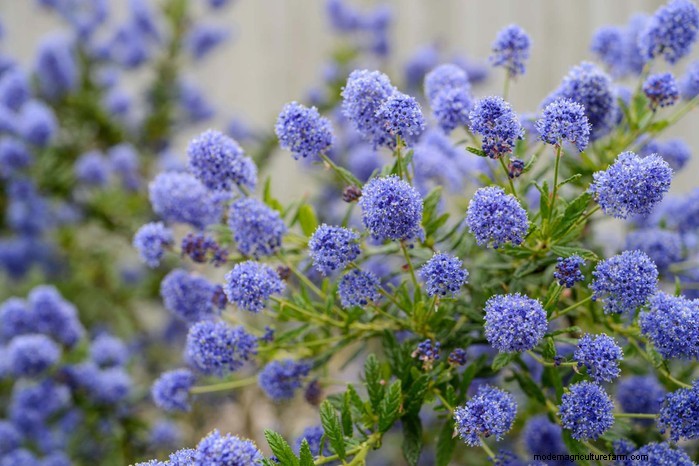
Californian lilac offers blue clusters of flowers.
Type: Evergreen wall shrub
Height × Spread: 3 m × 3 m
Hardiness: H4 (UK); USDA 7‑10
Bee‑friendly: Ceanothus (e.g., ‘Concha’ AGM) delivers blue flowers in late spring, providing nectar for bumblebees and other pollinators. Trained against a wall, it acts as a dense climber.
Pruning: Cut back flowering stems to two‑to‑four buds on the main framework; remove shoots that grow toward the garden.
Ideal site: Sheltered sun, well‑drained soil.
Pruning: Trim after flowering and mulch.


