Welcome to Modern Agriculture!

Music hardneck garlic delivers a distinctive flavor profile that makes it a favorite among chefs and home cooks alike. When raw, it packs a hot, peppery kick; when cooked, it unfolds into an aromatic, authentic garlic taste with subtle sweet undertones.
Unlike many varieties that produce dozens of tiny cloves, Music bulbs contain four to six large, easy‑to‑peel cloves. These robust bulbs are hardy, low‑maintenance, and thrive in a wide range of climates.
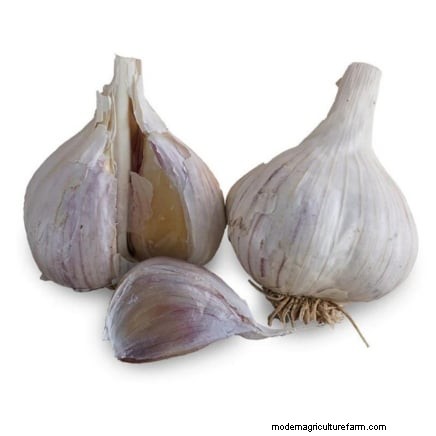
Music stands out for its deep flavor, large cloves, and exceptional shelf life—up to nine months after proper curing. Its thick paper wrappers protect the cloves and give the bulb a beautiful, slightly blush‑tinged appearance.
Hardneck varieties, including Music, are prized for their cold hardiness, robust flavor, and the production of ornamental scapes in spring. Those scapes are edible and can be harvested for use in stir‑fries, soups, and roasted dishes.
Because it requires minimal care, Music is ideal for both new gardeners and seasoned growers. Start with disease‑free seed garlic in the fall for a bountiful summer harvest.
Fall is the optimal planting season, giving roots time to establish before the first frost. Aim to plant six to eight weeks before the expected first frost, usually September or October in most regions. In warmer climates, plant in the coolest months (December–January) and provide a two‑month vernalization period at temperatures below 40°F (4°C).
From planting to harvest takes about 250 days. When planted in the spring, bulbs will mature in ~90 days, but they will be smaller and may not receive the full vernalization benefit.
Separate the largest cloves, leaving the paper intact for protection. Dig 2 inches deep, pointy end up, and space cloves 4–6 inches apart. After planting, water thoroughly and mulch with straw or leaf clippings to suppress weeds.
Bulbils develop from scapes left to flower. They require two growing seasons to become full bulbs. Harvest bulbils in the fall, plant 1½ inches deep, and allow them to swell over two years.
Full sun (6–8 hours) yields the largest, healthiest bulbs. In hot regions, provide afternoon shade to protect from intense heat.
Maintain evenly moist soil, avoiding waterlogged conditions that can cause bulb rot. Water deeply once a week or as needed, especially during dry spells. Reduce watering two weeks before harvest to harden the bulb skins.
Garlic prefers fertile loams with good drainage and a pH of 6.0–7.0. Amend poor soils with compost to improve structure and nutrient content.
As a cold‑hardy cultivar, Music thrives in zones 4–9. It can adapt to warm climates if provided afternoon shade and consistent moisture.
Organic compost at planting is sufficient for most soils. In nutrient‑poor beds, apply a balanced organic fertilizer at planting and a light fish emulsion boost when seedlings reach 4–6 inches.
Regular weeding and straw mulching keep competition low. Clip scapes if you wish to channel energy into bulb growth. Propagate by dividing large bulbs at harvest.
Harvest when 40% of the lower leaves are yellow and beginning to dry. Use a fork to gently lift bulbs, then brush off dirt. Do not wash with water; instead, cure by hanging in a cool, dry, well‑ventilated area for 2–3 weeks until the skins are papery and the stems are dry.
After curing, trim the tops and roots, then store in a cool, dark place. Properly cured Music garlic can last up to nine months.
Divide the largest cloves at harvest for immediate replanting. For long‑term expansion, allow scapes to produce bulbils and plant them in subsequent seasons.
Thrips may appear but rarely damage the crop; treat only if visible harm is present using horticultural soap or neem oil. Bulb maggots can be deterred by rotating away from allium crops for at least two seasons.
Bulb rot is most common in overly wet soils. Improve drainage, avoid late‑season watering, and remove affected bulbs promptly. Rust can be controlled by pruning affected leaves and ensuring adequate spacing.