
Welcome to Modern Agriculture!

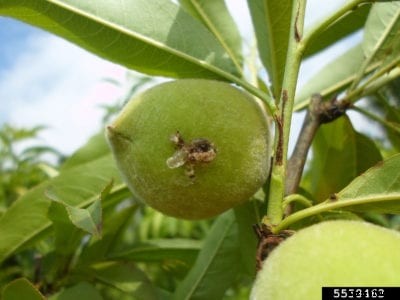
Oriental fruit moths are nasty little pests that wreak havoc in a number of trees including cherries, quince, pear, plum, apple, ornamental cherry, and even rose. However, the pests are particularly fond of nectarines and peaches.
Fruit moths in peaches aren’t easy to control, but the following information should be helpful. Read on to learn more about oriental fruit moth in peaches.
Adult fruit moths are gray with dark grey bands on the wings. The adults lay tiny, disk-shaped eggs on twigs or the undersides of leaves. They fly in the evenings or sometimes early in the morning. The eggs are white, but eventually change to amber. One female moth can lay as many as 200 eggs. Oriental fruit moths generally have four or five generations per year.
Oriental fruit moth larva, which are white with dark heads, turn pinkish as they mature. The larvae overwinter in cocoons, which may be seen on the tree or the ground. In spring, the larvae bore into twigs, causing dieback and wilt.
The next generation of larvae bores into developing fruit, often leaving masses of gummy castings or “frass.” Later generations enter the stem end of the fruit, especially at the top of the tree. Tiny entry holes in peaches with oriental fruit moths are difficult to see and are often an unpleasant surprise after the fruit is harvested.
Controlling fruit moth in peaches isn’t the easiest, but with some simple approaches, it can be possible. If you plan to plant new peach trees, plant early cultivars that will be harvested by midsummer. Cultivate the soil around the trees in early spring. Working the soil to a depth of about four inches (10 cm.) will help destroy overwintering larvae. Plant blooming cover crops that will attract beneficial predatory insects, including braconid wasps.
Pheromone dispensers hung from the lower limbs of trees in February, and again 90 days later, will help prevent peaches with oriental fruit moths by interfering with mating. However, pheromones are generally used in orchards and may not be effective for home gardens.
Dormant oils aren’t effective against fruit moths in peaches, but some insecticides, including pyrethroids, are suitable for home use. Check with your local cooperative extension office as many are highly toxic to bees while others threaten fish and other aquatic life if the spray drifts or runs off.


