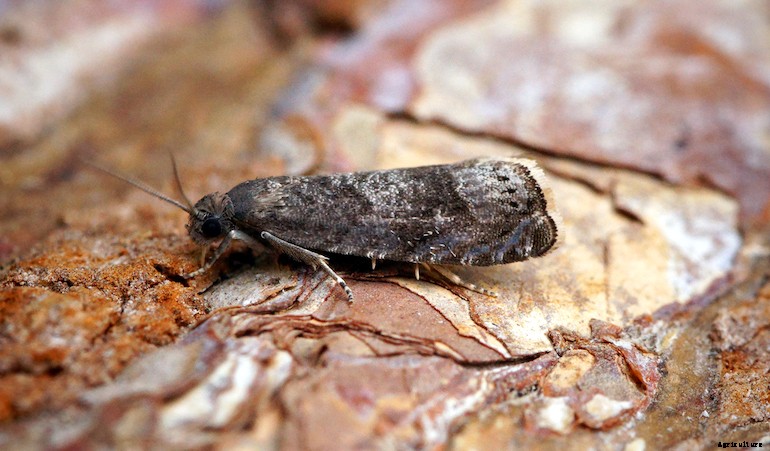
Plum fruit moths are a common problem for UK gardeners
Here’s how to combat a plum fruit moth infestation:
- • Get rid of any infested fruit – including fallen fruit. Otherwise the caterpillars drop from the fruits to the ground and overwinter in the soil beneath the tree, continuing the cycle.
- • Eliminate places for the larvae to overwinter by clearing away debris and loose bark from the base of the plum trees.
- • Lightly disturb the soil around the base of the tree in early March and again in April to disturb the pupae; hopefully they will be eaten by birds.
- • Encourage insect-eating birds to the area using feeders and nest boxes. Bluebirds and swallows particularly like moths, while grosbeaks and orioles will go after the larvae.
- • Trap the adult moths before they mate using fly traps or special pheromone traps that will not impact beneficial insects. Pheromone traps, for example, catch male moths, which should mean fewer fertile eggs are laid. Adult moths lay their eggs in June and July, and you can hang traps in the trees from May to August. If you catch large numbers, then it may be necessary to spray with an appropriate insecticide.
- • Spray with an insecticide around the third week of June if the other methods haven’t proved successful, and then again a few weeks later. If you use a pheromone trap, you should be able to calculate the most effective time to spray. Just be sure to not spray plants that are in flower.
For more fruit tree resources, head over to our comprehensive fruit tree hub page to learn more.


