
Welcome to Modern Agriculture!

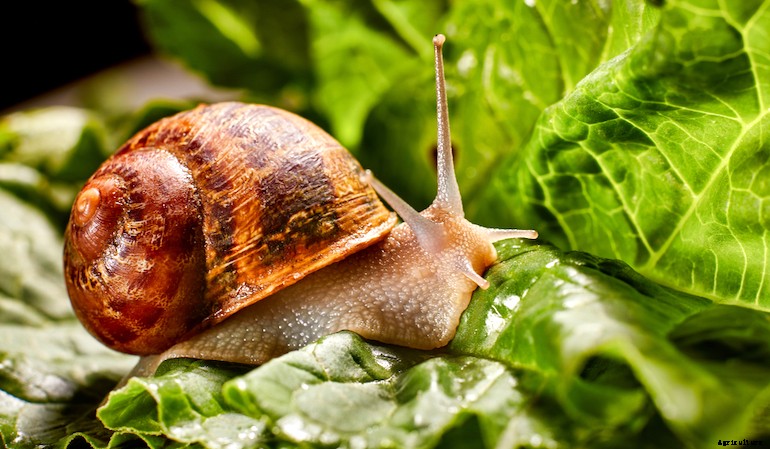 Learn more about these common garden pests
Snails are a common pest in our gardens. They may be slow but they can quickly cause damage to plants - eating holes out of leaves, stems, flowers and veg.
Snails are gastropods - a type of mollusc with a single shell and soft body. Their tongues (or radulas) have thousands of tiny ‘teeth’ which rip their food into small pieces. Snails move along the ground using a single muscular ‘foot’, lubricated by mucus.
Snails like wet and damp conditions. They tend to come out into the open after dark, or after rainfall.
They’re dormant over winter and will hide in clusters under empty plant pots, large stones and other protected areas. Snails reproduce in autumn and spring and lay groups of round, yellow-white eggs under logs, pots and rocks.
The common garden snail (Cornu aspersum) is the one you’re likely to encounter wreaking havoc on your plants.
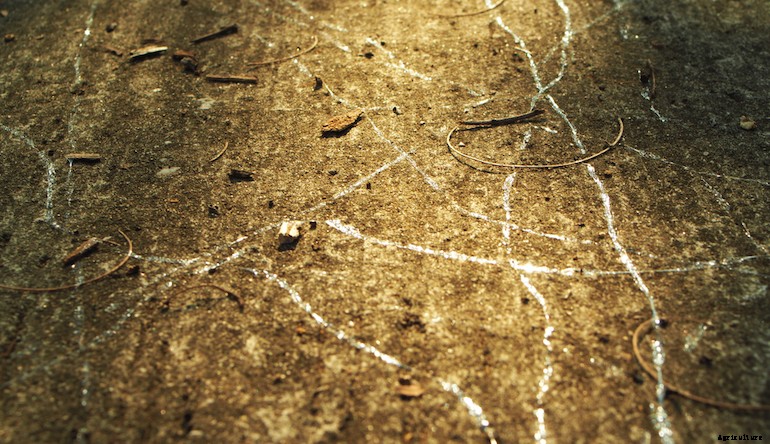 Keep an eye out for silvery slime trail
Snails leave a couple of calling cards:
But snails are also large enough to be spotted with the naked eye. If you go out into the garden with a hand torch after dark, you’ll be able to see whether or not snails are the cause of any damage to your plants.
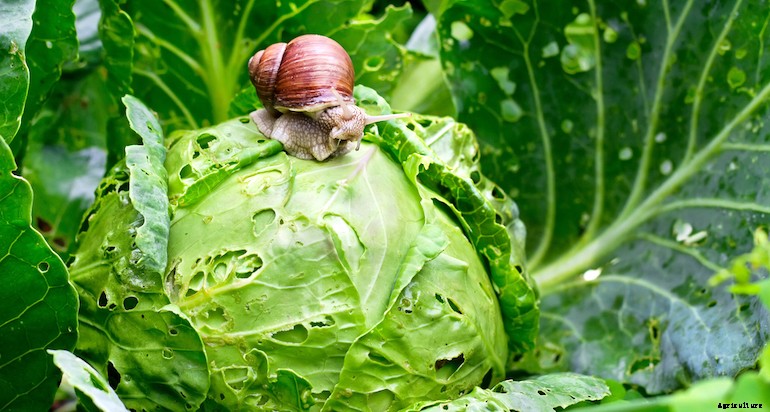 Snails can make quick work of your brassicas
Snails will eat most ornamental plants and vegetables - particularly when they’re young and in new growth in the spring. They are surprisingly good climbers and can even damage fruit trees.
They’ll also eat any decomposing organic matter including rotting leaves and compost and other dead snails and slugs.
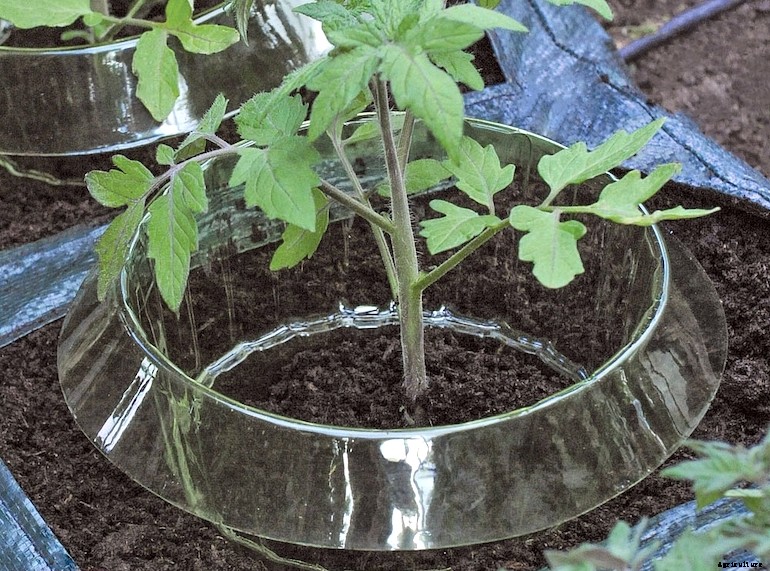 Protect young plants with snail collars
No, unfortunately you can’t. Nematode biological control works for slugs - which often go underground - but won’t affect snails, because they won’t come into contact with the soil-dwelling parasites.
It sounds like your Clematis is struggling a bit! The damage to the stems and leaves is likely to be caused by snails or slugs between around April and June. The easiest way to deal with them is to apply slug pellets around the base of the plant and hand pick them off the leaves and stems at dusk when they are at their most active.
We would also suggest that you prune out any dead stems to allow new growth to develop.
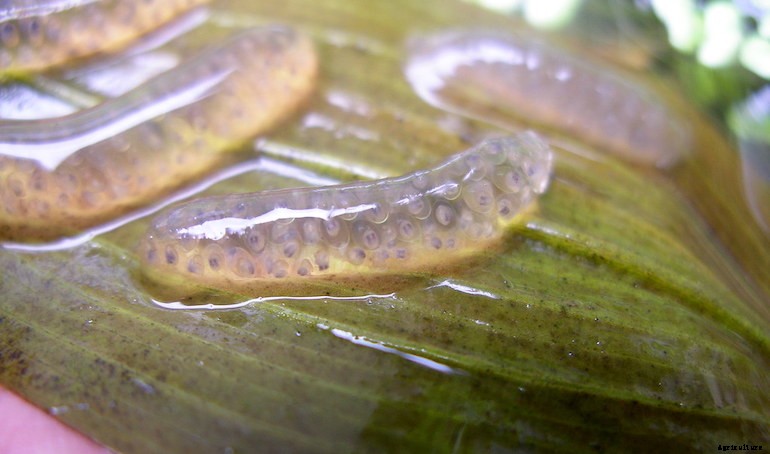 Keep an eye out for snail eggs
The jellies that you are noticing are probably snails' eggs, most likely greater pond snails (Lymnaea stagnalis). Snails are an important part of your ponds ecology but they can become a nuisance in ponds where they have become overpopulated. The eggs themselves will not do any harm but their parents may well take a nibble at your plants.
Given that chemical controls cannot be used in or around water, you’ll need to reduce the population by fishing snails out when you see them. One technique is to float lettuce leaves on the water, then remove and destroy them when you’ve collected a number of feeding snails on them.
If you can remove the eggs before they hatch, then that will be a few less snails to worry about. Of course, if they are not causing a problem in your pond then you don’t need to take any action.

