
Welcome to Modern Agriculture!

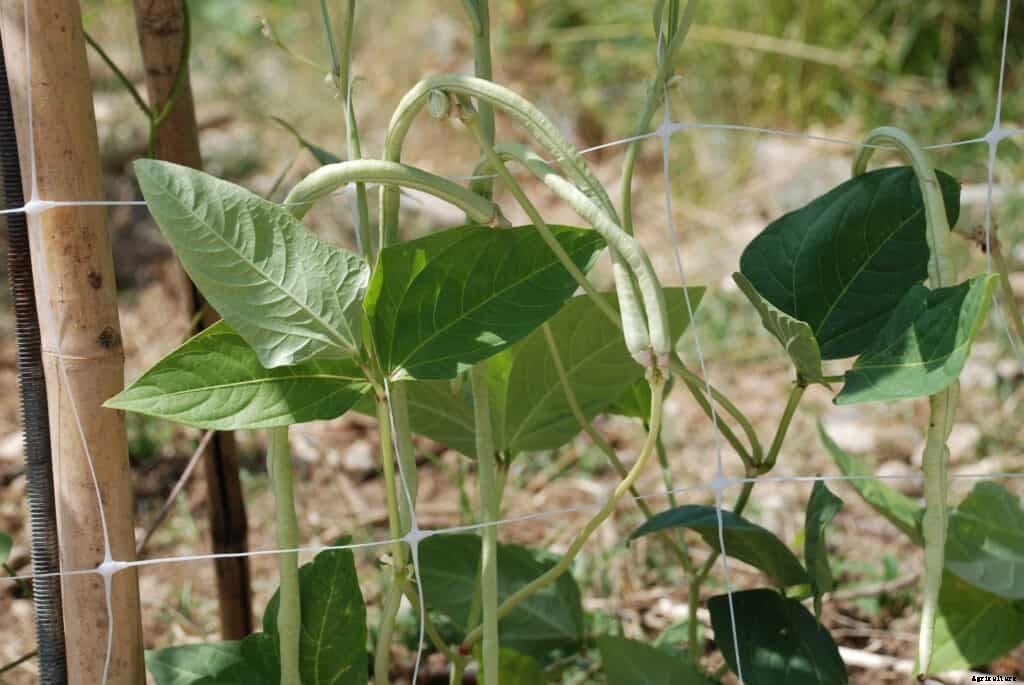 The Southern pea is a warm-weather annual that will tolerate no frost. Southern peas are also called blackeyed peas, crowder peas, and yard-long beans. Southern peas are sometimes called cowpeas or field peas. Sow Southern peas in the garden 4 weeks after the last average frost date in spring. For an early start, sow Southern peas indoors 6 weeks before you plan to transplant them into the garden. Sow succession crops every 2 weeks. Southern peas require 60 to 90 days to reach harvest.
Description. Southern peas are tender bushy or vining annuals. They are more beanlike than pealike. The best know Southern pea is the blackeyed pea. It is white with a distinctive black mark at the hilum or seed scar where the seed attaches to the pod that makes it look like an eye. Other types of Southern peas are: the crowder pea, so named because the seeds seem to be crowded into their pod; cream or conch peas; and the purple-hull pea, named for the color of their pod. Southern peas are also called cowpeas or field peas because they are sometimes fed to livestock or used as green manure.
Southern peas have compound glossy green leaves with white or pale purple flowers. The pods resemble those of the common bean. Dwarf varieties of the Southern pea produce blackeyed peas. Other subspecies of the Southern pea include a very long-podded subspecies (sesquipedalis) known as asparagus bean, snake bean, or yard-long bean and an oblong-seeded subspecies (cylindrical) known as catjang pea or Indian cowpea
Yield. Plant 30 Southern pea plants for each household member. Succession sow Southern peas every 2 to 4 weeks for a continuous harvest.
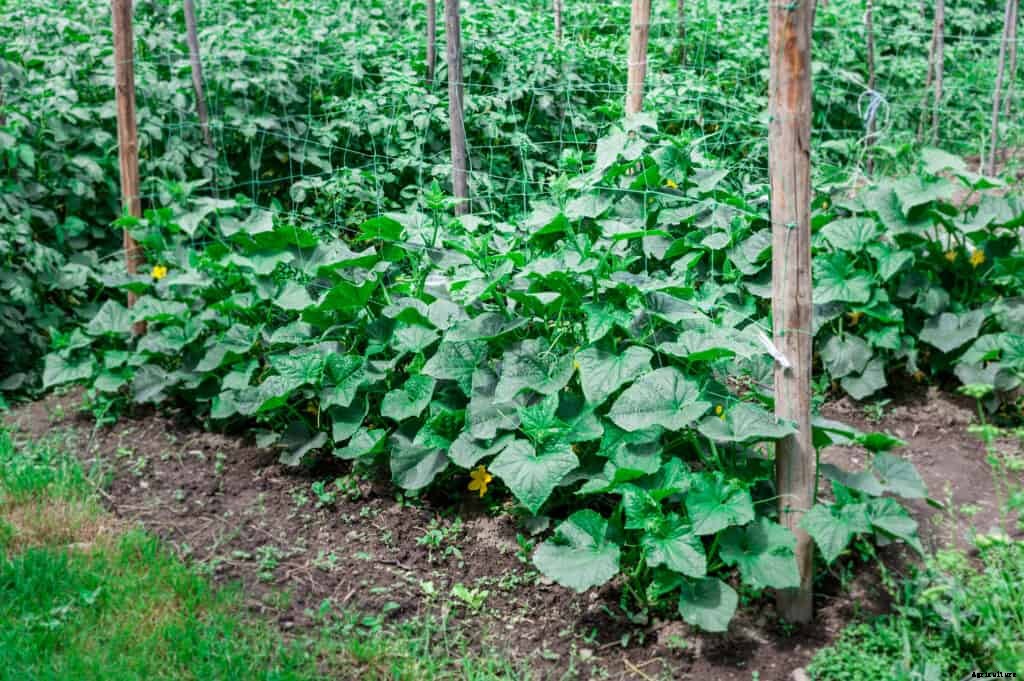
Site. Plant Southern peas in full sun; they will tolerate partial shade. Grow Southern peas in loose, well-drained soil. Southern peas prefer sandy, loamy soil. Soils rich in organic matter will increase productivity, but Southern peas, like other legumes, are often planted to help improve poor soil. Add aged compost to growing beds at planting time. Southern peas prefer a soil pH of 6.0 to 6.5.
Planting time. Sow Southern peas 4 weeks after the last average frost date in spring when the soil has warmed to at least 60°F (16°C). Southern peas prefer warm to hot weather, with air temperatures between 70° and 95°F (21-32°C)–most days exceeding 85°F (29°C). Southern peas require 60 to 90 frost-free days to reach harvest. For an early start, sow Southern peas indoors 6 weeks before you plan to transplant them into the garden. Sow southern peas for later transplanting in biodegradable peat or paper pots that can be set whole into the garden; generally, Southern peas do not transplant well. Sow succession crops every 2 to 4 weeks.
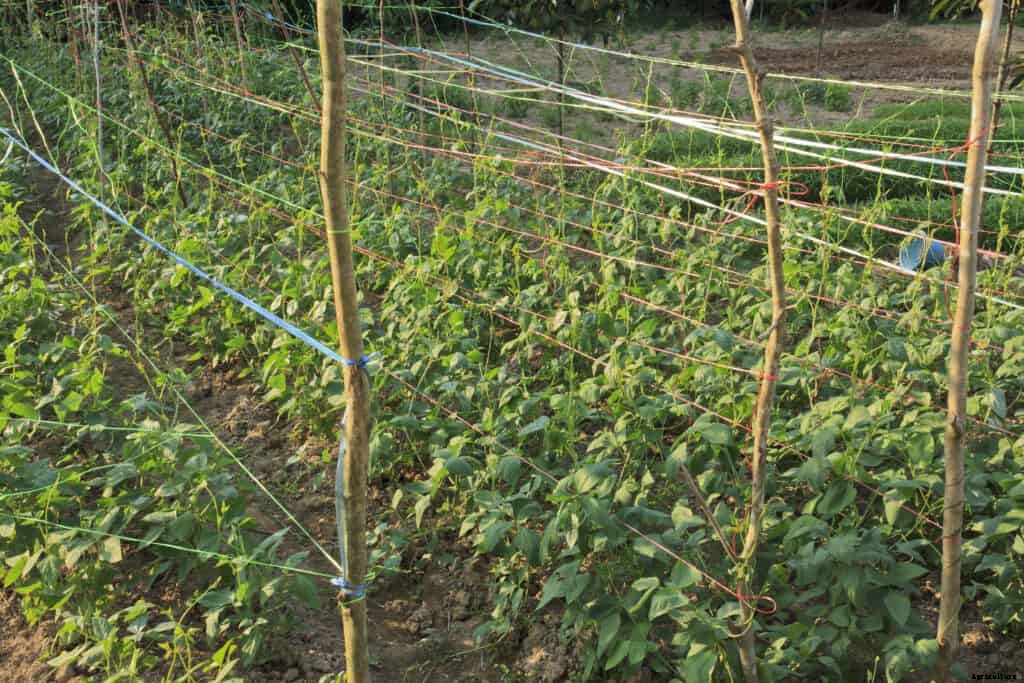
Planting and spacing. Sow Southern peas ½ to 1 inch (2.5cm) deep, space plants 2 inches apart later thinning successful seedlings to 4 inches apart (25cm). Space rows 3 feet (.9m) apart. Raise rows 6 to 8 inches (15-20cm) above the garden; Southern peas grow best in well-warmed soil. Grow Southern peas up stakes, trellises, or wire supports strung between stakes.
Companion plants. Beans, carrots, corn, cucumbers, radishes, and turnips. Do not plant Southern peas with garlic, onions, or potatoes.
Container growing. Southern peas can be grown in containers, but growing peas in a container may not be practical because many plants are required to produce a reasonable crop. Grow Southern peas in containers 12 inches deep.
Water and feeding. Keep the soil moist; do not let Southern peas dry out. Water at the base of plants; overhead watering may cause flowers or small pods to fall off and reduce the yield. Add aged compost to growing beds at planting time. Side dress Southern peas with compost tea at midseason. Too much nitrogen will prevent blossoms from setting pods.
Care. Set supports in place at planting time.
Pests. Southern peas can be attacked by bean beetles, aphids, spider mites, and leafhoppers. Control aphids and beetles by handpicking or hosing them off plants or pinch out aphid-infested vegetation. Plants infested with spider mites should be removed and placed in a paper bag and put in the garbage before they spread to other plants.
Diseases. Southern peas are susceptible to anthracnose, rust, mildews, mosaic, and wilt. Plant disease-resistant varieties when possible. Keep the garden clean and free of debris. Do not work with plants when they are wet to avoid spreading fungal spores. Remove and destroy diseased plants before healthy plants are infected.
 Harvesting and Storing Southern Peas
Harvest. Southern peas can be eaten fresh or dried. For fresh use harvest Southern peas when pods are just bulging but still young and tender. The entire pod can be eaten or the pods can be shucked and the seeds or peas eaten after rinsing. Dried Southern peas can be harvested after the pods have matured, turned yellow or brown, and dried but before the pods have split open. Southern peas for fresh use will be ready for harvest in 60 to 70 days, for dry use in 90 or more days.
Storing and preserving. Fresh, green-podded Southern peas can be stored unshelled in the refrigerator for 1 to 2 weeks. Green-shelled peas can be blanched, cooled in an ice-water bath, and stored in the freezer for up to 1 year. Dried shelled Southern peas can be stored in a cool, dry place for 10 to 12 months.
Common name. Pea, southern pea, black-eyed pea, cowpea, crowder pea
Botanical name. Vigna unguiculata subsp. unguiculata
Origin. Asia
Grow 80 vegetables: THE KITCHEN GARDEN GROWERS’ GUIDE


