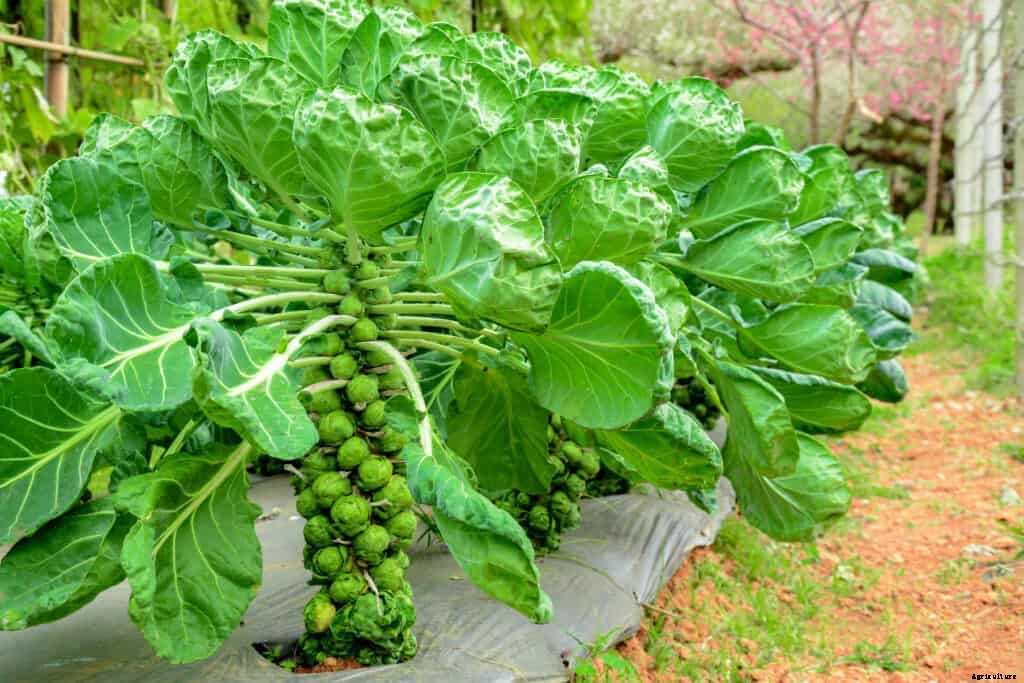
Brussels sprouts are a slow-growing but very bountiful crop. Planting Brussels sprouts from seed outdoors requires a very long, cool growing season. Timing is important when growing Brussels sprouts.
- In most regions, it is best to plant Brussels sprouts so that they come to harvest in autumn.
- Start seeds indoors 12 to 14 weeks before the first frost in autumn for harvest after the first frost.
- In mild-winter regions plant Brussels sprouts in late summer or autumn for winter or cool spring harvest.
- Brussels sprouts reach maturity 80 to 90 days after transplanting and 100 to 110 days after sowing seed depending on the variety.
- Time planting so that Brussels do not grow in periods of extended warm weather much above 70°.
Where to Plant Brussels Sprouts
- Brussels sprouts grow best in fertile compost-rich, well-drained soil. Add 6 or more inches (15cm) of aged compost or commercial organic planting mix to planting beds before planting then turn the soil to 12 inches (30cm) deep.
- A heavy soil, not a light sandy soil, is best for growing Brussels sprouts.
- Brussels sprouts prefer a soil pH between 6.0 and 6.8. If clubroot disease has been a problem in the past, add lime to adjust the soil to 7.0 or slightly higher.
- Avoid planting Brussels sprouts in the same location two years in a row. Crop rotation is important to prevent soil nutrient depletion and soilborne diseases.
Brussels Sprouts Planting Time
- Plant Brussels sprouts so that they come to harvest in cool weather; the ideal time to harvest Brussels sprouts is in autumn after the first fall frost.
- To determine the best time to plant Brussels sprouts, estimate the date of the first fall frost then count back the number of days to maturity for the variety you are growing; that is the date to set Brussels sprouts transplants in the garden.
- Sow seed directly in the garden 10 to 12 weeks before the first average frost date.
- Time the planting so that harvest comes about 2 weeks after the first frost.
- The best average temperature range for Brussels sprouts growth is 60° to 65°F (15-18°C). Temperatures much above 70°F (21°C) can cause Brussels sprouts to bolt and go to seed.
- Brussels sprouts will reach maturity 80 to 90 days after transplanting and 100 to 110 days after seeds are sown.
- Mature Brussels sprouts plants are not suited for temperatures greater than 80°F (26°C); sustained warm temperatures will leave Brussels sprouts bitter tasting and may cause their tight cabbage-like heads to open.
Planting and Spacing Brussels Sprouts
- Sow Brussels sprouts seeds ¼ to ½ inch (6-12mm)deep.
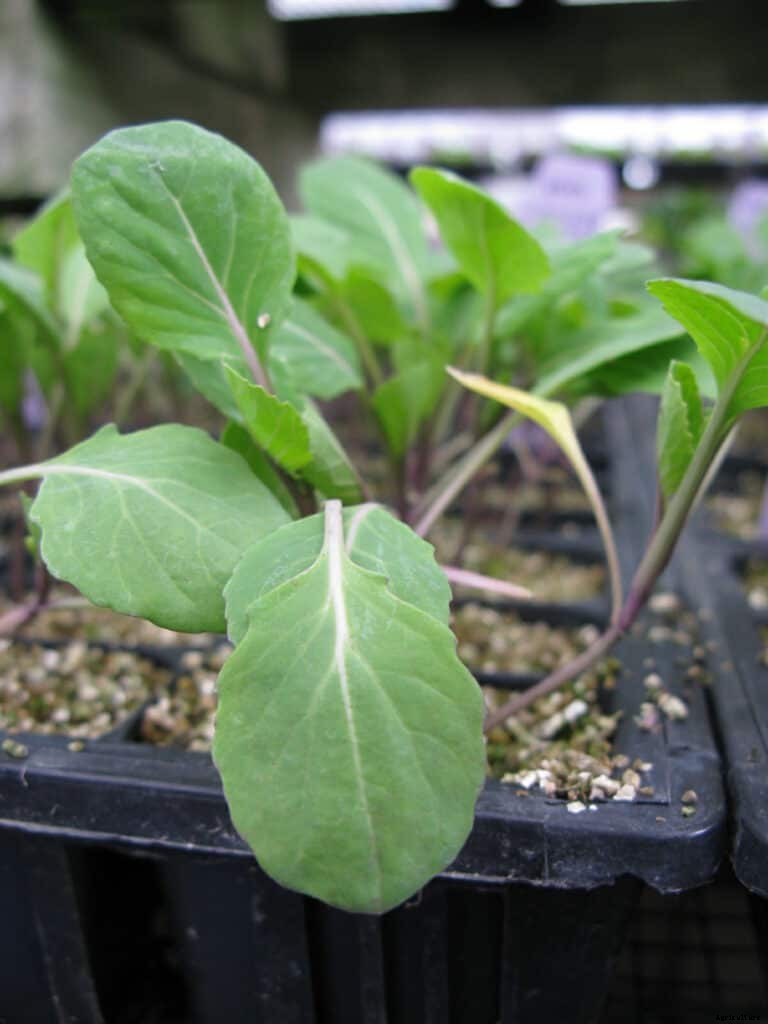
- In flats or containers, sow seed 2 inches (5cm) apart; when plants are 5 to 7 inches (12-17cm) tall they can be transplanted into the garden.
- Space or thin plants 24 to 30 inches (61-76cm) apart in the garden. Space rows 30 to 36 inches (76-91cm) apart.
- Leggy transplants or transplants with crooked stems can be planted up to their first leaves so they won’t grow top-heavy.
- Be sure to firm the soil around Brussels sprouts transplants so that they are well-rooted and anchored as they mature.
- Plant 1 to 2 plants per person in the household
Container Growing Brussels Sprouts
- Grow a single plant in a container 12 inches (30cm) wide and deep or larger.
- In larger containers, allow 24 to 30 inches (61-76cm) between plants.
- Keep the soil evenly moist.
- Feed plants compost tea or diluted fish emulsion solution every three weeks.
Watering Brussels Sprouts
- Keep the soil around Brussels sprouts evenly moist; water at the base of plants.
- Brussels sprouts require 1 inch (16 gallons/60.5 liters) of water each week or more.
- Mulch around plants during the summer to slow soil moisture evaporation and to keep the soil cool.
- Give plants shade if the weather warms much above 70°F (21°C).
- Reduce watering as Brussels sprouts approach maturity.
Feeding Brussels Sprouts
- Fertilize before planting and again at midseason; side-dress plants with well-aged compost or feed with an even organic fertilizer such as 5-5-5 or 10-10-10.
- In regions with heavy rains or sandy soil, supplement the soil with a nitrogen-rich fertilizer.
- If Brussels sprouts develop hollow stems or small buds, the soil may need the plant nutrient boron. You can add boron to the soil by dissolving 1 tablespoon of borax in 5 quarts (4.7 liters) of water and sprinkling it evenly over the planting bed (this will cover 50 square feet/4.6 square meters).
Companion Plants for Brussels Sprouts
- Plant Brussels sprouts with beets, celery, herbs, onions, potatoes; avoid pole beans, strawberries, tomatoes.
Caring for Brussels Sprouts
- Place cutworm collars around young seedlings.
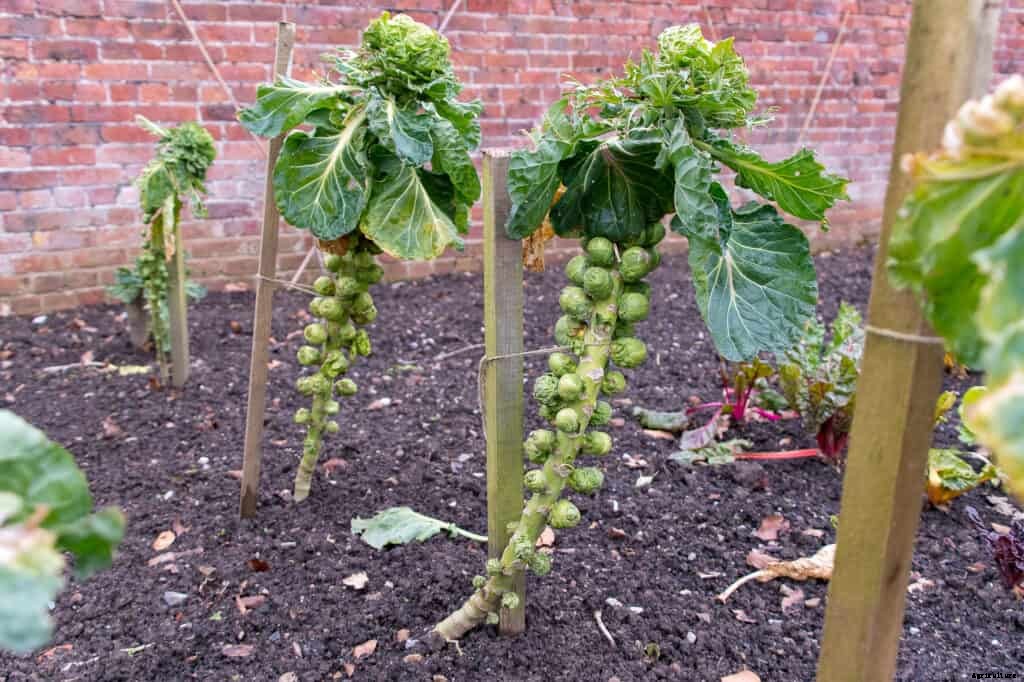
- Set a stake in place soon after planting or transplanting; mature plants will be top-heavy with sprouts and can lean or fall. At stake is necessary wherever it is windy.
- Keep planting beds free of weeds. Cultivate shallowly or weed by hand to avoid disturbing roots; Brussels sprouts are shallow-rooted.
- To encourage all of the sprouts on a plant to come to harvest at the same time, pinch off the top terminal bud when the plant is 15 to 20 inches (38-50cm) tall or 4 weeks before harvest time.
- Remove lower leaves from the sides of stalks as sprouts develop and are harvested; leave top leaves intact.
Brussels Sprouts Pests
- Brussels sprouts can be attacked by cutworms, aphids, cabbage loopers (preceded by small yellow and white moths), and imported cabbage worms.
- Aphids can be knocked off of plants with a strong blast of water.
- Cabbage loopers and cabbage worms can be handpicked off of plants and destroyed or spray with Bacillus thuringiensis.
- Place cutworm collars around young plants early in the season.
Brussels Sprouts Diseases
- Brussels sprouts are susceptible to yellows, clubroot, and downy mildew.
- Cabbage yellows are a fungal disease; lower leaves turn dull green then yellow and then the disease spreads upward; the stem and vascular system become brown and rot. Control yellows by applying compost tea to roots; bacteria in compost tea can suppress fungal spores. Plant resistant varieties.
- Clubroot is also a fungal disease. It causes roots to swell; plants become weak, yellow, and wilt. Control clubroot by maintaining a soil pH of 7.0 and add calcium and magnesium to the soil. Rotate Brussels sprouts and other cabbage-family members out of infected beds for 7 years.
- Planting disease-resistant varieties.
- Keep the garden clean of debris to reduce the possibility of disease. Remove and destroy diseased plants immediately.
- Rotate crops each year.
More on pests and diseases: Brussels Sprouts Growing Problems: Troubleshooting.
Harvesting Brussels Sprouts
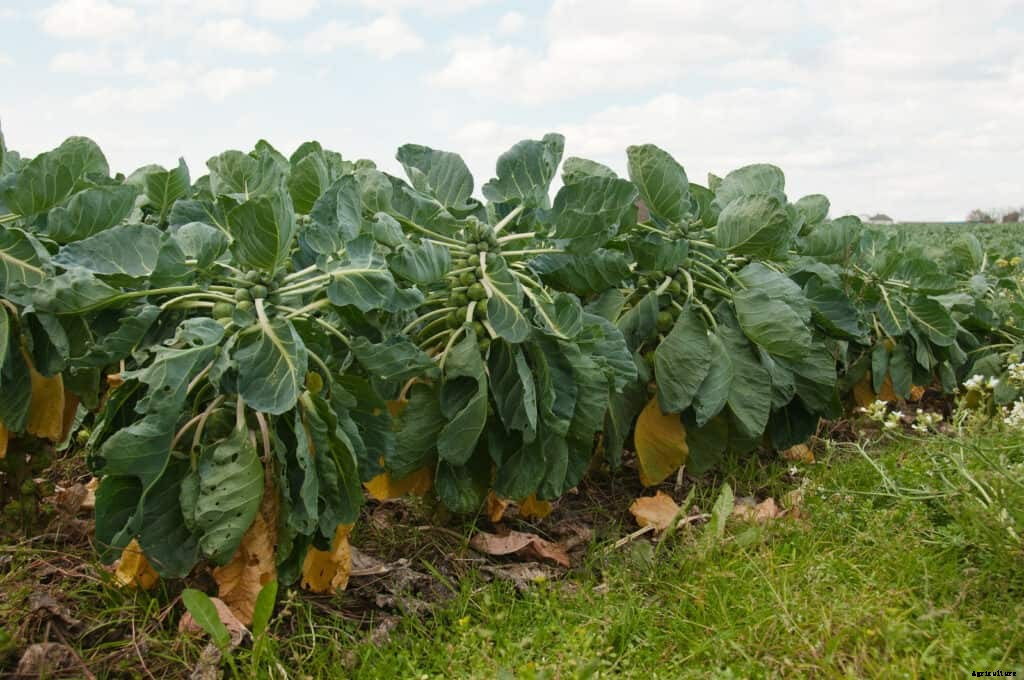
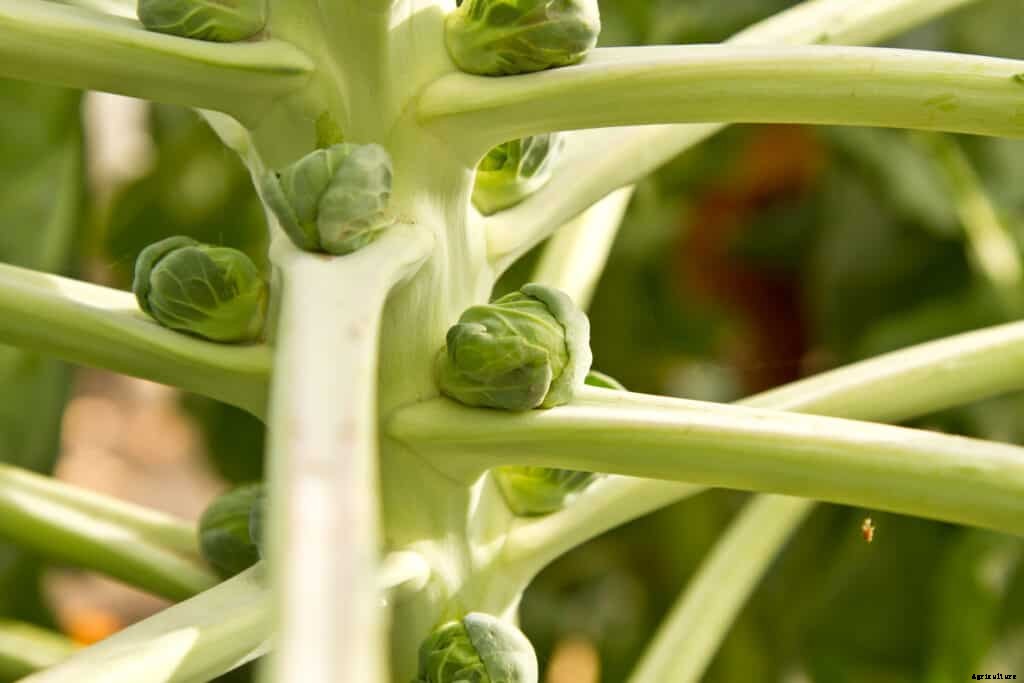
- Sprouts begin to form in lower leaf axils first and then continue to develop and mature upward. When sprouts mature, nearby leaves turn yellow.
- Harvest buds when they are small and tight, about 1 to 1½ inch in diameter.
- Break or cut off yellow leaves above developing buds as you harvest upwards. Remove leaves just above buds a few days before harvest leaving about 2 inches of leaf stem on the stalk as you remove each leaf. This will give developing buds room to grow round.
- The harvest of buds from one plant can last as long as 6 to 8 weeks.
- One plant can produce as many as 100 sprouts.
- If you want to harvest all of the sprouts on a plant at once, pinch out the growing tip—the top set of leaves–4 weeks in advance of harvest. All of the sprouts on the stem will come to harvest at once.
- Tendergreen leaves can be eaten as greens or cooked like collards.
- Cool temperatures and frost will sweeten the flavor of buds coming to maturity.
- Warm temperatures will cause sprouts to be loose-leaved and strong flavored.
- If a severe, hard freeze is forecast before the end of harvest, lift the whole plant root and all and put in a cold frame or unheated shed; you can complete the harvest there. Pack earth around the roots so that the plant does not dry out.
- The first sprouts harvested will not be as flavorful as the last.
 Storing and Preserving Brussels Sprouts
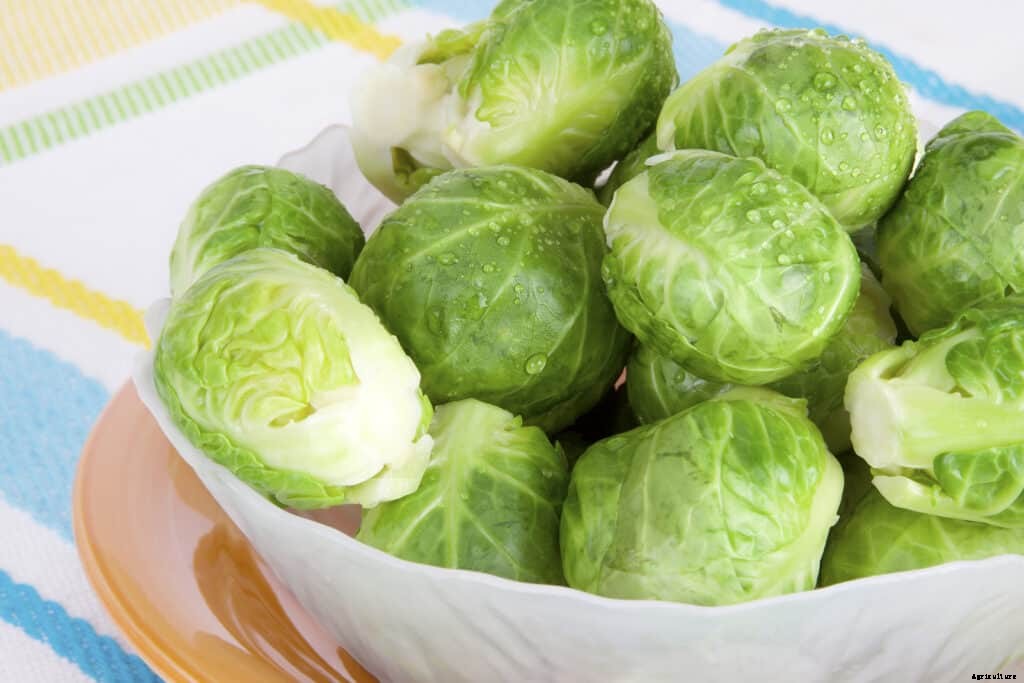
- Brussels sprouts buds will keep in the refrigerator unwashed for 3 to 4 weeks; keep them in a plastic bag or air-tight container.
- Sprouts can be frozen for up to 4 months after blanching.
- Stems loaded with buds in late fall can be harvested and kept in a cool (30° to 40°F), dry place for several weeks.
- Remove loose or discolored outer leaves from stems before storing them.
- Do not wash buds until you are ready to use them.
Brussels Sprouts Varieties to Grow
Bubbles (110 days); Catskill; Early Half Tall (90 days); Jade Cross (90 days); Long Island Improved (95 days); Oliver (90 days); Prince Marvel (90 days); Royal Marvel (85 days); Rubine Red (105 days); Seven Hills (95 days); Tasty Nuggets; Valiant (110 days).
About Brussels Sprouts
- Brussels sprouts are a hardy member of the cabbage family and produce miniature cabbage-like heads 1 to 2 inches in diameter.
- The sprouts grow from a tall, heavy main stem surrounded by large green leaves.
- Botanical name: Brassica oleracea gemmifera
- Origin: Europe, Mediterranean


