
Welcome to Modern Agriculture!

Today we are into a discussion of Gardening Soil Types. Most brilliants minds on earth spend millions of money and risk their lives in search of slightest possibilities for the life-supporting environment all around the universe. Solar missions are taken seriously and have become measure on one country’s strength and development. Hundreds of high-resolution camera’s and satellites are constantly revolving and being sent as far as they can gaze with those high-resolution telescopes to look for the possibility of life.
But how do we conclude which planet supports life?
They say when this universe was made Lord Brahma (according to Indian mythology) gave three components as life support: water, air, and soil.
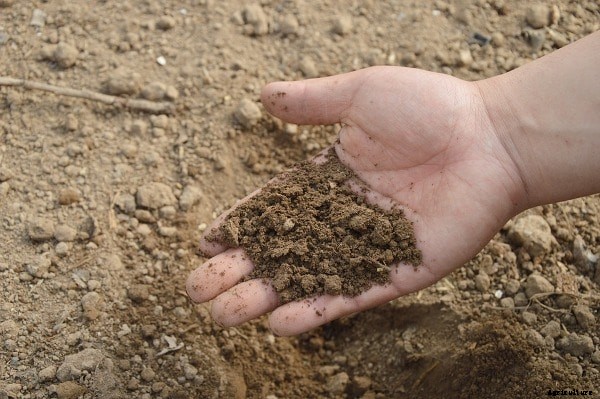
So all this hard work and capital are being spent to find water, air, and soil all over the universe, ever wondered!!!.
So coming to mainstream we need to know why soil is important for gardening.
Soil is the most wondrous gift of nature to mankind. Development of soil from the earth and the evolution of the human race have gone hand in hand. Soil is a dynamic three-dimensional substance that covers major world’s land surface after water. It differs from place to place, in response to the five factors that form it: climate, topography, organisms, the parent rock below surface, and time. Soil genesis is a slow process, taking nature between 80-750 years to generate one cm of soil.
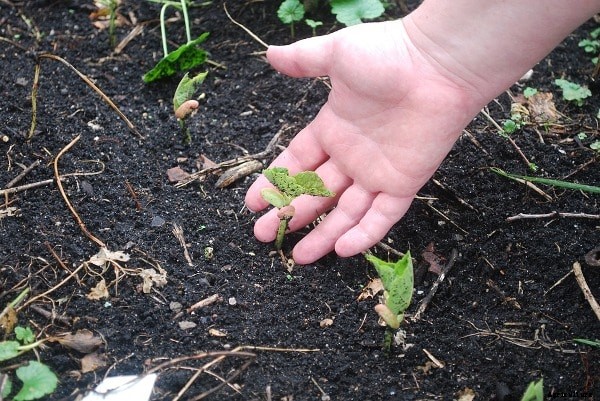
This section will enrich you about the importance of gardening soil. Soil is a dynamic body which renders a number of environmental services, especially to the growing plants.
Anchorage: soil works like a support system for the plant roots extending outward and/or downward through the soil, thereby stabilizing plants.
Oxygen: the spaces among soil particles contain air that provides oxygen and often called air pockets, which living cells (including root cells) use to break down sugars and release the energy needed to live and grow.
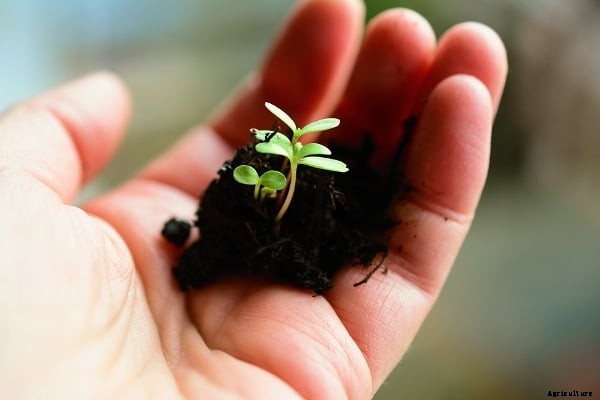
Water: the spaces present among soil particles also contain water, which moves upward through plants. This water cools plants as it evaporates off the leaves and other tissues; works as a carrier of nutrients absorbed by plant roots; also helps to maintain cell size so that plants don’t wilt; and serves as a raw material for photosynthesis, the process by which plants prepare their food.
Read: How To Grow Herbs In Your Backyard.
Temperature regulation: soil insulates roots from drastic fluctuations in temperature. This is especially important during the excessively hot or cold season of the year.
Nutrients: soil supplies essential nutrients, and also holds the nutrients that we add in the form of fertilizer.
Habitat for soil organisms: it helps the survival of numerous microorganisms and macro microorganisms through physical and nutritional support which on return increases soil fertility and makes the soil a living body.
Now let’s discuss varies properties which make it so important for the existence of life, it is well-known fact that if plants live, we will live as they are the producers we rely on for breath and food. For the convenience of study soil properties are divided as physical and chemical properties
Physical properties: they play an important role in determining soil’s suitability for gardening. The physical property of soil affects:
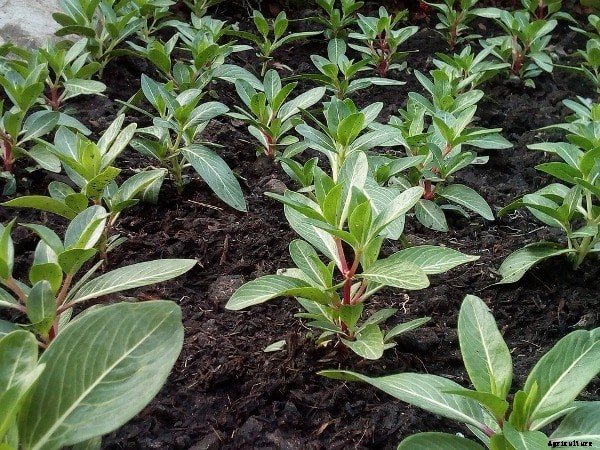
After going through varies literature and Google search a gardener often comes across the suggestion that plant should be grown in suitable type of soil, so how does one know what is suitable garden soil?
For this, we are here to help you out let’s see what different types of soil are and how do different garden soils affect the plant growth?
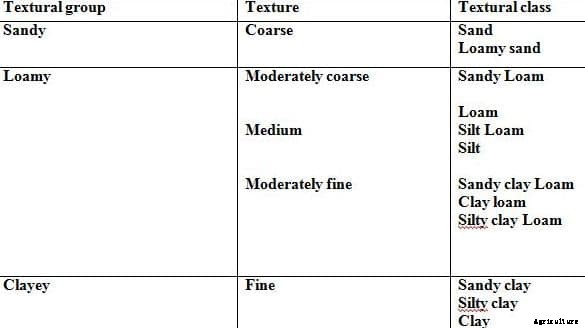
Different types of soil based on their texture:
It consists of more than 70% sand and less than 15% clay. It is divided into two classes.
Sandy or coarse-textured soils are loose, absorbs water rapidly and drain it quickly, it has lower water and nutrient holding capacity, lower organic content and it is also called light soil.
Loamy soil is the mixture of sand, silt and clay particles that exhibit properties of these separates in equal proportions. This doesn’t mean that sand, silt, and clay particles are present in equal quantities.
Loamy soil is the most preferred type of soil for the cultivation of plants because of its capacity to retain water and nutrients is better than sandy while its drainage, aeration properties are more favorable than clayey soils.
Loamy soils are subdivided into seven textural classes depending upon which constituent is in high proportion:
Also known as fine-textured or heavy textured soil. This type of soil contains at least 35% of the clay fraction. Clayey soil tends to absorb or retain more water, become plastic and sticky when wet, hard and cohesive when dry and difficult to cultivate.
Read: How to Design a Flower Garden.
Clayey soil has, high water and nutrient holding capacity, poor aeration, very slow drainage unless cracked, high to medium organic matter content.
It is subdivided into three textural classes.
Single grained structured: particles are completely unattached to each other as in case of loose sand.
Massive structured: particles are bonded in large cohesive, non-structural mass as in case of surface crust, plough pan, and clay pan.
Blocky soil: promotes good drainage, aeration, and penetration.
Prismatic soil: commonly occurs in subsurface soil in arid and semi-arid regions and in poorly drained soil of the humid region.
Platy soil: Restricted percolation and aeration in the soil.
Spherical soil: formed by biotic activities in the surface horizon and promotes percolation, infiltration, aeration and root penetration in soil.
Soil is the epicenter of life on planet earth .its sustainable use; management and conservation are the onerous responsibility of all inhabitants of the earth, it takes around 1,000 years to form 1 cm soil and soil erosion washes it away in less than a year. Hence, sustainable and better soil management is critical for crop productivity. Good management must consist of maintaining the soil’s integrity over time. Poor management can cause soil erosion, loss of soil fertility, deterioration of soil structure hence poor crop yields.
That’s all folks for today about Gardening Soil Types and their facts.
Read: Rainwater Harvesting Methods.


