
Welcome to Modern Agriculture!

Introduction to how to start jujube gardening for beginners, planting tips, ideas, techniques, questions, and answers (FAQs): Hello gardeners, we are here with one more new topic and the article is all about jujube gardening. Do you want to know how to grow a jujube tree and do you have any doubts about planting and growing a jujube tree? Then follow and read this complete article to grow the perfect jujube tree. In this article, we are going to discuss some frequently asked questions about jujube gardening.
Ziziphus jujuba, which is often known as jujube, red date, Chinese date, or Chinese jujube, is a buckthorn species in the Ziziphus genus.
The Chinese date, or jujube (Ziziphus jujube), is a fruit endemic to China. This medium-sized tree with glossy green deciduous leaves and light grey bark can reach a height of 40 feet or 12 meters. The single-stoned, oval-shaped fruit starts green and turns dark brown over time. When left on the vine, the fruit, like figs, will dry out and wrinkle. The flavour is comparable to that of an apple.
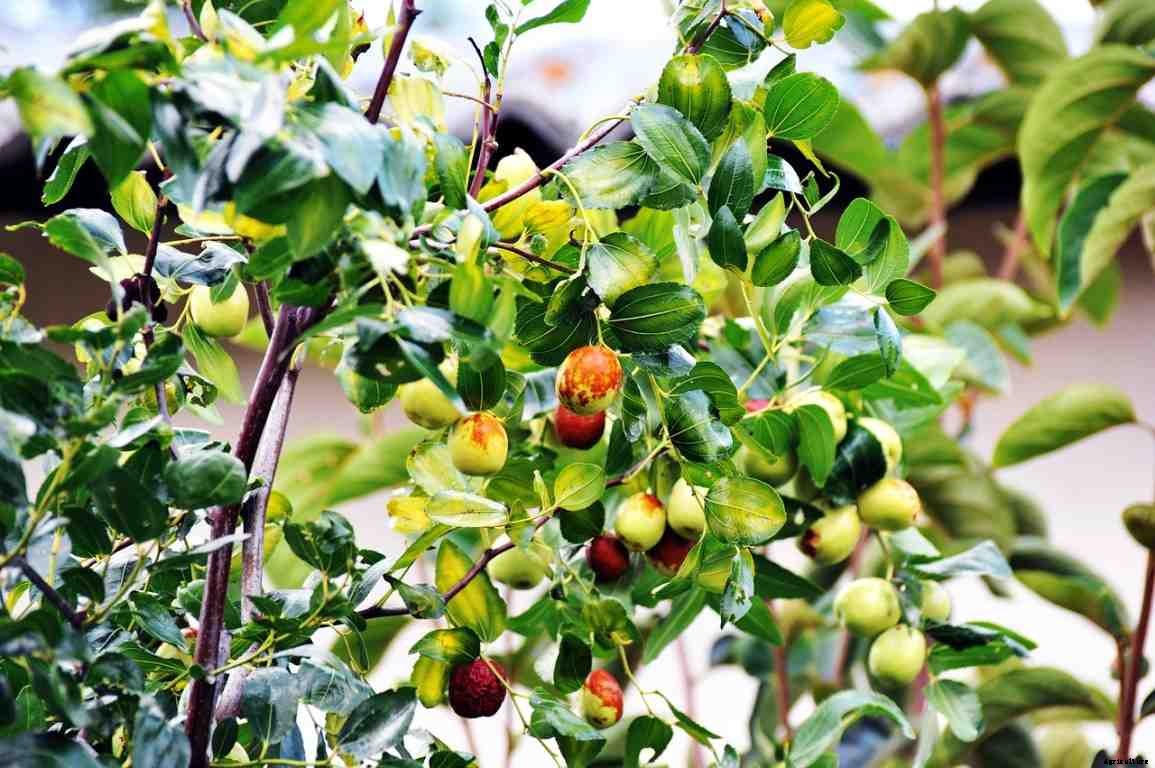
Jujubes thrive in hot, dry areas, but can withstand temperatures as low as -29°C in the winter. As long as you have sandy, well-drained soil, growing jujube trees is simple. They don’t care about the pH of the soil, but they do need to be planted in full sun. Seeds or root sprouts can be used to propagate the tree.
Fruit yield is aided by a single application of nitrogen before the growing season.
Even though this robust tree can withstand drought, frequent watering will aid fruit production.
This tree does not have any known insect or disease concerns.
When it comes to picking jujube fruit, it is quite simple. When the jujube fruit turns dark brown, then it’s time to harvest it. Alternatively, you can leave the fruit on the tree until it is completely dry.
Instead of removing the fruit from the vine, cut the stem when harvesting. To the touch, the fruit should be firm. In a green fruit bag, keep the fruit between 11 to 13°C.
Now, let us discuss some frequently asked questions about jujube gardening;
Planting: Dig a hole big enough for the root system to fit in. The same depth should be used to plant bare-root trees as in the nursery row (or no more than 1-inch below). Because jujubes demand high light intensities for good output, they should be spaced 10 to 15 feet apart.
In case if you miss this: Small Space Gardening Ideas For Beginners.
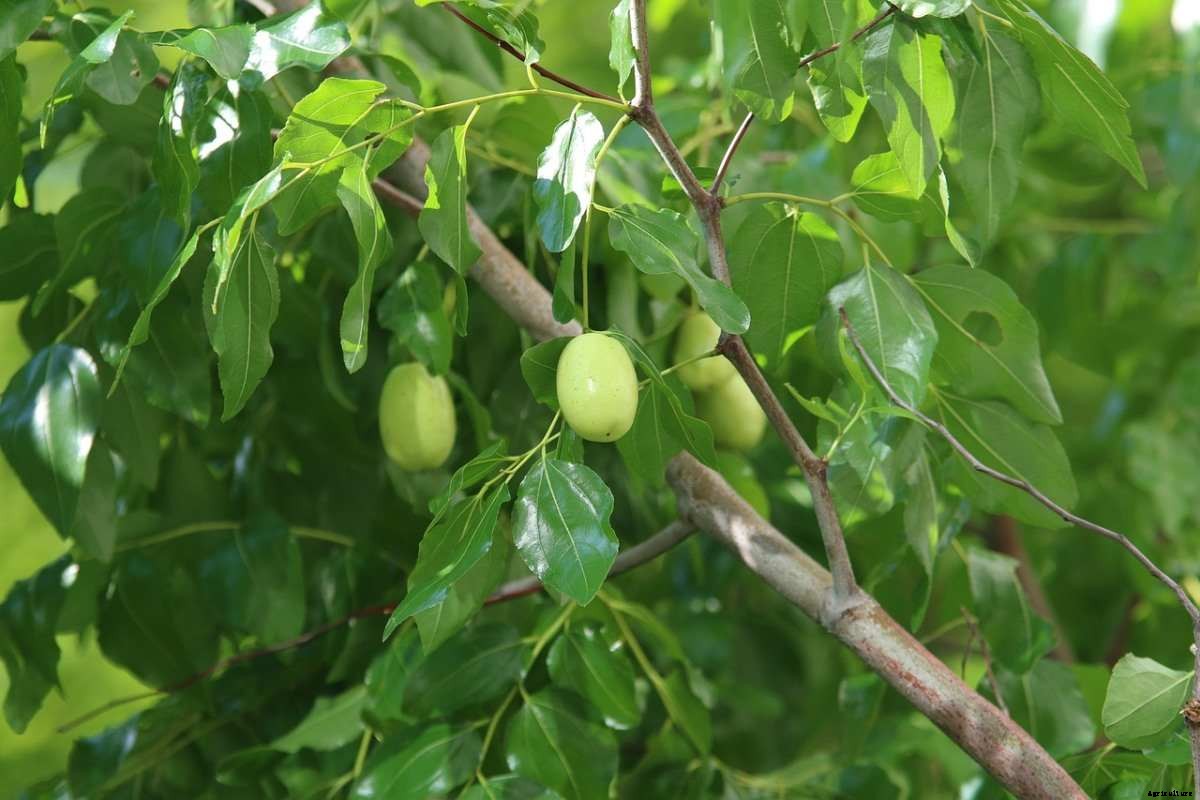
Jujube trees are young. They bloom the same year as they are planted or grafted, and some cultivars can even produce fruit. In the second year, most varieties will produce a few fruits. Jujubes will produce a reasonable output after 4 to 5 years.
You need to plant jujube trees in full sun in any well-drained soil. Jujube trees are drought resilient once established, yet regular irrigation will result in larger yields. Without fertilizer, jujube can grow in practically any soil and at any pH. Once the tree is a year old, fertilize it with a fruit-tree fertilizer for the greatest results.
Although jujube trees are most usually propagated by vegetative methods, they can also be grown from seed. Once sown, the seeds don’t need much attention, but they must be well cleaned and prepared before planting to ensure germination.
Don’t fertilize jujubes when they’re first planted; instead, use 1 cup of 8-8-8 fertilizer to the soil under the tree’s canopy each spring after that. Better water jujube trees every few days after they’ve been planted until they’ve established themselves. When the weather is dry, mature trees only need to be watered once a month.
Deeply Throughout the colder early spring and fall seasons, water newly planted jujube plants weekly (1 time per week), then 2 to 3 times per week during the hot summer season. Watering should be halted in the winter since deciduous plants go dormant (lose their leaves).
Although the Li Jujube is self-fertile, planting it with Lang will result in larger fruit production. Jujube trees are drought-tolerant, prickly, and pest and disease resistant.
Cause – Fruit trees’ foliage becomes yellow when they are deficient in iron, manganese, or magnesium. Herbicides are sometimes present in tree fertilizers, causing the leaves to yellow and thicken. Trees grown in highly alkaline or poorly drained soil are prone to nutrient shortages.
The Chinese date, or jujube (Ziziphus jujube), is a fruit endemic to China. This medium-sized tree with glossy green deciduous leaves and light grey bark can reach a height of 40 feet or 12 meters. The single-stoned, oval-shaped fruit starts green and turns dark brown over time.
In most situations, a lack of pollination is the main culprit. This might be due to a variety of factors, the most prevalent of which is a lack of insect activity. To set fruit, most fruit trees require a pollination partner, so make sure your tree has a matching partner-in-crime nearby.
Harvesting: Jujubes will begin to produce in 3 or 4 years, and the yield can be quite large. They’re ready when their hue shifts from lime green to a rusty brown. Pick fruit first thing in the morning for the finest flavour. Jujubes can be eaten straight from the tree or incorporated in recipes that call for apples.
Jujubes appear to thrive in the absence of fertilization. During the growing season, light broadcast applications of a balanced fertilizer such as 10-10-10 at two-month intervals will likely speed up growth. Do not fertilize the newly planted tree until it has had many months to establish itself.
Weak and competitive branches should be trimmed out from the base of a jujube tree if it has too many primary shoots. We can utilize these to enhance the fruiting area of a tree that is lacking in branches, but we can thin them out or reduce them to 2- to 3-year-old secondary branches if the tree is overcrowded.
Trees must be pruned every year for them to produce a complete yield.
The fruits of the jujube tree are tiny and tasty. They have a chewy texture and a date-like flavour when dried. These fruits have a sweet, apple-like flavour when eaten fresh and make a healthy snack. They have a pit in the middle with two seeds that must be removed before eating.
How about this: Pumpkin Seed Germination.
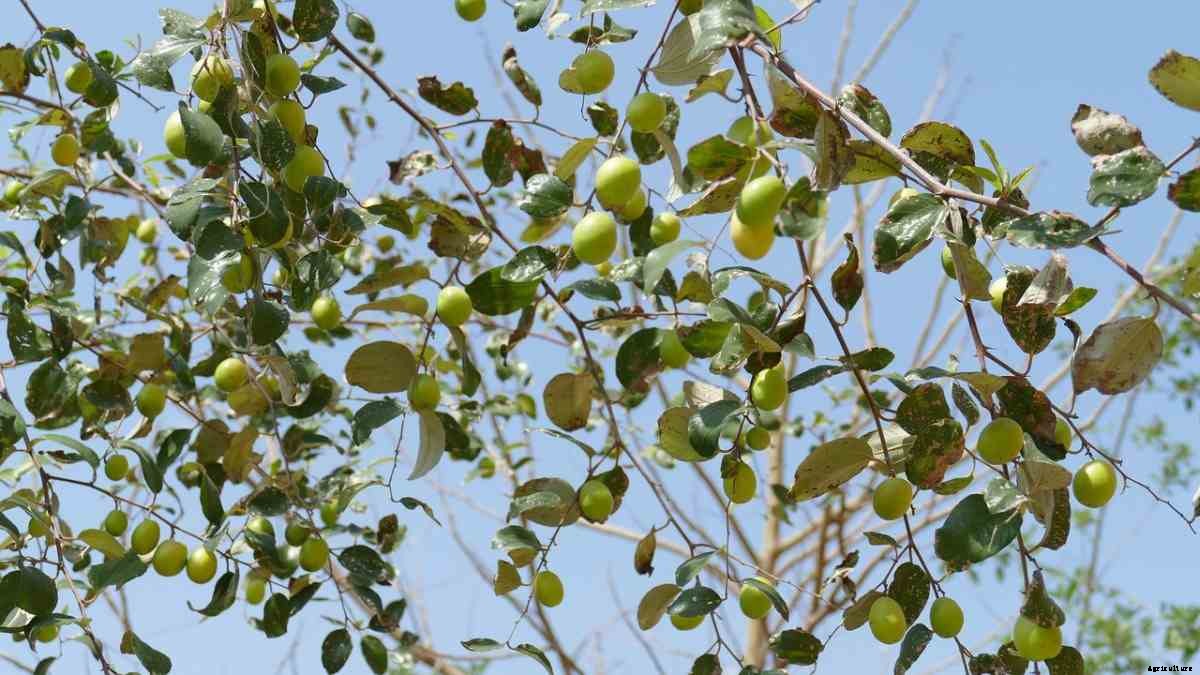
Drought-tolerant jujubes require water to yield luscious fruit. Allow a few inches or 5 to 10cm of soil to dry out before watering, and then water deeply. Each spring, fertilize and apply new compost.
The tree forms a deep and significant taproot in natural settings, making it drought resilient. Jujube trees thrive in areas that have a long, hot, dry summer with enough rain early in the season and cool temperatures throughout the dormant season.
Yes, jujube trees may be grown in pots, and in fact, many apartment dwellers usually have potted jujube plants on their balconies.
Jujubes are propagated by grafting two genotypes or cultivars together, just like many other deciduous fruit trees. Grafting requires two parts: the rootstock, which serves as the root system, and the scion, which is the cultivar or variety chosen.
Because jujubes demand high light intensities for good output, they should be spaced 10 to 15 feet apart. Irrigation: The jujube tree’s drought tolerance is one of its most notable characteristics.
Soils: Jujubes will grow in a variety of soil types, but they favour sandy, well-drained soils and struggle in heavy, poorly drained soils.
Planting: Dig a hole large enough for the root system to fit in. The same depth should be used to plant bare-root trees as in the nursery row (or no more than 1-inch below).
They’re ready when their hue shifts from lime green to a rusty brown. Pick fruit first thing in the morning for the finest flavour. Jujubes are used in a variety of ways. Jujubes can be eaten raw or incorporated in recipes that call for apples. Apple flavour is modest in ripe fruits.
The majority of jujube fruit ripens around October and can be collected for a long time. Green fruit will not ripen after being picked, but slightly riper, pale-yellow fruit will ripen if sealed in a bag and exposed to ethylene gas produced by a ripening apple. Fruit that has not been fully ripened will be less delicious than fruit that has been fully matured on the tree.


