
Welcome to Modern Agriculture!

Introduction on How To Start Radish Gardening for Beginners: Hello gardeners, we are back with another topic today. Do you want to plant radish and do you have any doubts about planting and growing radish? Then, follow our complete article to have a grip on planting radish. In this article, we are going to discuss some frequently asked questions about radish gardening.
The radish is a root vegetable from the Brassicaceae family that was domesticated in Asia before the Roman era. Radishes are farmed and eaten all over the world, with the majority of them being eaten raw as a crisp salad vegetable with a pungent flavor.
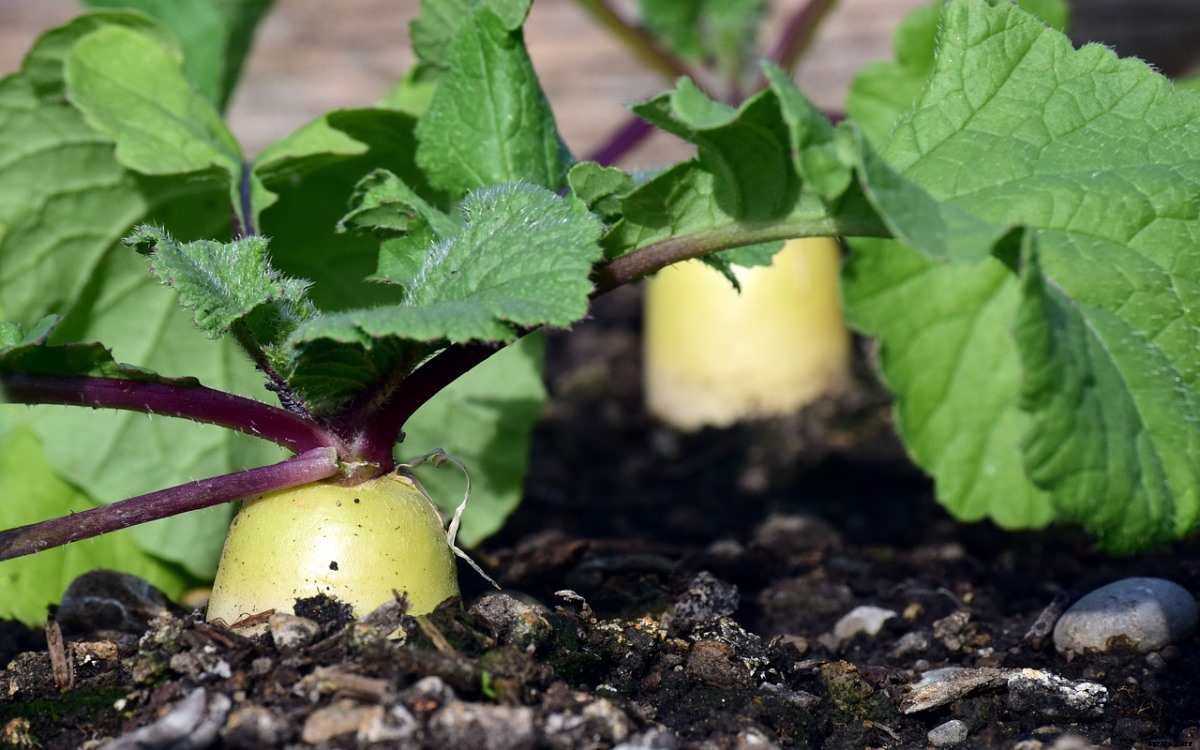
Radishes are resilient, low-maintenance root vegetables that can be planted several times during the growing season. Radishes can also be harvested as soon as three weeks after they’ve been planted. Here’s all you need to know about growing radishes in your garden.
Radish seeds can be planted in the spring and the fall, but during the summer, when temperatures are often too high, growth should be stopped. (Radishes may bolt in hot weather, rendering them completely unusable.)
Sow seeds 4 to 6 weeks before the average last frost date for a spring planting. Here are the frost dates in your area.
Radish seeds should be planted directly in the garden to avoid disturbing their roots. Sow seeds 1 inch deep and 1 inch apart in rows 12 inches apart outside.
Plant a new round of seeds every 10 days or so, while the temperature is still chilly, to ensure a steady supply of radishes in late spring and early summer.
Consider planting in the fall. Radishes can be planted later in the summer or early fall than any other root crop and still yield a harvest. 4 to 6 weeks before the first fall frost, sow seeds.
Now, let us discuss some frequently asked questions about planting radishes
You may also check this: How To Grow Organic Pears.
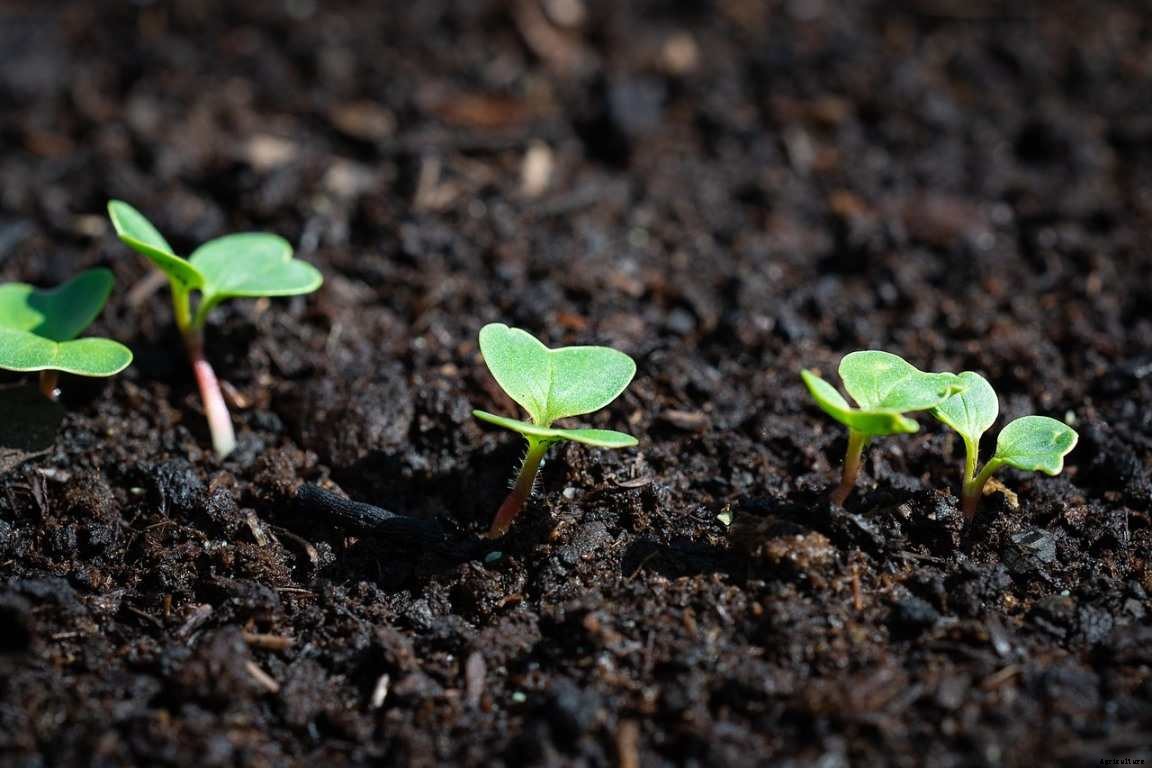
Plant radish seeds in the spring from early April to early May, and again in the fall from August 1 to September 1. In a row, leave about an inch between seeds. Smaller varieties should be planted one-fourth to one-half inch deep. Larger kinds should be planted deeper, up to one inch.
In loosened soil, you need to sow radish seeds one inch apart in rows one foot apart. Cover them with a half-inch to one-inch layer of soil and water them gently. For a constant yield, plant radishes every ten days. Thin the radish seedlings to every two to three inches one week after they emerge.
Put on some warm clothes and plant the first sowing of radishes as soon as the garden soil is workable in the spring. Select a location that receives at least six hours of sunlight per day. For optimal results, use light, well-drained soil with a pH of 5.8 to 6.8.
Several plants, on the other hand, should not be planted adjacent to radishes:
Radishes will be available to harvest in as little as three weeks after planting, depending on the variety. Harvest when the roots are about 1 inch in diameter at the soil surface for most kinds.
It is possible to regrow a radish from the top, although this usually only works if the roots are still attached and it is not as effective as sowing radishes from the seed.
It’s critical to ensure adequate spacing when direct sowing plants like radishes. Be careful to check the seed packet for proper seed spacing guidelines and radish spacing can vary from 1 to 3 inches depending on the type.
Keep the soil moist at all times. Begin watering softly – and consistently – with a watering can as soon as the first shoots appear. Radishes should never be allowed to sit in water, although they do require enough moisture for their roots to become fat. Indoors, sow radish seeds sparingly.
“Can radishes grow in containers?” may be a question many patios and small-space gardeners have. Yes, it is correct. Radish seeds planted in containers generate food rapidly and with little effort.
Radishes use very little fertilizer in the soil. Having too much of some components, usually, nitrogen, is a regular concern while producing radishes. In the vegetable garden, well-balanced soil will have a mix of various key elements, including nitrogen, phosphorus, and even potassium.
When you plant radishes and carrots together, you can ensure that neither plant is harmed by pests. Because radishes germinate faster than carrots, you can plant them at the same time as carrot seeds and the radish seeds will have loosened the soil by the time the carrots begin to grow.
Both radishes and tomatoes will benefit from companion planting in the garden. Cucumber bugs, flea beetles, and other pests are attracted to radishes. Although they work well together, when planting them, keep in mind the amount of space they require. Both require sufficient attention for this combination to succeed.
Plant the first seeds once the worst of the winter cold has passed, and continue planting every week or so until approximately June for the quickest growing radishes, which mature in about three weeks. Radishes should be sown in late spring, no later than the end of June.
One radish seed yields one radish plant, and one radish plant yields one radish. Radishes grow quickly, so if you want a lot of them, just sow a lot of seeds and in three to four weeks, you’ll have an excess of them.
How About This: Potato Seed Germination.
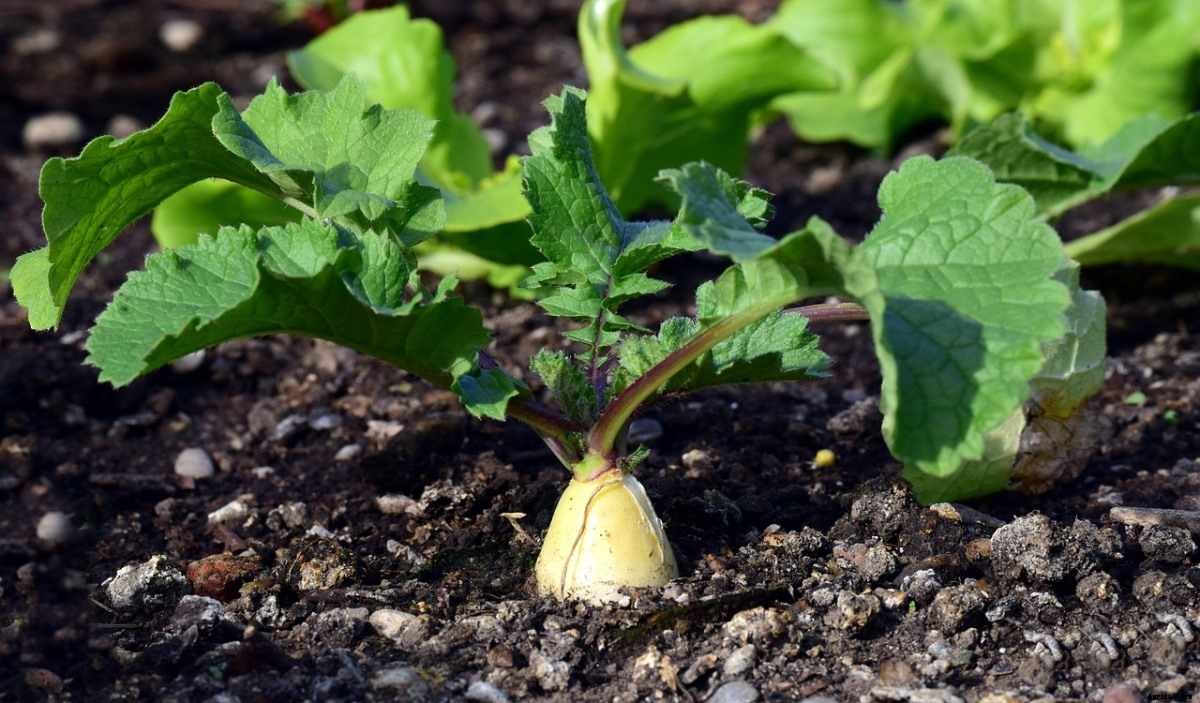
Radishes grow best in fertile, well-drained, deep, and sandy soils that are rich in organic matter.
Watering radish plants lightly 4 to 5 times a week is fine, as long as the soil does not become too wet. Mulching with grass clippings, straw, or newspaper strips is an excellent technique to keep the soil moist.
When the roots are approximately an inch or 2.5 cm across, you can start selecting radishes. To examine the size, simply pull one out. Pull winter radishes like Daikon before the ground freezes, as they can grow rather large before their quality deteriorates.
Alternatively, before sowing, gently tickle organic manure, dry farmyard manure, or even chicken pellets with added seaweed into the soil. Radishes require full sun in the spring, but by July, they will thrive in semi-shade, where the soil will remain cold.
When the soil temperature, humidity, and air movement are adequate, radish seeds germinate faster. Of course, you may germinate radish seeds indoors and transplant them outside later, but this is difficult, so germinating radish seeds immediately in the soil outdoors is preferable.
Sulfur is required for the growth of asparagus, cabbage, cauliflower, kale, onions, radishes, turnips, and many other blooming plants. Epsom salts are very water-soluble and can be absorbed quickly by plants when diluted with water and given as a foliar spray.
Once or twice a week, water your radishes thoroughly to wet the soil to the root level. Regularly check them and water if the soil seems dry to the touch 1-inch below the surface. To develop very quickly and create sensitive roots, radishes require evenly moist soil.
Radishes prefer direct sunlight and require at least 6 hours of light to generate adequate bulbs. Radishes are also a cool-season vegetable that will bolt in warmer weather, producing seed instead of fat tiny bulbs.
Radish is a cool-season vegetable that matures very quickly and is simple to grow. Garden radishes may be planted in any location with enough sun and moist, healthy soil, even on the tiniest city lot. Although early types thrive in the chilly days of early spring, certain later-maturing kinds can be planted in the summer.
Radishes don’t have a lot of preferences when it comes to potting soil, but they do best in soil that drains well and has a lot of organic content. Organic potting soil that has been well-composted will suffice. Radishes require a lot of sunlight to maintain their rapid growth and root formation.
To begin sprouting, soak your seeds for 4 to 6 hours or overnight in a dish of lukewarm water, making sure they are completely submerged and not floating on top of the water. This will soften the seed coat, allowing it to germinate more easily. Drain the water completely after soaking.
1/4 to 1/2 inch deep and 1 inch apart, sow the seeds. Spring radish seeds germinate in three to four days under optimal conditions, although it might take up to ten days in some cases. The seeds will take longer to germinate if placed any deeper or subjected to cooler temperatures, and they may not germinate at all.
Radishes require a lot of phosphorus, so use something like a bone meal as a fertilizer before sowing. Too much nitrogen encourages excessive top growth while discouraging root bulb growth. Kelp meal is high in micronutrients and will provide trace minerals to the crops being ingested.
Keep the soil moist at all times. Begin watering softly – and consistently – with a watering can as soon as the first shoots appear. Radishes should never be allowed to sit in water, although they do require enough moisture for their roots to become fat. Indoors, sow radish seeds sparingly.
Radishes use very little fertilizer in the soil. Having too many of some components, usually, nitrogen is a regular concern while producing radishes. In the vegetable garden, well-balanced soil will have a mix of various key elements, including nitrogen, phosphorus, and potassium.
Prepare garden soil or a planting bed for growing radishes from seed by tilling it at least 8 to 20 inches deep, depending on the variety.
Radishes are a cool-season crop, which means they prefer the lower temps of spring and fall to flourish. They thrive in temperatures ranging from 10°C to 21°C. When the days lengthen and the temperatures rise in late spring, radishes will bolt (or blossom).
The radishes have grown in size and are blossoming, although they are still little. True, once the radishes begin to flower, the root’s stored energy will be utilized to make flowers and seeds. When radishes are left in the ground for too long or if the weather becomes too hot, they can bolt (bloom).
You most likely have a case of Rhizoctonia or Fusarium root rot if your radish plants get wilted and appear feeble, with yellow leaves and oval, red spots at the stem base, as well as roots with red streaks (stem rot). Warm soil is ideal for this fungal disease to develop. This disease is prevalent in damp, low-pH soils.
Overcrowding and scorching weather make radish roots vulnerable. Another possibility is that the soil was not sufficiently free and friable. Why do my radishes have a woody texture? Radishes are a cool-season plant, and if harvested too late in the season, they will become woody.
Controlling the problem can be as simple as keeping the soil around seedlings properly watered; alternatively, cover rows with fine mesh or horticultural fleece. The most important thing to remember is to rotate radishes with other brassicas and to weed the ground thoroughly, as flea beetle larvae can overwinter in the soil and feed on plant detritus at first.
If the weather is particularly cold, then germinate the seeds indoors and then transplant them to a greenhouse or cold frame as soon as the seedlings emerge. After a few weeks of sheltered growth and the seedlings have filled out their modules, they’ll be ready to plant out under row covers or in the ground.


