
Welcome to Modern Agriculture!

Introduction on how start watermelon gardening for beginners, water melon planting questions and answers (FAQs): Hello gardeners, do you want to grow your own watermelon and do you have any doubts about growing watermelon, and if you want to know all the watermelon growing requirements? Well and then you will need to follow this complete article to have a perfect grip on planting watermelon. In this article, we are going to discuss some frequently asked questions about planting and growing watermelon.
Watermelon is the edible fruit of a flowering plant species in the Cucurbitaceae family. It was domesticated in Africa as scrambling and trailing vine-like plant. It is a widely cultivated fruit with over 1,000 variations worldwide.
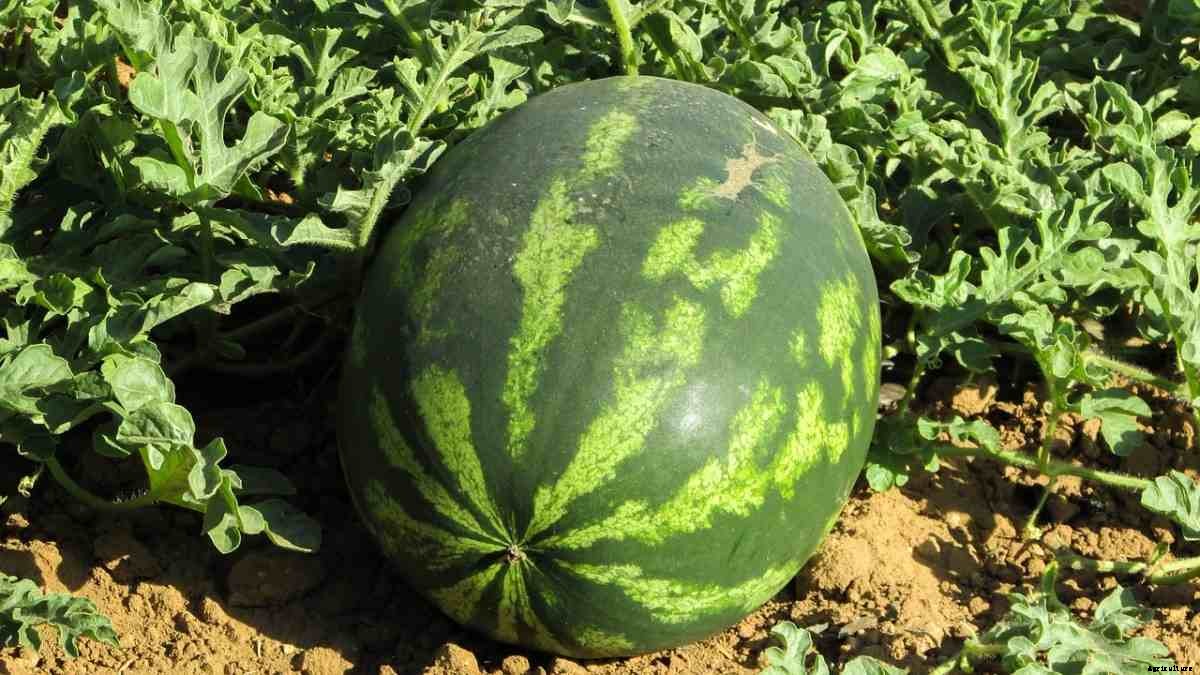
Before planting, amend the soil with old manure, seaweed, and/or compost. Watermelons are heavy feeders, which means they require fertile soil with high nutrient content. Better find out more about soil amendments and how to prepare the ground for planting.
Watermelons thrive in soil that is loamy, sandy, and well-drained. They may suffer if the soil is too clayey and does not drain effectively.
Watermelons prefer a pH of 6.0 to 7.5 (“slightly acidic to neutral”) in their soil.
Watermelons require a significant amount of room, up to 20 square feet per plant. Plant them in an area where they won’t crowd out other plants so that their vines can sprawl.
If you’re growing in rows, make sure they’re at least 6 feet apart.
Outdoors, sow seeds 12 to 1 inch deep; indoors, sow seeds 14 to 12 inches deep in seed-starting pots.
Use larger starting pots than you would for most seeds to allow for additional root growth. Consider using compostable containers that can be cut away or planted directly in the garden to reduce the chance of seedlings’ sensitive roots being damaged during the transfer.
Now, let us discuss some frequently asked questions about watermelon planting
Watermelon should be planted in late spring or early summer when soil temperatures reach 21°C or higher.
In nutrient-rich, well-drained soil with a pH of 6.0 to 6.8, space watermelon 3 to 5 feet apart.
It matures in the shortest amount of time, perhaps 70 to 75 days. Watermelon from the main season is larger and takes longer to ripen approximately 80 to 90 days. Watermelons with no seeds are a fascinating study of plant genetics.
Light – Watermelons must be exposed to direct sunshine to grow. Plants may take some partial shadow, especially in warmer climes, but melons require a lot of suns to grow their sugars.
A strong and healthy watermelon vine can produce two to four fruits per plant. Male and female flowers grow on watermelons. Female flowers have a bulbous bottom and stay on the vine after the male blooms have fallen off to produce fruits.
Watermelons do not require a lot of water during the planting process, but they do benefit from a weekly soaking of 1 to 2 inches of water. When you water, make sure the soil is saturated to a depth of 6 inches.
For optimal sweetness, add four to six inches of composted manure to the planting bed before planting. When the vine shrivels at the fruit or the fruit detaches on its own, watermelon is said to be at its sweetest.
In case if you miss this: Greenhouse Gardening For Beginners.
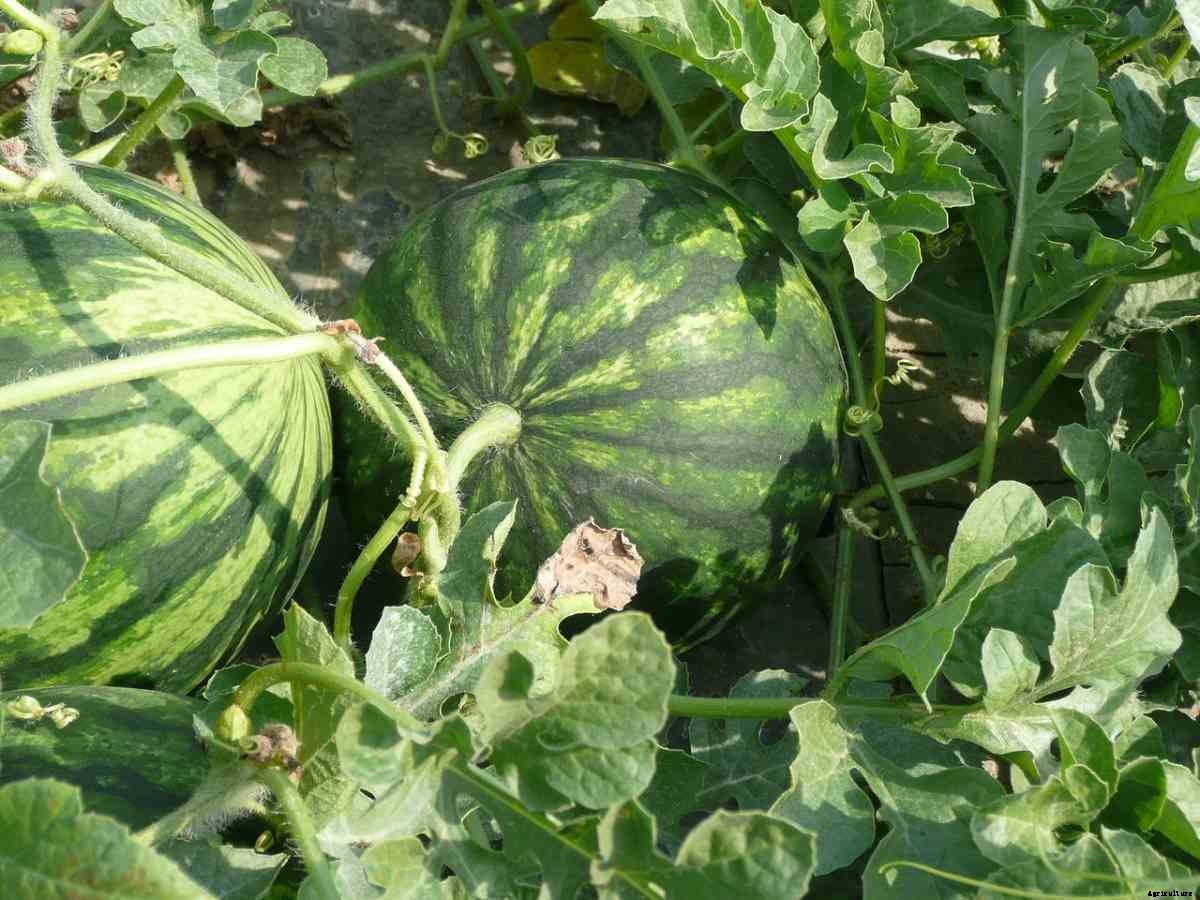
When the bottom or belly of the watermelon transforms from a greenish white to a buttery yellow or cream, it’s time to harvest it. On the dark green-skinned types, this colour change is very noticeable. When the fruit is fully ripe, it loses its glossy sheen on top and becomes bland.
Watermelons are surprisingly simple to grow as long as the plants have enough place to spread out, excellent drainage, plenty of sunlight, and a long enough growing season. Early-ripening types should be chosen by gardeners in northern climes. Sugar Baby, Sweet Favorite, and Cotton Candy are all popular watermelon varietals.
You’ll need to pick a pot that’s big enough for your container of watermelon to grow in. Because watermelons develop very quickly and require a lot of water, it’s best to use a 5-gallon or larger container. Make sure the container you’re using to plant watermelons has plenty of drainage holes.
Watermelons require a lot of nutrients, and they prefer phosphorus and potassium-based fertilizers over nitrogen-based fertilizers to promote vine growth. However, after the plants have begun to flower, switch to a nitrogen-free fertilizer to increase flowers and fruit.
Melons benefit from the use of old coffee grinds. There is no scientific evidence to back this up, however, it is stated that using coffee grounds results in yield larger melons. The grinds will release nitrogen into the soil as they decompose.
How About This: How To Grow Sweet Potatoes On Terrace.
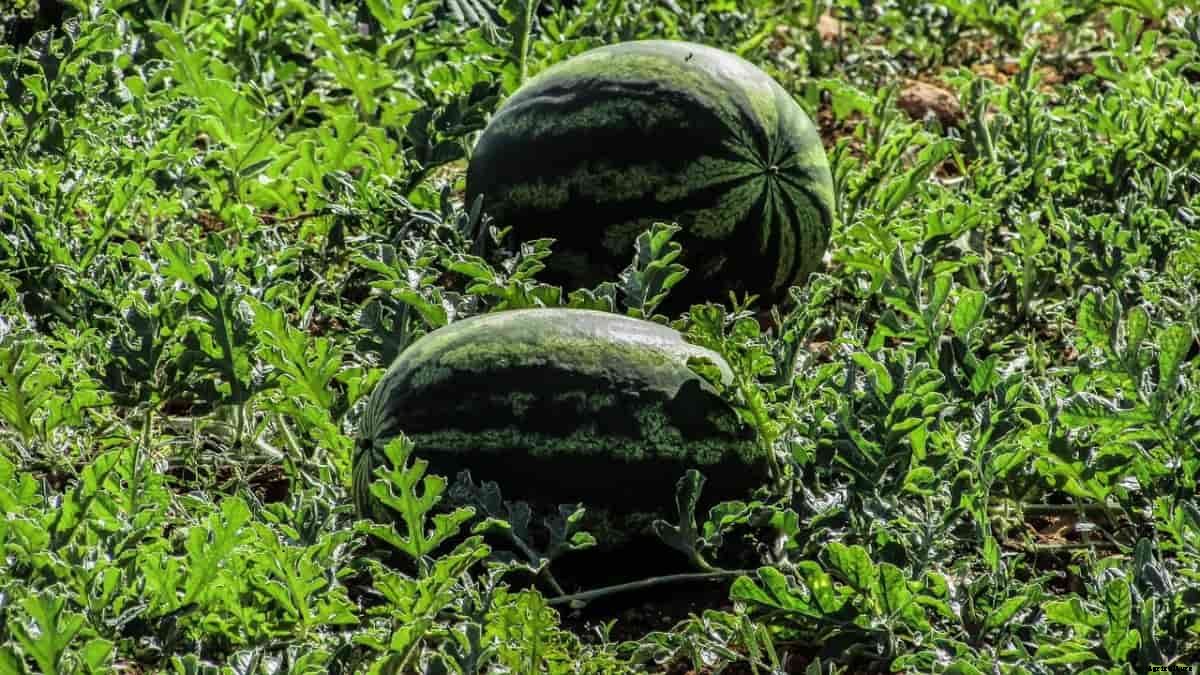
Water the plants at the base in regular, thorough watering sessions to maintain the soil moist and optimize the size of the melons. To feed the watermelon plants, side dress them with a fertilizer formulated for food plants or compost tea. The fertilizer promotes growth, resulting in larger melons.
Spray 6 1/2 teaspoons Epsom salts and 3 1/2 tablespoons borax in 5 gallons of water when the plant starts vining and again when small 1-inch melons appear for sweeter watermelons and cantaloupes. Place a 2-foot-long stake in the center of melon hills to allow hand-watering of the roots rather than the entire plant.
Watermelons may grow in a variety of soil types, but they prefer a light, sandy, fertile loam with good drainage. Before planting, amend your garden with plenty of manure, compost, and leaves, and thoroughly work the soil. Keep the soil moist at all times since melons require a lot of water.
Watermelons require a significant amount of room, up to 20 square feet per plant. Plant them in an area where they won’t crowd out other crops so that their vines can sprawl. Growing the grapes in hills, or raised rows offer proper drainage and retains the sun’s heat for longer.
You can keep your watermelon seeds to develop more plants, but you’ll have to wait until next spring to do so. You might be astonished at the variety of fruit you can produce if you keep the seeds from a supermarket shop melon.
Cool temperatures (below 15°C), too much water, or too little water are the three reasons that cause melons to slow down (or cease growing). Melons cease developing if they don’t get enough water. Even though watermelons enjoy hot weather, the severe heat this summer has been difficult on everything.
Watermelons require water throughout the growing season, but it is especially crucial to hydrate them when they are setting and producing fruit. Because the watermelon fruit is 92 percent water, this is the case. This means that when the fruit is maturing, the plant must absorb a large amount of water.
Banana peels are high in nutrients that are necessary for watermelon to thrive. They do not, however, contain everything your plant needs. Banana peels, like a slow-release fertilizer, give potassium, as well as modest amounts of nitrogen, phosphate, and magnesium, to the soil as they degrade.
It matures in the shortest amount of time, perhaps 70 to 75 days. Watermelon from the main season is larger and takes longer to ripen approximately 80 to 90 days.
To soften the outer seed coating and promote germination, many types of plant seeds benefit from pre-planting soaking. Watermelons, on the other hand, are an exception to the norm. Soaking seeds before planting increases the danger of fungal infections like anthracnose, which is caused by the fungus Colletotrichum lagenarium.
Too much nitrogen fertilizer may be to blame in some cases. As a result, there is a lot of foliage growth but little to no flowering, resulting in no watermelon fruit. This can be mitigated by using a high-phosphorus fertilizer or bone meal around your plants.
The best way to prevent Fusarium wilt in watermelons is to plant resistant types and rotate plants. Longer rotations (five years or more) may reduce fungal spore survival in the soil and hence reduce the severity of symptoms.
The signs of watermelon damping-off are well-known. It affects immature seedlings, causing them to wilt and fall over. Near the soil line, the lowest section of the stem gets soggy and girdled. The roots of the plant will be discoloured and stunted if it is plucked out of the ground.
Controlling this disease on vulnerable types requires a mix of seed treatment, crop rotation, and fungicide sprays. Spraying with a protective spray should begin when the vines begin to flow and should be repeated every 7 to 10 days during periods of humid or wet weather.
Fusarium wilt is a soil-borne fungal disease that causes watermelon vines to shrivel up and die, turning yellow or brown. The disease causes plants to wilt significantly on one side first. Once Fusarium wilt has entered the soil, it is a highly serious disease that requires a long time to manage.
The viral illness watermelon leaf curl, also known as squash leaf curl or even watermelon curly mottle, is carried from plant to plant by the saliva and piercing mouthparts of the insect vector whiteflies. Plants that have been infected may become stunted and yield little or no fruit.
After all dangers of frost have gone and the soil has warmed to 21°C, then direct sow watermelons in the garden in the spring. Watermelon seeds will not germinate if the soil temperature is below 18°C. The seed should be sown 12 inches or 13 mm deep. At 27°C or warmer, seeds germinate in 3 to 10 days.
Melon seedlings should be transplanted when they have at least two pairs of genuine leaves. Plant them in threes on slopes, spacing them approximately 18 inches apart in rows about 4 feet apart.
You need to cover the reflective mulch‘s edges with soil to hold it in place, and cut 3 to 4-inch diameter holes in the mulch to plant the watermelon.
Cucumber Beetles – These pests don’t try to hide their harm to your watermelon patch, feeding freely on the leaves and blooms. You can always pick them off if they bother you and are only a few leaves. Spider Mites are a type of mite that can be found on spiders. Spider mites aren’t strictly bugs, but they’re common garden visitors.


