
Welcome to Modern Agriculture!

Growing Dahlia Flowers At Home
Hello gardeners, we are here today with a beautiful flower growing article at home. The topic is all about growing dahlia flowers at home. We also cover the topics listed below about growing dahlia flowers at home.
Introduction to Growing Dahlia Flowers At Home
Dahlia flower belongs to a genus of bushy, tuberous, herbaceous and it is a perennial plant. Dahlia flower belongs to the Asteraceae family. There are 42 species of dahlia including hybrids and it is commonly grown as garden plants. Flower can form in a different variable, it will grow with one head per stem; these flowers can grow as small as 5 cm in diameter or even up to 30 cm. it is also related to species that include the sunflower, daisy, chrysanthemum, and zinnia. You can use this information for growing Dahlia flowers in the Balcony, Terrace, Backyard, and Indoors.
Dahlias flowers are classified according to the shape and petal arrangement of the flower. The flowering plants are borne from tubers, and they require well-drained soil and plenty of sunlight to survive well. There is nothing difficult in growing dahlias. These flower-producing machines survive almost in any place and they even require little to no attention. Simply you need to plant the tubers in spring and you can enjoy months of big, brightly-colored blossoms or flowers.
There are so many varieties of dahlia flowers. Some of them are listed below:
Single-flowered Dahlias:
This type of dahlia flower consists of a single or one set of petals around the central or middle disc. The blooms or flowers are nearly about 10 cm in diameter.
Star Dahlias:
The blooms or flowers are very small and consist of 2 or 3 rows and with somewhat pointed petals and they are slightly incurved by forming a cup around the central disc.
Anemone-flowered Dahlias:
In this type, the flowers have a central disc as a dense dome-shaped of tubular florets surrounded by an outer ring of petals.
Collarette Dahlias:
The flowers of this type somewhat resemble the singles, and they even as an additional ring of small petals called the collar, which is about half the length of outer petals.
Paeony flowered Dahlias:
This type consists of semi-double flowers and a few rows of petals surround a central disc. The blooms or flowers may be of large, medium, or small size.
Decorative Dahlias:
The flowers of this type or variety are fully double in size, and the central disc of the flower is not visible until the blooms or flowers are aged. The petals are very flat and even broad with a blunt point.
Cactus dahlias:
These types of flowers have fully double flowers like decorative Dahlias. Petals in this type are very narrower and to be more pointed like cactus spines. Sometimes even petals tend to curve backward also.
Double show & fancy Dahlias:
The flowers in this group or type are also fully double; it is almost globular and had small central florets. The Margins of these petals are incurved, tubular, and blunt at the mouth of the flowers. The flowers are 10 cm.
Pompom Dahlias:
These resemble precisely the double show and fancy Dahlias within the shape of bloom except that these are much smaller in size.
Dwarf bedding Dahlias:
The height of the plants during this group is between 30 and 60 cm which is far but regular Dahlia plant, but the formation of the flower may belong to any of the above groups.
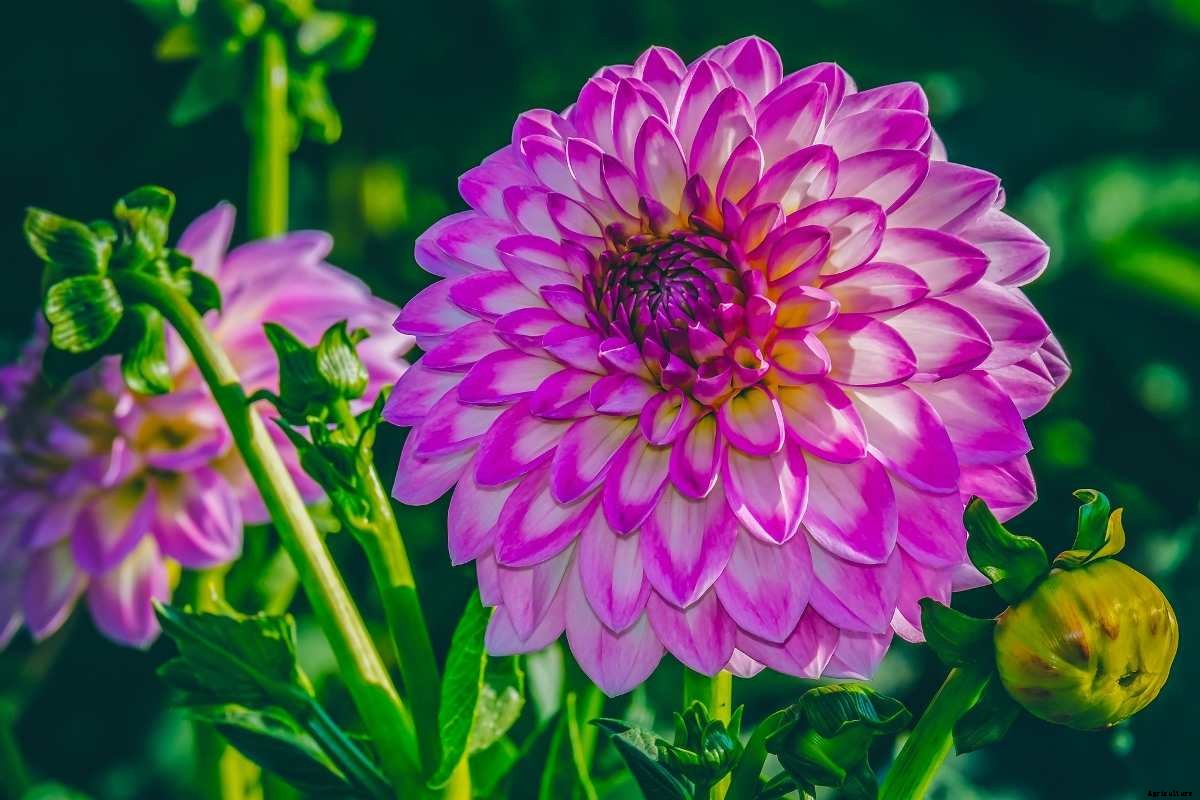
Dahlias flowering plant usually likes rich, well-draining soil with plenty of organic matter. The soil pH should be around 6.5 it is fairly neutral. If you are planting your dahlia tubers in containers, you need to mix in a bit of garden soil for better moisture retention because the potting soil can dry out quickly and the tubers must have moist until they have sufficient roots.
This dahlia flower does very well when they have full sun; it needs at least six to eight hours a day. In hotter or warmer climates, they will do very better with a bit of shade in the peak afternoon hours when the sun is especially very hot and they can risk burning the plants.
For most of the dahlias, you want a very large pot, though it needs not to be very deep. Many varieties of flowers will do very well in a 12- to 14-inches diameter pot and it should also be at least 12 inches deep. Also, you need to make sure that the pot has good drainage because the tubers will rot if left to sit in water.
You should not be too hurrying to plant; dahlia plants will struggle in cold soil. Ground temperature should reach 16°C. You need to wait until all danger of spring frost is past before planting. Some people start tubers indoors in containers or pot a month ahead to get a jump on the season. Medium to dwarf-sized dahlia plants will do very well in containers. You need to order dahlia tubers in early spring.
Especially young plants of dahlia plants do not need a ton of water to survive. Over-watering your plant poses more of a potential issue, as excessive water can cause the plant to rot. Because the roots of the dahlia plant are very close to the surface of the soil, a typical summer rainfall can usually sufficient. If your plant gets less than one inch of rain in seven days or a week, you need to plan to supplement with additional watering. However, with dahlias, it’s most important to never let the soil dry out. They’re not deep-rooted plants. Dry soil equal to a dry plant.
Timing is especially very important when it comes to planting and growing dahlia plants, as they will struggle to establish in cold soil. You need to wait until the final spring frost has passed and the ground temperatures have reached around 15 °C.
Additionally, dahlias like more humidity when being stored as tubers, but they don’t require additional humidity in their environment when growing in the spring and summer outdoors.
Dahlias benefit more from a low-nitrogen liquid fertilizer such as a 5-10-10 or 10-20-20. You need to fertilize after sprouting and then every for 3 to 4 weeks from mid-summer until it reaches early Autumn. You should not over-fertilize, especially with nitrogen content, or you risk small or no flowers, weak tubers, or rot. Dahlias benefit greatly from being treated with fertilizer—the more food they get, the larger roots they’re going to grow, and subsequently the larger (and more numerous) their flowers are going to be. Whatever sort of fertilizer you select, search for one with a coffee nitrogen ratio, and do not fertilize after August.
When your plants are about 1 foot tall, you need to pinch out 3-4 inches of the growing center branch to need to encourage bushier plants and to increase stem count or stem length.
If you want or wish to grow large flowers then try disbudding which means you need to remove the 2 smaller buds next to the central one in the flower cluster. This will allow the plant to put all of its energy into fewer but considerably very larger flowers.
For the taller dahlia plants, you need to insert stakes at planting time. You need to pinch, disbranch, and disbud, and deadhead moderately to produce a new showy display for 3 months or more.
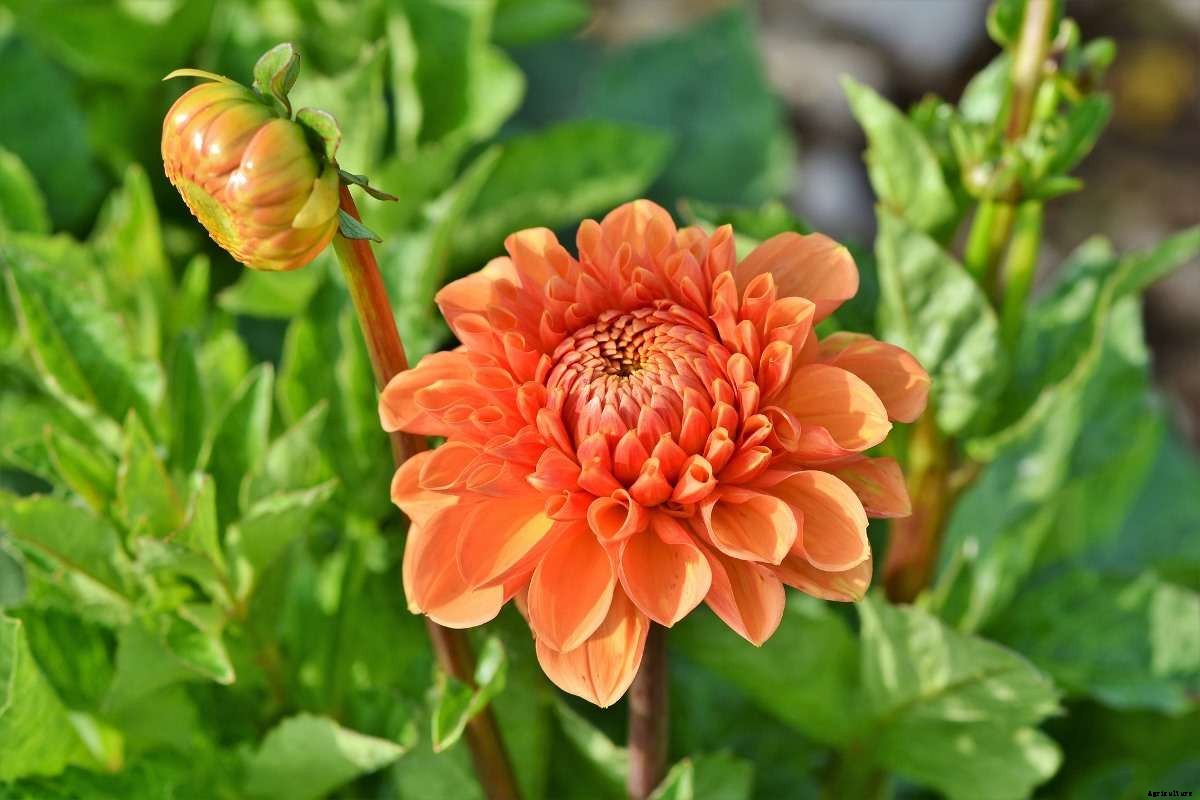
You need to fertilize the dahlia plant monthly with a water-soluble, organic fertilizer that’s formulated for flowers. You need to avoid using a high-nitrogen fertilizer, or you may get lots of green growth with little flowering. You need to mulch with straw or shredded bark to keep weeds to retain moisture. You need to water regularly, especially in dry periods.
Dahlias are tender annuals, but you’ll overwinter them pretty easily. In fall, after the primary frost has blackened the foliage, stop about 2 to 4 inches of top growth, and punctiliously dig tubers without damaging them. Allow tubers to dry for a couple of days during a frost-free location, out of direct sunlight. Once dried, you need to remove the excess soil, leaving 1 to 2 inches of stem. Store each clump of tubers during a ventilated box or basket.
In case if you miss this: Vegetable Gardening At Home In India.
No matter how experienced you’re as a gardener, some issues will arise together with your plants. Those amazing flowers referred to as dahlias are not any exception. Among the foremost common dahlia, diseases are those caused by fungi, like mildew and grey mold. Dahlia flower pests tend to reflect the sap drinking forms but also can encompass leaf eaters like a good array of caterpillars and larvae. Knowing what to observe for is half the battle to keep your prized plants healthy and delightful. You’ll have little chance of giant bunches of flowers if your tubers are scrawny, moldy, or rotting. Start with healthy tubers first. The primary signs of trouble in your plants are often even as they sprout and develop leaves. It’s common to seek out new leaves completely chewed, lacy, and barely still there. The culprits are usually caterpillars or some sort of larvae. These prey on leaf tissue and make Swiss cheese of the foliage, diminishing the plant’s ability to intake solar power. Hand-picking could also be the answer to beating these sorts of problems with dahlia. Fungal issues like mildew are another universal complaint. Avoid overhead watering and use a horticultural fungicide.
The diseases may include:
Numerous insect pests find dahlias delicious. additionally to the caterpillars and larvae, sucking insects are likely to be the foremost important issue with the most widespread offenders being: Aphids, Thrips, Mites, Leafhoppers, these are relatively very tiny pests and they have a habit of sucking sap from the plant can diminish its health, cause stunting and distorted plant parts and even transmit disease. Systemic fertilizers may offer some protection if applied early within the season. Slugs, snails, and cutworms produce bigger damage that’s visually obvious and reduces plant health. Hunt in the dark with a flashlight and use the “squish” method of pest control for cutworms. Slugs and snails could also be controlled with diatomite or slug baits.
You need to cut the dahlia stems when the central flowers of the plant are fully opened and you need to cut them in the morning when the plants are full of water, which will give you the longest-lasting cut flowers. You need to bring a bucket full of water. Then, you need to take a long section of the stem. The stems are sturdy and can make great arrangements.


