
Welcome to Modern Agriculture!

Introduction to Growing Bell Peppers on Terrace (Organically)
Here, today in this article we are going to discuss growing organic bell pepper on the terrace.
In this article, we also discuss the following topics:
The other names for Bell peppers are capsicum or sweet peppers. They belong to the Capsicum annuum family. They are a perennial plant. Bell peppers are available in different colors like yellow, red, green even white, and purple. They can be a delicious addition to any dish. Bell peppers are rich in vitamins C, B6, and A as well. Bell peppers are round and hallow shaped.
When coming to tropical areas bell peppers are a perennial plant but in the cold climate, bell peppers are grown as an annual plant. They don’t have much tolerance for cold climates or cool temperatures. Growing bell peppers are easy but they are very particular about their requirements.
Four types/varieties of bell pepper are listed below:
The red bell pepper is also known as the King of the Grill. They are highly versatile.
The yellow bell peppers are sweet in taste and high in nutritional content. This reason makes many people’s go-to Pepper. Yellow bell peppers are rich in vitamin C. They have a great pop of color.
The orange bell peppers are a good source of antioxidants, fiber, iron, and folic acid. They are used as flavor to salads, dips, and sauces.
Green bell peppers are popular among all the bell peppers. People always pick them from all grocery marts or stores.
Bell pepper plant is a perennial plant and they slightly acidic. The pH level of soil should be 5.8 to 6.5 which means slightly acidic. They prefer rich and loamy soil. They will do best in rich loamy and slightly acidic soil.
Bell peppers need a potting mix, not potting soil. Mostly prefer organic matter-rich, moisture-retentive, well-draining potting mixes. Adding an equal quantity of high-quality compost and peat moss can help the plant to survive long. Peat moss keeps the mixture loose and compost provides nutrients to the plant.
You need to have a good spot to plant your capsicum or bell pepper plant. It is a sun-loving plant and mostly it prefers a sunny spot to grow. Maximum 4-5 hours of sunlight they require. The temperature to grow bell pepper or capsicum plants should be neither too hot nor too cold that means temperature need to be moderate. So, for this reason, you need to choose or pick a sunny spot with partial shade. Optimum temperature falls between 21°C to 26°C required for bell peppers to survive well.
Bell peppers require room to spread their roots. So, Bell pepper plants require a container that is at least 10 to 12 inches deep and wide. Be sure that the container has sufficient drainage holes. In this type of containers or pots, you can easily grow up to 2-3 plants (smaller varieties). If you’re growing bell peppers in a tropical area then you need to avoid using the black color container or pots.
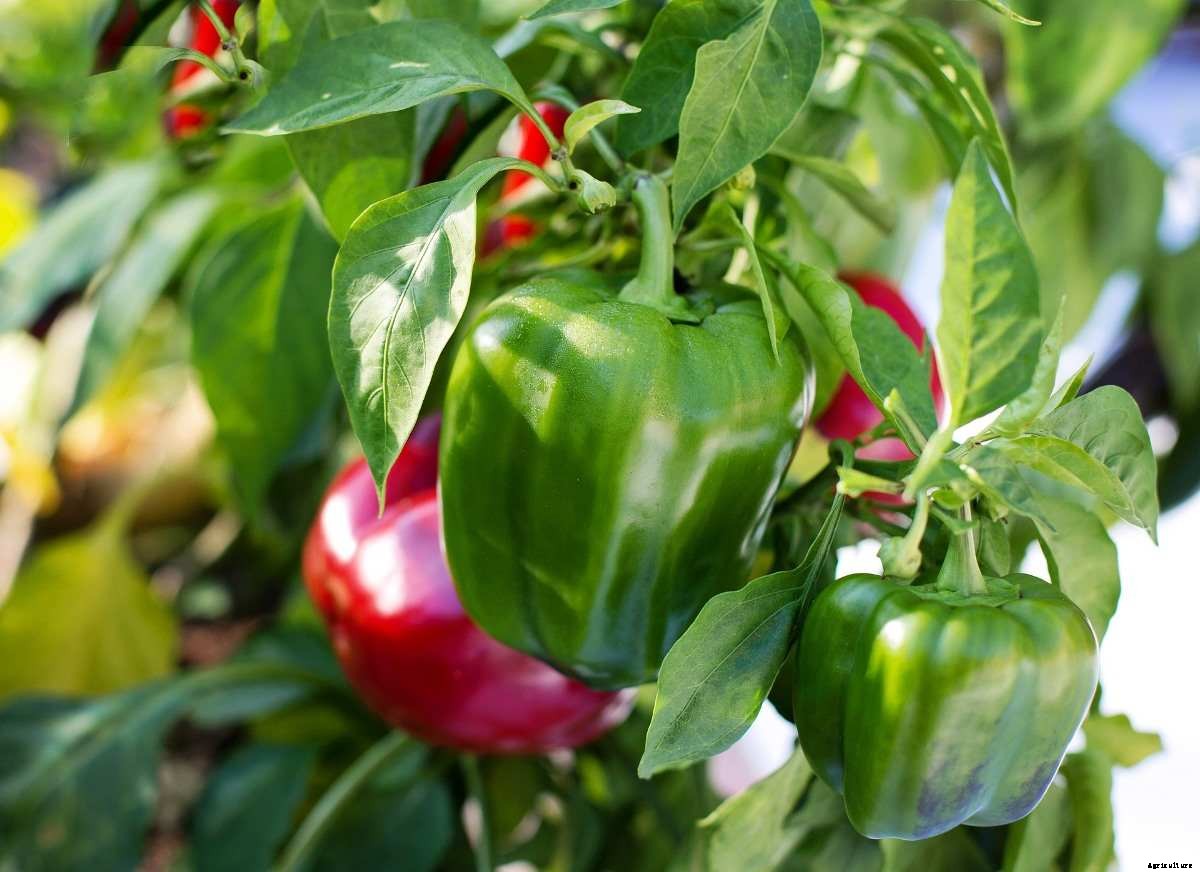
Spacing of bell pepper plant:
Space bell pepper plants from 18 to 24 inches apart. Space the rows from 24 to 36 inches apart.
Watering bell peppers depends on the size of the plant container, and the size of the plant. Bell pepper plants need regular water to survive better, especially during flowering season or time. Using a drip is the best way to water your bell pepper plants. You just need to place this drip at least two inches away from the plant. Keep the soil moist. They need deep watering, about one to two inches per week. Even though bell peppers like warm weather, they will not survive in intense heat, so in climates that are prone to higher temperatures you need to water twice a day if necessary. Dry conditions of soil will cause bitter-tasting peppers. Don’t overwater your plant because overwatering can suffocate the roots or lead to blossom end rot, this appears when the calcium in the soil is depleted. Monitor you’re watering carefully, you need to keep it as balanced as possible.
In case if you miss this: Growing Garlic In Balcony.
Organic fertilizers have a natural blend to keep your bell pepper plants healthy you need to use organic fertilizers listed below:
Mixing fish emulsion with water and spraying it on your pepper plants gives them a rich source of nitrogen. Nitrogen helps to grow plants healthy.
Well-rotted animal manure helps to add slow-release nutrients and this soil will improve its texture. Manure is a favorite for many plants because it boosts plant growth and improves both drainages. Adding manure to the planting hole before planting or spreading manure around the base of pepper plants, provides your bell peppers with rich nutrients.
Compost means the decomposed organic matter, often made from kitchen scraps and yard waste. Same like manure, compost improves the soil while releasing nutrients to the plants. Adding compost to the planting hole before planting or spreading it around your pepper plants gives them a source of nutrients to support the healthy growth of the bell pepper plant.
Gather tea compost into a cloth and soak it in water. The resulting water or tea solution is applied to the soil around the plant which helps to boost the nutrients.
Step 1) pruning early in the season
Use your fingers, small scissor, or cutters when first pruning your pepper plant. You need to pinch off the unwanted matter. If you want to prune by hand you need to first dip your fingers in a solution of powdered milk or water otherwise bacteria may spread. Start pruning when your pepper plant is about 1 foot tall. You need to cut back excess leaves and stems at each node.
Step 2) pruning later in the season
First, prune out inward-facing stems. Pruning out inward-facing stems may help to free up space for growth. Next, remove the first few flowers that appear. First blossoms may take the energy for the fruit. Trim back all non-essential stems a few weeks before the first frost.
Using reusable plastic netting, paper bags, cheesecloth or wire mesh can protect your bell pepper plant from birds on the terrace. These paper bags should be placed over plants or seed rows. The netting needs to be secured close to the plants so that birds don’t find a way through going.
There are lots of homemade products to protect your plants from ants. They are listed below:
Pests and control methods are listed below:
Symptoms – You can observe small soft-bodied insects on the underside of leaves and stems of plants. They are usually green or yellow.
Management – The population of aphids can be reduced by pruning out the dead leaves.
Symptoms – You can observe holes on leaves due to their eggs.
Management – Use organic fertilizer at the required amount to reduce them.
Symptoms – They lay eggs which default plant growth.
Management – Water your plant regularly to reduce them.
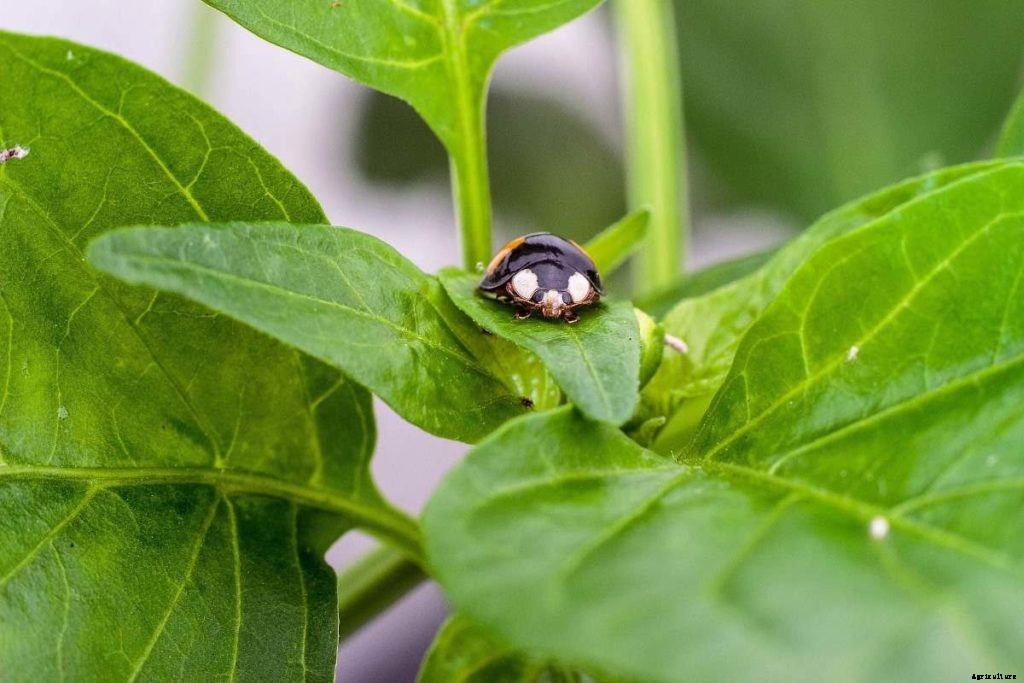
Symptoms – Small holes or pits on the leaves of the plant.
Management – Apply insecticide to reduce this problem.
Symptoms – They are a tiny black and yellow fly that lays eggs on the leaves. So you can observe thin and white winding lines on leaves.
Management – You need to check the plant carefully before planting and need to remove it after harvest.
Symptoms – Leaves will be tied and rolled together with the silk of this insect.
Management – You need to monitor the plant and removes the leaves when you notice this symptom.
Symptoms – when buds turn into fruit this may occur.
Management – You need to remove night shaded plants nearby the bell pepper plant.
Symptoms – You will observe them on flowers and buds.
Management – Avoid planting next to the onion, garlic plants.
Symptoms – You will observe tiny moving dots of the web.
Management – spraying a strong jet of water may help to reduce this problem.
Diseases and control methods are listed below:
Symptoms – There are circular lesions on fruit that contain orange to black concentric rings in the center.
Management – Always need to plant disease-free seeds and transplants.
Symptoms – You will be able to observe small, circular, water-soaked spots on leaves.
Management – Mixing the content of soil should be appropriate.
Symptoms – Collapsing of seeds or seedling.
Management – Avoid planting in poor and wet soil.
Symptoms – You can observe yellow wilting on the upper layer of leaves.
Management – Water at regular intervals.
Symptoms – Sudden browning in stem and leaves of the plant.
Management – Provide promote air circulation.
Symptoms – Plant gets stunted and leaves may turn yellow.
Management – Soil and water requirement should be perfect,
Symptoms – Holes on leaves and stem and fruit may destroy.
Management – Use disease-free transplants.
Symptoms – Small water-soaked area occurring on the side of the fruit.
Management – Maintain the accurate pH of the soil,
Symptoms – This occurs due to a deficiency of magnesium.
Management – Use the correct quantity of fertilizers.
How to Harvest Bell Peppers?
Are growing bell peppers are easy?
Growing bell peppers is easy but they need an accurate temperature to grow.
How long it takes to grow bell peppers?
Nearly it takes 60 to 90 days to grow.
How long can a bell pepper plant live?
They can survive for 5 years if proper care is taken.
At what temperature bell pepper will die?
At 32°F (°C) bell pepper plant may die.
What is the bell pepper yield per plant?
Bell peppers produce 3.6 pounds or 1.6 kg of fruits per plant.


