
Welcome to Modern Agriculture!

Introduction to growing leafy vegetables on terrace
Leafy vegetables are also called leafy greens, salad greens, or vegetable greens. Leafy greens tend to be shallow-rooted plants that do not demand rich soil, but they do need plenty of sunlight and a constant supply of water. While they come from a wide variety of plants, most share a great deal with other leaf vegetables in nutrition and cooking methods. In this article we also discuss below topics;
Most leafy vegetables are easy to grow from seed, but if you’re new to gardening and can’t tell seedlings from weeds, work with purchased seedlings your first year. Growing green leafy vegetables is the most rewarding of all vegetable gardening experiences as they grow fast from seed to harvest taking as less as 30 days at times. There is a wide variety of leafy greens that you can grow at home. Leafy greens grow equally well in containers as their root system is not very deep and prefer containers as they can be transported anywhere. In terrace garden containers, you can plant almost any leafy vegetable. Select large and deep pots, avoid thin and poor quality plastic pots because they heat up quickly and drain poorly.
Using normal garden soil is a bad idea for growing leafy vegetables in pots. Instead, use a good quality potting mix for the healthy growth of vegetable plants and productivity. Leafy vegetables grow best in rich, loamy soil that contains plenty of organic matter. Before you sow or plant out seedlings, use a trowel or hand fork to dig some compost into the top couple inches of soil. Seedlings benefit from being watered right after transplanting with a weak solution of seaweed or fish emulsion.
Pre-planning is key when you are thinking of setting up a terrace garden that will give you a good yield of produce all year round. List of the basic things that you require before you start terrace garden;
If you’re looking for practical as well as a stylish method to make a terrace vegetable garden, then making a raised bed is a great option. You’ll be able to grow a lot of leafy vegetables as compared to containers. Vegetable plants will thrive better, with less care and maintenance.
In case if you miss this: Growing Herbs Organically in the Backyard.
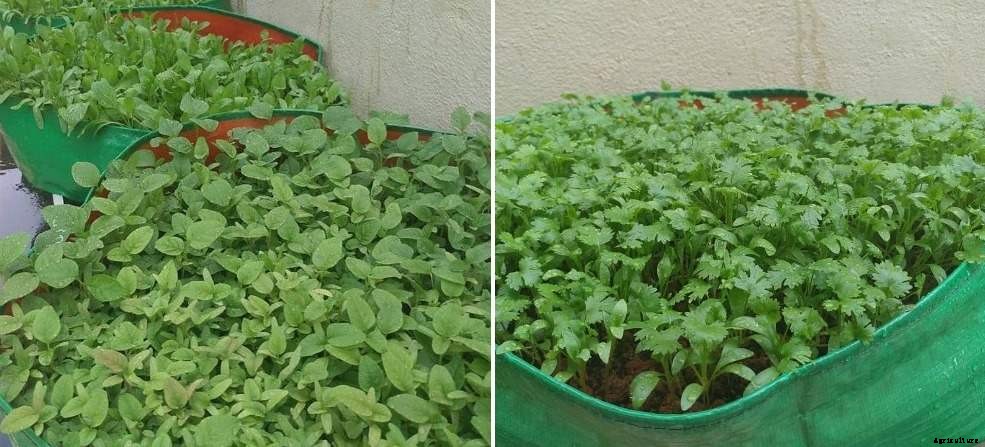
Step 1) Leafy vegetables are more nutritious and have fewer calories than other vegetables, and they’re easy to grow. Most greens can be grown in relatively short, cool growing seasons, making them obtainable for fresh harvest earlier than most other crops. If properly planned, fresh, leafy vegetables can be harvested all season long.
Step 2) Leafy vegetables adapted to spring and fall growing conditions include lettuce, spinach, mustard, collards, endive, and kale. Many new cultivars of these cool-season crops have improved heat tolerance, making them productive into the early summer season.
Step 3) Leafy vegetables grow best in open, level areas where the soil is loose, rich, and well-drained. Although leafy plants tolerate shade better than plants grown for their fruits or roots, at least 6 hours of sunshine daily will help ensure a high-quality harvest. Avoid planting leafy greens in heavy clay soil or sandy soils. The soil pH level should be between 5.8 and 6.8.
Step 4) Start with a good-quality potting soil or seed-starting soil. Fill it an inch or two below the rim to prevent soil, water, even seeds from running over once filled and then watered. Dampen the soil and then sprinkle seeds. If you prefer more orderly arrangements, make a shallow furrow to drop seeds in. Most greens can germinate in temperatures of 4 to 15°C.
Step 5) Leafy vegetables can be planted as early in spring as the soil can be worked. Then, the soil is ready for tilling and planting if a handful of soil crumbles when you squeeze it. If the soil forms a muddy ball when you squeeze it, the soil is still too wet and then forms hard, long-lasting clods if you work it.
Step 6) Seed can be directly sown in the garden for many leafy greens and must be planted at the proper depth to ensure good germination. The seed packet must include information on planting depth and spacing. Crops such as lettuce, spinach, chard kale, and collards can be transplanted to get an early start.
Step7) Home gardeners can choose that approach or decide to harvest a few leaves as they are needed, allowing for a longer harvest season from a single planting. If you harvest plant leaves as needed, harvest the outer, more mature leaves first, leaving the young, inner leaves to continue growing.
Lettuce and other salad greens are shallow-rooted and produce rapidly. They require continuous access to lots of water to produce tender, succulent leaves. Keep the soil consistently moist so the vegetable plants don’t get stressed. If summers are hot and dry, invest in a soaker hose or dripper line. Here list of leafy vegetables for terrace garden;
Chard – Chard planted from seed requires thinning to one plant every 12 inches. Though, use a small pair of scissors to thin seedlings that are growing too close together. About 6 weeks after planting begin harvesting leaves as you need them in the kitchen, twisting off outer leaves 2 or 3 at a time.
Leaf Amaranth – Leaf Amaranth is similar to Spinach in the way it is grown only that it is harder than spinach and resists medium to harsh sunlight. The plant leaves are used just like spinach and can be used in Chinese cuisine for stir fry dishes and soups. Indian cooking uses them for oh so many dishes and the tangy leaves just lend enough flavor to the dish.
Fenugreek – Fenugreek or Methi is easy to grow again and the average Indian doesn’t even have to go buy seeds for it. Methi seeds that we use for cooking at home can be used for growing Methi plants. Fenugreek is used for several Indian dishes. One can harvest as soon as 2 to 3 weeks post sowing and the whole plant is plucked out in most cases.
Kale – The most vigorous grower in the cabbage family, kale plant leaves are packed with vitamins A, C and K. Kale easy to grow from seeds or purchased seedlings, just four or five plants will provide an abundant supply for cooking or green smoothies.
Spinach – The rich, hearty flavor of crispy young spinach plant leaves lends well to salads, both cooked and raw. And the best part, growing spinach plants in pots is one of the easiest things.
Celery – This popular low-calorie vegetable is good to go in salads. It’s good for weight watchers and also helps in improving digestion; it is a member of the same family that includes carrots, parsnips, and parsley.
Swiss chard – Swiss chard has glossy green color leaves borne on vivid leaf stalks that are stunning to look and good to eat. The delicate baby leaves can be used to brighten up the salads, while the mature ones can be tossed in soups and their crispy stalks are an attractive addition to stir-fries.
Radicchio – Growing radicchio is similar to lettuce as belong to the daisy family. Start the seeds in spring and again in summer for the fall harvest.
Arugula – Growing arugula in pots is easy. You can grow it in almost every climate, though planting time can differ. Make sure to use a quality potting soil. Also, space out the plants 4 to 6 inches apart, when they grow a bit tall. Start harvesting the mature greens after 6 weeks. It performs well in moderate conditions and bolts rather quickly in sultry weather.
Once seedlings are up, you can water less, but more deeply to help the greens establish roots. It can still help to thin seedlings, at least in areas of the container where the leafy vegetable plants are bunched up. One of the biggest benefits of growing cool-weather leafy greens in containers is flexibility. As the weather warms or shadows change, you can move the container to a spot that gets afternoon sun, or to the north patio of your home to extend the plant’s season.
You should not miss this: Preparation of Organic Fertilizer, Methods, and Benefits.
We need food and water to grow and survive, plants require sunlight and water to grow and survive. It is crucial to monitor the sunlight and water intake of plants as any discrepancy in the amount of sunlight or water can lead to the death of plants. Listed below are key points that you need to always keep in mind while watering plants in your terrace garden.
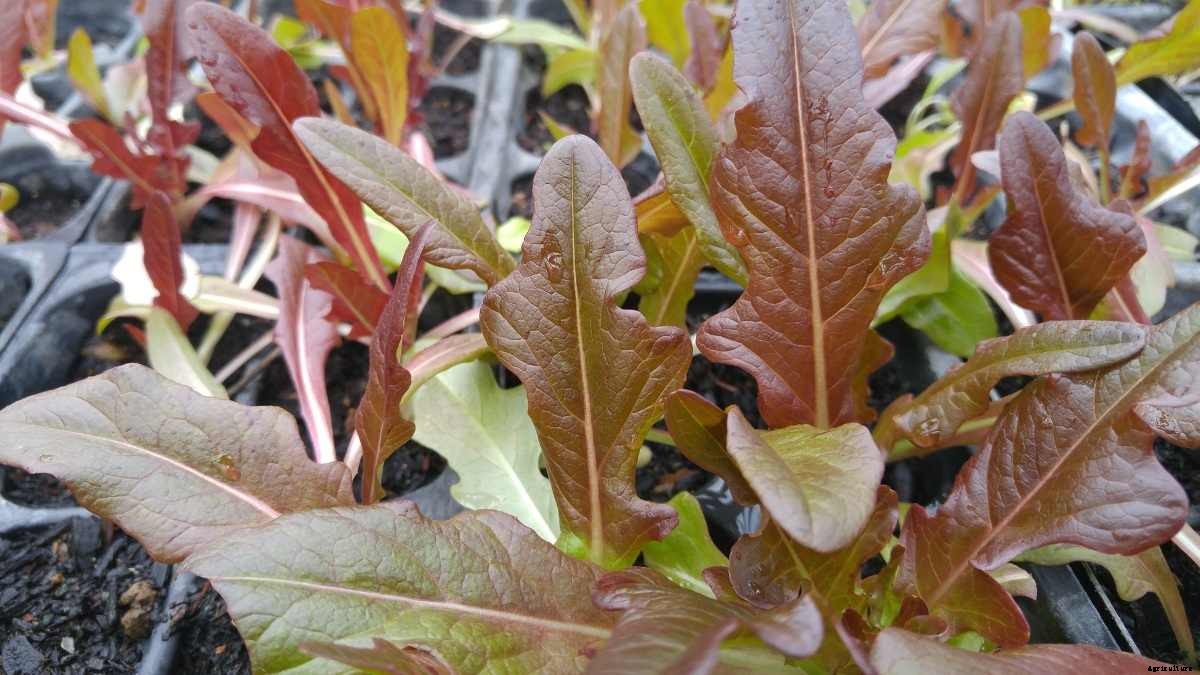
There are different ways to harvest salad greens. In all cases, you want to make a clean cut using a knife or use scissors. Most leafy greens will re-grow after cutting, as long as you leave about a half-inch of the plant behind. Individual leaves may be picked, entire heads can be cut, cutting mixes and leaf lettuce may be cropped off with scissors.
You might also like the Vegetable Farming Profit Per Acre, Model Project Report.


