
Welcome to Modern Agriculture!

Introduction to Turnip seed germination procedure
Growing Turnips indoors can be a fun hobby, it can save you money, and you won’t have to worry about soil-borne diseases and poor soil conditions. Turnip (Brassica rapa, variety rapa) is also known as white Turnip, a hardy biennial plant in the mustard family growing for its fleshy roots and tender growing tops. Grow Turnips in a sunny position that receives at least 6 hours of direct sunlight and you can also grow them in partial sunlight as well but this will reduce productivity. In this article we also discussed below topics;
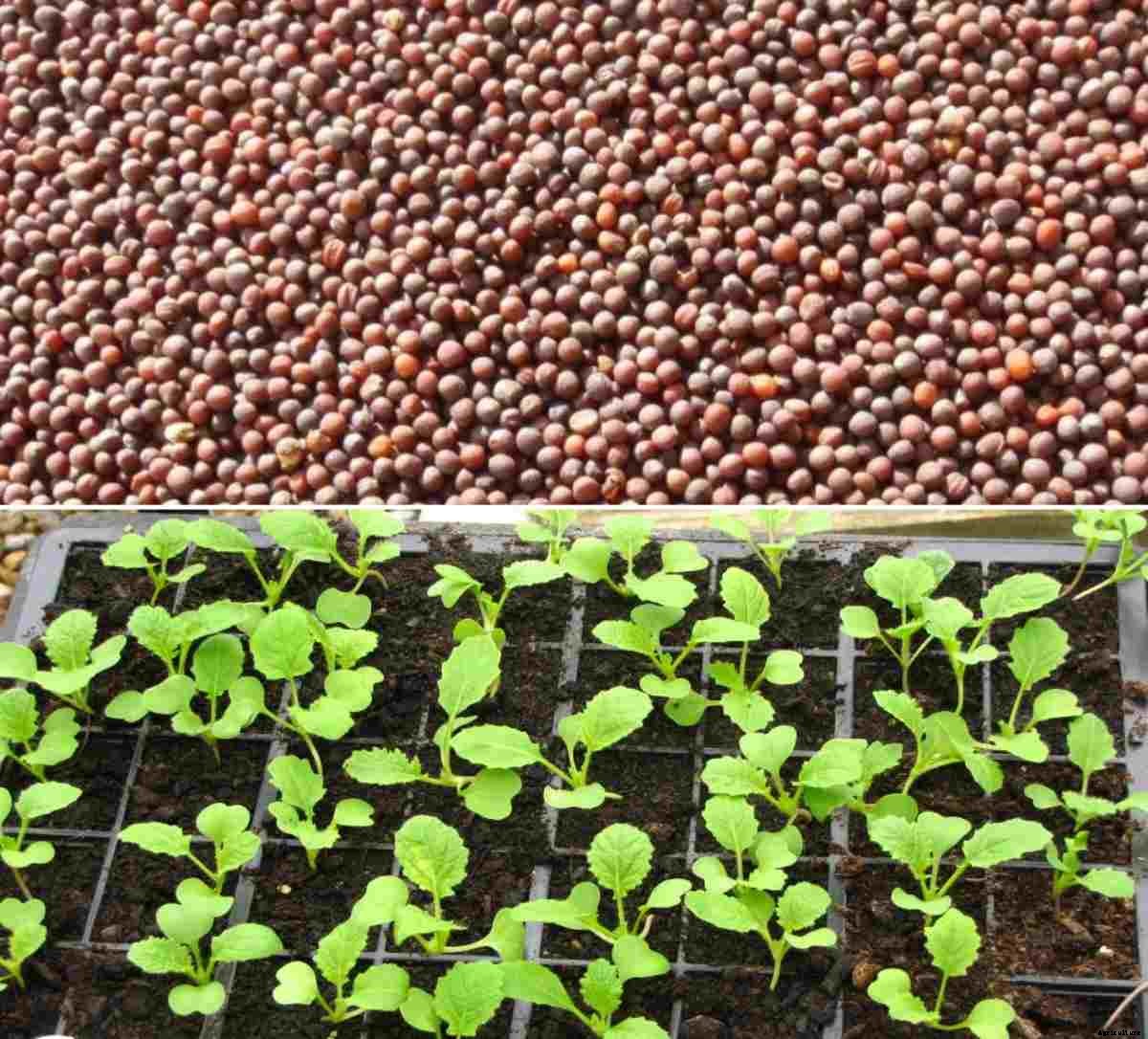
Use rich, well-drained soil for growing Turnips. To ensure the root growth is unobstructed, use a good quality potting mix, or make your own that is more loamy than clayey and have no stones. You can add compost or well-rotted manure while planting Turnips. You can add organic materials like peat moss, compost, aged manure, or coconut coir. Using perlite or vermiculite is also an option. Turnips grow best in mildly acidic soils, with an ideal pH level between 6.0 and 6.5. If necessary, you can raise the pH of soil by incorporating lime into the soil.
Turnip plant is a cool-season crop that grows best in short days. A minimum temperature of 5°C and a maximum of 32°C work best for them. For optimum Turnip seed germination temperature, keep them around 13-30°C. Below or above this range, seeds germinate slowly. Turnip seeds will germinate in 3 to 10 days.
The spacing of Turnip plants/seed spacing of Turnips
Thining should be done when the young Turnips grow a few inches tall while maintaining the space of 4-5 inches. For growing, leafy greens, space them up to 2 to 3 inches. Turnips do not transplant well and sow seed directly in the garden ½ inch deep and 1 inch apart in wide rows, thin successful seedlings from 4 to 6 inches apart. Space wide rows about 12 to 24 inches apart and thin Turnips grown for greens from 2 to 3 inches apart.
Sow Turnip seeds in early spring 4 to 6 weeks before the last expected frost for a summer harvest. Sow 6 to 8 weeks before the first expected frost in autumn for an autumn and winter harvest. Sow seeds ½ inches (13 mm) deep. Seeds will germinate in 3 to 10 days in an optimum soil temperature of 16°C. Space plants 2 to 6 inches apart for roots; 1 to 4 inches apart for greens.
In case if you miss this: Radish Seed Germination, Time, Temperature, Procedure.
For summer crops, start seeds early in spring, and for fall crops, start the seeds in midsummer, about 2 months before the first expected frost. Turnip seeds can germinate at a temperature as low as 4°C. Sow the seeds about 1 inch apart and cover them with about 1/4- to 1/2-inch layer of soil. Space the rows at least 1 foot apart. Water the soil regularly to keep it moist throughout the seed germination period. When the seedlings are 4 inches tall, thin them so that the plants are spaced about 2 to 4 inches apart.
The seeds can be directly planted outside, and need to be spaced 20 cm apart from each other. Usually, Turnips are planted in rows which are spaced about 30 cm from each other. Usually, no fertilizer is required for this plant. The Turnip seeds are sown directly in the main field. When the plants are 10 to 15 days old, thinning is done to keep them at 10-15 cm in rows. Sowing is done in ridges by opening shallow furrows. In normal cases, seeds germinate after 4 to 6 days of sowing.
For sowing of a one-acre land seed rate of 2 to 3 kg is sufficient. Before sowing treats seed with Thiram about 3gm per kg of Turnip seeds to protect the crop from crown rot.
Plant Turnip seeds about 1/2-inch deep in soil-filled containers. Place containers outside in a sunny spot or near a sunny window when growing Turnips indoors. Keep soil moist but not wet and the Turnip seeds will sprout within 10 to 14 days. Thin seedlings once they reach about 3 to 4 inches high. Turnips must be thinned to one plant for every 8 inches of space.
Most plants will be ready for harvest within 35 to 60 days after planting. When planting in containers, it easier to keep the correct temperature, so you can plant more flexibly. It is important that Turnips get plenty of sunlight, so planting in the spring or late summer is the best time.
Sow seeds about ½-inch from the top. Plant 2 to 3 turnip seeds in the middle of the container about 1 inch apart. After 2 weeks, they must be about 3 inches high. Pull out the smaller seedlings, allowing just one to grow to maturity.
Sow Turnip seed onto fertile, well-drained soil. Turnip seeds sprout best, within a week or two, between 15 and 21°C, they take longer to sprout. Keep soil moist and the Turnip plants will grow quickly, being ready for harvest between 40 and 60 days after planting a seed.
You may also like Dragon Fruit Seed Germination, Time Period, Process.
This is a delicious and nutritious vegetable, so its pests and insects tend to bother. Slugs and snails, aphids, cutworms, beetles, and root maggots, etc. are the main causes of the problem. Since this plant grows very rapidly and is harvested early. So, there is no major problem of infection in the home garden. As long as you notice a problem, the plant gets mature till then. Mildew and a white blister can affect the plant. However, it is infrequent.
Harvest Turnip leaves when they reach about 4 to 6 inches tall. Use sharp garden or kitchen scissors and cut the leaf near the base of the Turnip plant. To keep plants productive throughout the season, trim off no more than one-third of the leaves from a single Turnip plant. Bulbs can be harvested anytime they reach 1 to 2 inches in diameter. To harvest Turnip, wet soil thoroughly grasps plant at the base, then rock gently back and forth until Turnip lifts up out of the soil.
Brown spots in Turnip roots are generally due to boron deficiency. To prevent this add one pound of boron per acre.
Turnip seeds are sown straight into the garden, as transplanting seedlings can effect in interrupting root development or damage. Though, careful handling of seedlings, with minimal root disturbance, can make transplants successful.
Turnips do not require much care, but consistent soil moisture is important. Keep the soil lightly moist, watering at a rate of about 1 inch per week to prevent the roots from becoming tough and bitter.
Turnip plants grow best in well-structured sandy loam. Loam is soil that contains an equal amount of sand, silt, and clay. Sandy loam has slightly more sand than silt and clay soil.
A Turnip crop is fairly easy to grow and needs loose, fertile soil rich in compost. Stored Turnips often try to grow new plant leaves and roots over time, and these become bitter with a woody texture. Then, sprouting Turnips are not good to eat, but you can plant them in the garden to grow a crop of Turnip greens.
Turnips are grown as a root vegetable or for their green leaves, plant 5 to 10 Turnip plants per household member.
Yes, Turnips are easy to grow; no they don’t come back every year. It can take a few seasons for the deer to realize that they like the Turnips.
Turnips may be dipped in warm wax to coat them entirely. This helps prevent moisture loss if they are put in cold storage for several months, usually lasting between 2 and 4 months. If stored in late fall, they usually last the winter.
For a better percentage of seed germination, get quality seeds from the certified seed sources. You may also like the Soybean Seed Germination, Time, Temperature, Process.


