Introduction: Hello Gardeners today we are here with a great in formation of container gardening for herbs. Growing herbs in containers are one of the most enjoyable and simple techniques for starting an herb garden. Herbs are one of the most rewarding container crops and also easy to grow.
Benefits of growing herbs in containers
There are several benefits to growing herbs in containers;
Growing herbs in containers will keep aggressive spreaders, like mint and lemon balm, under control and away from garden beds.
Maintenance is more convenient with containers, and there are fewer problems with weeds and critters getting into your crop.
Herb container gardening allows you to enjoy herbs even when you don’t have enough soil in the backyard. It’s also great for urban dwellings like apartments, dormitories, and condominiums, where the luxury of space is not often presented.
You can have a flexible garden where you can simply move potted herbs around. Move them to a more shady area when it gets too hot, or move them when you feel like re-designing garden.
Pots or containers act like barriers that can protect herbs from weeds, pests, and diseases. It’s a good way to keep invasive herbs under control.
If you’re planting ornamental herbs, what better method to make them more beautiful than to plant them in beautiful, ornamental pots. They come in several shapes, sizes, and designs.
You can simply bring your potted herbs indoors to protect them from the frost.
A step be step guide to container gardening for herbs
You should not miss the Bonsai Tree Types, Bonsai Gardening, Bonsai Care.
Herbs will thrive in container gardens
List of the herbs for container gardening;
Basil – Basil is a warm-weather annual herb and thrives when grown in containers and window-boxes. Many gardeners struggle to produce great basil but give it well-drained soil and plenty of sunshine and it’s usually smooth sailing.
Sage – Sage is preferred for seasoning poultry. Best grown in full sun and moist, well-drained potting mix, it is perfect for adding structure to container gardens.
Mint – Mint is such a vigorous plant that it will become invasive unless it is confined in a container. Grow it in full sun or partial shade. Mint can grow in various soil types and degrees of sunlight, but it produces the best leaves in rich soil.
Rosemary – Growing Rosemary in containers makes it easy to bring indoors to a sunny windowsill once the days start to cool down in mid-autumn. Rosemary is a Mediterranean evergreen shrub, likes hot, dry, sunny spots. Quick-draining soil is the key to excellent growth. Maintain the soil moist but never wet when grown indoors.
Thyme – Thyme is one of the best herbs for container gardening and it’s low maintenance, drought-tolerant, and can take a bit of neglect. And, it looks fantastic when planted at the front of a container where the tiny leaves can mound over the edge of the pot. Give it full sun requirement and don’t overwater; it’s drought-resistant and prefers its soil on the dry side.
Chives – Chives are grassy, clump-forming perennials with hollow plant leaves. Essentially tiny onions, chives are developed for their leaves and blooms rather than their bulbs. Chives produce well in container gardens.
Cilantro or Coriander – Cilantro is also known as coriander, can be used for its tangy leaves or its dried, ground seeds. Plant this annual herb in well-drained soil. Coriander grows best in sun, although it tolerates some shade. It has a long taproot, place it in a container garden that is at least 12 inches deep.
Oregano – Oregano is an enthusiastic grower in the garden and putting it in a container is an easy and beautiful way to control its growth. The small leaves are packed with flavor and perfect for topping homemade pizza and bruschetta, as well as adding to vinaigrettes and marinades.
Lemon balm – Lemon balm is an old-fashioned favorite that spreads freely and self-sows readily is perfect for container gardens so it doesn’t take over the yard. Plant this Lemon balm in partial shade or full sun and moist, rich, well-drained potting mix.
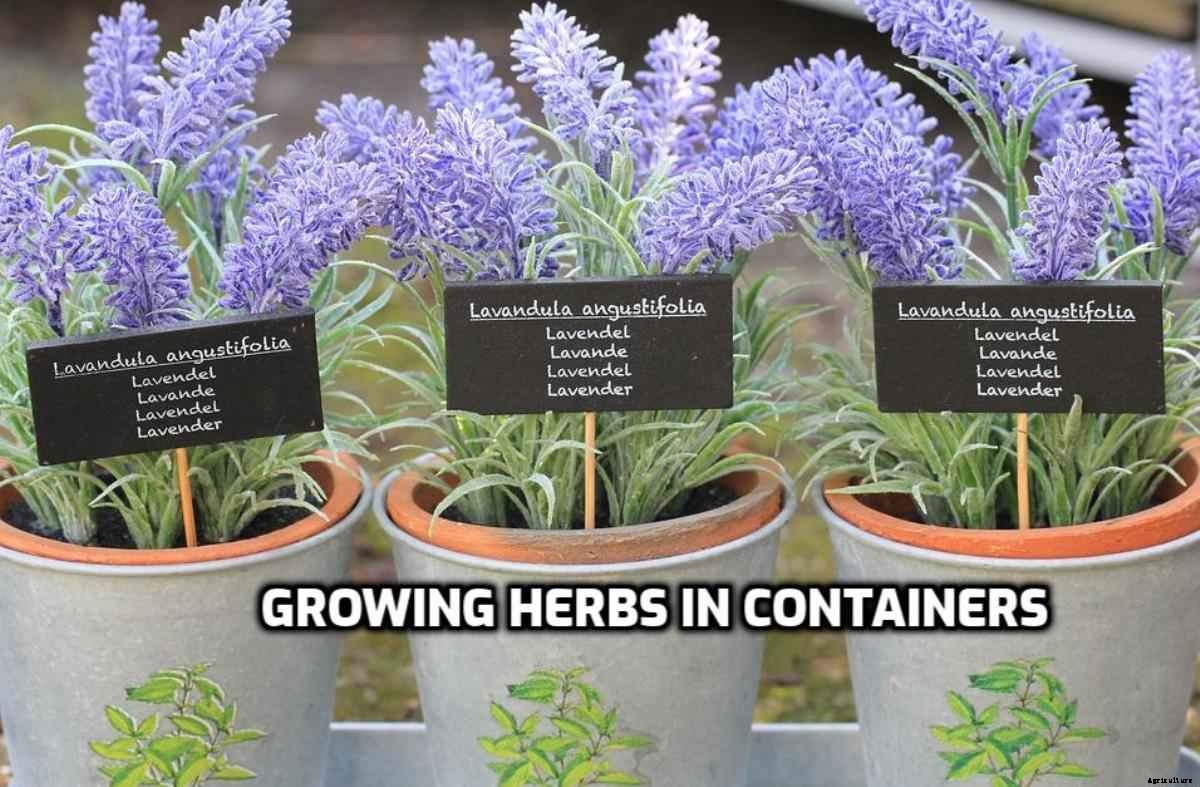
Lavender – It is a bushy perennial shrub that does best in full sun and well-drained potting mix. Keep it on the dry side and avoid over fertilizer.
Planning your Herb container
You can grow as different types of herbs in one container as you want, as long as you make sure that all the herbs in a single pot share the same sun, water, and soil preferences. For example, rosemary likes it hot and dry, while parsley requires steady moisture. Therefore, they don’t work well together in the same container.
Don’t forget that herbs can serve as decorative elements in any container garden, adding texture and scent when mixed with annuals or perennials. Again, to pair them with plants that have the same requirements for light and water.
You may be interested in Home Vegetable Garden Ideas.
Find the best spot for a container herb garden
Here we discuss growing herbs in containers;
To grow well indoors, herbs require as much natural light as possible.
For best results, most herb varieties need at least 6 hours of sun per day. If herbs growing indoors, many plants will do fine on a south-facing windowsill.
If the amount of light is not enough, you can supplement light with fluorescent lamps or a grow light, particularly during the winter months.
When selecting herb plants for containers, the amount of light that is obtainable for a particular spot and read the lighting requirements found on individual seed packets. If planting several containers in one area, or several herb plants in a pot, do not mix plants with different lighting requirements.
South-facing windows have more light and most hours of sun during the short, cool winter days. Good choices for these locations are plants that come from tropical and semi-tropical climates, for example, rosemary, thyme, basil, bay laurel, and oregano.
East- and west-facing windows receive bright sun for about 6 hours in the morning or afternoon, but east windows remain cooler. Good plant choices include mint, parsley, chives, and chervil, which thrive with less intense light and prefer the cooler temperatures.
Full-spectrum grows lights are ideal for all types of herbs. Place plants within a foot of the bulbs or follow the instructions provided with lights. Start by having the lights on for 12 to 16 hours a day for bright-light plants and adjust as required.
Pick the container that works best for herb plants
Whether you’re growing herbs in containers, you’ll find the greatest success when you use containers with adequate drainage. Most containers come with drainage holes, but they can easily be added to wooden or plastic pots.
For indoor container gardening, you may want to select ornamental pots that can double as decorations in your home. After you’ve considered all these factors, make sure that containers have enough drainage holes. Drainage holes should be small enough to keep the soil in the pot, but large enough to drain water from the soil.
Small containers can hold individual herb plants, while the larger sizes are perfect for an instant herb garden on decks and patios.
Some herb plants thrive in self-watering containers because they like a constant level of moisture. Plants such as chives, parsley, marjoram, and mint would be particularly good herbs for growing in self-watering pots. Other herbs, such as oregano, thyme, rosemary, and basil, will prefer to dry out between watering so wouldn’t be good candidates for self-watering containers.
Best pot sizes for growing herbs
A 14-inch diameter pot normally works for any herb type and an 8-inch diameter is a minimum size you should use or you run the risk of cramping the plant’s roots. If you are direct-seeding, look for compact different varieties of herbs, which need the least room to roam.
Most herbs require 6 hours of sunlight daily, so if you live in an area that requires you to grow herbs indoors and out, a pot that’s too large can make transport tedious and take up more counter space than necessary.
You can also check the Aeroponic System Benefits, Components.
Soil or growing medium for potted herbs
Herbs grown in pots or containers need a well-draining potting mix, and organic enriched potting mix or coco coir based soilless mix. Just digging up some dirt from the outdoor garden and throwing it into a pot is the surest way to fail when growing herbs in containers.
There are many new “soilless” growing mediums obtainable today that are suitable for growing herbs in containers, provided a regular feeding regimen with a complete mineral plant nutrient is provided. These can include Grodan rock wool grow cubes, coco coir peat, Grow stones (a recycled glass growing medium), and others.
Fill pots with a good quality potting soil
To fill your containers with garden soil, but garden soil quickly compacts in pots, reducing soil drainage and porosity. Fill pots with potting soil or a combination of potting soil and aged compost. Worm castings are also an easy way to boost soil nutrients and moisture retention and you need to add a handful to containers as a little goes a long way.
Planting and caring for herbs in containers
Help your container herbs thrive with the right soil, sun, and feeding. Use high-quality potting soil because most herbs require good drainage. Also, make sure that the container has drainage holes so you don’t drown your herbs.
Most herbs need full sun for at least 6 hours a day. That said, containers can bake on a hot day, so if you live somewhere where temperatures soar, your herb containers may require to be shaded during the hottest part of the day.
Be careful not to over-fertilize your herb plants. Most don’t like it and some of the herbs will simply die if they are fussed with and overfed. Some herbs, for example, thyme and oregano thrive on neglect and won’t be as tasty if they are given too much attention, water, or food.
Check herb plants for common indoor insect pests such as aphids, spider mites, thrips, and whiteflies, and apply control measures when needed.
Apply water consistently
Water requirements differ from plant to plant. Apply water until it starts to drip from the pot drainage holes. Do not over-fertilize your herbs. Certain herbs prefer well-drained soil (thyme, oregano, rosemary), while others like more moisture (mint, coriander, lemon balm). Make sure the container herb garden is near a water source.
Fertilize as necessary
Potted plants need more fertilizer because they deplete nutrients quicker than those grown in the ground. Mix in compost with the potting soil, and use slow-release organic fertilizers to provide a more steady supply of nutrients.
Picking your container gardening herbs
Carefully, pick herbs often to keep new growth coming. When you harvest leaves on herbs that grow in clumps like chives, lemongrass, cilantro, or parsley, pick outer leaves first, working way toward the center of the plant.
For herbs that have an upright stem with a growing point, that are mint, stevia, basil, or oregano, snip individual branches.
Leafy herbs need to be harvested when the leaf quality is optimal and this can be found by the flower buds when they first appear. Harvest by removing top leaves and stems by the sharp knife.
When harvesting annual leafy herbs, leave 4 to 6 inches of shoots on the plant for better re-growth. Harvest perennial herbs less heavily by removing the top third of the plant as compared to annual herbs since future harvests will depend on new growth. All herbs can be used fresh or dried.
You may also like Ring-pit Method of Sugarcane Cultivation.