
Welcome to Modern Agriculture!

Hello gardeners today we discuss the topic of shade net gardening tips, advantages. Summers with their hot dry winds can create very harsh conditions in which to grow gardening vegetables. So we built shade net houses to protect our vegetables. A Shade net house is a structure enclosed by agro nets or any other woven material to allow required sunlight, moisture and air to pass through the gaps. It is also called as Shade house or Net House. Shade cover can be used to create shade houses or net houses. Shade houses generally have shade cloth over it. They are mainly used to protect cultivated plants from excessive heat, light or dryness. Different shade cloth can be available in different colors and percentages to protect plants from sun, frost, etc.
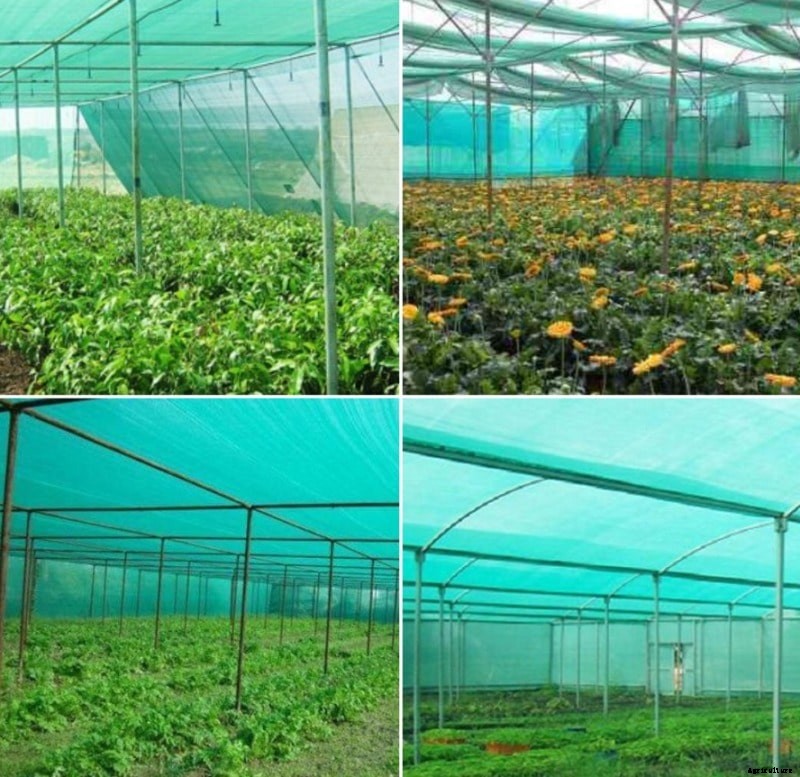
Several kinds of vegetables need a different amount of sunlight. To know how much sunlight vegetable needs, here are the basic sunlight conditions to grow vegetables:
This is the part of the garden that receives direct light (usually 6 or more hours a day between 10 am and 6 pm) from the sun. Normally, fruiting vegetables such as tomatoes, cucumbers, squash, cucumbers, eggplants, and peppers need to be planted in full sun areas where they obtain the most sunlight during the day.
Partial shade or partial sun refers to the portion of the garden that obtains 3-6 hours of sun or shade for the rest of the day. Root vegetables which contain beets, carrots and potatoes can be grown in partial shade areas.
Light shade areas obtain less sunlight or reflected light during the day. It usually receives about 2 to 4 hours of sunlight per day. Leafy vegetables such as spinach, chards, and salad greens are the most tolerant plants that you can grow in light shade places.
List of vegetables grown in the shade net gardening;
Root crops and leafy vegetables can thrive in shade houses. Here is a list of vegetables that are perfect for shade net gardening.
A shade net is a structure that is framed and made using materials like wood or bamboo, steel pipes, and iron.
You may also like the Growing Jasmine Hydroponically.
Flat Roof Shade Net House is developed to overcome the problems of severe sunlight in summer, to catch CO2 level in the night to minimize infection of pests. So many parameters are controlled such as temperature, humidity, light and CO2 level in this net house.
They are very easy to install and requires little maintenance. Any kind of vegetables and flowers can be grown in this net house.
The shade net cover is mostly used to prevent the overheating of the soil and the plants, during the warmer months. And, also, it prevents the spread of some diseases, by blocking the insects from coming in contact with the plants.
The main function of shade covers is to protect plants from the harmful effects of the sun. Although sunlight is essential for plant growth, not all plants require the full sun. There are varying requirements of sunlight depending upon the variety of the plant.
You must choose a shade net cover according to the environment you are planning to grow your plants in. You can decide Shad net cover about the heat and light requirements of your plants.
Also, in addition to all the protection benefits, shade covers come in a wide range of thickness, style, and colors that you can purchase, according to plant and garden theme requirements.
Fully enclosed shade-house advantages are given below;
List of materials used to build the shade house is;
You should not miss the Growing Potato from Seed.
Vegetables that are grown in shade net houses are most likely to be succulent and free of the bitter taste. To effectively grow vegetables in a shade house, look for areas which receive sunlight above ground level. Areas that are shaded in the morning but sunny by afternoon are perfect for climbing vegetables like beans, peas, squashes, and cucumbers.
Use Good Soil: If you are going to challenge shade-tolerant crops to grow in partial shade, provide them with good-quality soil with plenty of nutritious compost. If tree roots are a major problem, consider using a raised bed or growing vegetables in containers.
Moisture Requirements: The watering needs of shade garden will be different than a garden in full sun. Moisture doesn’t evaporate as quickly in the shade so you could not need to water as often. However, if the shade garden is near trees, you may need to water more frequently since your plants will be competing with trees for moisture. Also, the leafy canopy can prevent rain from reaching plants. Water when the garden soil feels dry and mulch to conserve moisture.
Here are some useful tips that can help you grow plants in a shade net;
You may be interested in Bottle Gourd Cultivation Income.


