
Welcome to Modern Agriculture!

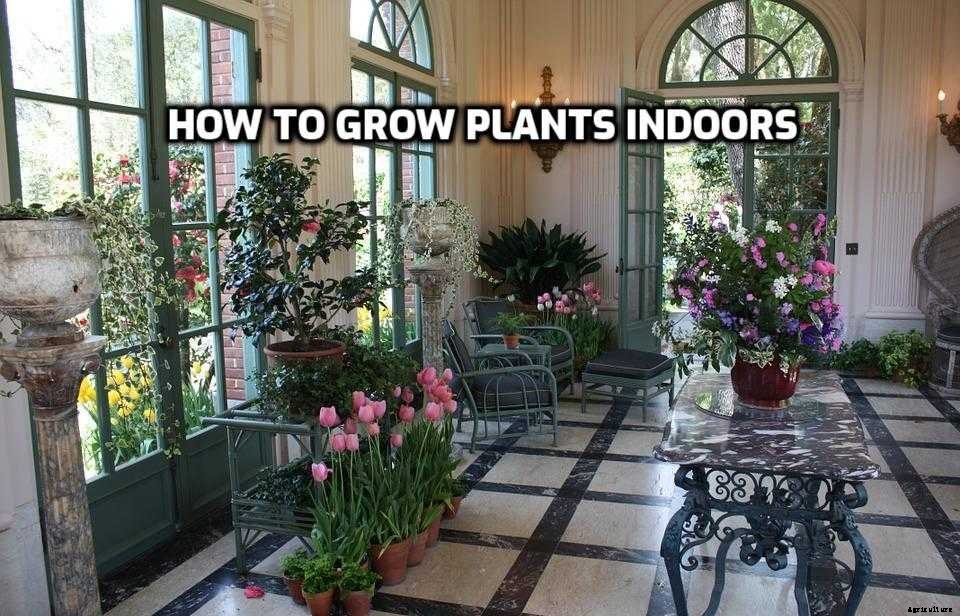
Introduction: Indoor gardening is nothing more than the act of just growing plants indoors. There are several types of indoor gardening, including container gardening, hydroponic gardening, controlled environment agriculture, vertical farms, and more. Indoor gardens can be grown in any indoor space such as homes, offices, schools, and restaurants.
In Indoor garden, plants can grow all year without a worry of temperature changes or harsh conditions. Indoor gardening requires less of a financial and time commitment and allows beginner gardeners to ease into the daily hobby.
Some popular vegetables, herbs, and fruits you can easily grow with your Indoor gardening.
Choose plants adapted to climate, soil, and sunlight. Here are a few easy-to-grow gardening plants for beginners;
Basil, oregano, parsley, thyme, and tarragon are all excellent herbs for indoor gardening.
Squash, Tomatoes, Bell Peppers, Lettuce, Cucumbers, Lemons, and Kale are some vegetables for indoor gardening
Begonia, Bromeliads, African violet, Poinsettia, Jasmine, Impatiens, Lavender, Geranium Pelargonium, Hibiscus, and Ixora are some flowers for growing indoors.
You should not miss the Growing Roses from Cuttings.
Below are the most important Indoor gardening tips for beginners;
Indoor gardens need a light source, fertilizer, and distilled water. The light source can be artificial or a sunny location within the house. Use a quality, nutrient-rich potting soil in the container. Plants will need a container that allows room for growth, or they will need to be moved to something larger if roots begin to overlap. One of the important reasons for growing an indoor garden is the lack of space to grow one outside. You can bring the garden inside; no matter how much space you have obtainable, indoor gardening will be there to slip into your life and house.
Almost all vegetables, herbs and most flowers need 6 to 8 hours of full sun each day. So you want to observe yard throughout the day to figure out which spots receive full sun versus partial or full shade and don’t despair if a lot is largely shady. Choose a relatively flat spot for the garden because it’s more difficult, time-consuming, and expensive to deal with a sloping garden.
Indoor container gardening is a flexible type of indoor gardening. With a few recyclable containers or store-bought ones, you can make an indoor garden with little to no fuss, and you can also decide where to put these planters. Some gardening containers are made to be attached to one place, but many of them can be moved anywhere you want at any time.
You can develop many plants in pots or containers, including vegetables, herbs, flowers, fruit trees, berries, and shrubs. When gardening in pots, use a pot that’s large enough for the plant it’s hosting, and fill it with Miracle-Gro, Moisture Control, and Potting Mix. Not only is it mainly formulated to help plants in pots thrive, but it helps protect against over- and under-watering.
An optimum place for indoor plants is one with indirect sunlight. Though several plants thrive in full sun, many will burn with too much light. If you lack a natural light source, you’ll want to use artificial light. Rooms with white color walls help reflect light to plants. Fluorescent lighting can be used, but several indoor gardeners rely on high-intensity discharge or HID, lights hanging above plants.
Light is very essential for Indoor gardening. Plants that are grown indoor gardens require plenty of light to grow and especially to produce a healthy harvest. Common house plants don’t depend so much on appropriate lighting, but when gardening a plant to harvest; plants will need more light. Plants breathe in the carbon dioxide in the air around them to use for the photosynthesis method.
You may also lie the Growing Mint from Cuttings.
Nearly all Indoor plants prefer a humidity level of 50% or more. Houseplants may suffer, especially during the winter season, from a lack of humidity. A simple technique to increase the humidity is to place plants in a pebble tray. This is a tray lined with pebbles and filled with enough water to reach below the pebble’s surface. The water evaporates from the tray up into the air around the indoor plants increasing the relative humidity.
Indoor plants are generally not too fussy about fertilizers. Always water your indoor plants thoroughly before applying any sort of fertilizer. A standard 10-10-10 formulation is fine for most indoor growing plants.
Supplementing with an organic amendment such as liquid seaweed or fish emulsion, or a biostimulant, will give some of the trace nutrients lacking in inorganic plant fertilizer. A top-dressing of compost or worm castings is another effective method to add organic nutrients. Be aware that some plants are mainly sensitive to pH level, and that this sensitivity can be either exacerbated or corrected, with the right fertilizer. To avoid the buildup of fertilizer salts, it’s an idea to periodically drench the soil with clean water, then water again with clean water. This idea will help flush any salts out of the soil.
You can check the Hydroponic Greenhouse Farming.
Removing any shriveled or discolored leaves and cleaning dust from your indoor plant will not only make it look more attractive; it also allows the plant to function more effectively. Plant leaves can be cleaned with a soft cloth while supporting the leaf with one hand. And also use commercial leaf shiners. Liquid shiners must be applied with a soft cloth and never applied directly onto the plant. Monthly applications are more than enough.
Some plants can advantage from an actual rain shower. Smaller plants can be washed by placing your hand over the top of the pot to maintain the soil from falling out, inverting the plant, immersing it in a solution of mild soapy water and swirling it around for a few seconds. This is particularly good if you suspect insect problems.
Spots, rots, wilts and mildews on your Indoor plant are symptoms of the disease. It is very important to identify the problem correctly so it can be treated effectively. Black shriveled sections of the stem just above the soil line can indicate a disease called blackleg caused by a fungus. Soft, slimy stems with black or brown decayed areas can be symptoms of crown rot, caused by a fungus. Brown leaf spots which grow and merge can be either bacterial or fungal leaf spot diseases. If any of these symptoms happen, a recommended treatment includes destroying infected leaves, using a fungicide and modifying cultural practices.
There are a variety of pests which plague indoor plants. Identify the pest and apply the suitable remedy as soon as the first symptoms appear. Repeated treatments can be necessary to break the life cycle of overlapping generations of most of these insects.
The final phase of learning how to start an indoor garden is enjoying harvest season. This is the phase where you get to enjoy the results of all of the hard work learning how to start a garden.
Harvest your plants in the morning if possible, after the morning dew has dried. The plants will be fresh and plump with moisture, having not yet been dried out by the hot afternoon sun. They’ll be at the peak of their flavor and perfect for enjoying.
You may also be interested in Broccoli Farming in Polyhouse.


