
Welcome to Modern Agriculture!

Types of Farming in India
India is an agriculturally important country. Two-thirds of the population in India is engaged in agricultural activities. Agriculture is the main activity in India, which produces most of the food that we consume. Besides food grains, it also produces raw materials for several industries. Agriculture is a livelihood for a majority of the population in India. While its contribution to the gross domestic product (GDP) has reduced to less than 20% and the contribution of other sectors increased at a faster rate, agricultural production has grown. Different types of agriculture in India depend on rainfall, irrigational facilities, production purpose, and size of holding and technology used. Based on these all factors types of farming can be identified.
Agriculture in India involves plants and animal breeding and land cultivation for people. Also, it provides other products necessary for life enhancement and sustenance. Domesticated plant and animal species farmed for food surpluses to sustain people living in cities. Types of farming systems in India range from subsistence farming to organic farming, to industrial or commercial farming. Then, this variation in types of farming in India is large because the climate varies significantly according to the different regions in India.
The cultivating practice of commercially important crops is called farming. Almost 58% of India’s population is involved in agriculture, but this sector contributes to only 15.5% of the Gross Domestic Product (GDP). The cropping system in India is based on winter and rainy seasons and is mainly classified as Kharif, Rabi, and Zaid.
Kharif – Kharif means crops cultivated around June-October. Kharif crops need an ample amount of water for irrigation, for example, Rice, Maize, Groundnut, Millets, and Cotton, etc.
Rabi – Rabi means crops are cultivated during October- March. The major Rabi crops of India are Wheat, Mustard, and Peas, etc.
Zaid – The crops can be cultivated within a relatively short period which means from April to June. These include seasonal fruits and vegetables.
The crops grown in India can be mainly classified as;
Agriculture is an age-old economic activity in India. Over these years, farming methods depending upon the characteristics of the physical environment and socio-cultural practices. Farming changes from subsistence to commercial type. At present, the following farming systems are practiced in different parts of India.
The majority of Indian farmers practice subsistence farming. Subsistence farming is nothing but farming for their own consumption. In other words, the entire farming production is largely consumed by the farmers and their family and they do not have any surplus to sell in the market. In this Subsistence farming, landholdings are small and fragmented. Cultivation methods are primitive and simple. Also, there is a total absence of modern equipment like tractors and farm inputs such as chemical fertilizers, insecticides, and pesticides. Farmers mostly cultivate in Subsistence farming are cereals along with oilseeds, pulses, vegetables, and sugarcane.
Features of Subsistence Farming are;
Types of Subsistence Farming
Primitive or Simple Subsistence Farming – Primitive subsistence farming practiced on small patches ofland with the help of primitive tools. This mainly depends uponmonsoon, natural soil fertility, andsuitability of other environmental conditionsto the crops grown.It is the oldest form of agriculture.
In primitive subsistence farming, farmers grow food for themselves and their families. Some small surpluses can be exchanged by barter or sold for cash. Then, the resultant economy is thus static with little chance for improvement, but there is a high degree of rural independence because farmers are not tied to landlords or trading centers.
Intensive Subsistence Farming – It is practiced in areas of high population pressure on land and it is also known as the ‘monsoon type of agriculture’. Under such subsistence farming, in contrast to extensive farming, more labor and capital is used in the same plot of land to get more yields.
In this system, the farmer cultivates a small plot of land using simple tools and more labor. Rice is the main crop in subsistence farming. Other crops include Wheat, Maize, Pulses, and Oilseeds.
Shifting agriculture is a system that preserves soil fertility by plot or field rotation. In this farming, after 2 or 3 years of producing vegetable and grain crops on cleared land. The land is cleared by slash-and-burn methods trees, bushes, and forests are cleared by slashing, and the remaining vegetation is burnt. The ashes add potash to the soil.
Dry paddy, Maize, Millets, and Vegetables are the common crops grown in shifting agriculture. The per hectare yield is low in shifting agriculture. The characteristic of shifting agriculture is the use of higher doses of modern agricultural farming inputs like high-yielding variety (HYV) seeds, chemical fertilizers, insecticides, and pesticides to obtain higher productivity. In shifting agriculture, the degree of commercialization of agriculture changes from one region to another region. Rice is a subsistence crop in Odisha, but, it is a commercial crop in Haryana and Punjab.
Features of Shifting Agriculture
The main characteristics of shifting cultivation are;
It is the process in which plant and livestock production is practiced to sell the products on the market. Commercial farming is just the opposite of subsistence farming in agriculture. Most of the produce in Commercial farming is sold in the market for earning money. In this farming, farmers use inputs like irrigation, chemical fertilizers, insecticides, pesticides, and high yielding varieties of seeds, etc. Some of the major commercial crops grown in India are Cotton, Jute, Sugarcane, and Groundnut, etc. The practice of commercial farming uses modern inputs and high crop-yielding varieties of seeds, pesticides, weed killers, and insecticides. Then, this is done to obtain higher production but has detrimental effects on environmental sustainability.
Commercial farming needs large supplies of both skilled and unskilled labor. They do not rely on the rains or natural supplies as ordinary farmers do since they have advanced methods, machines, and artificial growth enhancers to have their crops or animals sustained throughout.
Extensive Farming – Extensive farming is also called extensive cultivation. Extensive farming means when more land is brought under farming to increase output. Extensive farming is an agricultural system that uses small inputs of labor, fertilizers. Extensive farming is done on large patches of land and the production is high due to the large area. This kind of Extensive farming is predominantly done in temperate areas such as the US and Canada. It is almost absent in India except in some states such as Punjab, Uttar Pradesh, and Haryana.
Intensive Farming – Intensive agriculture is known for high production per unit of land. It is the cultivator that uses a larger amount of labor and capital in a relatively small area. This is performed in countries where the population to land ratio is high which means the population is big, and the land is small. Annually 2 or 3 types of crops are grown over the land in Intensive farming. Manual labor is used in this farming. Intensive farming is associated with the increasing use of labor, high-yielding varieties of crops, chemical and natural fertilizers, insecticides, pesticides, and irrigation. Intensive farming is practiced in many areas in India like Uttar Pradesh, Bihar, Madhya Pradesh, Punjab, Haryana, Gujarat, Maharashtra, and Orissa.
In case if you miss this: Vegetable Farming Tips.
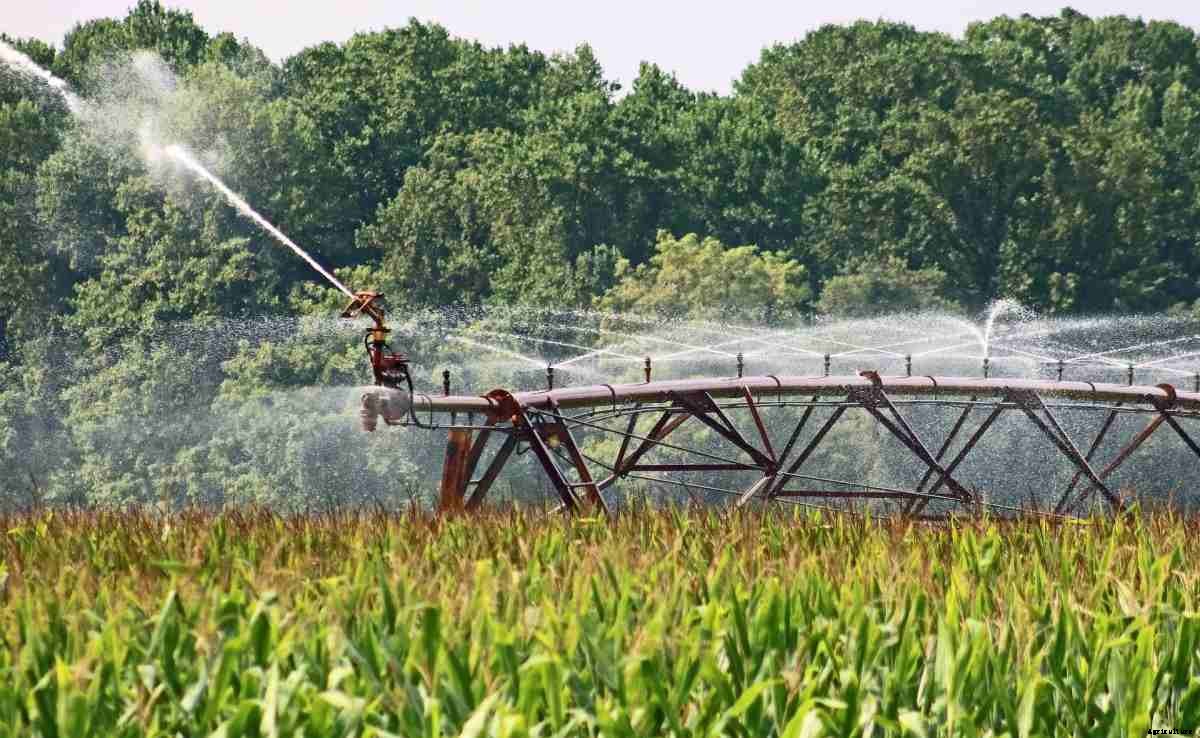
Irrigation farming relies on help from an irrigation system supplying water from a tank, river, reservoir, or well. As India grows and there is an increasing demand for food, water is more crucial. Some farming methods should be focused on sustaining or recycling water.
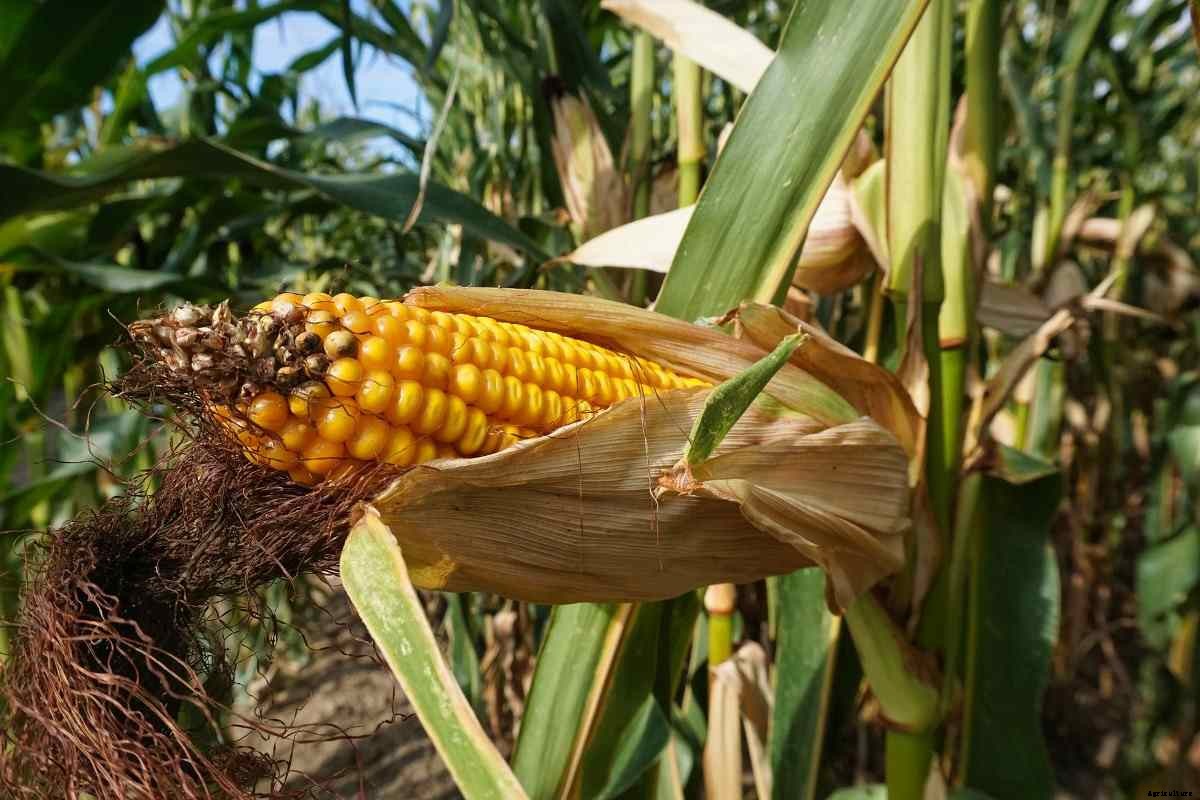
In Grain farming, grains like corn, barley, and wheat are grown for human consumption and exports. Grain farming is mechanized and requires sufficient amounts of land, machinery, and farmers. The Grain farming farmers are exceptionally busy during the planting and harvesting seasons.
Nomadic farming means farmers moving with their animals from one place to another place in search of water and pasture. It is similar to pastoral farming and also practiced in arid and semi-arid areas. Different regions across the world rear different animals under Nomadic farming. The animals mainly include camels, sheep, cattle, donkeys, goats, and horses.
Dry farming is mainly practiced in areas where the amount of annual rainfall is less than 80 cms. In such areas, the farmers are dependent upon rainfall. In Dry farming, the moisture content in the soil is less. Thus, only one crop can be grown in a year. Millets like Jawar, Bajra, Ragi, and Pulses, etc are important crops grown under Dry farming. In India, Rajasthan, Maharashtra, parts of Madhya Pradesh, Southern Haryana, part of Gujarat, and Karnataka fall under Dry farming. The dryland farming technique conserves water through proper cropping, irrigation, and soil management techniques. Moisture control during crops consists largely of the destruction of weeds.
Wet farming is practiced in the areas of alluvial soils where the annual average rainfall is more than 200 cm in India. In wet farming, more than one crop is grown because enough amount of moisture in the soil is available. The areas under Wet farming are West Bengal, Assam, Meghalaya, Tripura, Manipur, Nagaland, Mizoram, and Malabar Coast fall.
India is affected by heavy monsoon rains and subsequent flooding. Wet farming suitable in all the well-irrigated areas like those in northeast India and the Western Ghats. Rice, Jute, and Sugarcane are the important crops of wet farming and it is a type of farming that depends upon rain.
It is the one in which crop production is combined with the rearing of livestock. Some examples of mixed farming are crop-livestock, crop-forestry, crop-horticulture fish-pig, fish-duck, and paddy-fish, etc. Odisha and Kerala practice Mixed farming in India. Mixed farming is an efficient process of farming and proximity to the urban markets and reins ability of precipitation. The important crop of mixed farming is the grass, occupying at least 20% of the cultivated land. In the maritime regions (Wales) grasses occupy up to 75% of the cropped area. The grass is treated with as much care as cash or cereal crop.
The cultivated crops under Mixed farming are Wheat, Barley, Oats, or Rye. Many practice crop rotation, growing root crops like Turnips or Potatoes, and Legumes as an alternative to cereals in some years. This maintains soil fertility and mixed farms grow some industrial crops like Sugar Beet, Hops, Tobacco, and Flaxseed.
Plantation farming involves the growing of a single cash crop purely meant for sale. Some examples of plantation crops are Tea, Coffee, Rubber, Sugarcane, Cocoa, Banana, Coconut, Spices, and fruit crops like Apples, Grapes, and Oranges, etc. Plantation farming is export-oriented agriculture farming. Crops grown in plantation farming have a life cycle of more than 2 years. Plantations exist on every continent possessing a tropical climate and it is capable of producing a single crop that takes a long time to grow. Kerala, Assam, Karnataka, and Maharashtra are practiced in Plantation farming.
Plantation farming is grown for commercial purposes and the capital is needed to make this project’s success is very high and it is labor-intensive and highly mechanized. As a result, the cost of production is also high. It needs large tracts of land and managing huge tracts of land is not easy. This helps to boost efficiency and production. This is meant to sustain the huge population. It requires more than 40 hectares to be successful and other types of farming do not require huge tracts of land to be successful.
Characteristics of Plantation Farming are;
Plantation farming is different from other forms of agriculture. The characteristic features of plantation agriculture are;
Organic farming or Eco-farming avoids the use of synthetic fertilizers, pesticides, growth regulators, and livestock feed additives. It relies on crop residues, animal manure, crop rotation, off-farm organic wastes, and biological pest control to maintain soil productivity. It mainly involves the cultivation of plants and rearing of animals in natural ways.
The principles of organic production include the following;
In organic cultivation, some preventative insect and disease control methods are practiced including crop rotation, improved resistant varieties. Integrated pest and weed management, and soil conservation systems are valuable tools for an organic system.
In cooperative farming, all the members have the right of ownership in the business. Then, the income is distributed based on the share of land, labor, and capital of the members. It means mobilizing a group of farmers for crop cultivation and achieving scale economies through the division of labor. The important things in cooperative farming are specialization, economies of scale, and marketing.
Cooperative farming mainly refers to an organization in which;
Cooperative farming gives the following benefits or advantages;
1. Economies of scale
2. Also, solves the problem of sub-division and fragmentation of holdings.
3. Cooperative farm has more money resources to increase irrigation potential and land productivity.
4. Case studies point out that with cooperative farming, per acre production increases.


